Hill stations
Nineteenth-century colonial doctors advocated repatriating troops and officials stricken with colonial ills of the mind and body. Yet they added that such an enterprise should be undertaken carefully, lest the patient suffer a kind of thermal shock upon re-entry into their clime of origin.
Thus in 1859, doctor Adolphe Armand advised sick colonials in Africa to first stop at Majorca, Minorca or Mahon, before setting foot on continental European shores. If that proved impractical, he wrote that ‘at the very least’ the colonial returning from Africa ‘should stop in Italy, Toulon or Marseille before setting off for the interior of France’.19 The logic of decompression was still at work later in the century, when, during the conquest of Madagascar in 1895, French colonial troops transited through ReunionIsland before being repatriated to France. Over the course of the nineteenth century, on-site latitudinal escape from the tropics—where geography rendered it possible—emerged as an attractive alternative to the costly and time-consuming voyage home. British, Dutch and French colonial administrations, most notably, stood to gain significantly from setting up hill stations on location in the colony. These sites were intended to serve as surrogates of home, offering on location the putatively reparatory function of the motherland’s climate.
The quest for latitudinal refreshment in the tropics can be traced to the early nineteenth century at least. The idea of governing a tropical territory from a climatically safe zone went hand in hand with that of recreating the motherland overseas—whatever motherland that might be. Thus, in the first two decades of the nineteenth century, at Penang Hill in Malaya, the British began constructing an approximation of home.20 Sometimes the renderings of home proved more complex and cosmopolitan: at Petropolis in Brazil in the 1840s, German migrants began to carve out what they considered to be a ‘small piece of Europe recreated in Brazil’.21 The matter was not conceived as one of comfort or homesickness, at least not initially, but rather one of survival.
Hans Pols has shown how in the 1840s German physician Franz Wilhelm Junghuhn declared the Dutch East Indies to be anathema to European settlement, by virtue of their tropicality. However, posited the doctor, local geography could serve the cause of settlement if the Dutch managed to harness the region’s mineral springwaters, and make use of its cool highland zones.22 Such ideas were widespread in the middle of the nineteenth century, and gave rise to a veritable economic sector aimed at perpetuating colonialism and ensuring wellness. German, Belgian, Portuguese, French, British and other scientists were in constant dialogue over the question of ‘how high is safe’, engaging moreover in a global mapping of colonial healthfulness.23Colonial cloning overseas was nothing new, as place names such as New South Wales or New France attest. However, the concept of reproducing regional architecture, of introducing European crops and livestock, of mimicking the metropole’s climate and precipitation levels, its vegetation, hedges and flowers, bore unmistakably modern and utopian streaks. The task was enabled and impelled by a variety of currents and trends, ranging from Humboldtian logic to the hygienic contention that colonial settlement could be made possible if a strict regimen was followed, and ideal conditions recreated overseas. Obviously, considerations of climate and health soon dovetailed with issues of comfort, power and leisure. Doctors themselves quickly realised that these sites of medicine had morphed into a broader phenomenon. In the words of British colonial doctor Joseph Fayrer, writing in 1900, hill stations were of course intended to ‘preserve the health and vigour’ of the 100,000 Europeans in South Asia. But he added that they had come to ‘play so important a part in the social and physical economy and well-being of our countrymen in India’.24
These sites of power rested upon the illusion of Europe. And the illusion was often complete.
Colonials rarely failed to note the thermal contrast between lowland areas and hill stations. Consider the observations of Archibald Harrison, remarking on the contrast between the Philippine lowlands, and the American colonial hill station of Baguio. He writes of going ‘from heat and paddy fields to pine trees and blankets’.25 Health and familiarity led Europeans to construe hill stations as safe places, climatically of course, but also politically. For instance, in 1941—1942, as Japanese troops threatened the Dutch East Indies, Dutch colonial families sought refuge in hill stations like Tretes, near Malang.26 In the French colonies of Madagascar and Indochina, as the death knell of imperialism began to ring, colonial die-hards planned to transfer the locus of power from its historic seats in Antananarivo and Hanoi, to the hill stations of Antsirabe and Dalat, respectively.27Hill stations provided moreover a series of visual, social, even olfactory cues that reminded homesick colonials of home. In 1938, a French forestry official noted of the pine trees at the hill station of Dalat in Indochina:
Tourists who visit Dalat are unanimous in recognising that its charm is owed in large part to the presence of pine groves that cover the hills around the station. The sun distils their pleasant smell of resin, which enables the hiker to rekindle countless sites in France that he or she once enjoyed. The effect is revivifying.28
Indeed, the hill station served expressly as a surrogate for home. In French Indochina, even minor hill stations like Bana experienced a boom during the First World War, when colonial officials and military personnel were no longer repatriated to the metropole.29 During the Great War, French colonial agents scoured the highlands in search of new venues, uncovering most notably the site of Cambodia’s hill station, Bokor.30 In British India, architecture and landscape sent signals of home.
At Ootacamund, Dane Kennedy has shown how ‘Swiss Gothic’ dominated, all the while co-existing with Tudor, Scottish and other forms. This sometimes instilled a Euro-regional sense of place. At Dalat, for instance, homes bore the style of the Basque Country, the Alps, the Pyrenees, Normandy and even Bavaria. It is against such a backdrop that European sociability was fostered. Clubs, libraries, Masonic temples, literary and artistic societies, tennis and hunting associations, theatres, botanical gardens and grand hotels dotted major European hill stations. The quest for health thus frequently went hand in hand with, or was even replaced by ‘pleasure seeking’.31 Colonial testimonies speak to a kind of rebirth at the hill station: white blood cells were believed to return to their normal count, Europeans raved at eating foodstuffs from their homeland, and revelled in hiking, strolling and socialising. Mostly, these places became sites of European domesticity. An undated early twentieth-century postcard of the small hill station of Tam-Dao in Indochina—a station d’altitude catering mostly to Hanoi’s whites—shows a French husband and wife with their child in front of their cottage. The handwriting on the reverse bears three simple words: ‘Vive la convalescence!’ (Long live convalescence!)—a sure sign that health, leisure and recreation overlapped in the experience of the senders (see Figure 23.2).At most hill stations, then, questions of leisure and sociability were inextricably linked to notions of health, safety and Europeanness. Even in the small hill stations of Malaya in the nineteenth century, Robert Aiken finds that colonial Britons practised croquet, tennis, riding and golf, tended to British-style gardens and engaged in hikes and other outdoor activities which they rarely practised in the stifling lowlands.32 By the middle of the nineteenth century, Simla had come to be considered the premier hill station of British India. It emerged not merely as a summer capital and as a climatic oasis from the tropics, but also as a hub of colonial power, as Dane Kennedy and others have analysed.
It fostered colonial sociability in a replica of Great Britain. In 1891, the viceroy’s birthday ball in Simla attracted some 500 elite guests. Golf tournaments, gymkhanas, theatre performances, artistic competitions, concerts, dog shows and racing events marked the following ‘Simla season’ in 1892.33 Even in such artificial environments, however, colonials found ways of blaming the climate for hampering their reincarnation of Britain in South Asia. An 1892 article about Simla bemoaned: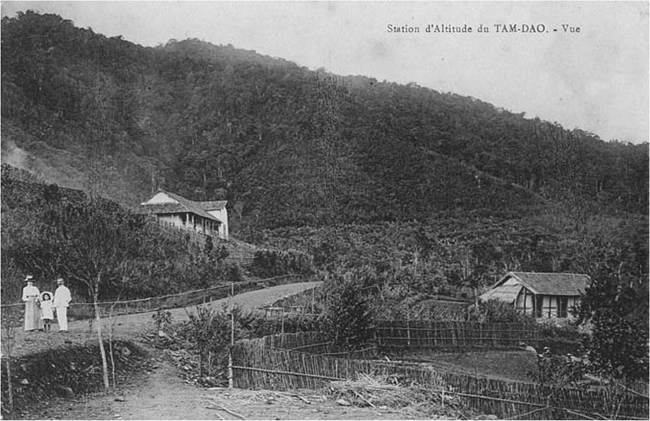
Figure 23.2 Tam-Dao hill station, Indochina. Private postcard, precise date unknown. Author's collection.
With the improvement in the weather the Noah's Ark lifestyle to which many of us have for so long been condemned is considerably ameliorated. Even tennis, that most exacting of out-door amusements is possible, and its flannel-clad votaries may again be seen on their way to its worship and exercise. Ball badminton has raised its yellow head.34
Try as they might to conjure up the motherland, the monsoon nevertheless precluded transforming South Asia into Yorkshire.
Hill stations remained critical sites during colonialism's dusk. At Simla, bourgeois Indians began frequenting a place once considered resolutely segregated. Dalat, in Indochina, a place deliberately intended at first to keep out the Vietnamese, soon attracted Vietnam's last emperor, Bao Dai, who revelled in its romance, hunting and entertainment. In fact, Dalat's reputation as a restful, natural site would endure, and, unlike most aspects of French colonialism in the region, has survived beyond the colonial era. In 1954, precisely as French colonialism approached its twilight in Vietnam, a U.S. evangelical missionary wrote home from the hill station: ‘Here we are in beautiful, quiet Dalat with its cool, pine-scented air. What a contrast to Hanoi and other cities on the plains with their sweltering heat, crowds and noise... This place is a foretaste of heaven'.35 Contemporary Vietnamese sources express much the same emotion, which echoes colonial panegyrical depictions of the resort.
The logic of hill stations transcended borders as well. In 1923, one report indicated that the small Dutch hill station of Brastagi in Sumatra had attracted a substantial British clientele.36 In 1942, a French missionary reported his surprise at discovering the St Theodore sanatorium at Ootacamund, in India. There, he explained, a French father by the name of Pottier had created ‘a mountain refuge' where other men of the cloth ‘broken by the intense fire of the tropics' could seek ‘healing and pampering in the calm and peace of the mountains'.37