Research Trends
As in other parts of the world, questions relating to violence and warfare received little attention in Japanese archaeology until quite recently. Stone arrowheads and bronze weapons were not infrequently discovered in premodem times, but such objects were given a range of sometimes fanciful interpretations.7 Scientific archaeology began in Japan in 1877 with excavations by the American zoologist Edward Morse at the Omori shell midden in Tokyo.
Morse's suggestion that human bones excavated from Omori bore traces of cannibalism was not confirmed by later research, but he influenced the development of archaeology and anthropology in Japan through his emphasis on histories of ‘racial' mixing. The Victorian idea that certain races or ethnic groups were naturally more powerful than others precluded the need for a specific concern with violence as a historical process in need of analysis or explanation. The role of censorship also needs to be considered at a time when Japan had launched upon a project of modernisation which involved frequent wars and colonial conflicts. Anthropologist Shogoro Tsuboi, for instance, was a clear supporter of the Russo-Japanese War (1904-5).8 At the height of this conflict he wrote one of the first essays on anthropology and war publishedCulture in the Prehistoric Japanese Archipelago (Oxford: Oxbow Books, 2004), pp. 133-4.
6 R. Brian Ferguson and N. L. Whitehead (eds.), War in the Tribal Zone: Expanding States and Indigenous Warfare (Santa Fe, CA: School of American Research Press, 1992).
7 Peter Bleed, ‘Almost Archaeology: Early Archaeological Interest in Japan', in R. J. Pearson (ed.), Windows on the Japanese Past: Studies in Archaeology and Prehistory (Ann Arbor: Center for Japanese Studies, University of Michigan, 1986), pp. 57-67.
8 Eiji Oguma, A Genealogy of Japanese' Self-images (Melbourne: TransPacific Press, 2002), pp.
57-8.in Japan, yet this text uses ethnographic examples from Africa and the Americas to naturalise the role of warfare in human history and studiously avoids any mention of violence in the Japanese past.[317] From the 1930s, censorship became more overt and profoundly influenced the practice of archaeology, anthropology and history in Japan until 1945.[318] [319]
Japan's defeat in World War II made it possible for archaeologists to contribute to a new ‘democratic' history of Japan that explained and critiqued the role of the emperor. If the imperial system was responsible for the rise of despotic power in Japan, then it followed that earlier periods in Japanese prehistory had been characterised by more peaceful, egalitarian communities. In the late 1940s, excavations at the Yayoi period Toro site in Shizuoka seemed to provide the perfect example of such a community.11 One exception to the post-war emphasis on the peaceful roots of ancient Japan was Egami's ‘Horse rider' invasion theory, but this was widely criticised in both Japanese and English.[320] [321] [322] [323] By the 1960s, however, Japan was confronted with the growing consequences of industrial pollution and with the international tensions of the cold war, socio-political trends which became coupled to a new interest in conflict in Japanese history.13 In particular, an expanding archaeological record made it clear that the Yayoi was characterised by extensive evidence for violence, especially in western Japan. This changing interpretation was crystallised by excavations at the Yoshinogari site in Saga, a large settlement enclosed by multiple ditches and palisades with watchtowers (Figure 7.1).14 The fiftieth anniversary of the end of World War II further stimulated research and by the turn of the twenty-first century a new consensus had been established on the evolution of violence and warfare in prehistoric Japan.15 Although the
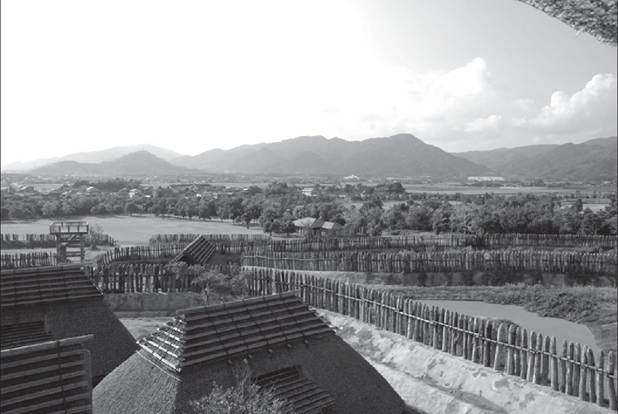
Figure 7.1 Reconstructed defensive structures at the Yoshinogari site.
possibility of some small-scale raiding in the Jomon period was not denied, it was widely concluded that organised warfare began with agriculture in the Yayoi. Japanese research has thus concentrated on developments related to violence after the beginning of agriculture and has continued to downplay conflict among preceding hunter-gatherers.
More on the topic Research Trends:
- Role of enterprise resource planning: A review of practices, trends, theory and opportunities in expanding field of research
- The Threat Within: Troubling Trends
- EMERGING TRENDS IN MEASURING ITSG PERFORMANCE
- Current Trends
- Current Trends
- Section 6 Emerging Trends
- Comparative Trends in Taiwan’s Macroeconomy
- THIRTEEN Future trends and predictions
- ANTI-IJTIHAD TRENDS AND THEIR EXCLUSION FROM SUNNISM
- Marcartois 1, herve bourhy2, thomas f. muller3, Thomas selhorst3 and graham c. smith4 1 VetAgro sup, campus veterinaire de Lyon, Marcy l’Etoile, France 2Institut Pasteur, Unit Lyssavirus dynamics and host adaptation. National Reference Centre for Rabies, WHO Collaborating Centre for Reference and Research on Rabies, Paris, France 3Friedrich-Loeffler-Institut, Federal Research Institute for Animal Health, Seestrasse 55, D-16868 Wusterhausen, Germany 4Tht Food and Environment Research Agency, Y
- Market Research: What Your Customer Wants
- Market Research: What Your Customer Wants
- Ethics of Research During Transport
- Ethics of Research During Transport
- THE RESEARCH