The Ottoman Empire and Its Dissolution
If the rise of the Ottoman Empire was one of world history's great moments, its decline was no less momentous. The dissolution of the Ottoman Empire (Map 39.1) was inseparably bound up with the global expansion of the European empires.
Indeed, it constituted the central problem of European diplomacy in the nineteenth century, the so-called Eastern Question of how to manage the waning of Ottoman power and partition Ottoman territory without triggering a great power war. The question of Ottoman decline has inspired some of the most contentious debates among historians.2 Even the date of the beginning of the decline is vigorously disputed. Some Ottoman intellectuals asserted that their empire began its process of descent with Sultan Süleyman the Magnificent's failure to take Vienna in 1529.Most historians, however, question the utility of applying the label of decline to a stretch of imperial history nearly four centuries in strength. The dates they more commonly cite are 1699 and the signing of the Treaty of Karlowitz; 1774 and the signing of the Treaty of Kü^ük Kaynarca, and 1798 and Napoleon's invasion of Egypt. The Treaty of Karlowitz, signed between the Ottomans and the Hapsburgs, marked an unambiguous defeat for the Ottomans and their first serious territorial losses. The ease with which Napoleon and his expeditionary force crossed the Mediterranean, entered the Middle East, and dispatched the Ottomans and their local allies demonstrated the vast gulf in power and capabilities that now separated European societies from the Ottoman's. The Treaty of Kü^ük Kaynarca, however, is the better choice. Signed at the conclusion of the Russo-Ottoman War of 17681774, it inaugurated the “Eastern Question,” both laying bare the deep vulnerability of the Ottoman Empire before European military might and also highlighting the ascent of Russia as a major player in the Balkans and Middle East.
Russia was now, and would remain, the single greatest existential threat to the Ottoman Empire. But Russia's rise worried others, too, and the efforts of Britain, France, Austria-Hungary, and Germany to block Russia's southward advance gave the Ottomans a lease on life into the twentieth century.Containing the burgeoning rivalries of their growing states constituted the primary concern of European diplomats for much of the nineteenth century. Diverting those rivalries into arenas outside the heart of the European continent served as an escape valve of sorts. The Ottoman Near East was one such arena, but its proximity meant that a change there still had the potential to upset the balance of power in Europe and spark a larger war. Since the Ottoman Empire was incapable of defending its own turf unilaterally, managing its decline in the face of European expansion demanded considerable care. Moreover, the presence of multiple actors in the Near East meant that disputes always had the potential to spark a broader conflagration, as indeed ultimately happened in Sarajevo in August 1914. This was the essence of the “Eastern Question.”
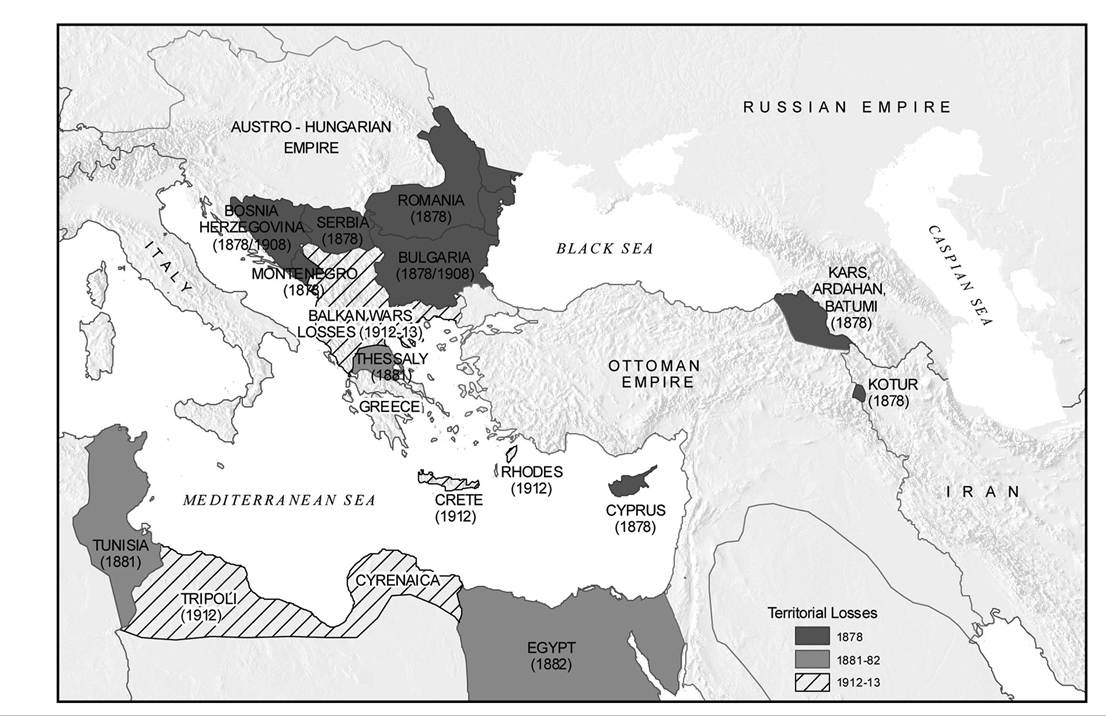
Map 39.1. Dismemberment of the Ottoman Empire.
Source: Reynolds, 2011, Shattering Empires: The Clash and Collapse of the Ottoman and Russian Empires, 1908-1918, map titled “Dismemberment.” Copyright: Michael A. Reynolds.
1060 MICHAEL A. REYNOLDS AND RANA MITTER
The Ottomans’ entanglement in the European balance of power complicated not only their efforts to manage their own relative weakness in the realm of diplomacy, but also their efforts to restructure their internal institutions. Ottoman diplomats could demonstrate considerable skill playing the Great Powers off against each other. Yet such tactics could only be temporizing measures. The fundamental work had to be internal reform, and in this the Ottomans engaged—contrary to long-standing perception—energetically and, ultimately, successfully. Although Ottoman defeat in World War I consigned the empire to dissolution and thereby at one level signaled the failure of the reform effort, the victory of the Turkish nationalist movement in founding the Turkish Republic in defiance of the Entente powers’ plans to partition Anatolia represented the successful culmination of the reform efforts of the nineteenth century.
More on the topic The Ottoman Empire and Its Dissolution:
- Agrarian Empire: Ottoman Comparisons
- 12. The Soviet Collapse
- Ottoman Empire, Seljuks, Turkey
- The City of Glory
- The First World War in East Asia
- Conclusion
- Viacheslav Lypynsky: Statesman, Historian, and Political Thinker
- Part I Chronology
- INDEX
- Ukraine: Between Empires and National SelfDetermination