OUR MODEL OF LEARNING THROUGH REFLECTION ON EXPERIENCE
Many models of learning from experience have their roots in the thinking of John Dewey (1938) who examined the way in which past actions guide future actions (Boud, Cohen, and Walker, 1993; Jarvis, 1992; Kolb, 1984; Schon, 1987).
Dewey observed that, when people do not get desired results, they attend to the resulting “error” or mismatch between intended and actual outcomes. He described learning as a somewhat informal use of what is known as the scientific method. People collect and interpret data about their experiences. They develop and test their hunches even though they may not do so in a highly systematic fashion. Dewey summed up learning from experience as follows:It involves: (1) observation of surrounding conditions; (2) knowledge of what has happened in similar situations in the past, a knowledge obtained partly by recollection and partly from the information, advice, and warning of those who have had a wider experience; and (3) judgment that puts together what is observed and what is recalled to see what they signify (Dewey, 1938, p. 69).
People make meaning of situations they encounter by filtering them through impressions they acquire over time from past experiences. They determine whether they can rely on past interpretations or need a new response set. They may need to search for new ideas and information, or reevaluate old ideas and information. Learning takes place as people interpret and reinterpret their experience in light of a growing, cumulative set of insights and then revise their actions to meet their goals. Learning results in new insights and a relatively new set of what Dewey called “habits” of new behavior.
Figure 22.1 depicts a model for learning through experience that Marsick and Watkins (1990) have developed that is based on the work of John Dewey as applied to problem solving. The circle in the center represents the encountering of a new experience.
New experiences are always potentially problematic, even though people may simplify them by emphasizing what is familiar, whether or not this is accurate. In the model, people use reflection to become aware of the problematic aspects of the experience, to probe these features, and to learn new ways to understand and address the challenge they encounter.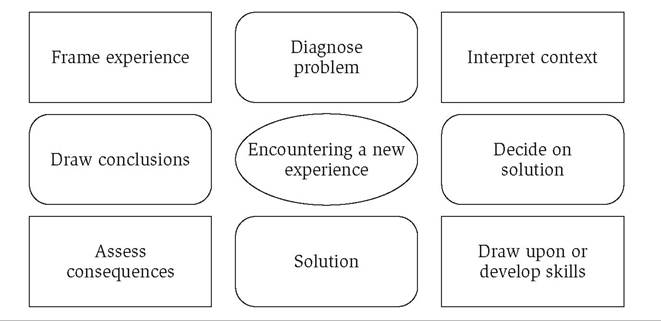
Figure 22.1 Marsick and Watkins' Informal and Incidental Learning Model.
Adapted from Marsick, V. J., & Watkins, K. E. (1990). Informal and incidental learning in the workplace. London, England: Routledge.
Problem-solving steps are located at vertical and horizontal axes, and are labeled (clockwise) as North, East, South, and West. Learning steps are located in between problem-solving steps, and are labeled (beginning clockwise just before North) as North West, North East, South East, and South West.
Problem solving begins when people encounter a new experience (North). They frame the new experience based on what they learned from past experience (North West). They assess similarities or differences and use their interpretation to make sense of the new situation. Often, people make these judgments quickly, without much conscious reflection. Reflection slows down the diagnosis, but it also helps a person to become aware of the complexity of the situation and the assumptions used to judge the new challenge.
After diagnosing a new experience, people learn more about the context of the problem (North East). They find out what other people are thinking and doing. They try to understand the politics of what is going on. They may gather information from other people or social groups that are affected by the problem. They might test their thinking with others or conduct mini-experiments before they choose a course of action. Reflection can play a key role in this phase by opening up lines of thinking that would otherwise have remained unexplored. Interpretation of the context leads to choices around alternative actions that are guided by recollections of past solutions and by one’s own search for other potential models for action.
Once a decision has been made about a course of action (East), a person develops or gathers what is needed to implement the decision (South East). Reflection might be anticipatory, and lead to the development of new capabilities in order to implement the solution. Often, reflection occurs while the action is being implemented over time. When people reflect-in-action (Schon, 1987), they typically do so when they are taken by some surprise in the course of action. Because they are learning as they implement, people may make quick judgments based on partial information. They may also seek further information during action.
Once an action is taken (South), people assess consequences and decide whether or not outcomes match their goals (South West). Reflection after the fact allows for a full learning review. It is relatively easy to assess intended consequences when goals are reasonably explicit and data are available to make sound judgments. It is harder to recognize unintended consequences, although reflection can lead one to ask questions from a wide range of people and explore sources of information that might otherwise be ignored. A learning review leads to conclusions about results (West) and lessons learned that can be of help in planning future actions. Reflection at this point brings a person full circle to the new understandings (North West) that are drawn in a new iteration of the cycle.
Reflection is central to every phase of learning from experience, although everyone does not always consciously use reflection to its fullest potential.
Reflection sensitizes people to surprises and mismatches that signal the inadequacy of their prior stock of knowledge. Through reflection-in-action (Schon, 1987), people adjust their course of action and learn while they are carrying out the solution. Reflection after the fact helps to draw out lessons learned that are useful for the next problem-solving cycle.
In situations of conflict, people may be forced into making quick sense of many complex factors that influence how they interpret the context and identify unintended consequences.
Studies of informal learning have highlighted the fact that when contexts are highly variable and surprise-rich—as is certainly the case under conditions of conflict—their interpretation assumes larger significance (Cseh, 1998; Cseh, Watkins, and Marsick, 1999; Volpe, Marsick, and Watkins, 1999). Our model calls for refocusing attention on a wide range of contextual factors that influence the way in which people frame what is problematic about a conflict, think about alternative actions, and look for unintended consequences.At the heart of this model is the dynamic interaction of action—having an experience—and reflection that helps a person to interpret and re-interpret experience. The quality of reflection is central to the way in which a person makes meaning of what is occurring. People are often guided in reflection by internalized social rules, norms, values, and beliefs that have been acquired implicitly and explicitly through socialization. These internalized perspectives can distort one’s interpretation of an experience. To learn deeply from experience, people must critically reflect on the assumptions, values, and beliefs that shape their understanding. To gain insight into how people engage in deep, critical reflection, we turn to work by Jack Mezirow (1991, 1995, 1997) and by Chris Argyris and Donald Schon (1974, 1978).
More on the topic OUR MODEL OF LEARNING THROUGH REFLECTION ON EXPERIENCE:
- OUR MODEL OF LEARNING THROUGH REFLECTION ON EXPERIENCE
- USE OF REFLECTION DURING CONFLICT
- EXPERIENTIAL LEARNING
- INSIGHTS FROM PRACTICE
- The difference between integrity and dissonance reduction
- §98. Nomad Empiricism
- Oetzel John, Ting-Toomey Stella. The SAGE Handbook of Conflict Communication: Integrating Theory, Research and Practice. SAGE Publications,2013. — 912 p., 2013
- THE THEORY AND PRACTICE OF EMPIRE-BUILDING