Shallow ocean zones are diverse and productive
Near the coastline, enough light may reach the ocean bottom to permit the establishment of sessile photosynthetic organisms. Like terrestrial plants, these photosynthetic organisms provide energy that supports communities of animals and microorganisms, as well as a physical structure that creates habitat for those organisms, including surfaces to which they can anchor and places where they can find refuge from predators.
The diversity and complexity of the habitats provided by the photosynthesizers support considerable biological diversity in these shallow ocean environments.Coral Reefs
In warm, shallow ocean waters, corals (animals related to jellyfishes), living in a close association with algal partners (a symbiotic mutualism; see Concept 15.1), form large colonies. The corals obtain most of their energy from algae that live within their bodies, while the algae receive protection from grazers and some nutrients from the corals. Many corals build a skeleton-like structure by extracting calcium carbonate from seawater. Over time, these coral skeletons pile up into massive formations called reefs (FIGURE 3.22). The formation of reefs is aided by other organisms that extract other minerals from seawater, such as sponges that precipitate silica. The unique association of these reef-building organisms gives rise to a structurally complex habitat that supports a rich marine community.
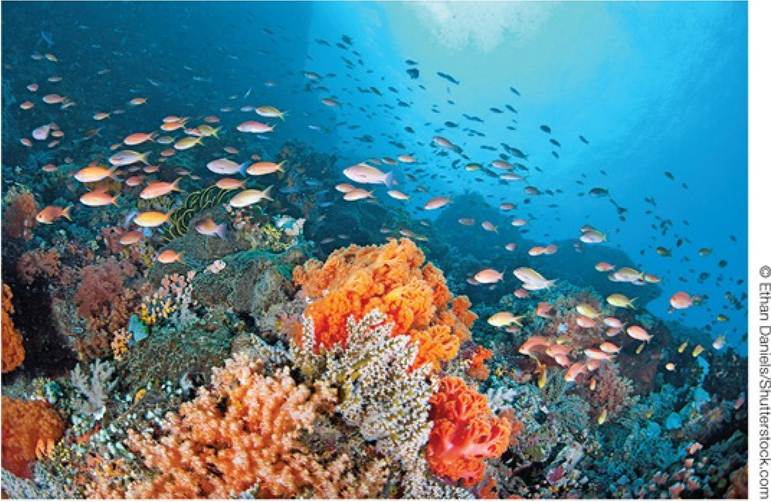
FIGURE 3.22 A Coral Reef Corals, like this one off North Sulawesi, Indonesia, create habitat for a diverse assemblage of marine organisms. View larger image
Coral reefs grow at rates of only a few millimeters per year, but they have shaped the face of Earth (Birkeland 1997). Over millions of years, corals have constructed thousands of kilometers of coastline and numerous islands (FIGURE 3.23).
The rate of production of living biomass in coral reefs is among the highest on Earth. The accretions of coral skeletons are as much as 1,300 m (4,300 feet) thick in some places, and they currently cover a surface area of 600,000 km2 (23,000 square miles), approximately 0.2% of the ocean surface.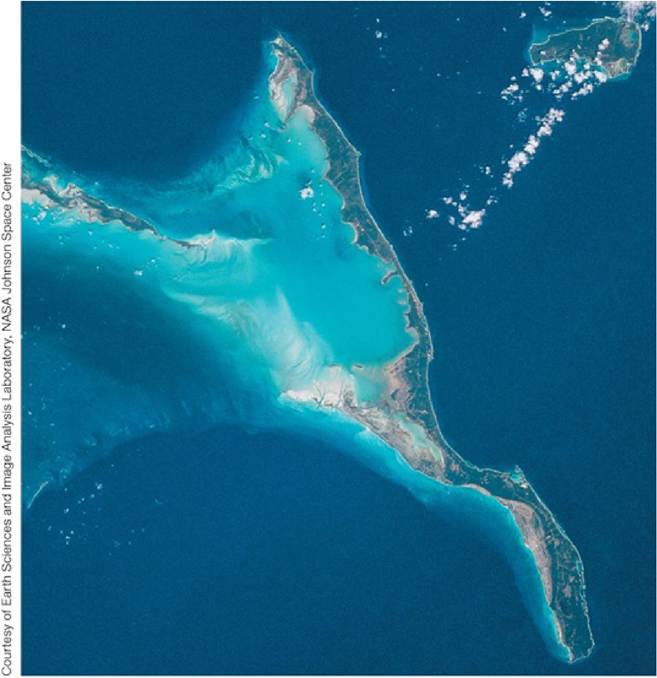
FIGURE 3.23 Coral Reefs Can Be Seen from Outer Space Long Island, in the Bahamas, was formed by coral reefs, which can be seen on the fringes of the island in this satellite photograph. View larger image
As many as a million species are found in coral reefs worldwide, including more than 4,000 fishes. Many economically important fish species rely on coral reefs for habitat, and reef fishes provide a source of food for fishes of the open ocean, such as jacks and tuna. The taxonomic and morphological diversity of animals in coral reefs is greater than in any other ecosystem on Earth (Paulay 1997). The full diversity of coral reefs has yet to be explored and described, however. The potential for development of medicines from coral reef organisms is great enough that the U.S. National Institutes of Health established a laboratory in Micronesia to explore it.
Human activities threaten the health of coral reefs in a number of ways. Sediments carried by rivers can cover and kill the corals, and excess nutrients increase the growth of algae on the surfaces of the corals, increasing coral mortality. Changes in ocean temperatures associated with climate change can result in the loss of the corals' algal partners, a condition called bleaching. Increased atmospheric CO2 has increased ocean acidification (discussed in more detail in Concept 25.1), which inhibits the ability of corals to form skeletons (Orr et al. 2005). Another threat is an increased incidence of fungal infections, possibly related to increased environmental stress.
Seagrass Beds
Although we typically associate flowering plants with terrestrial environments, some flowering plants are important components of shallow (protists, and sea worms. Sea stars and sea cucumbers graze the ocean floor, consuming organic matter or organisms in the sediments or filtering food from the water. Benthic predators, like those of the deep pelagic zone, use bioluminescence to lure prey. Unique communities of organisms can be found in hydrothermal vents scattered in the benthic zone in association with volcanic activity. Seawater that is chemically altered by magma provides chemical energy that supports these relatively rich and diverse communities (see the Case Study for Chapter 20). The benthic zone has received increasing attention in the past two decades but still remains one of the least explored marine biological zones.