Christianity as a Way of Life
There is much more to Christianity than the beliefs Christians hold inwardly. Like the adherents of other religions, Christians express their beliefs outwardly in a variety of ways.
Some are public, such as formal worship in church, participation in rituals, and the observance of holy days. Others are more private and personal, such as prayer and meditation.Worship
Because the first Christians were Jews, they patterned their worship on the Jewish synagogue service, which consisted of readings from scripture, prayer, and a sermon. To these elements, they added the celebration of the Eucharist, a commemoration of the Last Supper Jesus shared with his disciples. The result was a liturgy (Greek leitourgia, “work of the people”) consisting of two parts: the liturgy of the word, including readings from scripture, prayer, and a sermon, and the liturgy of the Eucharist. The Western custom of referring to the liturgy as the “Mass” can be traced back to missa, one of the Latin words used to dismiss the congregation: Ite, missa est (“Go, the dismissal is made”).
VISUAL GUIDE
Christianity
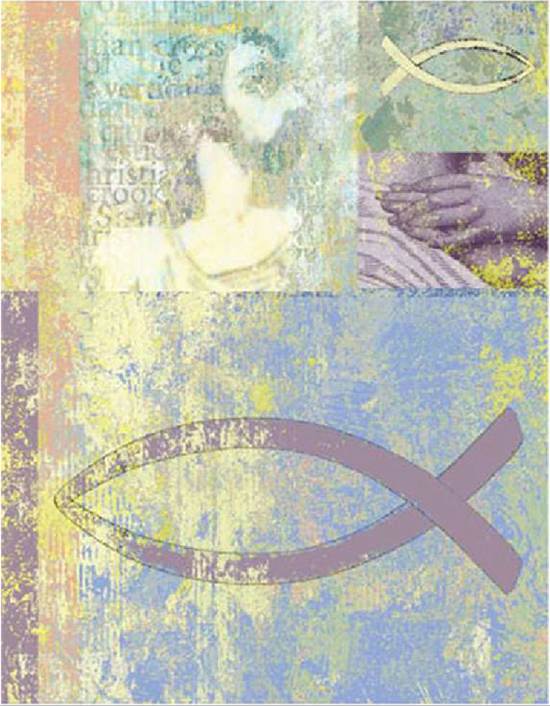
Early Christians used the “sign of the fish” as a secret symbol to identify themselves during times of persecution. The letters of the Greek word for ‘fish” (ΙΧΘΥΣ) are the first letters in the words that make up the phrase “Jesus Christ, Son of God, and Savior.”
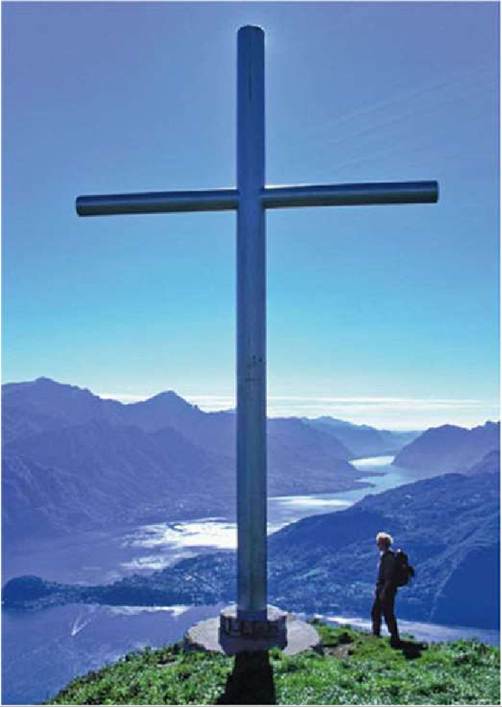
The cross has served as a Christian symbol since ancient times and appears in many forms. With its longer vertical and shorter horizontal arms, the Latin cross is the form favored by the Roman Catholic and Protestant churches. This one stands atop Monte Crocione in northern Italy.
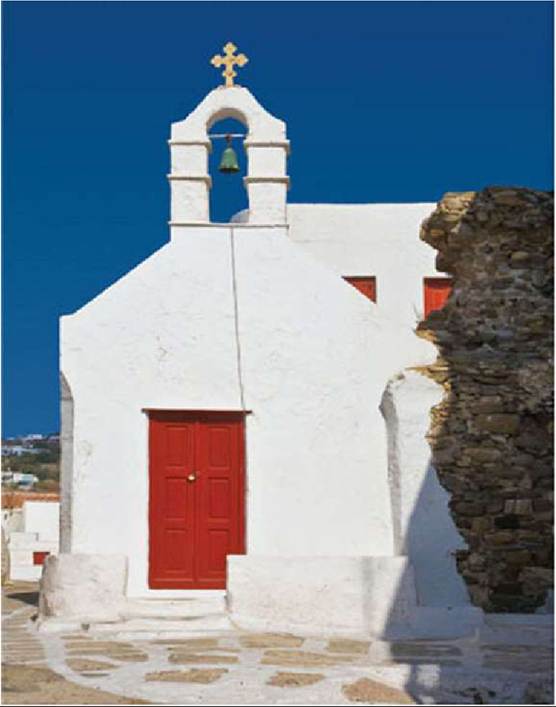
Orthodox Christians use many different forms of the cross.
The most common is a simple figure formed by four arms of equal length. This one decorates a small convent on the island of Mykonos, Greece.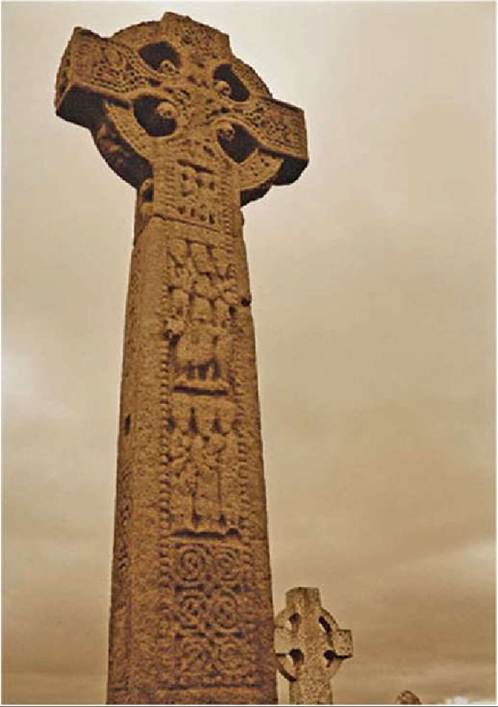
The Celtic cross. According to legend, the Celtic cross on the left originated with St. Patrick, who brought Christianity to Ireland. This one serves as a grave marker in a cemetery in Dublin, Ireland.
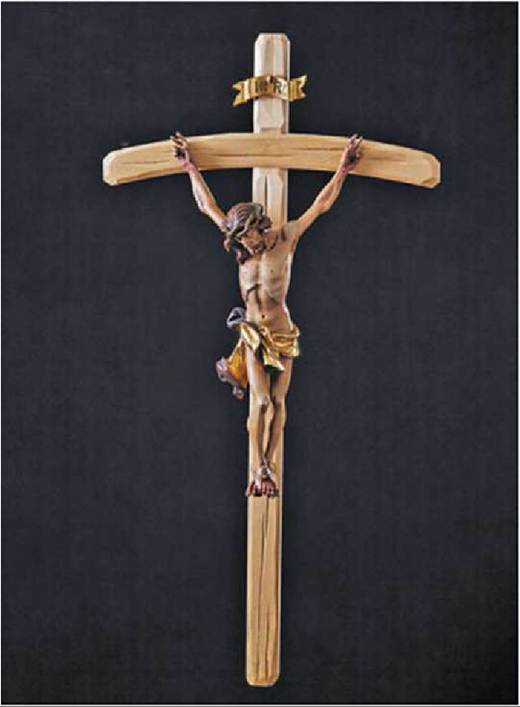
A crucifix is a cross with an image of the crucified Christ. It is used extensively in the Roman Catholic, Orthodox, Anglican, and Lutheran traditions. A vivid reminder of Christ’s suffering on behalf of humanity, it is usually displayed prominently in church interiors.
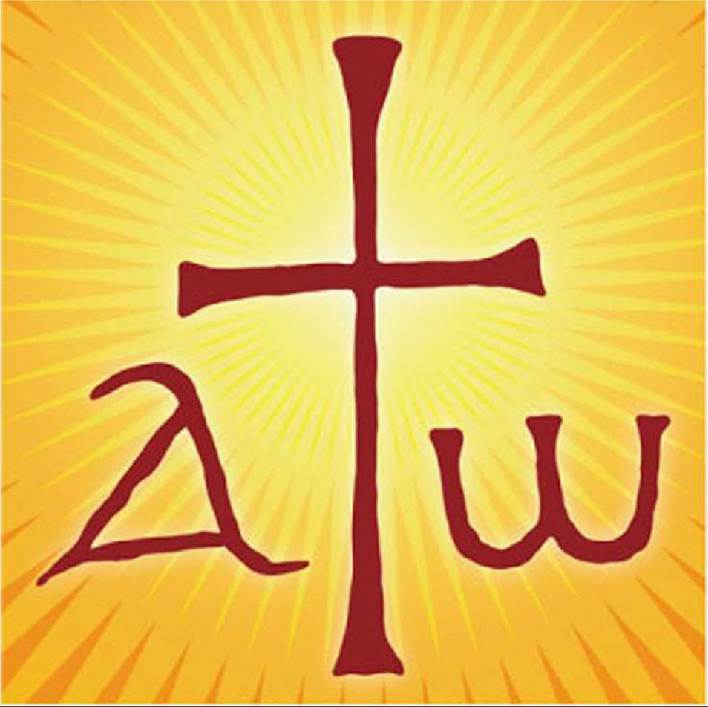
The custom of using alpha and omega, the first and last letters of the Greek alphabet, to symbolize the eternality of God is based on a verse from the book of Revelation in the New Testament (1:8): “I am the Alpha and the Omega,” says the Lord God, “who is, and who was, and who is to come, the Almighty.”
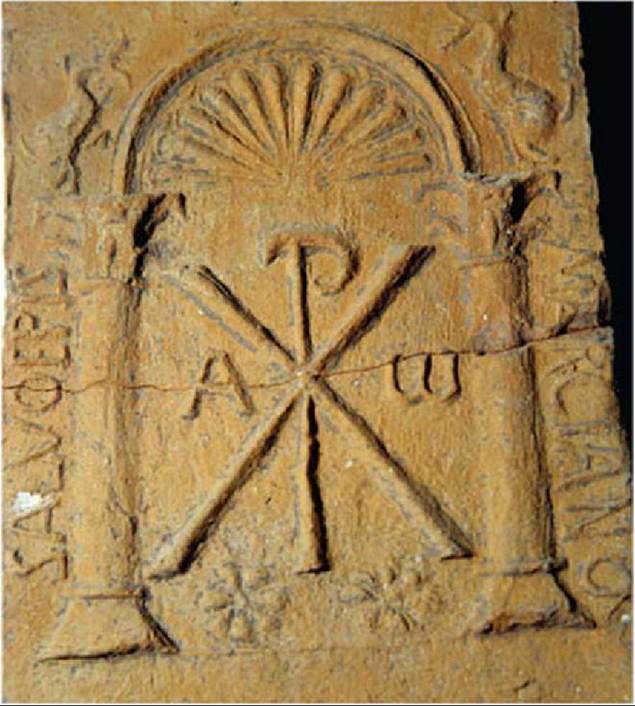
The Chi-Rho is a symbol of Christ. Its name is based on the Greek letters chi and rho, the first two letters in the Greek word Christos, or “Christ.” According to legend, the Chi-Rho was revealed in a dream to the Emperor Constantine, who won a military victory after marking it on the shields of his soldiers. Today, the Chi-Rho appears on altars, plaques, vestments, and other items. It is shown here on a Christian stele from Spain, c. 600.
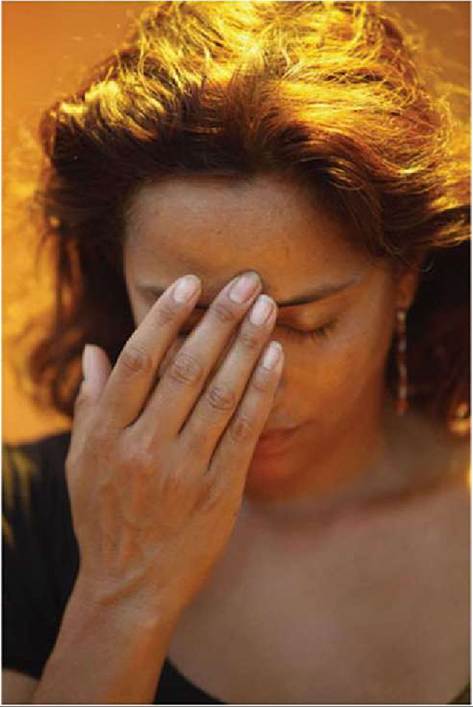
The “sign of the cross” is a ritual hand motion in which the shape of the cross of Christ is traced across the forehead and chest.
It is used in both public worship and private prayer. The practice of “signing” oneself as an act of devotion goes back to ancient times. Writing c. 200, the North African theologian Tertullian noted that the Christians of his time “wore out their foreheads” making the sign of the cross.Today’s Roman Catholic and Orthodox churches are highly liturgical. In worship, members of these traditions are caught up in ritual rhythms of praise and adoration that reach back through more than two millennia. In contrast, most Protestant groups have adopted much simpler forms of worship that emphasize readings from scripture and preaching over ritual.
Christians have always made Sunday, the day of Christ’s resurrection, a day set apart for communal worship. Typically, worship in Protestant churches begins with a hymn followed by an invocation or opening prayer. After readings from scripture, congregants might sing another hymn in preparation for the sermon. Informal announcements of interest to the congregation often follow, along with a collection taken up for support of the church and its charitable causes. A recitation of the Lord’s Prayer follows the collection. The service concludes with a final prayer and a closing hymn. In Roman Catholic churches, worship begins with a formal procession of the clergy toward the altar (a table used in celebrating the
Eucharist) accompanied by the singing of an opening hymn. Next, in a penitential rite, those present confess their sins and ask God’s forgiveness. The liturgy of the word that follows consists primarily of readings from scripture, a short sermon, or homily, and a recitation of the Nicene Creed. At this point, the liturgy of the Eucharist begins with the presentation of bread and wine, which are set on the altar. After the priest blesses these elements, there is a special Eucharistic prayer followed by a singing of the Sanctus, a short hymn taken from the Old Testament (Isaiah 6:3). The congregation then recites an affirmation of faith and the Lord’s Prayer. In a final preparatory act, members of the congregation wish each other “the peace of the Lord.” It is at this point that the bread and wine are consecrated, making Christ present upon the altar. The members of the congregation then share in the rite of communion, in which each person receives a bit of the consecrated elements of bread and wine. Many Roman Catholic Christians say that it is in this solemn moment that they are most acutely aware of God’s presence. The liturgy concludes with a final prayer, a benediction (blessing), and the formal dismissal of the congregation. The liturgy celebrated in Orthodox churches follows this same pattern, though additional processions, prayers, and blessings make it more elaborate.
More on the topic Christianity as a Way of Life:
- Life tables can be based on age, size, or life cycle stage
- Birth is a water-shed event in human life, necessitating various physiological changes to adapt from intrauterine to extrauterine life.
- Christianity and Chinese Culture
- Christianity and Colonialism
- Christianity in Ukraine
- The History of Christianity
- Christianity in Africa since Independence
- Christianity in Russia
- Counter reactions towards Christianity
- The Conflict Between Judaism and Christianity
- The Beginnings Of Christianity
- Advent of Christianity
- Christianity, Gender, and Inclusion
- The Positions of Islam and Christianity
- Christianity as a Mitigating Influence?