Picture Credits
a = above, b = below, l = left, r = right
2 Trustees of the British Museum, London; 9 © Paul Jenkins; 10 © Martin Lubikowski, ML Design, London; 13 From Bogaers, J.E., ‘King Cogidubnus in Chichester: Another Reading of ‘RIB’ 91’, Britannia 10, 1979; 17 Trustees of the British Museum, London; 20a, 20b National Museum of Wales, Cardiff; 22 Ashmolean Museum, Oxford; 30 © Ian Dennis; 38 Capitoline Museums, Rome.
Photo © Sam Moorhead; 41l, 41r © Cotswold District Council, courtesy of Corinium Museum, Cirencester; 50 Trustees of the British Museum, London; 56 Drawn by Baty, 1923; 58 Housesteads Fort, Hadrian’s Wall/Historic England; 61 Trustees of the British Museum, London; 62 Senhouse Roman Museum, Maryport; 65 Photo English Heritage Trust/Trustees of the Clayton Collection (on display at Chesters Fort); 67 National Museum of Wales, Cardiff; 68 National Museums of Scotland; 71l, 71r Senhouse Roman Museum, Maryport; 72 Peterborough City Museum; 74 Great North Museum: Hancock, Newcastle-upon-Tyne; 75 National Museums of Scotland; 80 Photo courtesy National Museum of Wales, Cardiff; 82 Jeremy Richards/Historic England; 84l, 84r © Cotswold District Council, courtesy of Corinium Museum, Cirencester; 89 © Nick Griffiths; 92 Kent County Museum Service. Courtesy Surrey Archaeological Society; 96 © Nick Griffiths; 99 © Chris Rudd Ltd (www.celticcoins.com); 102l, 102r Senhouse Roman Museum, Maryport; 103 Museum of Archaeology and Anthropology, University of Cambridge; 104 Carlisle Museum and Art Gallery; 106 Photo © Miranda Aldhouse-Green; 107 Roman Baths Museum, Bath; 108 © Anne Leaver; 110 Museum of London; 113 Roman Baths Museum, Bath; 117l Great North Museum: Hancock, Newcastle-upon-Tyne; 117r © Mick Sharp; 119 Photo Colchester Museums; 122 © Anne Leaver; 123, 124 Roman Baths Museum, Bath; 126a, 126b © Steven Birch; 127 © Paul Jenkins; 131 Bristol Museum; 132 © Cotswold District Council, courtesy of Corinium Museum, Cirencester; 133 Object on long-term loan to the British Museum, London from the Barnard Estate (BCB95977, PELoanIn.3.b). Photo courtesy the Trustees of the British Museum, London; 139 By kind permission of Tabitha Mead. Photo © Oriel Ynys Môn; 140l, 140r Newport Museum and Art Gallery; 142 © Cotswold District Council, courtesy of Corinium Museum, Cirencester; 143 National Museum of Denmark, Copenhagen; 144 National Museum of Wales, Cardiff; 149 Archaeological Museum, Dijon; 151 Shrewsbury Museum; 152, 153, 156 © Cotswold District Council, courtesy of Corinium Museum, Cirencester; 160 © Mick Sharp; 161, 162 Museum of London; 163 © AOC Archaeology Group; 165, 168 National Roman Legion Museum, Caerleon. Courtesy National Museum of Wales, Cardiff; 169 Trustees of the British Museum, London; 172 Peterborough City Museum; 175, 176 Museum of London; 178 From Tomlin, R. S. O. ‘The Curse Tablets’, in Cunliffe, B. ed. The Temple of Sulis Minerva at Bath. Vol. 2 The Finds from the Sacred Spring. Oxford: Oxford University Committee for Archaeology Monograph No. 16, 1988, p. 232; 180 Illustration by Dale Evans (1988) after R. A. Anderson (1981). Cadw: Welsh Historic Monuments, Crown Copyright; 181, 185, 186l, 186r Trustees of the British Museum, London; 191 © Rupert Willoughby; 193 Trustees of the British Museum, London; 195 Drawing Alan Sorrell. © National Museum of Wales, Cardiff; 201 Photo Cambridge County Council; 206l, 206r Photo © Andy Chapman, Northamptonshire County Council; 207 Musee gallo-romain de Lyon-Fourvière; 208 © Dover Archaeological Group (Keith Parfitt); 209, 210 Roman Baths Museum, Bath; 212l York Museums Trust; 212r, 213l Photo Colchester Museums; 213r C. M. Dixon/Heritage Images/Diomedia.com; 215 Roman Baths Museum, Bath; 219 Tullie House Museum and Art Gallery, Carlisle; 227 Roman Baths Museum, Bath; 228 Gloucester City Museum; 231 Buckinghamshire County Museum, AylesburyColour plates: i, ii (a) Trustees of the British Museum, London; ii (b), iii National Museum of Wales, Cardiff; iv Aphrodisias Museum; ix National Museum of Wales, Cardiff; v Trustees of the British Museum, London; vi Photo © Miranda Aldhouse-Green.
Courtesy Colchester Town Council; vii Photo © Cotswold Archaeology; viii National Roman Legion Museum, Caerleon. Courtesy National Museum of Wales, Cardiff; x (a) © Prisma by Dukas Presseagentur GmbH/Alamy Stock Photo; x (b) © Anthony Brown/123.rf.com; xi (a) © Steve Vidler/Alamy Stock Photo; xii, xiii (a), xiii (b) Trustees of the British Museum, London; xiv Photo Glyn Goodrick; xiv–xv Trustees of the British Museum, London; xv Trustees of the British Museum, London; xvi Humber Archaeological Partnership, Hull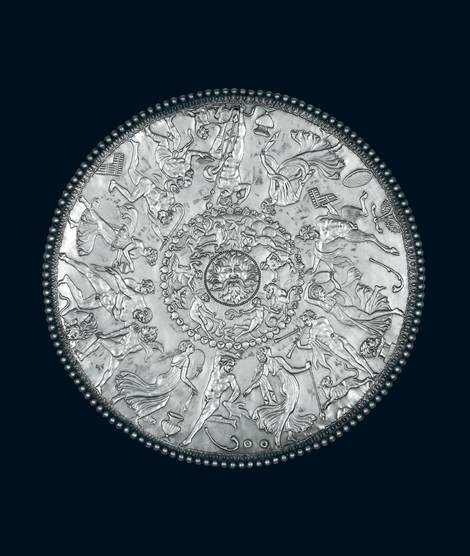
Silver dish from Mildenhall, Suffolk, its central roundel depicting Oceanus, the great river believed by the Romans to encircle the world. (diam. of dish 61 cm/2 ft). The dish comes from a cache of silver treasure deliberately buried in the 4th century AD (see p. 6).
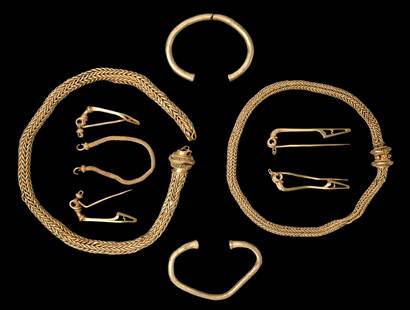
Late Iron Age hoard of Greek-made gold jewelry found near Winchester, Hampshire (see p. 11).
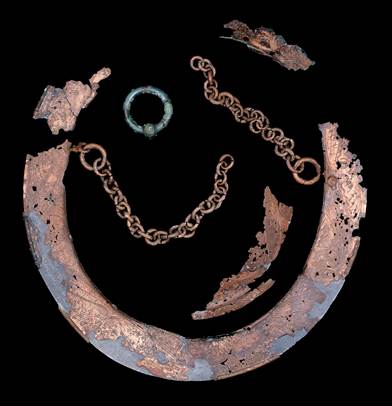
The Iron Age headdress as discovered at Cerrig-y-Drudion, North Wales (see p. 22).
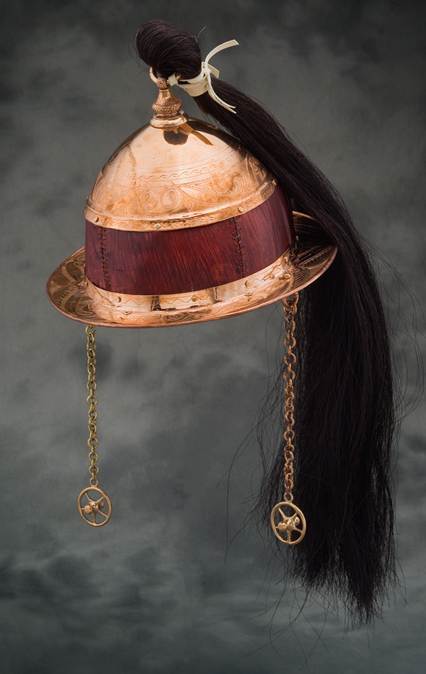
Modern reconstruction of the Cerrig-y-Drudion headdress.
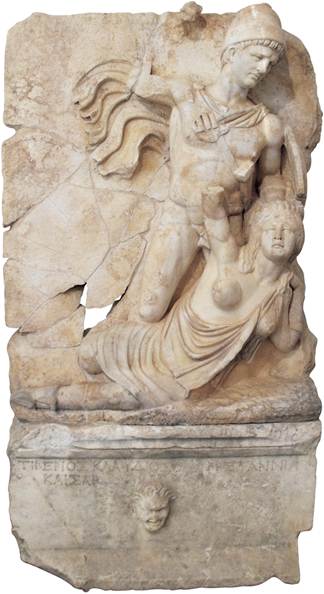
Sculpture showing the violation of Britannia by the emperor Claudius, from Aphrodisias, Turkey (see p. 39).
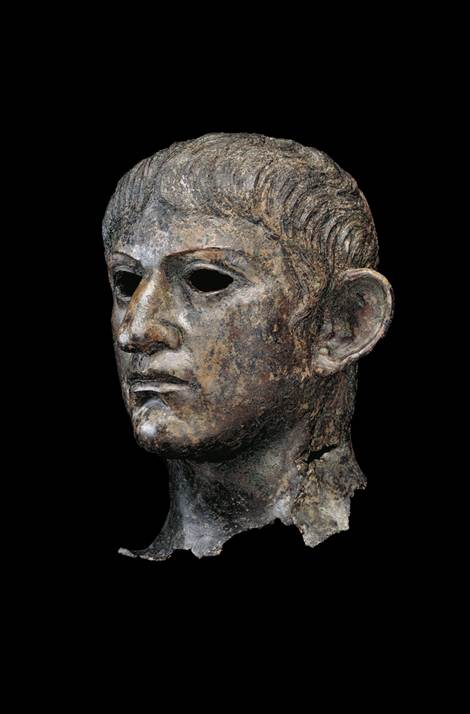
Life-sized decapitated head from an equestrian statue of the emperor Claudius that once stood outside the great temple at Colchester, found in the river Alde, Suffolk (see p. 44),
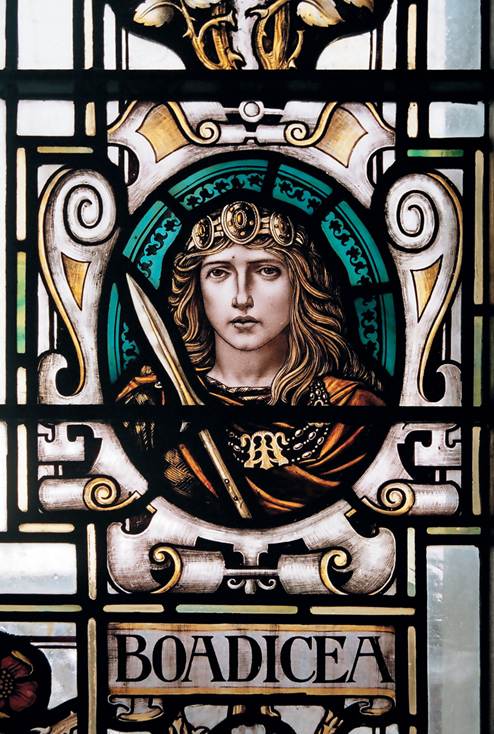
Edwardian stained-glass window depicting ‘Boadicea’ (Boudica) from the ‘Queens’ Window’ in the Moot Hall at Colchester Town Hall (see p.
47).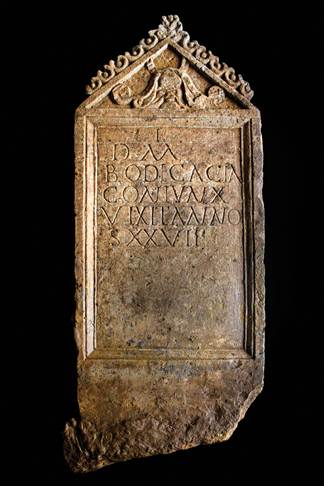
The tombstone of an early 2nd-century AD British woman called Bodicacia, found in 2015 in a Roman cemetery at Corinium. In the apex of the monument the deliberately defaced head of Oceanus, with crab-claws in his hair, is clearly visible (see p. 51). Ht 134 cm (53 in.).
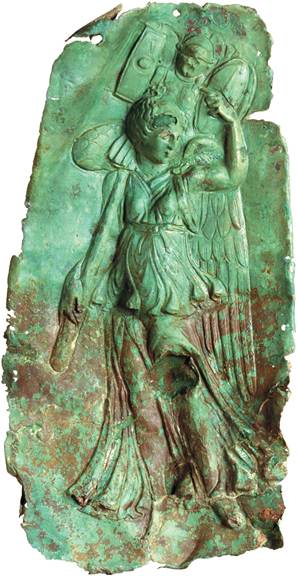
Bronze plaque depicting Victory, from the legionary fortress of Caerleon, South Wales (see p. 67). Ht 26.2 cm (10½ in.).
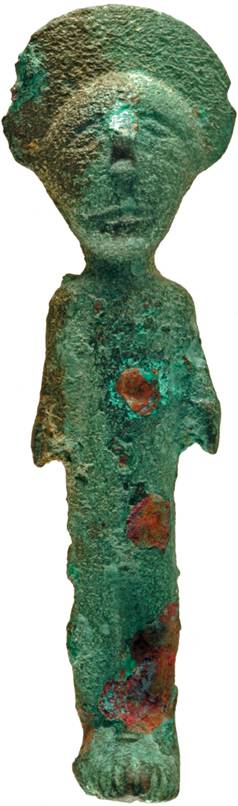
Early Iron Age bronze figurine of a woman with ornate headdress in the shape of a crescent moon, from Culver Hole Cave, Gower, South Wales (see p. 99). Ht c. 10 cm (4 in.).
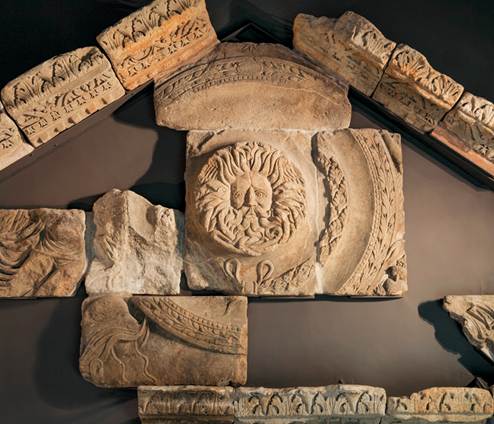
The temple-pediment at the entrance to the sanctuary of Sulis Minerva at Bath, showing the great frowning head of a composite male Medusa-sun/water deity (see pp. 111–15).
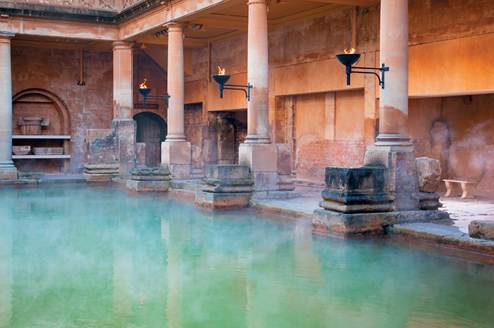
The great bath at the temple of Sulis Minerva at Bath. A close look at the water reveals the swirl of the springs that fed it, and the steam given off by the heat.
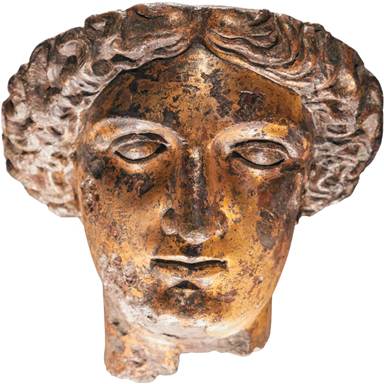
Gilded bronze head from the cult-statue of Sulis Minerva from Bath. The head was deliberately hacked from the body in antiquity, and the face shows cut-marks. Ht 24 cm (9¾ in.).
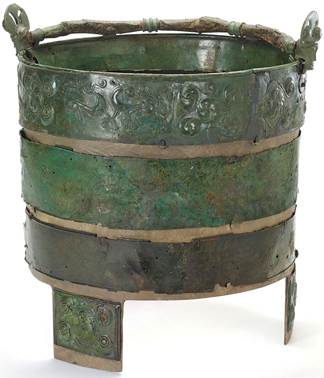
The wooden, bronze-clad bucket found in a high-status late Iron Age grave at Aylesford, Kent.
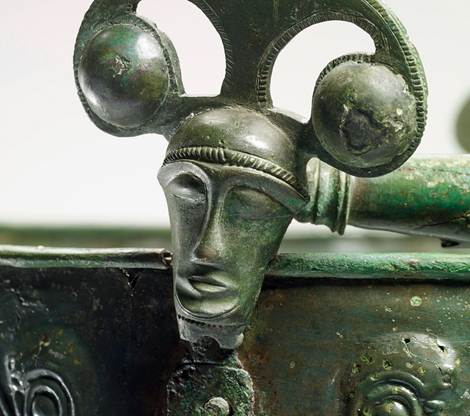
One of the two crowned human heads forming the handle-escutcheons
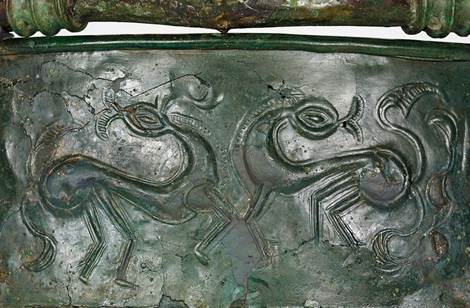
The people dressed up in horse-costumes (see p.
147). Diam. 27.6 cm (10¾ in.).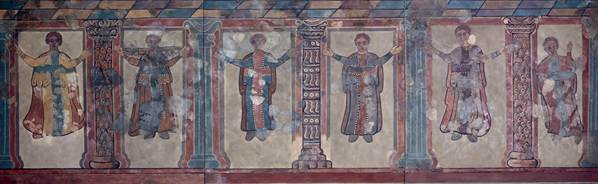
Reconstructed wall-painting from the 4th-century Christian chapel at Lullingstone, Kent, showing a frieze of orantes (praying figures) (see p. 189).
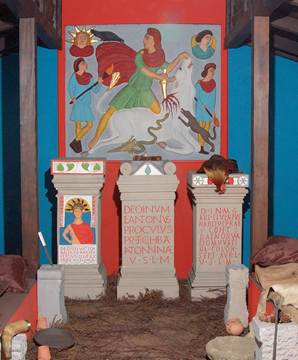
Reconstruction of part of the Carrawburgh Mithraeum, showing Mithras slaying the bull above three altars inscribed with dedications to the ‘Invincible god Mithras’. The one to the viewer’s left shows Mithras identified with the sun god Sol (see pp. 162–63).
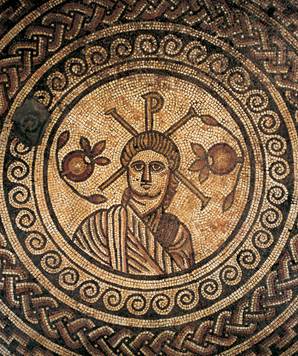
The head of Christ in front of a chi-rho symbol, on the 4th-century Christian house-church mosaic from Hinton St Mary, Dorset (see p. 187).
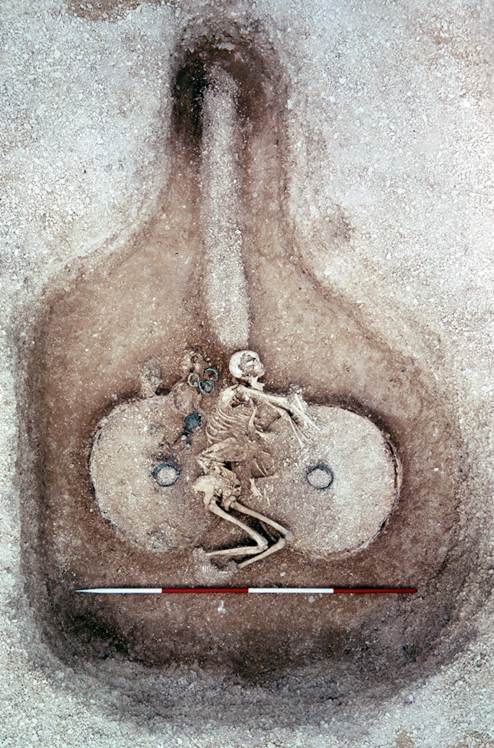
The ‘red lady’ of Wetwang. Iron Age chariot-burial of a high-ranking woman from Wetwang, East Yorkshire. Her rich grave-goods included her war-chariot and many objects decorated with red coral. It is thought that the colour might have been chosen specially in reference (and perhaps deference) to the woman’s bright red facial tumour (see p. 200).
More on the topic Picture Credits:
- STUMBLING DOWN THE AUDIT TRAIL
- Education
- Theory of the firm
- B Hypotheses: Always Under Construction
- Conclusion
- The Validation of Signs
- 9.2.3 MAKING THE FACTSTATEMENT PERSUASIVE
- The Skeletal System
- SOCIAL STRUCTURE IN SCIENCE
- The Open Corporation