28 The Peoples of Dnieper Ukraine in the Nineteenth Century
Ukrainian lands had been inhabited for centuries by peoples of different ethnic and religious backgrounds. In the course of the historic nineteenth century (1789-1914), the policies of the Russian imperial government helped to increase further the ethnocultural diversity of Dnieper Ukraine.
The settlement pattern of Dnieper Ukraine’s various peoples was not, however, evenly distributed, with certain groups being concentrated in different areas or regions. Based on the first comprehensive census of the Russian Empire, conducted in 1897, the national composition of the nine so-called Ukrainian provinces and the city of Odessa was as shown in Table 28.1.TABLE 28.1 Nationality Composition of Dnieper Ukraine, 1897
| Nationality | Number | Percentage |
| Ukrainians | 17,043,000 | 71.5 |
| Russians | 2,966,000 | 12.4 |
| Jews | 2,033,000 | 8.5 |
| Germans | 502,000 | 2.1 |
| Poles | 406,000 | 1.7 |
| Belarusans | 222,000 | 0.9 |
| Tatars | 220,000 | 0.9 |
| Romanians/Moldovians | 187,000 | 0.8 |
| Greeks | 80,000 | 0.3 |
| Bulgarians | 68,000 | 0.3 |
| Czechs | 37,000 | 0.2 |
| Others | 70,000 | 0.3 |
| TOTAL | 23,834,000 | 99.9 |
Nearly three-quarters of Dnieper Ukraine’s inhabitants in 1897 were ethnic Ukrainians. The seventeen million ethnic Ukrainians were not, however, distributed in equal proportion throughout the so-called nine Ukrainian provinces of the Russian Empire (see Map 26).
For instance, ethnic Ukrainians made up the majority of the inhabitants in the northern and central provinces of Poltava (93 percent), Kharkiv (81 percent), Kiev (79 percent), Volhynia (70 percent), Katerynoslav (69 percent), and Chernihiv (66 percent), but their percentage was much lower in the southern provinces: Kherson (53 percent), Taurida (42 percent), and only 9 percent in the city of Odessa.
28.1 Peasant wedding procession in a Ukrainian village in Kiev province, as depicted in a painting (1891) by Mykola Pymonenko.
In all these provinces ethnic Ukrainians did not live in large numbers in urban areas. Only in small towns with fewer than fifteen thousand inhabitants, whose livelihood was linked closely to the agriculture of the surrounding countryside, did Ukrainians comprise at most about half the inhabitants. In the large cities, however, they represented only 30 percent of the inhabitants. The vast majority of ethnic Ukrainians—93 percent—were peasants, who until the reforms of 1860s fell into two categories: state peasants and serfs. State peasants lived on land that belonged or had formerly belonged to the state. In return for use of state land, they were required to pay taxes and to perform labor duties such as the maintenance of buildings and roads. After 1801 state peasants received the right to buy land from the state with full property rights. The serfs lived on lands owned by landlords, whether nobles or, in earlier times, Cossacks and the church. Serfs were required to perform various kinds of labor duties and were liable to taxes. To assure that these taxes were paid, after 1783 the state forbade serfs from leaving the land. In essence, serfs became the property of their landlords.
Serfdom was most strongly entrenched in the formerly Polish-ruled Right Bank (Kiev, Podolia, and Volhynia provinces), where three-quarters of the peasants, whether ethnic Ukrainians or Poles, were serfs.
By contrast, state peasants outnumbered serfs two to one in the former Hetmanate (Chernihiv and Poltava) and three to one in the former Sloboda Ukraine (Kharkiv). In the Steppe Ukraine (Kherson and Katerynoslav) and former Crimea (Taurida) the number of serfs was very small.
28.2 Ivan Kotliarevs’kyi (1769-1838), poet and playwright who is considered the “founder” of modern Ukrainian literature.
After the Great Emancipation of 1861 the serfs were released from personal and legal subjugation to their landlords. A complicated system allowed them to use land assigned to the village commune (obshchina), which was held responsible for reimbursing the state for the property that the landlords had lost. In effect, the economic status of the former serfs, now proprietary peasants, did not improve. Former serfs who had been assigned by landlords to work in factories received no rights to land and remained in urban areas where, if lucky, they worked as underpaid day laborers. State peasants fared better in the post-reform era, because, with the exception of those living on the Right Bank, they could purchase with full ownership rights land from the state or from private landlords.
The only other social stratum in which ethnic Ukrainians were represented in the majority (but not exclusively) were the Cossacks, of which there were three categories: officers, rank-and-file military, and Cossack helpers. Among the officers, the Cossack social stratum known as Distinguished Military Fellows had as early as 1785 been encouraged to apply for membership in the Russian imperial noble estate (dvoriane). Almost immediately about twenty-five thousand took up the offer, but only about a half were accepted. After decades of legal proceedings, in 1835 a tsarist decree settled the issue: only the two highest levels of Cossack Distinguished Military Fellows were given the rank of hereditary nobility, a status which was automatically transferable to their descendants.
As hereditary nobles these former Cossack officers of the Army of Zaporozhia were allowed to own property in perpetuity, they were exempt from taxes and state service, and they were given legal ownership of the serfs on their landed estates. Not surprisingly, these Cossacks-turned-nobles welcomed Russian imperial rule and quickly became fully integrated into the empire’s ruling social strata. The rank-and-file Cossacks, who did not have (or could not prove) sufficiently high officer status, and the Cossack helpers, two categories which together numbered an estimated 375,000 in 1764, did not fare as well. Those rank-and-file military and Cossack helpers who remained in the Hetmanate or in Zaporozhia were classified as state peasants. Those who wished to continue in military-related pursuits could only do so by moving to the southern frontier regions where they joined the various Cossack formations along the Black Sea and Sea of Azov (see Map 23).
28.3 Mykhailo Maksymovych (1804-1873), historian, ethnographer, and first rector of Kiev University, best known for his collections of Ukrainian songs; depicted in a sketch (1859) by Taras Shevchenko.
By the outset of the nineteenth century the Cossacks of the Hetmanate and Zaporozhia were only a memory. Tales of their past exploits did, however, furnish belletrists and historians with an unending source of material. At a time when the Romantic movement was reaching Ukraine, some writers not only glorified the Cossack past but also began to speak of the existence of a distinct Ukrainian people. These developments marked the beginnings of what became known as the Ukrainian national awakening.

28.4 Taras Shevchenko (1814-1861), painter, poet, and national bard of Ukraine, who set the standard for Ukrainian literary language in his most widely read works, Kobzar (1840) and Haidamaky (1841); depicted in a self-portrait from 1860.
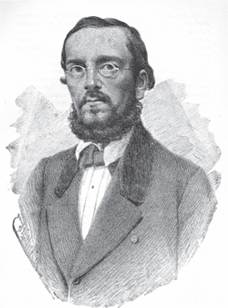
28.5 Mykola Kostomarov (1817-1885), historian, professor, poet, and proponent of a Ukrainian national renaissance within the context of all Slavic peoples.
Among intellectuals in Ukraine were some who were exposed to the Romantic movement that by the outset of the nineteenth century had come to dominate thought throughout much of the European continent. Romantics were inspired by the idea of uniqueness and the belief that each culture in the world had its own particular genius which was worthy of preservation for and propagation by future generations. It was also at this time, in the 1810s, that intellectual circles in Kharkiv proposed a new name to describe the majority East Slavic population of Ukraine. The traditional ethnonym from medieval Kievan times, Rus’, had been replaced by the Russian government with the designation Malorosy, or Little Russians. This official designation of the imperial authorities and intellectual establishment implied that Ukrainians were only a branch of a more encompassing common Russian (obshcherusskii) nationality that consisted of Great Russians, White Russians, and Little Russians. In response, Ukrainian activists and those who sympathized with the Romantic principle of differentiation argued that Ukrainians comprised a distinct people worthy to have its own national identity (to be called Ukrainian) and its own literary language (Ukrainian, not any kind of “Little Russian dialect”).
Throughout the entire period of Russian imperial rule during the long nineteenth century, a small group of ethnic Ukrainian patriots, known as the nationalist intelligentsia, tried to promote the “Ukrainian idea” in Dnieper Ukraine. To this end, figures like Ivan Kotliarevs’kyi, Mykhailo Maksymovych, Taras Shevchenko, Mykola Kostomarov, Panteleimon Kulish, Mykhailo Drahomanov, Lesia Ukraïnka and a host of other “national awakeners” collected and published the linguistic and folkloric heritage of their people, published poetry and prose, wrote plays and operas, and established organizations and journals.
By the outset of the twentieth century they were even able to form, however short-lived, political parties and parliamentary coalitions.
28.6 Panteleimon Kulish (1819-1897), historian, ethnographer, and popular Ukrainian novelist.
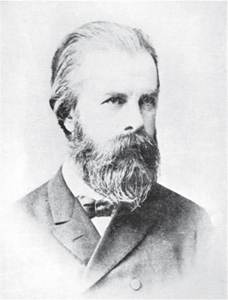
28.7 Mykhailo Drahomanov (1841-1895), political thinker, historian, professor, and civic activist of behalf of Ukrainian movement at home and abroad.
Whereas initially the Russian imperial government tolerated and even encouraged what it called “Little Russian patriotism,” after 1845 it became increasingly concerned with what was by then being called “Ukrainian separatism.” Most of leading lights of the Russian secular intellectual elite as well as the Orthodox Church rejected the idea that Ukrainians formed a distinct nationality, and such views contributed to an atmosphere in which the imperial government progressively outlawed publications in Ukrainian in 1863 and in 1876. Consequently, until the collapse of tsarist Russian rule during World War I, an awareness that Ukrainians might form a nationality with their own literary language was absent among the vast majority of the population and was limited to only the nationally patriotic intelligentsia.

28.8 Lesia Ukrainka (b. Larysa Kosach, 1871-1913), prolific writer and translator best known for her inspiring lyric and dramatic poetry. Russians
Numerically the second largest group of people in Dnieper Ukraine in 1897 were the Russians, who counted 2.9 million persons or 12.4 percent of the region’s population. The settlement of Russians from the north began already in the second half of the seventeenth and early eighteenth centuries, when Russian nobles and high-ranking military officers arrived in the Muscovite-controlled Left Bank and brought with them peasants to work on their landed estates. Most of these early Russian settlers eventually assimilated with the local ethnic Ukrainian population.
Among the earliest Russian settlers were also Orthodox traditionalists known as Old Believers (starovery/staroobriadtsy), who first settled in the 1660s near Starodub in the old Hetmanate (northern Chernihiv province) and from there moved on to southern Ukraine (Kherson and Taurida) and to southern Bessarabia, where they were known as Lipovany. The Old Believers, who at the beginning of the twentieth century numbered over 166,000 in the Dnieper Ukraine, maintained their Russian language and old Orthodox traditions and avoided contact with ethnic Ukrainians and others among whom they lived. Much larger numbers of Russians, who were to retain both their language and national identity, arrived in the steppe provinces (Kherson, Katerynoslav, and Taurida) and the Crimean Peninsula after those territories were annexed to the Russian Empire at the end of the eighteenth century. Finally, during the second half of the nineteenth century, when heavy industry was being developed in the rapidly growing urban areas of the Donbas (parts of Kharkiv and Katerynoslav provinces), Russian workers were brought in from the north as factory laborers and miners. In these areas they still today form a substantial portion of the workforce.

28.9 Nikolai Gogol (Ukrainian: Mykola Hohol, 1809-1852), depicted in a portrait by A. Ivanov (1841), considered one of the greatest writers in 19th-century Russian literature, was a patriot who wrote numerous stories on Ukrainian themes, including the enormously popular tale about the Zaporozhian Cossacks, Taras Bulba (1835).
Consequently, most of Dnieper Ukraine’s cities became Russian, not simply because they were administrative centers of the Russian Empire but because they were inhabited by ethnic Russians. By 1897 ethnic Russians made up the largest proportion (34 percent) of Dnieper Ukraine’s urban inhabitants. They were particularly well represented in the largest cities: Odessa (51 percent), Kiev (54 percent), Kharkiv (63 percent), Katerynoslav (42 percent), and Mykolaiv (66 percent). Dnieper Ukraine was the home and, in some cases the birthplace as well, of several writers (Nikolai Gogol, Vladimir Korolenko, and Nikolai Leskov), artists (Ilia Repin, Ivan Aivazovskii, Kazimir Malevich, Aleksander Archipenko, and Mikhail Vrubel), composers (Reinhold Glière and Sergei Prokofiev), humanities scholars (Timofei Florinskii and Mikhail Rostovtsev), and philosophers (Nikolai Berdiaiev) who, whether or not they were ethnic Russians, were associated with some of the greatest achievements of Russian culture during the “long” nineteenth century and the immediate decades that followed.

28.10 Russia’s leading 19th-century historical realist painter, the Ukrainian-born Illia Repin (1844-1930), used themes from his native land, such as The Zaporozhian Cossacks Writing a Letter to the Turkish Sultan (1880-91).
This was also a time when many of the leading lights of pre-revolutionary Russian imperial life developed a special love and affinity for Little Russia / Ukraine. Some Russians, like the philologist Izmail Sreznevskii, helped to stimulate among Ukrainians an appreciation for the uniqueness of their own culture and language. Others were less interested in Ukraine as the homeland of a distinct people, but rather as a special place within the larger Russian Empire. This was, in particular, the attitude of Russians who themselves owned family estates or who visited the estates of their relatives in Dnieper Ukraine. There they spent their summer holidays in peaceful rural settings served by local “Little Russian” peasants, whose loyal service made possible a leisurely and cultured environment in much the same way that slave labor allowed for a similar way of life for “white folk” in the antebellum United States. Therefore, Ukraine became a source of inspiration and, even more often, nostalgia for individuals like the composer Petr Il’ich Chaikovskii (a descendant of the Zaporozhian Cossack family Chaika), the statesman Nikolai P. Ignatiev, and the literary scholar Dmitrii Mirskii, not to mention a whole host of lesserknown aristocratic families and their descendants who, after the Bolshevik Revolution, were to preserve memories of Little Russia from their exile in various parts of the world. Whether they worked the land as serfs and state peasants or were urban-based laborers, artisans, merchants, and administrators, Russians felt fully at ease in what for them was their homeland—Little Russia—an indivisible part of “Mother Russia.”

28.11 Some Russians could never accept that “Little Russia” might have a separate national existence. Title page from a historical tract denying the existence of Ukraine, published in 1920 in Italy (Russian and English editions) by the antiBolshevik emigre Prince Aleksander Volkonskii. Jews
Despite the periodic attacks against Jews during the Khmel’nyts’kyi era in the mid-seventeenth century and during the haidamak revolts of the eighteenth century, Dnieper Ukraine continued to be a homeland for Jews. Their numbers in the course of the nineteenth century increased tenfold, from about 200,000 in the 1790s to over 1.9 million in 1897. By the latter date Jews on average represented 8.5 percent of the population of Dnieper Ukraine, although their geographic distribution was very uneven. Nearly three-fifths (1.2 million) lived in the Right Bank provinces (Kiev, Volhynia, and Podolia) of former Poland-Lithuania. In fact, the tsarist government tried to restrict Jews within its empire to reside only in those territories that had once been part of Poland-Lithuania. This area came to be known in Jewish literature as the Pale of Settlement, which included among others all the provinces of Dnieper Ukraine with the exception of Kharkiv.

28.12 Shalom/Sholem Aleichem (b. Shalom Rabino-vitz, 1859-1916), Yiddish author whose childhood years in the Ukrainian village of Voronkiv, near Pereiaslav, inspired his Jewish tales of shtetl life, made famous in North America in the Broadway musical, Fiddler on the Roof.
Wherever they lived, Jews were primarily an urban population. Actually, two-thirds of all Jews in Dnieper Ukraine lived in very small towns (with a minimum of 1,000 inhabitants), where they formed a particularly dominant element. Among larger towns and cities, those with the largest percentage of Jewish inhabitants in 1900 were Berdychiv (78 percent), Uman’ (59 percent), Balta (57 percent), Rivne (56 percent), Mohyliv-Podils’kyi (55 percent), Khmel’nyts’kyi/Proskuriv (50 percent), Kamianets’-Podil’s’kyi (49 percent), Zhytomyr (47 percent), Vinnytsia (38 percent), and Odessa (34 percent). Jews were engaged primarily in trade, banking, and industry and in operating small shops and businesses. They were especially well represented in certain industries in which they formed the majority of owners, such as alcohol distilleries (43 percent in 1872), sawmills (57 percent), and tobacco processing (49 percent). By the 1890s one-quarter of all sugar refined in the Russian Empire was carried out in factories owned by the Kiev industrialist and Jewish philanthropist, Israel Brodski and his sons, Lazar and Lev Brodski.
In the small towns and villages, Jews lived voluntarily in specific districts or sub-communities that they called shtetls. There they were able to create an atmosphere characterized by, first, humaneness, where economic and psychological support could be found on a daily basis and in times of crisis, and secondly, Jewishness, that is, a public and private religious environment in which to sustain one’s faith and identity within a larger Christian world. This world was lost forever after 1914, but immortalized in the humorous short stories of the Jewish writer from Pereiaslav, Shalom Aleichem.

28.13 Baal Shem Tov, the Master of the Divine Name (b. Israel ben Eliezer, ca. 1700-1760), founder of Hasidic Judaism.
The vast majority of Jews in Dnieper Ukraine, as in other parts of eastern and central Europe, were Ashkenazim. That is, they were of central European origin and spoke a Germanic dialect called Yiddish. This was in contrast to the Sephardim, or Sephardic Jews from the Mediterranean world, who spoke Ladino, a form of archaic Spanish heavily influenced by Hebrew and Aramaic. There were only a few Sephardic Jews in Dnieper Ukraine, mostly in Crimea.

28.14 Jewish pogrom victims in Katerynoslav, as depicted in a postcard (in German) issued by a socialist and Zionist society in the Russian Empire.
The Right Bank was very important in the general history of Ashkenazic Jewry. After the Khmel’nyts’kyi period it was the home of Shabbateanism, a belief in the eminent return of the Messiah (allegedly in the person of Shabbatai Zevi). Somewhat later the social and psychic instability of the post-Haidamak era set the stage for the birth of Hasidism. Founded in Podolia by Israel ben Eliezer (the Baal Shem Tov), Hasidism is a mystical movement that encourages joyous religious expression in music and dance as opposed to the more formal rabbinic tradition based on the study and application to daily life of the Talmud (the authoritative book of Jewish law and tradition). Hasidism was to become an important variety of Judaism among the Jews not only of Ukraine but of Eastern Europe in general.
Jewish cultural life in the Dnieper Ukraine and elsewhere in eastern Europe was also marked by a conflict over language. Some Jewish intellectuals felt that only the liturgical language, Hebrew, was worthily of representing Jewish culture; others argued that Yiddish, the spoken vernacular of Ashkenazic Jews, should be codified into a literary language. Among the important promoters of Yiddish in Dnieper Ukraine were the ethnographer Sh. An-Ski and the writer Shalom Aleichem.
The second half of the nineteenth century saw the rise of anti-Jewish attacks called pogroms. The first relatively small-scale pogroms occurred in the Dnieper Ukraine in the early 1880s. A larger wave of pogroms took place between 1903 and 1906, beginning in the Moldovian town of Chişinaŭ (Russian: Kishinev) in the province of Bessarabia, but then spreading to the Dnieper Ukraine, in particular to Zhytomyr, Odessa, and Katerynoslav (today Dnipropetrovs’k). Organized by Russian right-wing monarchist organizations, this second wave of pogroms contributed to what had already begun in the 1880s—the large-scale emigration of Jews from the Russian Empire, most especially to the northeastern United States. Despite the pogroms and the efforts of Zionists to convince Jews to emigrate to Palestine—not to mention the attractiveness of America for the large number of poor Jews—the vast majority remained at home, where they continued to play an important role in the economic life of Dnieper Ukraine. Germans and Mennonites
By 1897 just over half a million Germans and Mennonites lived in Dnieper Ukraine, where they were concentrated in two areas: the Steppe Ukraine north of the Black Sea and in the province of Volhynia. Although individual Germans were invited to Ukraine’s cities as early as the medieval period, large-scale immigration and the creation of compact German communities, all in rural areas, was the result of two decrees issued by the Russian imperial government (in 1763 and 1804). Response to the first decree came largely from Mennonites, who by the early 1790s settled in the very center of Zaporozhia, specifically at the site of the first Cosssack sich on Khortytsia Island and the surrounding area. The second decree saw larger-scale emigration from German states (Baden, Württemberg, and the Rhine Palatinate) and Alsace, which had been heavily affected by the Napoleonic wars. These Germans included Roman Catholics, Protestants (Evangelical Lutherans), and Mennonites, who settled primarily in the provinces of Kherson, Katerynoslav, and Taurida (north of the Crimean Peninsula). In those three provinces their number reached 283,000 by 1897 and 489,000 on the eve of World War I. In Volhynia, German settlement (mostly Evangelical Lutherans) dates from the 1860s and 1880s. By 1897 the number of Volhynian Germans had reached 171,000.

28.15 German-language girls’ school on Khortytsia Island, the former center of the Zaporozhian Cossacks.
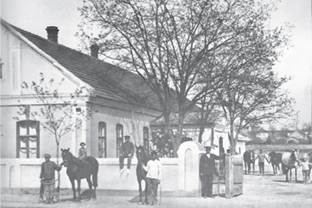
28.16 Typical German rural homestead in Dnieper Ukraine.
The Germans and Mennonites were welcomed by the Russian imperial government for their skills in agriculture. Therefore, they settled almost exclusively in undeveloped rural areas, where their compact communities became models of farming and husbandry techniques. Living a life virtually apart from other inhabitants of Dnieper Ukraine, the German and Mennonite communities had the right to self-government, their own German-language schools and churches, special tax privileges, and (until 1871) they were exempt from military service. The Mennonites, who previously had been a persecuted religious minority in the Netherlands and northern Germany, were particularly grateful to tsarist Russian rule which allowed them to build “a state within a state,” what their literature describes in positive terms as a virtual Mennonite Commonwealth. Despite restrictions imposed in the 1870s and 1880s, which led to some immigration abroad, German and Mennonite communities continued to flourish in Dnieper Ukraine until the outbreak of World War I. Poles
In 1897 Poles numbered 406,000, or perhaps over 650,000, if Roman Catholic religion were used as a criterion for identity. Nearly 80 percent (322,000) were concentrated in Dnieper Ukraine’s Right Bank provinces—Kiev, Volhynia, and Podolia—which were annexed by the Russian Empire as a result of Polish partitions of 1793 and 1795 (see Map 25). Initially, the tsarist government treated Poles quite favorably. Polish nobles (szlachta) were immediately granted the status of Russian nobility (dvorianstvo), which together with polonized Ukrainian szlachta accounted for near 260,000 persons. It is true that the vast majority of these titular nobles held no land, but about 30,000 were quite wealthy and it was they who continued to form the social and economic elite of Right Bank society. The Polish school system under the leadership of the Pole, Prince Adam Czartoryski, was left intact, and Dnieper Ukraine remained the home of the important secondary school (lyceum) for the sons of Polish nobility. Located at Kremenets’, the presence of the school helped the town to become known as the “Volhynian Athens.” The political and social influence formerly enjoyed by the Roman Catholic Church was largely diminished by the Russian imperial government, and only the diocese of Zhytomyr (until 1866) was left to administer the Right Bank Poles. Local parishes were, however, basically left undisturbed. Their continued use of the Polish language (other than Latin for the liturgy) helped to preserve a sense of Polish identity, most especially among the group’s rural inhabitants.

28.17 The Polish-language Volhynian Liceum, established in 1805 at Kremenets’.
The Polish presence was most evident in the Right Bank countryside, where well-to-do nobles continued to operate their large manorial estates (latifundia) much as they had done when Dnieper Ukraine was part of the Polish-Lithuanian Commonwealth. The nobles also employed both Polish and Ukrainian serfs in the factories that they owned, especially those engaged in sugar processing.

28.18 The Roman Catholic Church in Kiev, symbol of a Polish presence still very much in evidence in 19th-century Dnieper Ukraine’s main city; drawing by Taras Shevchenko, 1846.
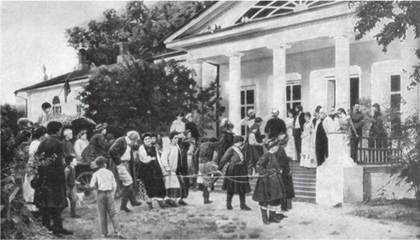
28.19 Polish landowning gentry receiving Ukrainian peasants before the manor house, depicted in a painting (1881) by Mykola Bodarevs’kyi.
Despite their relatively favorable treatment, Polish-language schools such as those in Kremenets’ and the Polish university at Vilnius soon became transformed into seedbed of revolutionary activity. Poles in Russia’s western provinces revolted twice, in 1830-1831 and again in 1863, as a result of which several Polish-owned estates were confiscated and the school system reduced in size and russified. Despite such setbacks, the Polish nobility remained a dominant socioeconomic force in the Right Bank, where as late as 1914 they still owned 46 percent of all private landholdings. It was on the provincial estates of Dnieper Ukraine that some of the most creative elements of nineteenth-century Polish culture were born and raised, or where they lived and found creative inspiration. They included the leading Polish Romantic poet and dramatist Juliusz Slowacki and all three members of the socalled Ukrainian school of Polish literature, Michal Czajkowski, Jozef Bohdan Zaleski, and Michal Grabowski; the musicians and composers Juliusz Zaremski, Ignacy Jan Paderewski, and Karol Szymanowski; the avant-garde painter Kazimir Malevich, and the architect Leszek Dezidery Gorodecki (Vladyslav Horodets’kyi), whose buildings continue to grace the streets of Ukraine’s capital city. Some of these creative artists were drawn to Kiev, which despite only a small number of Poles (10.8 percent of the city in 1910) could boast its own Polish schools, theater, publishing houses, cultural societies, sports clubs, and legal and illegal political societies.

28.20 Jozef Bohdan Zaleski (1802-1886), Polish poet and revolutionary born in Kiev province whose idyllic poems written in exile recalled his childhood in Ukraine and its Cossack past. Crimean Tatars
Like the Poles, the Tatars were associated with a state structure that had ruled a significant portion of Ukrainian territory until the Crimean Khanate was dissolved and annexed by the Russian Empire in 1783. Despite the Khanate’s extent along the northern shores of the Black Sea and the Sea of Azov, most Tatars lived on the Crimean Peninsula. Fearing the onset of tsarist rule, Crimean Tatars began to emigrate en masse to the Ottoman Empire. The initial wave that left in the 1780s numbered 80,000, followed by tens of thousands more in the first decades of the nineteenth century and in the wake of the Crimean War (1853-1855). As a result of emigration and the subsequent influx of Ukrainian and mostly Russian settlers, the proportion of Tatars in the Crimea dropped steadily: from 90 percent of the population in 1783, to 60 percent in 1854, to 34 percent in 1897. In that last year the Crimea had 188,000 Tatars, which represented 85 percent of all Tatars who lived in the Dnieper Ukraine.

28.21 The palace of the khans in Bakhchesarai, ca. 1800.
At the outset of the nineteenth century, the vast majority of the Tatar populace was composed of free peasants (88 percent), followed by clergy (5 percent) and nomadic Nogays (5 percent). Under Russian rule Tatar peasants were enserfed until 1861, while the small Tatar landowning elite stratum (mirza) was given the option—and most accepted— to enter the Russian nobility (dvorianstvo). The Islamic Tatar cultural landscape of the peninsula also suffered as many of the monuments connected with the Crimean Khanate were destroyed, left in ruins, or remade into Orthodox churches.
In part as a reaction to such developments, the Crimea in the 1880s became a birthplace of national awakening for all Tatars throughout the Russian Empire. Led by Ismail Bey Gaspirali, the national awakening called for the secularization of Tatar society (including the emancipation of women), the modernization of the educational system, and the adoption of the Turkish language for written communication. This last goal prompted a debate about national identity. In other words, did the Crimean Tatars form a distinct nationality worthy to have its own literary language, or were they a branch of a single pan-Turkish people? Debates over Crimean Tatar particularism versus pan-Turkism were to continue within Tatar intellectual and political circles until the end of Russian imperial rule and beyond.

28.22 Typical Tatar cafe in 19th-century Bakhchesarai, depicted in a drawing by Raffe, 1837. Other Peoples
Among the other peoples living in Dnieper Ukraine, some like the Greeks of Odessa, the Crimea, and the Azov sea coastal areas and the Czechs of Volhynia developed civic and cultural organizations, which helped to preserve their distinct identities. The Bulgarians, who were welcomed into the Russian Empire between the 1770s and 1870s, settled in farming communities along the shores of the Sea of Azov and the southern Bessarabia. As a group they had their own local administrative organs, churches under Bulgarian Orthodox jurisdiction, and Bulgarian-language elementary and secondary schools. Others, like the Belarusans spread throughout urban areas and the Romanians living in the rural areas of southern Podolia and Kherson did not establish a distinct community life (e.g., with organizations and publications) but tended to live in relative isolation in their rural communities or (in the case of Belarusans) in urban areas.

28.23 Ismail Bey Gaspirali (1851-1914), Crimean Tatar writer, educator, and in 1883 founding publisher of Tercuman, the first Turkic-language journal in the Crimea.
MAP 29 UKRAINIAN LANDS IN THE AUSTRIAN EMPIRE, 1772-1815

More on the topic 28 The Peoples of Dnieper Ukraine in the Nineteenth Century:
- Imperial expansion and medical pessimism in the nineteenth century
- Ancient Peoples of West Africa
- Chapter 3 Vikings on the Dnieper
- OUN-UPA in 21st Century Ukraine
- Contextual backgrounds and necessary clarifications
- Franciszek Duchinski and His Impact on Ukrainian Political Thought
- Polish-Ukrainian Relations: The Burden of History
- THE ALLIES’ ANTI-RUSSIAN PROPAGANDA
- The Greek and the unGreek, 1830–1920
- Ukrainian Cities in the Nineteenth Century