DIGITAL DILEMMAS
At the present, financial institutions and marketplace lenders should confront the dilemmas they can solve. Tackling complexity in the financial sector right out of the gate will be too ambitious a goal, and being aware of the challenge ahead might be enough for the time being.
Digital dilemmas on the road forward face in both directions: they matter for the established banking sector, as well as the newly emerging FinTech companies. Both need to incorporate those parts of the business models of their competitors that are strongest and use them as the baseline for innovation.Even though interactions between parties in the economy are also physical, we believe these dilemmas are mostly digital, and technology can solve them for the most part. Therefore, the first order of action for banks and FinTech companies boils down to formulating a digital strategy. We will first start with the questions surrounding digital strategy and the digital dilemmas for competitors in financial services.6 Without answering them definitively, the dilemmas we focus on here are:
Dilemma 1: Disrupt or defend?
Dilemma 2: Cooperate or compete?
Dilemma 3: Diversify or concentrate?
Dilemma 4: Keep digital businesses separate or integrate them?
Dilemma 5: Buy or sell businesses in the portfolio?
In the rest of this chapter, we will visit each dilemma and examine how it relates to banks and to FinTech companies, in particular marketplace lenders. Figure 14.3 summarizes the digital dilemmas and their focus.
14.2.1 Dilemma 1: Disrupt or defend?
When the market leaders in offline retail commerce were afraid around the millennium of “getting Amazoned” by new online competitors, some retailers started a mad rush to leapfrog into the internet age. However, the line between a disruptive and a defensive strategy is
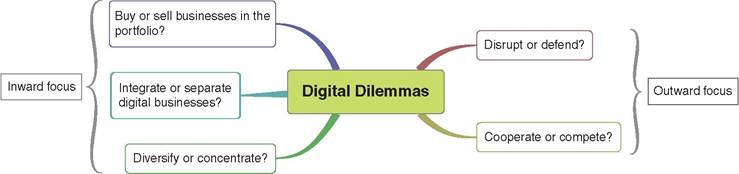
FIGURE 14.3 Digital dilemmas for competitors in financial services
seldom so clear.
For established banks, adopting a disruptive strategy is easier said than done. Their internal processes are often at odds with taking risky bets on unproven technology. Regulations and high legacy overheads lock banks into a conservative stance, whereas tech startups with nimble teams have more freedom to experiment. Venture capital firms who back tech companies understand that their investment may be a total write off, so they encourage startups to swing for the fences. By ducking any form of red tape and taking wild bets with frequent experiments, the expected payoff is large. Regardless, new ventures cannot remain in the startup phase forever. Their business models will have to mature at some point, and they will have to comply with regulations and laws governing the sector in which they compete. “Disrupt or defend” is just a starting point to frame the discussion about strategy. Especially in a sector such as banking that is already highly technical and highly regulated, we need to consider several gray areas instead of choosing between black or white.It makes sense for banks to defend their stance when they are under attack—at least for a while. They can invest in new technologies and digital channels and upgrade their traditional channels at the same time, such as by trying out new formats for their branches or using their ATMs to sell additional services. However, disruption of their existing business model may be a valid option for banks as well, especially for smaller banks without strong brand recognition. When they launch their own disruptive pilot projects, they may find that these projects are so successful that they cannibalize the traditional operations of the bank. At this point, a bank may choose to rebrand itself, wind down their traditional operations, and fully focus on its digital operations.
Marketplace lending platforms are by definition disruptive. Their digital dilemma therefore works in the other direction than that for banks: while banks may wish to operate more in the digital realm, marketplace lenders may feel the pressure to boost their physical presence.
Most people believe that bank branches are a thing of the past, and they may well be—for established banks. In the same way that Apple stores have helped the brand improve its mass appeal, large online lenders may want to expand their physical footprint and position themselves more like banks with physical stores. These might not be branches in the traditional sense, but stores that resemble information booths, genius bars, or cafes. Some banks are already experimenting with new branch concepts that focus more on information, and less on transaction.7 It is possible that online lenders will do the same. In this case, the digital dilemma for online lenders will be whether to make the leap from bits to bricks by investing in physical storefronts and sales staff.14.2.2 Dilemma 2: Cooperate or compete?
In the UK, under the Small Business, Enterprise and Employment Bill, banks that reject loan applications from SMEs must refer them to online lending platforms.8 Several banks have announced collaborations and partnerships with marketplace lending platforms, such as bank Santander and Royal Bank of Scotland (RBS).9,10 Despite a law telling them to do so, it may be in the interest of banks to cooperate with marketplace lenders by their own volition. Online lending is not just subprime lending by default.
An example of this kind of cooperation might be funding for entrepreneurs. After entrepreneurs have become wealthy by graduating to successful business owners, most banks will happily welcome them as clients. Conversely, the situation for entrepreneurs without a track record is entirely different. To build the trust of business owners earlier, banks—and private banks in particular—may find it sensible to partner with an online platform that can secure funding for early stage companies from private individuals. As an advisor, the bank may simply provide support for both parties in deal making without lending capital itself. The bank provides a service to wealthy individuals who might wish to invest directly in promising startups, and it also gets on the good side of entrepreneurs, who might enlist it when their companies need later stage funding or when they go public.
Such a partnership costs relatively little, and it may be a good investment in the long run for a bank. It would also help the marketplace lender because the tie-up with a bank would lend immediate credibility to its services. Entrepreneurs would be happy, too: they would get into the pipeline for larger funding later down the road right at the beginning.For the time being, banks often frame the discussion about FinTech in terms of a fragmented marketplace, where FinTech companies occupy a niche in the sector, and the banks dominate the most lucrative parts. The argument that the provision of this or that service is “not what we do” is still the common answer we hear when we broach the subject with banks. The dilemma for banks is that they fail to see an advantage in cooperating with online lending platforms—or other FinTech startups, for that matter. Most banks prefer to keep FinTech companies at arm's length, unless the partnership results in immediate process optimization. However, banks will profit in the long term when they can begin to see themselves not only as buyers of FinTech startups, but also as providers of services and knowledge to them. Even though banks often have bigger guns than startups in marketplace lending and could fight them relatively easily, they may choose to cooperate. Running a seed accelerator for startups is hardly the core competency for most banks. If they outsource a seed program to a FinTech startup, banks can access new customers or offer new services to their existing client base.
Cooperate or compete is an important digital dilemma that banks face, not only in the digital space. Regardless, this dilemma is perhaps more important for FinTech companies. Even though many of them rely on services provided by banks somewhere in their value chain, most of them have little interest in integrating with banking operations. When they provide sustaining innovation, they might be more aligned with how banks think and operate, and the gap might not be as big.
But for those disruptive FinTech entrepreneurs who offer financial services that banks have difficulty understanding, there exists a chasm between the two worlds.A difference in corporate culture is just one issue: it is of course much cooler to work with a small creative team in a loft in the Mission District in San Francisco than having to succumb to dress code and adhering to business hours in the cavernous back office of a bank. For many entrepreneurs, more important than a big paycheck is launching their own company and making an impact. The feeling of being a maverick, a game changer, is something that only true entrepreneurship can provide, warts and all. Sure, it helps if there is a billion-dollar payoff at the end, but even without it, most entrepreneurs will not want to miss the experience. Banks have nothing to offer in this regard, and they seem terribly unattractive to entrepreneurial spirits. At the same time, if banks can provide ways for entrepreneurs to innovate in-house, entrepreneurs might see benefits from cooperations more readily. The services of a FinTech startup that partnered with a large bank would enjoy an immediate boost in credibility, and their reach might be much bigger if they can tap into the large customer base of an existing network. The infrastructure for cooperations between startups and banks is still missing, but if banks reached out to entrepreneurs more actively, both sides may benefit.
For marketplace lenders, the question of whether to cooperate or not extends to partners other than banks. When online lending comes of age, regulators will demand cooperation without an option to opt out. Even though there are several regulations in place for marketplace lenders, such as money laundering rules and regulations that prevent misselling to the public, the sector has still nowhere near the regulatory overhead that established credit institutions grapple with. Going up against regulators has proven a bad strategy for marketplace lenders.
For instance, lending platform Prosper, the first of its kind in the United States, chose to challenge regulators in its early days.11 Whether this is the reason it ceded its leadership position to Lending Club is up for debate. The fact is that Lending Club cooperated with regulators early on and plans to keep doing so. This seems to be a winning strategy that triumphs over confrontation, at least in marketplace lending.14.2.3 Dilemma 3: Diversify or concentrate?
When a bank makes the decision to enter a new field, it faces the next dilemma: to diversify across several initiatives or concentrate resources on one venture. The decision to start a corporate venture is often stretching the comfort zone of a bank. Therefore, suggesting that a bank start several FinTech initiatives at the same time will require from the bank a lot of trust in the team leading these ventures. Diversification can reduce risk, but the payoff is that the bank will have fewer resources available per venture. Especially when they are moon-shot ideas that might take a long time to mature; the key to success is a long runway. To come up with a real game changer, a bank should allocate enough time, money, and human resources with strong leadership qualities to a project. For example, the Australian bank Westpac unveiled its mobile strategy in 2012 that included several small projects that it launched at the same time. When some of them took off, it integrated them in a digital platform and focused its investments.12
While diversification reduces the risk of a portfolio, some successful investors recommend putting all of one's eggs in one basket and watching that basket carefully. The same applies to digital strategy: venture capitalists seed multiple ventures and then double down on those with the most potential. Banks should follow the same model, funding several digital innovations at the same time. When some of them show promise, banks should focus more capital on the winners to scale their operations.
The first part of this decision—diversifying their digital initiatives—is already under way in some banks. They fund FinTech platforms and innovation labs and thereby keep their digital competitors close. However, seriously scaling up those ideas that bubble to the top still runs into problems, for several reasons. One of them is that new ideas often take years to develop their potential. To request proof-of-concept within a few months is unrealistic, yet it is how most FinTech accelerators and innovation labs function. Banks will need to take a much longer view on their technology initiatives to be able to spot the next disruptive trends. When they have supported a new idea over the longer term, they are in an excellent position to scale it up when it shows signs of success in the market. If they demand quick results and abandon those entrepreneurs that don't fit in the current paradigm, they will alienate the innovators with truly disruptive potential. These innovators are the ones that will unseat banks in the longer term, and they will remember it if banks have pulled the rug from underneath them.
Instead of diversifying, banks could also concentrate their efforts on just a few digital initiatives. However, it is unlikely that one digital idea is so strong that it warrants all the attention and resources of a bank. Diversifying digital strategy therefore often makes much sense. However, banks need to be aware that they can no longer remain passive investors in new ideas. They need to take an active part in implementing these ideas in the marketplace. For this to be successful, they need to build entrepreneurial competencies in leading digital projects on the ground. This competency is still sorely lacking at banks. Attracting the talent in the first place that allows banks to diversify across several digital initiatives is yet another challenge they face.
The question of diversification vs. concentration matters less to FinTech companies, at least in their current iteration. By definition, being relatively young companies, their focus is narrow, and they will lack the resources to diversify their efforts across several projects at the same time. However, they might want to consider several options within one overarching idea. For example, there are different ways to acquire new customers, some of which might include collaborations with established banks. FinTech companies should diversify not across projects, but across strategies for business models, marketing and business development. When they have grown past the startup stage and it is time to diversify their product offering, they may drive a similar strategy as banks that spin off products into new verticals instead of keeping them under the same umbrella. Nonetheless, once FinTech companies expand past their core competency, they risk giving up their advantage of being nimble and agile.
14.2.4 Dilemma 4: Keep digital businesses separate or integrate them?
One goal of banks in their digital strategy is to provide multiple channels of interaction to their customers. By integrating a digital operation that they have purchased or developed, banks can multiply their communication channels quickly. For example, Lloyds Banking Group integrated digital initiatives in its traditional business, but the rest of the group kept new technologies separate in a digital hub that improved the customer experience.13 On the other hand, Banco Bilbao Vizcaya Argentaria (BBVA) decided against integrating into its existing operations the online bank Simple, which it had acquired. Instead, BBVA runs Simple as a test lab to better understand the behavior of digital banking customers.14
Some banks integrate their digital initiatives into their traditional business. This is often the best scenario for customers, as they have access to several services on one platform. Other banks completely separate their digital businesses from their established operations. They may launch them under different names or are simply standing on the sidelines as investors. Both approaches work. However, in the long run, the traditional banking model will inevitably pivot towards a more digital experience, so integration makes sense when technologies have proven to add value for the customers of banks.
The dilemma of separating digital initiatives from more traditional operations will require care, especially when the continuity of a well-established banking brand is at stake. When starting initiatives in marketplace lending, banks can run a platform as a separate entity, whilst providing the same backend services, analytics, and risk management that they already use for their other loan portfolios. This way, banks can optimize their learning about customer behavior in a new sector, enabling them to understand first-hand how marketplace lending might be useful in their other lending operations. At the same time, banks are in a strong position to provide a superior service over other platforms. They already have a multimillion- dollar infrastructure in place that could support marketplace lending operations. The dilemma of separation vs. integration need hardly be a tough one to solve; banks could integrate new digital services into their existing operations on a sliding scale.
14.2.5 Dilemma 5: Buy or sell businesses in the portfolio?
Different segments of the financial sector are undergoing a digital transformation at different times. When faced with the need to upgrade their operations with digital capabilities, some banks invest heavily in their own infrastructure or in the acquisition of potential attackers. Other banks decide to shed those business units most in need of revamping. For example, a bank with a traditional lending operation may decide to move forward aggressively by launching their own marketplace lending initiatives or by backing existing platforms in the market. Alternatively, a bank may choose to jettison its small business lending operation altogether and focus on other segments as their core business. Where banks want to compete comes down to their long-term strategy and vision. Not every bank can and should try to please all possible customers—only key customers that are most important in the long run. Focusing on one specific segment may be more successful than juggling too many balls at the same time.
14.3
More on the topic DIGITAL DILEMMAS:
- Dialectics
- CONCLUSION
- THE FUTURE OF COMPETITION ON THE INTERNET
- Index
- Subject Index
- XAT 2010
- RISK REDUCTION BY MARKET SOLUTIONS AND GOVERNANCE CHOICE: OPPORTUNITIES AND LIMITATIONS
- The indeterminate mapping from economic principles to institutional arrangements
- Privatization and deregulation