Strong Emergence Doesn’t Work
Most physicists are confident strong emergence doesn’t exist. The reason is not only that there isn’t any known example for it but that, more importantly, if there was an example if would be incompatible with that they already know.
And physicists know what they know with high confidence.The argument—which I have made myself many times—goes like this. We know stuff is made of smaller stuff. We know this simply because it describes what we see. It’s extremely well-established empirical knowledge and rather idiotic to deny. No one has managed to cut open a frog and not find atoms.
Yes, It is interesting to ponder how it could have been any different, how it could possibly make sense that small stuff is made of larger stuff. The reason our universe doesn’t work this way is intricately linked with the ability of matter to occupy space and hence with space itself, something that—I admit—we don’t fully understand. Be that as it may, we have no working theory for building small things from large things. It doesn’t describe what we see. For all we know, stuff is made of smaller stuff.
This by itself, however, does not tell us what happens to the laws of the stuff. But for this, physicists have a mathematical framework called effective field theory; it tells us what happens with the laws if we join small things to large things.
It is worth emphasizing that effective field theories are a fairly recent development in the history of science. The idea has its roots in the 1950s, but key elements were only added in the 1990s (see e.g. [6] and references therein). It is still an active area of research, and I consider it origin of a paradigm shift that went largely unnoticed. I am emphasizing this because it means any discussion about emergence that predates or does not consider effective field theories is redundant.
Effective field theories are game changers because it used to be thought that theories which cease to work at high resolution (are “non-renormalizable”) are sick and cannot be correct as more fundamental theories.
The modern way to think of them, in contrast, is that they may be approximations to the fundamental theory but that they must completed. The paradigm change here is that a (correct) candidate for a fundamental theory might not reveal itself at first sight; indeed many theories which look wrong—because they break down at some resolution—are compatible with an underlying theory that is perfectly healthy. They can thus be weakly emergent from a fundamental theory. The previously mentioned Fermi-theory of the weak interaction is such a case: It is non-renormalizable (“sick”) but can be completed by a renormalizable (“healthy”) theory.Effective field theories work with quantum field theories, that is the type of theory that we presently use to describe nature at the highest resolution probed so far. The key equations of the framework (the “renormalization group equations”) connect a theory at high resolution with a theory at low resolution. That is, the theory at low resolution is always weakly emergent. It can be derived—at least in principle—from the theory at high resolution.
In practice the derivation of the low-resolution theory can only be done for simple systems, but from a philosophical standpoint this isn’t relevant. Relevant is merely that physicists do have equations that define the theory on low resolution from the theory at high resolution.
Effective field theories can fail [7] in the sense of methods becoming inapplicable, and there are certain theorems that can fail (such as the decoupling of scales), and there are some approximations that might become invalid (such as weak coupling), and so on. These are practical problems for sure. But in principle, none of this matters. Because even if we don’t know how to do a single calculation, the theory is still there. It doesn’t go away.
In principle, for example, we could use effective theories derived from the standard model plus general relativity to calculate, say, election outcomes. No one can do such a calculation, of course.
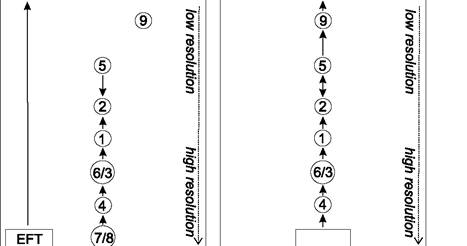
And even if we could it’s questionable we could finish the calculation before we have the election results. But since there isn’t any reason why the known theories should stop working, we must conclude that indeed human behavior is weakly emergent from the underlying quantum field theory. In other words, you are nothing but a bag of particles, and science has proved it.This is depicted in Fig. 3, left, where “EFT” stands for the effective field theories derived from a (presently) fundamental theory. We can use the known mathematical tools it to obtain the theory at low resolution from the theory at higher resolution. As per the assumption that no logical contradictions are allowed and two theories that make the same predictions are physically equivalent, this means all other theories
Fig. 3 Left: Effective field theories derived from one fundamental theory (EFT) remain valid at all resolution. Right: As a consequence, all other known theories must be compatible with the already known theories derived by use of EFT
EFT/7/8
either agree with the predictions from effective field theory (and are hence weakly emergent) or they are wrong. And that’s why there is no strong emergence.
The previous argument is a sloppy version of the philosophically more elaborate “causal exclusion argument” [8, 9] which, roughly speaking, says that if a low- resolution effect can be derived from a theory at higher resolution, then the effect cannot have another cause.
The causal exclusion argument combined with effective field theory is the main reason why physicists believe that reductionism is correct. Another reason for their confidence is the absence of any known example of strong emergence, i.e. a case in which the properties of a system at large scales are known to be not calculable from the underlying theory (Though there are certainly many examples in which they are not calculable by presently known methods).
One example that is supposedly a case of strong emergence which I sometimes hear is superconductivity. But there is no reason to think superconductivity is strongly emergent. It’s a novel feature that arises by the interaction of a system’s constituents and by that it’s entirely encoded in the system’s microscopic properties already. No behavior has ever been observed that would imply superconductors are incompatible with the standard model. If that was so, you’d have seen the headlines.
It is true that we have to date no good theory for high temperature superconductivity, but the reason for this is that high temperature superconductors are believed to be strongly coupled, i.e. perturbative methods fail. This is one of the above mentioned cases in which calculations become intractable, but that doesn’t mean the result of the calculation doesn’t exist.[XVIII]
There are two examples in which the problem of calculating a property of a composite condensed matter system has been identified with the halting problem in computer science by using suitably configured (if somewhat contrived) systems [10, 11]. If the calculation of an emergent feature has an undecidable outcome, this would constitute a cases of strong emergence. However, both of these examples rely on infinitely large systems and/or the thermodynamic limit. The statement then comes down to saying that for an infinitely large system certain properties cannot be calculated on a classical computer in finite time, which is probably correct but doesn’t teach us anything about reality.
4
More on the topic Strong Emergence Doesn’t Work:
- Strong Emergence Doesn’t Work
- Aguirre A., Foster B., Merali Z. (Eds.). What is Fundamental? Springer,2019. — 189 p., 2019
- The Maximum Principle: A First Look
- Why Be Concerned about Fallacies?
- What Did the Buddha Teach?
- References
- Codified Norm
- 8.2 RIGHTS AND HARMONY