In the philosophy of probability there are two central questions we are concerned with.
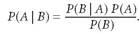
The first is: what is the correct formal theory of probability? Orthodoxy has it that Kolmogorov’s axioms are the correct axioms of probability. However, we shall see that there are good reasons to consider alternative axiom systems. The second central question is: what do probability statements mean? Are probabilities “out there” in the world, as frequencies, propensities, or some other objective feature of reality, or are probabilities “in the head,” as subjective degrees of belief? We will survey some of the answers that philosophers, mathematicians and physicists have given to these questions.
1.
Source:
Allhoff F.. Philosophies of the Sciences: A Guide. N.-Y.: Wiley-Blackwell,2010. — 386 p.. 2010
More on the topic In the philosophy of probability there are two central questions we are concerned with.:
- Allhoff F.. Philosophies of the Sciences: A Guide. N.-Y.: Wiley-Blackwell,2010. — 386 p., 2010
- UNITY OF SCIENCE AS A DICTATOR OF UNANIMITY ON ALL QUESTIONS
- C Different Meanings of Rationality; Different Solutions to Problems
- appendix: the role of corroboration IN POPPER’S PHILOSOPHY
- The Scientific Legitimacy of Mentalism?
- VAN FRAASSEN'S PRAGMATISM
- PERRIN AND REALISM
- Theory
- Level of Difficulty (LOD)—III
- TERRITORY AND CONFLICT: EMPIRICAL PATTERNS
-
Contemporary philosophical research -
Fundamentals of philosophy -
Logic -
Philosophy of Science and Technology -
Political philosophy -
Social philosophy -
-
Conflictology -
Ecology -
Economy -
Finance -
History -
Law -
Medicine -
Philosophy -
Religious studies -