Cowpox Virus Infection
Cowpox virus (CPXV), despite its name, is enzootic among wild rodents in Europe and Eurasia, but is infectious for humans, cattle, felids, and other hosts, including rats. Human exposure is most often contracted through infected cats, but recently, a number of human cases have arisen through contact with pet rats in Europe.
Natural infection of laboratory rats with CPXV, which at the time was termed Turkmenia rodent poxvirus, was reported in the former Soviet Union in the late 1970s. Clinical signs in rats were similar to ectro- melia virus in mice, and ranged from inapparent infections, dermal pox, and tail amputation to an acute pulmonary form with high mortality. There have been multiple documented reports of transmission of CPXV from rats to human and nonhuman primates. CPXV is an Orthopoxvirus that is genetically related to variola, vaccinia, and monkeypox viruses.Pathology
Experimental infection of laboratory rats demonstrated that intradermal or contact inoculation with CPXV generally resulted in mild dermal manifestations, characterized as vesiculopustular dermatitis. Intranasal inoculation resulted in severe dyspnea with peracute mortality. Histopathology revealed focal necrotizing lesions in respiratory mucosa with large eosinophilic intracytoplasmic inclusion bodies (Guarnieri bodies), bronchointerstitial pneumonia, pulmonary congestion and edema, and lymphoid necrosis. Intradermally inoculated rats also developed necrotizing rhinitis, laryngitis, and bronchointerstitial pneumonia. Dermal lesions were typically proliferative and necrotizing, involving limbs (Fig. 2.10), nose, lips, tongue, and inguinal skin with intracytoplas- mic inclusions within epithelium (Fig. 2.11).
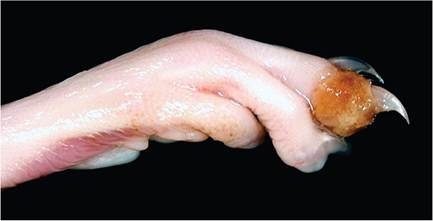
FIG. 2.10. Digit of a rat with cowpox virus lesion. (Source: Briethaupt et al. 2012. Reproduced with permission from SAGE Publications.)
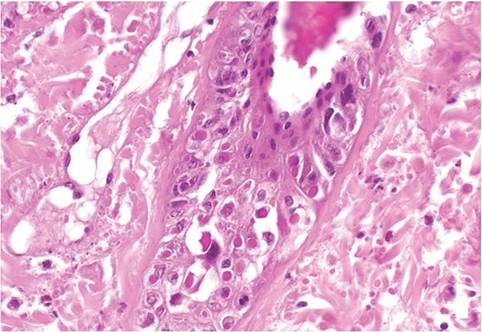
FIG. 2.11. Skin from a rat infected with cowpox virus. Note the many intracytoplasmic inclusions in the follicular epithelium.
(Source: Briethaupt et al. 2012. Reproduced with permission from SAGE Publications.)
Diagnosis
Definitive diagnosis can be achieved by identification of typical pox viral inclusion bodies within lesions, immunohistochemistry, or PCR. Human exposure to infected rats is most often associated with skin lesions on the patient's neck. Severe flu-like illness may also be present. Serology, using ectromelia virus as antigen, may be used for surveillance in laboratory rat populations.
More on the topic Cowpox Virus Infection:
- Cowpox Virus Infection
- BIBLIOGRAPHY FOR VIRAL INFECTIONS
- Arterivirus Infection: Lactate Dehydrogenase-Elevating Virus Infection
- LJUNGAN virus infection
- 5 Appendices