Klebsiella spp. Infection
There have been reports of isolated outbreaks of enterotyphlitis associated with Klebsiella pneumoniae and K. oxytoca among commercial rabbitries in Europe. Young kits and weanlings were particularly at risk, although diarrhea with mortality was occasionally seen in does.
Mortality rates of up to 100% occurred in affected suckling kits, with reduced mortality in older rabbits. In suckling kits, hemorrhagic enterotyphlitis with serosal hemorrhages was a typical finding at necropsy (Fig. 6.36). In affected weaned animals,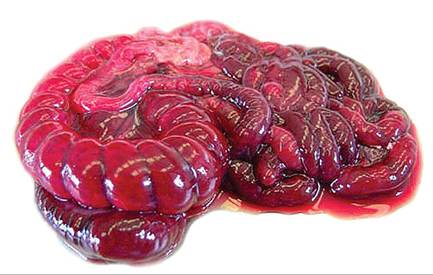
FIG. 6.36. Hemorrhagic enterotyphlocolitis in a suckling rabbit kit due to Klebsiella oxytoca. (Source: Nemet et al. 2011. Reproduced with permission from BMJ Publishing Group Ltd.)
catarrhal enteritis with serosal ecchymoses, and occasionally constipation, were observed at necropsy. On microscopic examination, hemorrhagic enterotyphlitis with marked submucosal edema was observed. Necrotic enteritis was frequently present in adults that succumbed to klebsiellosis. The organism was recoverable from a variety of tissues including intestine, liver, spleen, and lung. Possible predisposing factors that have been identified included the use of suboptimal concentrations of certain disinfectants, prior administration of antibiotics, and the emergence of antibiotic-resistant strains.
More on the topic Klebsiella spp. Infection:
- Enterococcus spp. Infection: Enterococcal Enteropathy
- Malassezia spp. Infection: Malasseziasis
- Dermatologic cytology