Conclusions: Monumentality, Technology, and the Inter-Imperial Ideal
Mary Helms's argument that the power of distance endows objects with aura in the crafting of the kingly ideal resonates especially strongly with this chapter's exploration of the itinerant obelisk and the negotiation of inter-imperiality.[508] Dominion is implicit in the movement of obelisks and the new ceremonial arenas they come to anchor.
This dominion is tied to the very monumentality of the obelisk itself and the technology surrounding its facture, a point that finds compelling evidence in diverse cultural contexts. Above Cuzco, enormous polygonal limestone blocks, some exceeding 200 tons, were fitted together with the precision that characterized imperial Inca masonry and has impressed visitors for centuries.[509] In Mycenaean Greece, megalithic construction was once described as cyclopean because of the assumption that it could only have been accomplished by beings larger than life.Because monumentality fundamentally signals mastery, the very existence of obelisks testifies to the superior engineering of their makers and movers. In this way, obelisks' construction, transport, and erection are all essential to their projection of power. Returning briefly to the ancient Egyptian context, we should recall that Hatshepsut is depicted in her red shrine with the two great obelisks she dedicated at Karnak (Figure 6.7). As part of a larger pictorial program of royal rituals, mostly concerning coronations and the investment of power, the obelisks here serve as metonyms for her might by indexing the labor of thousands in the service of the pharaoh. Further underscoring this point, it was not merely their dedication
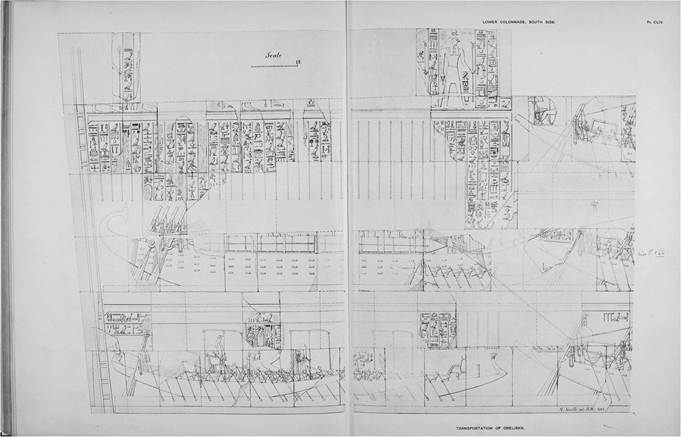
Figure 6.18. Drawing of the relief from Hatshepsut's mortuary temple at Deir el Bahri, after Edouard Naville, The Temple of Deir el Bahari (London, 1908)
that was celebrated, but their transport too.
At her mortuary temple across the Nile at Deir el-Bahri, reliefs depict the monoliths being shipped down the Nile from Aswan to Thebes on barges manned by a multitude of orderly oarsmen in such detail that modern scholars of nautical archaeology have relied on the representations to reconstruct the technology of ancient transportation (Figure 6.18). These scenes were integrated into the larger pictorial cycle celebrating Hatshepsut’s great deeds, including the expedition to the land of Punt, and in this way the mastery of monumental masonry ranks alongside military exploits. These images of dominion— over obdurate blocks of granite and also foreign people—together underscore her sovereignty. Egypt is not an isolated case. Ancient Assyrians too depicted such feats of technical mastery, though not of obelisks. The reliefs of Sennacherib’s palace at Nineveh depict the transport of the great lamassu from quarry to palace, all under the watchful eye of the ruler, who sits in a shaded chariot above the well-organized phalanx of workers. Other less-well preserved reliefs from the palace depict the more common Assyrian themes of warfare, thus reminding us that these themes operated in tandem as expressions of his authority.The technical prowess associated with erecting obelisks in their original setting is matched if not exceeded by the expertise necessary to move them great distances and to raise them in new spaces.[510] Narratives surrounding the Egyptian obelisks in Rome center on the technical achievement of transporting them over long distances across the Mediterranean. Pliny, our main source for the earliest arrival of obelisks in Rome, stresses that the most difficult enterprise was transporting them by sea in vessels
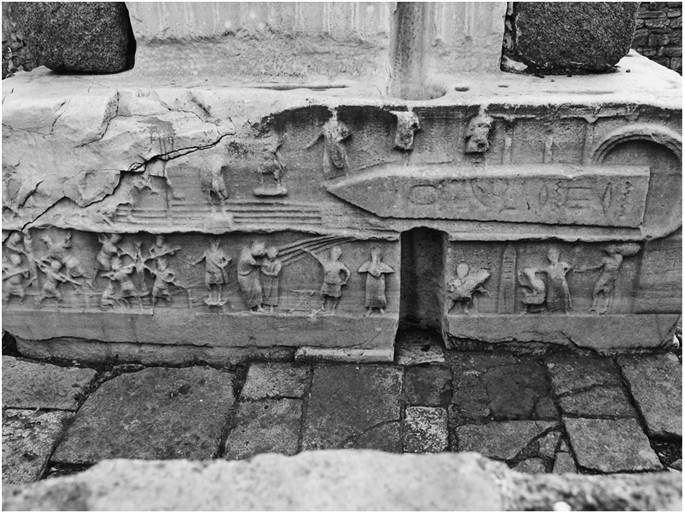
Figure 6.19. Obelisk base, Hippodrome, Constantinople (Istanbul), lower portion of the northeast face.
Photo: Cecily J. Hilsdale.
that “excited the greatest admiration.” Augustus consecrated the very ship carrying the first obelisk “as a lasting memorial of this marvelous undertaking.” While it was destroyed by fire, Pliny tells us that the vessel carrying an obelisk for Caligula endured “for some years and [was] looked upon as the most wonderful construction ever beheld upon the seas” before being sunk for the construction Ostia's harbor.[511] For the obelisk in Constantinople, we know nothing about how it arrived, but its installation on the hippodrome was immortalized on the lowest portion of the '1 heodosian base itself.
Two faces of the base's lowest zone represent the circumstances surrounding the raising of the obelisk. One face depicts the obelisk being raised: it lies on its side harnessed as animated workers manipulate its ropes and levers at the command of engineers (Figure 6.19). The other face depicts the races in which that technological achievement culminated (Figure 6.20). These reliefs are marked by a particularly strong attention to detail and sense of precision. There is a close correspondence, for example, between the sequence of the hieroglyphs depicted on the obelisk lying on its side on the marble base and the actual incised face of the red granite monolith itself.[512] The Constantinopolitan obelisk is exceptional because it remained where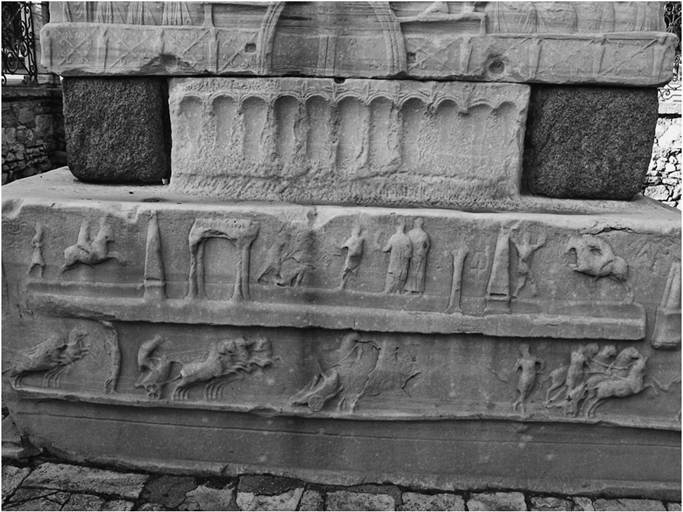
Figure 6.20. Obelisk base, Hippodrome, Constantinople (Istanbul), lower portion of the southwest face.
Photo: Cecily J. Hilsdale.
it was initially set up after its removal from Egypt. All the obelisks of Rome were rearranged as part of early modern urban renovations. As these were excavated and reinstalled throughout the city in the early modern era, the technical apparatuses for their manipulation became sources of wonder.[513]
In using obelisks as the anchor for this chapter, I have stressed the relationship between the monumental commemorative form and the ephemeral ceremonial actions surrounding them over time. In light of the dominance associated with the obelisk, we should not be surprised that it continues to do the work of empire in post- imperial contexts. Indeed, obelisks have featured in more contemporary efforts to monumentalize empire and even to instantiate post-imperial demonstrations of national sovereignty if not imperial ambition.[514] Emblematic in this regard is the obelisk installed at the Place de la Concorde in 1831. Originally set up as a pair by Ramses II at the entrance to Luxor, where its other half still stands, it was shipped to Paris on a vessel custom built for the occasion (the “Louqsor”) (Figure 6.21).
A diagram of the mechanics of its transport adorns its base in glistening gold, celebrating France's ingenuity and maritime power. But its location in the city is even more significant. At the Place de la Concorde, the obelisk was installed where the guillotine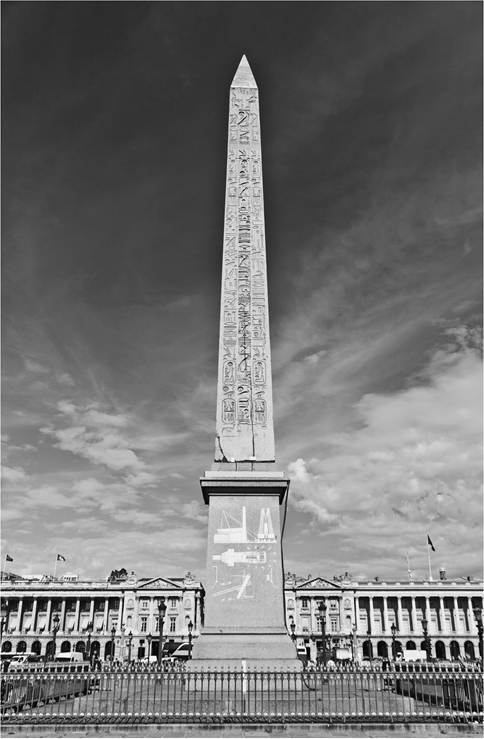
Figure 6.21. Obelisk and base, Place de la Concorde, Paris.
Photo: Shutterstock.
had once stood, thus rendering the ancient monument an antidote to the former bloodstained Place de la Revolution, as elucidated by Todd Porterfield.[515] Breaking with traditional commemorative strategies of the past, the obelisk was proposed as a monument devoid of politics and thus capable of erasing the historical memories of the site.[516] Of course, the obelisk was far from apolitical: although it may have provided a monumental commemorative solution for a site mired in the politics of the revolution and counterrevolution in France, its acquisition and installation indexed imperialist aspirations in the East.[517]
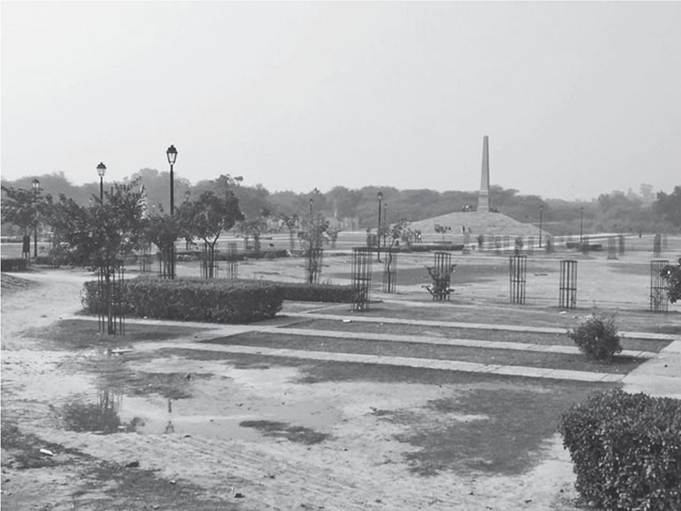
Figure 6.22. Obelisk in Coronation Park, Delhi.
Photo: Sunil Kumar.
Although one debate in the contemporary discussion of empire turns on the relationship between antique and early modern forms of imperial sway and modern colonialist regimes, a properly thorough engagement with these issues would exceed the parameters of this already long chapter. Nonetheless, it should be stressed that the obelisk as a form and figure, as a monument and symbol, persists in both contexts, marking it as a resonant heuristic for those invested in the debate. If for Cannadine ornamentalism conveyed colonial hierarchies in palpable performative terms, I have here presented monumentalism as equally significant. The obelisk in colonial rule in India thus serves as an apt closing for this chapter. The coronation memorial in Delhi celebrates the lavish 1911 coronation of King George V, whose visit to India during the Raj was celebrated with extravagant pageantry.100 The site itself, which served as the setting for three successive imperial durbars (1877, 1903, 1911), was commemorated with an obelisk (Figure 6.22).
The accompanying plaque makes its occasion clear:Here on the 12th day of December 1911, his Imperial Majesty King George V, Emperor of India accompanied by the Queen Empress, in solemn Durbar, announced in person to the Governors, Princes and Peoples of India his Coronation celebrated in England on the 22nd day of June 1911 and received from them their dutiful homage and allegiance.101
100 Cannadine 2002.
101 Coronation Park guide.
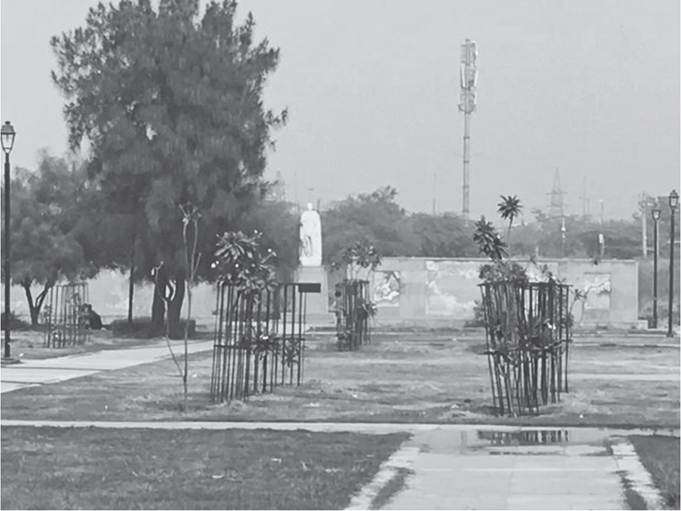
Figure 6.23. Coronation Park, Delhi.
Photo: Sunil Kumar.
Unlike Victoria's 1877 proclamation in absentia invoked in the chapter's introduction, this ruler, the text stresses, was present in person. This third and final durbar also marked the establishment of Delhi as the capital of New India, and the site, anchored by the sandstone obelisk, later served as a repository for marble statues of former British kings and officials that had once adorned the city.
After Independence, Coronation Park became a graveyard for monuments of India's colonial past, where the obelisk was surrounded by a forest of untended or empty plinths (Figure 6.23). Empire at this contested site became marked by absence. Just as empires rise and fall, monumental forms of commemoration endure and in many cases are abandoned.
Bibliography
Ahrweiler, H. 1975. L’ideologie politique de l’Empire byzantin. Paris.
Alfoldy, G. 1990. Der Obelisk auf dem Petersplatz in Rom. Ein historisches Dokument der Antike. Heidelberg.
Atasoy, N. 1997. 1582 Surname-i hümayun: an imperial celebration. Istanbul.
Bang, P. F., and D. Kolodziejczyk, eds. 2012. Universal Empire: A Comparative Approach to Imperial Culture and Representation in Eurasian History. Cambridge.
Bassett, S. 2007. The Urban Image of Late Antique Constantinople. Cambridge. Beard, M., J. North, and S. Price, eds. 1998. Religions of Rome. Cambridge.
Blake, S. P. 1991. Shahjahanabad: The Sovereign City in Mughal India, 1639-1739. Cambridge.
Boeck, E. 2009. “Simulating the Hippodrome: The Performance of Power in Kiev's St. Sophia.” Art Bulletin 91, no. 3: 283-301.
Breasted, J. H. 1901. “The Obelisks of Thutmose III and His Building Season in Egypt.” Zeitschrift für Ägyptische Sprache und Altertumskunde 39: 55-61.
Bruns, G. 1935. Der Obelisk und seine Basis auf dem Hippodrom zu Konstantinopel. Istanbul.
Canepa, M. 2009. Two Eyes of the Earth: Art and Ritual of Kingship between Rome and Sasanian Iran. Berkeley, CA.
Cannadine, D. 2002. Ornamentalism: How the British Saw Their Empire. Oxford.
Cannadine, D., and S. Price, eds. 1987. Rituals of Royalty: Power and Ceremonial in Traditional Societies. Cambridge.
Curran, B., et al. 2009. Obelisk: A History. Cambridge.
D'Onofrio, C. 1967. Gli obelischi di Roma. Rome.
Dagron, G. 1984. Constantinople imaginaire: Etudes sur le recueil des Patria. Paris.
Dagron, G. 1985. “Architectures et rituels politiques: La creation d'espaces romains hors de Rome: Le cirque-hippodrome.” In P. Catalano and P. Siniscalco, eds., Roma fuori di Roma: Istituzioni e immagini, 121-128. Rome.
Dagron, G. [1996] 2003. Empereur etpretre: etude sur le “cesaropapisme” byzantine / Emperor and Priest: The Imperial Office in Byzantium. Original: Paris. Reprint: Cambridge.
Dagron, G. 2003. “Trones pour un empereur.” In A. Avramea, A. Laiou, and E. Chrysos, eds., Byzantium. State and Society: In Memory of Nikos Oikonomides, 179-203. Athens.
Darnell, J. C. 2010. “Opet Festival.” In J. Dieleman and W Wendrich, eds., UCLA Encyclopedia of Egyptology. Los Angeles. http://escholarship.org/uc/item/4739r3fr
Dondelinger, E. 1977. Der Obelisk: ein Steinmal ägyptischer Weltanschauung. Graz.
Doyle, L. 2014. “Inter-Imperiality: Dialectics in a Postcolonial World History.” Interventions: International Journal of Postcolonial Studies 16, no. 2: 159-196.
Doyle, L. 2015. “Inter-imperiality and Literary Studies in the Longer Duree.” Publications of the Modern Language Association 130, no. 2: 336-347.
Emiralioglu, P. 2014. Geographical Knowledge and Imperial Culture in the Early Modern Ottoman Empire. Burlington, VT.
Fetvaci, E. 2013. Picturing History at the Ottoman Court. Bloomington, IN.
Frandsen, P. J. 2008. “Aspects of Kingship in Ancient Egypt.” In N. Brisch, ed., Religion and Power: Divine Kingship in the Ancient World and Beyond, 47-73. Chicago.
Fuchs, B. 2015. “Another Turn for Transnationalism: Empire, Nation, and Imperium in Early Modern Studies.” Publications of the Modern Language Association 130, no. 2: 412-418.
Geertz, C. 1973. The Interpretation of Cultures: Selected Essays. New York.
Grabar, A. 1936. Lempereur dans l’ art byzantine. Paris.
Guilland, R. 1966. “Etude sur l'Hippodrome de Byzance: Les spectacles de l'Hippodrome.” Byzantinoslavica 27, no. 2: 289-307.
Guilland, R. 1969. Etudes de topographie de Constantinople Byzantine. Berlin.
Habachi, L. 1977. The Obelisks of Egypt: Skyscrapers of the Past. New York.
Hassan, F. A. 2003. “Imperialist Appropriations of Egyptian Obelisks.” In D. Jeffreys, ed., Views of Ancient Egypt since Napoleon Bonaparte: Imperialism, Colonialism and Modern Appropriations, 19-68. London.
Helms, M. 1993. Craft and the Kingly Ideal: Art, Trade, and Power. Austin, TX.
Heslin, P. 2007. “Augustus, Domitian and the So-Called Horologium Augusti.” Journal of Roman Studies 97:1-20.
Hodgson, M. 1974. The Venture of Islam: Conscience and History in a World Civilization. Chicago.
Holliday, P. J. 1990. “Time, History, and Ritual on the Ara Pacis Augustae.” Art Bulletin 72, no. 4: 542-557.
Iversen, E. 1962. Obelisks in Exile. Copenhagen.
Kafescioglu, Q. 2010. Constantinopolis/Istanbul: Cultural Encounter, Imperial Vision, and the Construction of the Ottoman Capital. University Park, PA.
Kantorowicz, E. H. 1963. “Oriens Augusti. Lever du Roi.” Dumbarton Oaks Papers 17:117-177.
Kiilerich, B. 1998. The Obelisk Base in Constantinople: Court Art and Imperial Ideology. Roma.
Kostof, S. 1978. “The Emperor and the Duce: The Planning of the Piazzale Augusto Imperatore in Rome.” In H. A. Millon and L. Nochlin, eds., Art and Architecture in the Service of Politics, 270-325. Cambridge.
Larche, F., and F. Burgos 2006. La chapelle Rouge: Le sanctuaire de barque d’Hatshepsout. Paris. Lichtheim, M. [1976] 2000. Ancient Egyptian Literature, VII: The New Kingdom. Berkeley, CA. Lipinska, J. 2001. “Thutmose III.” In D. Redford, ed., The Oxford Encyclopedia of Ancient Egypt, vol. 3, 401-403. Oxford.
MacCormack, S., 1981. Art and Ceremony in Late Antiquity. Berkeley, CA.
McCormick, M. 1987. Eternal Victory: Triumphal Rulership in Late Antiquity, Byzantium, and the Early Medieval West. Cambridge.
Moffatt, A., and M. Tall, eds. 2012. Constantine Porphyrogennetos, The Book of Ceremonies: With the Greek edition of the Corpus Scriptorum Historiae Byzantinae (Bonn, 1829). Canberra.
Moret, A. 1902. Le rituel du culte divin journalier en Egypte. Paris.
Necipoglu, G. 1989. “Süleyman the Magnificent and the Representation of Power in the Context of Ottoman-Hapsburg-Papal Rivalry.” Art Bulletin 71: 401-427.
Necipoglu, G. 1991. Architecture, Ceremonial and Power: The Topkapi Palace in the Fifteenth and Sixteenth Centuries. Cambridge, MA.
Necipoglu, G. 1993. “Framing the Gaze in Ottoman, Safavid, and Mughal Palaces.” Ars Orientalis 23: 303-342.
Necipoglu, G. 2004. The Age of Sinan: Architectural Culture in the Ottoman Empire. Princeton, NJ.
Necipoglu, G. 2010. “From Byzantine Constantinople to Ottoman Kostantiniyye: Creation of a Cosmopolitan Capital and Visual Culture under Sultan Mehmed II.” In From Byzantion to Istanbul: 8000 Years of a Capital, June 5-Sept. 4, 2010, 262-278. Istanbul.
Necipoglu, G. 2012. “Visual Cosmopolitanism and Creative Translation: Artistic Conversations with Renaissance Italy in Mehmed II's Constantinople.” Muqarnas 29: 1-81.
Parker, G. 2007. “Obelisks Still in Exile: Monuments Made to Measure?” In L. Bricault, M. J. Versluys, and P. G. P. Meyboom, eds., Nile into Tiber: Egypt in the Roman World, 209-222. Leiden.
Parker, G. 2014. “Mobile Monumentality: The Case of Obelisks.” In J. F. Osborne, ed., Approaching Monumentality in Archaeology, 273-287. Albany, NY.
Pitarakis, B., ed. 2010. Hippodrom/Atmeydani. Istanbul.
Porterfield, T 1998. The Allure of Empire: Art in the Service of French Imperialism, 1798-1836. Princeton, NJ.
Protzen, J.-P. 1993. Architecture and Construction at Ollantaytambo. New York and Oxford.
Reiske, J. J., ed. 1829. De Cerimoniis Aulae Byzantinae. Bonn.
Safran, L. 1993. “Points of View: The Theodosian Obelisk Base in Context.” Greek, Roman, and Byzantine Studies 34, no. 4: 409-435.
Sodini, J.-P. 1994. “Images sculptees et propagande imperiale du IVe au VIe siecles: Recherches recentes sur les colonnes honorifiques et les reliefs politiques a Byzance.” In J. Durand and A. Guillou, eds., Byzance et les images, 43-94. Paris.
Stephenson, P. 2016. The Serpent Column: A Cultural Biography. Oxford
Stout, R. E. 1966. “The Sur-i-Hümäyun of Murad III: A Study of Ottoman Pageantry and Entertainment.” PhD diss., Ohio State University.
Subrahmanyam, S. 2004a. Explorations in Connected History: From the Tagus to the Ganges. Oxford. Subrahmanyam, S. 2004b. Explorations in Connected History: Mughals and Franks. Oxford. Swetnam-Burland, M. 2010. “ Aegyptus Redacta': The Egyptian Obelisk in the Augustan Campus Martius.” Art Bulletin 92, no. 3: 135-153.
Tappan, E. M., ed. 1914. The World’s Story: A History of the World in Story, Song and Art. Vol. II: India, Persia, Mesopotamia, and Palestine. Boston and New York.
Terzioglu, D. 1995. “The Imperial Circumcision Festival of 1582: An Interpretation.” Muqarnas 12: 84-100.
Treitinger, O. 1938. Die ostromische Kaiser-und Reichsidee nach ihrer Gestaltung im hofischen Zeremoniell. Jena.
Trilling, J. 1997. “Daedalus and the Nightingale: Art and Technology in the Myth of the Byzantine Court.” In H. Maguire, ed., Byzantine Court Culture from 829-1204, 217-231. Washington, DC.
Vespignani, G. 2001. Il circo di Costantinopoli nuova Roma. Rome.
Vogt, A., ed. 1935-1939. Le Livre des Ceremonies. Paris.
Yelqe, Z. 2014. “Evaluating Three Imperial Festivals: 1524, 1530 and 1539.” In S. Faroqhi and A. Ozturkmen, eds., Celebration, Entertainment and Theater in the Ottoman World, 72-109. London.
Zanker, P. 1988. The Power of Images in the Age of Augustus. Ann Arbor, MI.
More on the topic Conclusions: Monumentality, Technology, and the Inter-Imperial Ideal:
- The Inter-Imperial Obelisk in Istanbul
- Conclusions: Technology, growth, and the rise of the Occident
- Ideal marriage age
- The Future of the Service Ideal
- THE IDEAL NATURE OF HUMAN EXISTENCE
- Weber’s Methodology: Understanding and Ideal Types
- Inter-ethnic Violence on the Qing Frontier
- Inter-Ethnic Violence in the Nguyen Lands
- The Dynamics of Nation-building Processes in Inter-war Subcarpathian Ruthenia
- Fluid and electrolyte composition of body is in a state of dynamic balance, regulated by various inter-related mechanisms.
- In everyday life and for (inter)national issues as well, Neo-Assyrian kings were eager to hear or read their scholars’ reports and interpretations of omens.
- Technology and the social contract
- On 6 April 1868, the Meiji emperor proclaimed the Imperial Oath and ‘restored' the imperial rule, beginning the Meiji period (1868-1912).
- RELIANCE ON TECHNOLOGY AND DATA
- Chapter 40 Leveraging Technology Options for Financial Inclusion in India