Empires in Western Asia after 2000 все
Following the collapse of the Empire of Ur,[180] periods of political unification and fragmentation in Western Asia prior to the Persian conquest in 539 bce can be divided into three blocks.
Dates follow the so-called Middle Chronology[181] and are approximate only.(1) Conglomeration. Western Asia circa 2000-1760 bce was divided into hundreds of micro-polities forming shifting military and political alliances. Southern Mesopotamia became unified in a closely integrated imperialtype state under Hammurabi of Babylon and his dynasty (1792-1595 bce). Governors sought to implement regulations on economic policies in the conquered regions and attempts were made to bypass local political authority and channel resources directly to the capital. In reality, the state often had less success in penetrating existing urban power structures and appropriating resources than it was prepared to broadcast.[182] Imperial overtures rarely outlived their founder. Similar attempts at regional integration failed to gain permanency in northern Syria (e.g., the state of Samsi-Adad I). Instead, the area was dominated by smaller networks led by regional centers, such as Mari, Aleppo, and Tigunanum.
(2) Regional empires (map 3.1). After 1600 bce the area between Iran and Egypt was united into a dynamic regional system of empires. Mitanni covered northern and western Syria and northern Iraq circa 1550-1340 bce, but succumbed to internal strife and the pressure of the expanding Assyrian Empire of northern Iraq and Syria circa 1360-609 bce. Both states were structured into territorial provinces ruled by governors appointed by the ruler. Southern Mesopotamia (at times including territories in the Persian Gulf) was controlled by the Sealand (ca. 1600-1460) and the Kassite state (ca. 16001155 bce) and later by the rulers of Isin and various smaller dynasties.
Elam and Ansan in western Iran went through a period of centralization and consolidation of royal power to form a loose imperial state circa 1500-1100 bce. Anatolia was unified under the waxing and waning fortunes of the Hittite Empire circa 1650-1100 bce that successfully expanded its borders to clash with Assyria, Egypt, and the early Greek states. The period saw the large-scale founding of capitals across the region that were physically removed from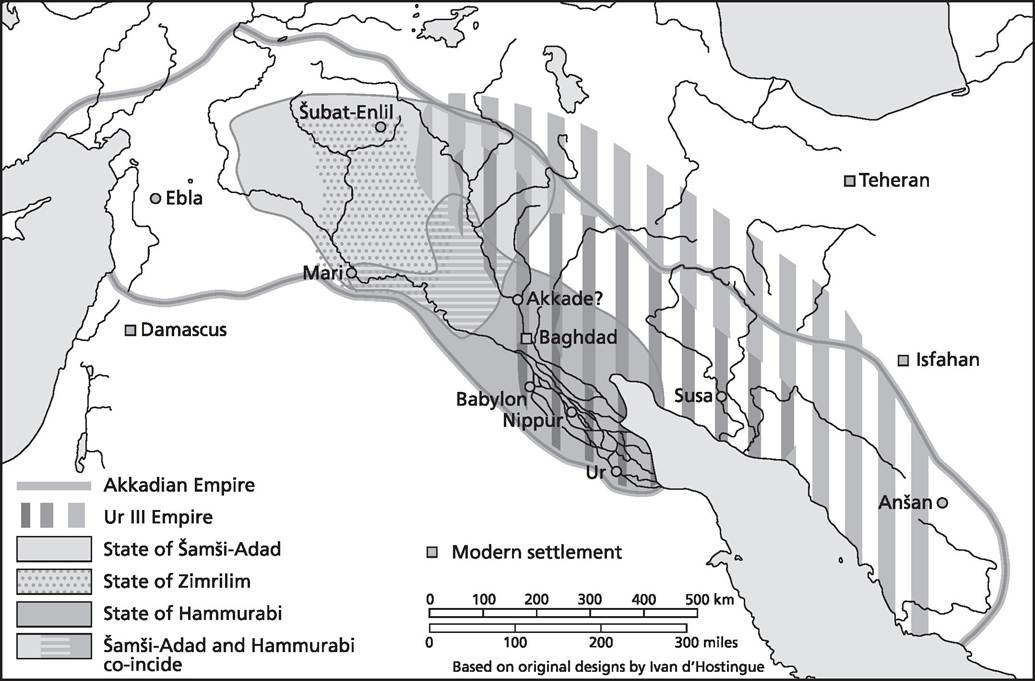
Map 3.1. Empires of the Near East, ca. 1500-1100 bce.
Source: Bang and Scheidel, 2013, The Oxford Handbook of the State in the Ancient Near East and Mediterranean, map 4.2 Copyright: Oxford University Press.
THE EMPIRES OF WESTERN ASIA AND THE ASSYRIAN WORLD EMPIRE 77
traditional seats of political and religious power. These include Akhetaten in Egypt, Tarhuntassa in Hatti, Kar-tukulti-Ninurta in Assur, Dur-Kurigalzu in Babylonia, and Dur-Untas in Elam. The location of these capitals points to a shift in perception of monarchic rule and the intentional physical seclusion of the royal court from those it ruled as individual charismatic (and sometimes divine) rulers and their personal retinue in the early empires gave way to courts as institutions and a heightened emphasis upon the theatrical aspects of kingship.
(3) Universal empires (map 3.2). A period of political fragmentation swept across the Near East and the Mediterranean circa 1050-900 bce, leading to mass migration and shifts in population.[183] Assyria and Egypt survived in a diminished form, while present-day southern Turkey, Syria, and southern Iraq reverted to a conglomerate of self-governed city-states, small territorial principalities, and tribal nations. All were gradually integrated into the Assyrian Empire. Its expanding political and military power was based on the economic development of territorial provinces, diplomatic relations with client states, centralized taxation, and a standing army—all enveloped in a universal ideology.
The expansion culminated in the conquest of Elam and Egypt in the first half of the seventh century bce and led to the political unification of Egypt and all of Western Asia, with the exception of Anatolia, into a single state. Beyond its territories, the disintegration of the Hittite Empire had split up central and western Asia Minor into the states of Phrygia, Lydia, and the principalities or city-states of Tabal (circa 1100-550 bce). At its peak, Phrygia formed an empire with a transregional elite culture, a loose provincial system, and a retinue of client states. Later, the Lydian state expanded eastward to become a small and relatively short-lived empire.[184] Tradition asserts that it established a frontier with the empire of the Iranian Medes (circa 640-550 bce) along the Halys River. To the east, the empire of Urartu (circa 830-600 bce) covered the highlands of eastern Turkey, Armenia, and northwestern Iran.[185] Its administrative system, political structures, and royal ideology were to some extent modeled on Assyria. After the fall of Assyria, the Babylonian Empire (626539 bce) developed the Assyrian imperial template into a regional model of political control and state administration.[186] A parallel administrative hierarchy of large temple institutions, based on transferable prebends and enormous landholdings, played a key role in society. Territories covered the entire Near East from Iran to the Sinai before the empire fell to the Persian invasion of Cyrus the Great. The Neo-Elamite state in Iran (circa 750-550 bce) developed as a loose confederation under Assyrian military pressure, but survived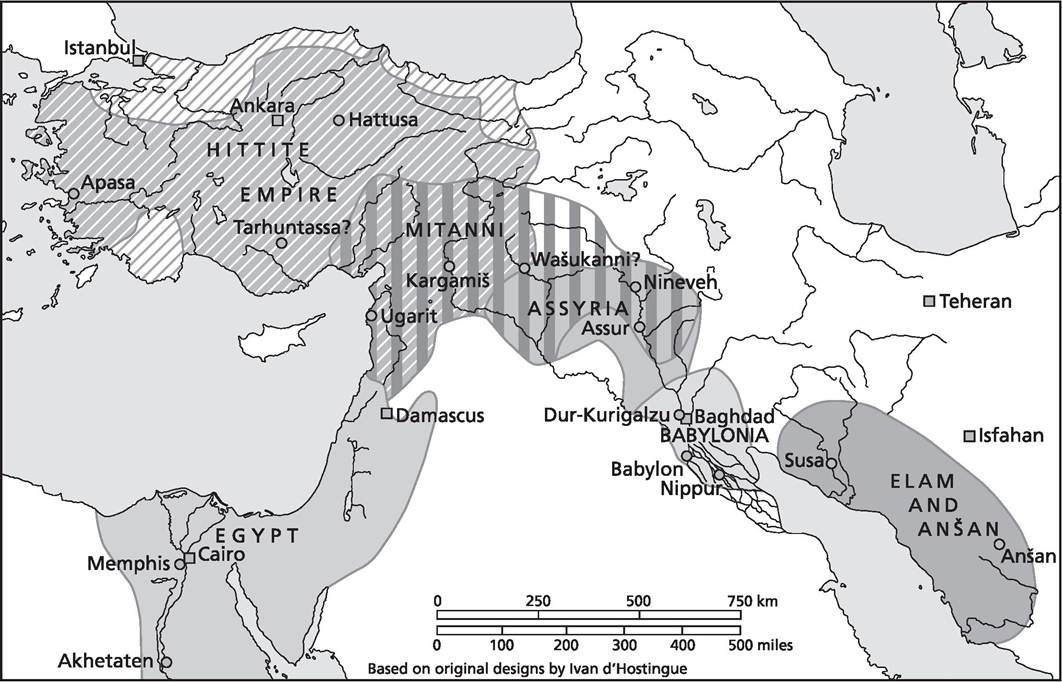
Map 3.2. Empires of the Near East, ca. 900-550 bce.
Source: Bang and Scheidel, 2013, The Oxford Handbook of the State in the Ancient Near East and Mediterranean, map 4.3. Copyright: Oxford University Press.
THE EMPIRES OF WESTERN ASIA AND THE ASSYRIAN WORLD EMPIRE 79
its chief antagonist before being engulfed by the emerging Iranian state of the Medes and Persians.[187]
This tripartite division of political history in early Western Asia is of course greatly simplified, and the existence of empires at a given point depends upon the definition of the term itself.
Here it is left deliberately vague to denote any type of territorial state that (a) held political hegemony over several formerly sovereign cities and kinship groups through military power, (b) formed a supranational elite, and (c) developed a sense of state ideology distinct from that of the individual communities it controlled.[188] Structural features are given precedence to variables that are hard to measure in ancient states, such as territorial size and degree of state integration. The definition produces a number of outliers (Anittas kingdom, Hammurabi’s Babylon, the Kassite state), and some authors would reject broad classifications in favor of a more fine-grained terminology.[189] But the list above permits comparative analysis and highlights a repeated oscillation between political fragmentation and centralization in Western Asia. It also emphasizes the overall shift from micro-polities toward imperial states during the two millennia covered by the chapter. From the Assyrian expansion in the eighth century bce, the heartland of Mesopotamia essentially remained under control by changing empires for nearly three millennia. Such continuity of imperial rule is distinctive to the region, and although a sweeping historical overview conceals major political and social breaks, there appears to be a remarkable bias at play in favor of large-scale territorial integration in the region where states first arose.Some empires did not outlive their founder (the Kingdom of Upper Mesopotamia), while others existed for generations and were formative for the tradition of statehood in the region (the Akkadian Empire, the Assyrian Empire). Some were large, loosely based networks of power with limited ability or ambition to penetrate underlying society (Mitanni); others were small, territorially integrated units that rested on provincial rule and a strong centralizing principle with direct control of workers, infrastructure, and resources (state of Ur).
In some cases the foundation of society rested upon an explicit expansionist ideology (the late Babylonian Empire). In other instances the empires were an end result of outside pressure (Urartu, Media). Territorial expansion could take place through diplomacy as well as conquest, and some empires were successful in attracting and keeping clients mainly through structural force (Hittites).Principles of military mobilization would vary from period to period with a trajectory toward permanence and professionalization. Military contingents were generally paid directly or by land allotment, while territorial armies were drafted through systems of corvee. The importance of taxation as a source of state income also increased through time. The early city-states did not support themselves by levying taxes directly on land or production, but set aside prebendary lands to generate an economic surplus for the support of its central institutions. Imperial taxation strategies would include such systems of corvee and generally make use of already existing systems of land ownership. They would in time include also direct taxation of land and estimated crop surplus. Levies were imposed primarily on a provincial basis through local officials and were often entirely dependent upon the resolve and skill of such areas to organize the collection themselves. One may conceptualize institutions and individuals as operating within vertical patrimonial structures, rather than referring to abstract entities, such as “administration” and “empire.”32 But crosswise forces were also always in operation, with authority being shared and contested between urban officials and kinship groups, popular assemblies, merchant councils, and religious institutions.33
Imperial economic policies are visible in the textual record mainly in relation to production. They include the founding of settlements dedicated to a particular purpose (cattle stations, fortifications, logging communities, ports of trade), communication infrastructure (roads, inns, postal systems), and promoting agricultural specialization (viticulture, olive growing, date cultivation, etc.) through a control of labor forces.
The distortion of the sources often makes it impossible to determine what level of private entrepreneurship existed at any given point in complement to the state-controlled economy, but there seems to be a developmental trend toward increased privatization.34The Mesopotamian alluvium is suited for supporting a large population through irrigation-based agriculture and animal husbandry. During periods of political stability the soil was capable of producing one of the largest crops known in premodern times. At the same time, the fertile river valleys lack a number of key strategic resources, including stone, quality timber, and metal. This situation led to a permanent dynamic in which all states centered on the floodplains supported a differentiated economy through varied measures of conquest, the establishment of new industries, and support of long-distance exchange. Trade was probably always a major source of state income, as well as a venue of social mobility, but since the domain of writing usually concentrated on central imperial administration, extant sources seldom overlap with the world of trade.35 Its importance is mostly indirectly visible in the form of traded goods in both texts and excavations, and through the strategies by which empires strove to control trade routes and restructure administrative procedures and systems of production36 in order to promote industries for the benefit of consumption and business.
A series of interlocking circuits of exchange connected Mesopotamia to remote resource areas, including tin mines in Central Asia, copper from Oman and Cyprus, gemstones from Afghanistan, silver from Anatolia, spices from Southeast
32 Schloen 2001; Ur 2014.
33 Barjamovic 2004; von Dassow 2011.
34 Hudson and Levine 1996; Postgate 2001a.
35 Larsen 1967; Joannes 2004, 38-39; Warburton 2016.
36 Steinkeller, Chapter 2 of the present volume.
Asia, gold from Egypt, and aromatics from South Arabia.[190] High-quality textiles constituted a chief Mesopotamian export commodity. In addition, people in the region generated revenue from its control of the major transit routes that connected Asia, Africa, and Europe. As a rule, silver bullion functioned as base currency. Income generated by trade was subject to imperial taxation in various ways, including mandatory gifts, the right of pre-emption on select cargo at favorable prices, requirements that private merchants carry out trade on behalf of state institutions, and through the collection of duty or tolls on imports or traffic in transit. Trading communities were often kept under indirect state control, presumably to outsource economic risk, and due to the fact that private entrepreneurs may have been better suited to negotiate transnational commercial ventures. Social issues may have been at stake as well, as suggested by the common physical separation of the state administration and trading communities.[191] The fact that market trade is often visible only on the periphery of our sources signals a public attitude toward the potentially inauspicious effects of trade on established patterns of social mobility and political influence among those who produced most of the written record. Nevertheless, the importance of international trade for the economy and strategy of early empires is evident[192] and points to the control over trade and trade routes as one triggering factor of imperial expansion.
More on the topic Empires in Western Asia after 2000 все:
- 3 The Empires of Western Asia and the Assyrian World Empire
- Empires Expand into Europe and Central Asia, 600 bce-6oo ce
- Most of us associate nomadic empires with the Huns, Mongols, and other great equestrian powers of central Asia.
- Like the other enduring empires in East Asia, the Han and the Qing, the Tang dynasty was an age of transformation.
- Nineteenth-century Western navies’ interactions in the Asia-Pacific region
- In the history of Inner Asia, by which I mean the history of steppe empires from the Xiongnu (established in 209 bce) to the Manchu conquest of China (1644 ce),
- CONVICT LABOUR AND THE WESTERN EMPIRES, 1415 -1954
- Western empires and indigenous peoples in the Bering Sea and Arctic Ocean, c. 1820-1900
- The collapse of the Western empires and the rise of human rights constitute two of the most transformative developments of the twentieth century.
- Aldrich Robert, McKenzie Kirsten (eds.). The Routledge History of Western Empires. Routledge,2014. — 542 p., 2014
- The Mauryan Empire (321-185 все) has a unique place in India's history.