Imperial Modeling in Byzantine Constantinople
In early imperial Rome, Egyptian obelisks were mobilized as remnants of the conquered foreign past in the service of promoting an empire distinct from what went before. Subsequent emperors also capitalized on the symbolic potency of obelisks to create their own lineages of succession.[474] Even as imperial power shifted to the eastern Mediterranean after the tetrarchy, Constantine I and his immediate successors continued to invest in obelisks as part of the symbolic building program for the establishment of Constantinople, and in this context the obelisk underscored the capital as New Rome.
The histories of the two extant Theban obelisks of Thutmose III elucidate this close relationship between old and new imperial cities.Under Constantine I, the largest extant obelisk was dismantled from the temple precinct of Karnak and shipped down the Nile to Alexandria to await the construction of special transport. Constantine died before the obelisk reached its intended destination in Constantinople.[475] Two decades later, Constantius II, his son and successor, had it transported to Rome instead to commemorate his month-long triumphal visit there in 357. While it now stands in the Piazza Laterano, when it arrived in Rome it was installed on the spina of the Circus Maximus next to the obelisk brought by Augustus in 10 bce. Its position there signaled imperial emulation, drawing Constantius of New Rome into alignment with the great emperors of Rome's past. The inscription on its base also situates Constantius's dedication as a continuation of his father's agenda: “Safe on the throne of the world august Constantius gave Thee, Roma, a gift of his father's which truly was worthy of the triumph won by the son in his fight, and world fame of his father.”[476]
The second of the two surviving Theban obelisks of Thutmose III was placed at the center of the circus of New Rome, that is, the hippodrome of Constantinople, and it remains standing there today, even as the terrain around it has been transformed in the two millennia since then (Figure 6.1).
Such an echo of Roman imperial precedent is part of a larger and well-known narrative in which the ceremonial layout and embellishment of Constantinople draws upon the more ancient example of Rome. More relevant to the present discussion, however, this obelisk gestures toward another dimension of imperial modeling, a prescriptive dimension that inflects successive ceremonial activities for the Byzantines and beyond. The obelisk was raised in the hippodrome to commemorate a single event, the defeat of Theodosius's rivals, and yet it continued to exert influence in the recurrent ritual life of the civic space over time, acting as a monumental stage for the public performance of imperium in both Byzantine and Ottoman Constantinople.The precise circumstances of the transport and arrival of the obelisk remain unclear, but we do know that when it was installed in the hippodrome by 390 ce it had been in Constantinople already for some time.[477] Despite this later date, and the fact that the hippodrome itself took on its more complete form during the Theodosian era, the obelisk should also be considered “a Constantinian project” in conception, even if not in execution.[478] St. Jerome famously declared that Constantine's city “was dedicated by denuding almost all other cities,” and the movement of an ancient Egyptian obelisk to early Byzantine Constantinople corresponds to Constantine's wider program of using antiquities to provide a hallowed and prestigious veneer for his relatively new capital city. The hippodrome, which had been begun by Septimius Severus, assumed primary importance as part of Constantine's “appeal to romanitas” which prioritized the magnificence of Rome and its institutions.[479] Constantinople's hippodrome was built in clear emulation of the Circus Maximus of Rome: both public spaces were situated next to the palace, graced with an imperial box, and anchored by impressive monuments on their central axes.
Accommodating up to 100,000 people, the hippodrome was the primary civic space of the capital. Beyond the chariot races themselves, which followed Roman tradition, the hippodrome served as the site for imperial coronations of the early Byzantine period; it was here that the city's populace encountered the emperor face to face and where he was acclaimed.[480] As noted at the beginning of this chapter, the emperor's appearance at the hippodrome was likened to the rising of the sun, with the crowd chanting the anateilon as he ascended to the kathisma. With its direct connection to the imperial palace by circular staircase, the kathisma should be understood as the extension, even the public face, of the palace. Because of these imperial associations, the hippodrome provided the optimal venue for military triumphs and spectacles performed for foreign embassies and receptions. The hippodrome thus emerges as the principal site not only to proclaim power, but also to test it. Most famously in 532, the violent uprisings known as the Nika Riots, which destroyed much of the ceremonial center of the city including an earlier Hagia Sophia, started at the hippodrome and were brutally suppressed there. The hippodrome also served as the site for ritual humiliations and executions, where its monuments provided an especially vibrant visual backdrop for these gruesome events. In the twelfth-century account of her father's rule known as the Alexiad, Anna Komnene describes the spectacle of one execution by fire with “flames rising and shooting out fiery sparks with a noise like thunder, sparks which leapt high in the air to the top of the stone obelisk which stands in the centre of the Hippodrome.”[481]
The Theodosian obelisk base alludes to these different associations, while ultimately stressing the spectacular quality of the imperial encounter above all else.[482] All four faces of its upper portion depict the emperor solemnly staring out from the kathisma, flanked by members of the imperial household, administration, and the military (Figures 6.2, 6.12, and 6.13).
In an exclusive space marked off from the rest of the civic arena, the kathisma sets the framework for this lithic epiphany: its architecture frames the emperor literally and presents him symbolically as the embodiment of the imperial palace. On the southeast face, breaking the frame of the low railing, the emperor holds a victory wreath to signify his status as granter of victory (Figures 6.12). In this way, the scene offers a visualization of the verbal acclamation that took place in the hippodrome. Despite compositional variations among the four sides, the reliefs of the upper portion of the Theodosian base project in every direction a stilled and hieratic tableau of imperial sovereignty.The lower zones of the upper portion of the base exhibit a contrast between the southeast and the northwest faces, which were directed to the kathisma and the people, respectively. The language of the dedicatory epigrams on the lower block of the obelisk base clarifies this distinction. The Latin inscription, which was the language of the court, bureaucratic, and military spheres in late antiquity, appears
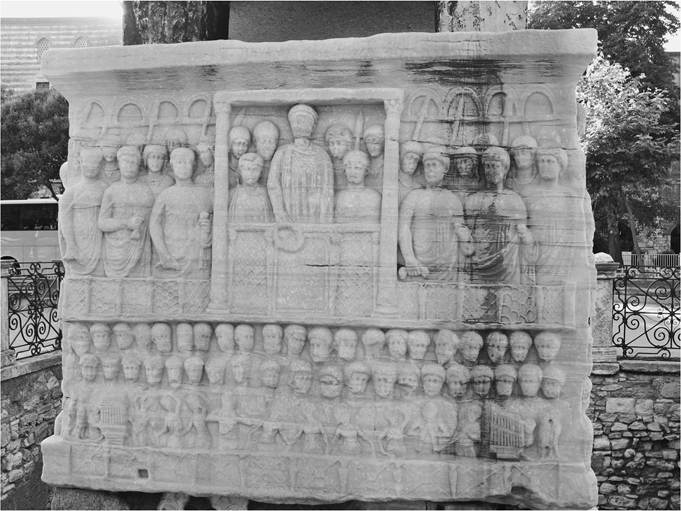
Figure 6.12. Obelisk base, Hippodrome, Constantinople (Istanbul), southeast face. Photo: Cecily J. Hilsdale.
on the southeast, or kathisma-facing side of the base, whereas Greek, the “lingua franca” of the people that complemented the polyglot culture of Constantinople, appeared on the northwest side, facing the people.[483] The pictorial program of the official/Latin/ kathisma-facing southeastern relief depicts the ludic celebration of the hippodrome below the standing emperor holding the wreath of victory. Compressed into the foreground, performers animate the solemn festivities with dancing and music provided by water organs and pipes. Opposite this, on the un- official/Greek/demes northwestern face, vanquished barbarians kneel before the seated emperor and offer tribute, a stock theme in the iconographic repertoire of victory (Figure 6.13).
Compositionally and conceptually, the active ludic performers and vassals kneeling in supplication serve to contrast the solemn stasis of the emperor and his entourage above them. In this sense, the obelisk base offers a visual counterpart to the Book of Ceremonies’ definition of taxis invoked at the beginning of this chapter.
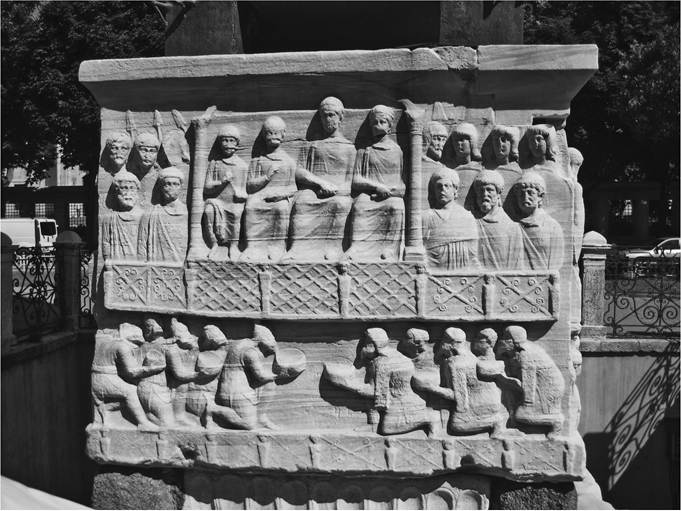
Figure 6.13. Obelisk base, Hippodrome, Constantinople (Istanbul), northwest face. Photo: Cecily J. Hilsdale.
And indeed the ceremonial dimension of the monument is entirely apposite given the context of the hippodrome and the rituals enacted there over time. Just as the Book of Ceremonies established an idealized protocol with a distinct prescriptive motivation, the Theodosian monument too sets a model of and for imperium.[484] In this sense, while the erection of the monument was occasioned by a set of particular political circumstances, its resonance is not tied to those specifics. Beyond depicting a particular emperor, the monument celebrates the epiphanic potency of the presence of subsequent Byzantine emperors. The reliefs, in other words, exceed their documentary value and offer a more prescriptive element that came to inflect ceremonial life far beyond fourth-century Constantinople. In addition to the more general hieratic vision of imperial authority, two specific aspects of the reliefs, as we shall see, resonated particularly strongly over time in later contexts: gift-giving and the technology associated with the hippodrome festivities.
The supplicatory position of the barbarians on the northwestern or populacefacing side of the base suggests the importance of gestural and diplomatic protocol, a central component of which was the display of gifts. Primary sources testify to the importance of such gift-giving, and they outline in detail the protocol for enumerating, appraising, and displaying diplomatic gifts, which were often paraded through the hippodrome.
In light of this ceremonial performance, the positioning of the kneeling gift-bearing barbarians takes on additional ceremonial significance over time. When in the sixth century, the Byzantine emperor hosted a Sassanian delegation, this lithic image of subjugation, according to Matthew Canepa, would have appeared as an “encrypted” image of triumph.[485] This is because the kneeling barbarians on the obelisk base were positioned such that they would have been seen by the people of the hippodrome with the kathisma beyond, but would not have been visible from the kathisma itself, where the visiting Sassanian delegates sat. In this way, the reliefs stressed the power and dominance of the Byzantines over and against diplomatic supplicants far beyond the context of their original creation— their significance was coded and interwoven with diplomatic ritual over time.If the northwestern face of the obelisk base played into the projection of Byzantine imperium as one of subjugation through the rhetoric of the gift, its southeastern face, with its celebratory festivities, helped to shape later instantiations of empire further to the East, in Kiev, through a rhetoric of specialized technological knowledge. While the architectural layout and mosaic decorative program of the eleventh-century church of St. Sophia in Kiev draws on Byzantine prototypes more generally, its princely turrets reveal a more specific visual dialogue with the hippodrome in Constantinople, a dialogue hinging on political power and the technology of its trappings, as argued by Elena Boeck.[486] The frescoes there depict aspects of ceremonial life in imperial Constantinople, specifically in the hippodrome. Following scenes of the races themselves—the starting gates, factions, and kathisma—the program terminates with performances featuring the golden organ that was displayed on special occasions in the hippodrome (Figure 6.14). This detail in Kiev echoes the southeastern face of the base of hippodrome obelisk and, further, bears diplomatic significance, as the organ represented a technology protected by the Byzantines and not widely available.
In depicting with such precision the spectacles of the hippodrome—its games and coveted technologies like the organ—the frescoes in Kiev showcase an intimate and direct knowledge of the distant capital on the Bosphorus. Moreover, the relationship between the two ceremonial sites of authority is expressed not merely in pictorial terms but in their spatial organizations. According to Boeck, the movement from the palace to the hippodrome is simulated in the Kievan church. Recall that at the hippodrome in Constantinople, a spiral staircase reserved for imperial use offered the emperor access to an upper story and a privileged view from the kathisma. In Kiev the hippodrome frescoes line the interior of a circular staircase whose access was restricted to and granted by the prince. As the Kievan prince ascended the stairs and viewed the unfolding of the fresco races, he mirrored the
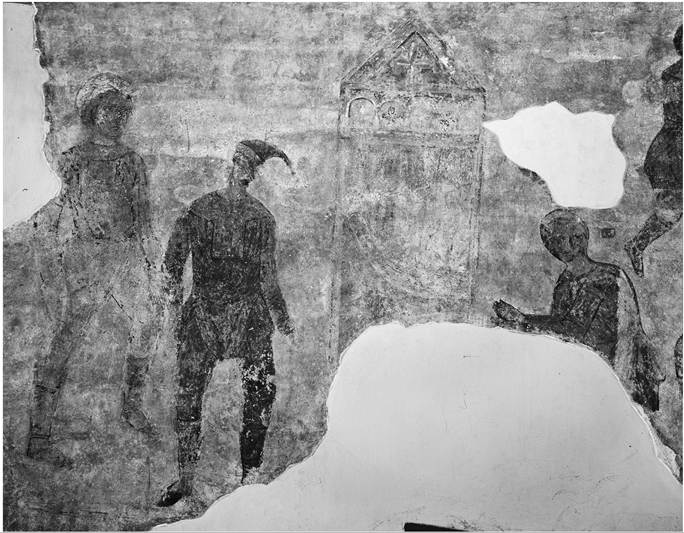
Figure 6.14. Detail of the frescoes in the southwestern turret of the Church of St. Sophia, Kiev.
Photo: Andrea Jerole/Scala / Art Resource, NY.
emperor’s ritual ascent to the kathisma in Constantinople. This parallel ritual action is clear: following a similar ascent, rulers in both Constantinople and Kiev emerged into a privileged space to see and be seen.[487]
More on the topic Imperial Modeling in Byzantine Constantinople:
- Constantinople: The Imperial Capital
- When the emperor of Byzantium ascended the imperial box or kathisma of the hippodrome in Constantinople, the people welcomed him by chanting the anateilon (Rise up!),
- The Voyage from Kiev to Constantinople
- The Development of Byzantine Christianity
- Afterlife and Reception of Byzantine Law
- The Byzantine Empire and Its Attitude toward Kievan Rus'
- More Crusades: The Fall of Constantinople
- Reception of Byzantine Law in the West? Glossators and Humanists
- Challenges for Scaling Agent-Based Modeling
- Agent-Based Modeling and Simulation