Monumental Temporality and the Consolidation of Empire in Augustan Rome
While the obelisk of Thutmose III now standing in Istanbul was transferred there directly from Egypt, the conception of its movement was motivated by obelisks in Rome and the previous emperors who went to great lengths to transport such impressive monoliths across the Mediterranean.
Despite its unmistakable hieroglyphs and Theban provenance, the obelisk's significance and the ceremonial life it came to anchor in Constantinople were understood in relationship to Rome and the consolidation of its Mediterranean-wide empire. The fact that the first Egyptian obelisk to travel to Rome was occasioned by the subjugation of Egypt to Rome testifies to the symbolic resonance of obelisks within narratives of imperial ascendency and dominion.Augustus celebrated the annexation of Egypt and the establishment of the princi- pate with the dedication of an Egyptian obelisk at the center of the Circus Maximus (Figure 6.8).[456] Pliny the Elder tells us that the obelisk in question, originally quarried by Pharaoh Seti I and completed by Ramses II for dedication in Heliopolis, was transported first to Alexandria and then to Rome, where it was installed on the spina of the circus in 10 bce. There it was set on a base faced with a Latin inscription outlining the circumstances of its arrival: “... Imperator Augustus, son of divine Caesar, dedicated this obelisk to the sun, when Egypt had been brought under the sway of the Roman people.”[457] At the same time as it stresses Roman dominion over Egypt, the inscription echoes the original purpose of its dedication in ancient Egypt, that is, to commemorate on an awe-inspiring scale divine royal genealogy linked to conquest. Furthermore, in both contexts the dedications are associated with the sun. Originally installed at the sanctuary of Re at Heliopolis, the obelisk was understood, like others, as the physical embodiment of the sun's rays.
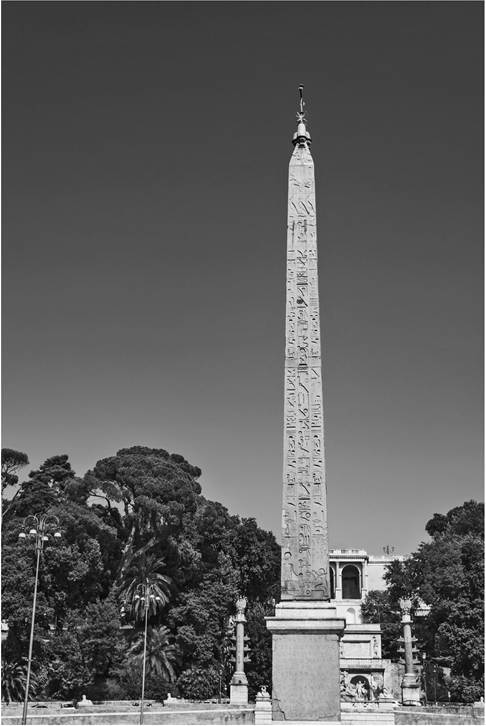
Figure 6.8. Obelisk once installed at the Circus Maximus, now at the Piazza del Popolo. Photo: Shutterstock.
In Rome, its dedication to the sun contributed to the wider heavenly analogy of the circus: its central position on the spina mirrored the position of the sun, with heavenly chariots and celestial bodies racing cyclically around both.[458]
These solar and cosmic associations are especially significant in light of a second obelisk that was dedicated by Augustus in the very same year and adorned with the same inscription on its base. With this second obelisk we see how Egyptian monumentalism came to mark the construction of a Roman imperial future. Smaller than the one at the Circus Maximus, this obelisk, which was one of a pair dedicated in the Late Egyptian Period by Psametik II in Heliopolis, figured prominently in Augustus’s larger renovations of the Campus Martius, an area with rich foundational symbolism going back to Romulus and Remus as well as the city’s last Etruscan king
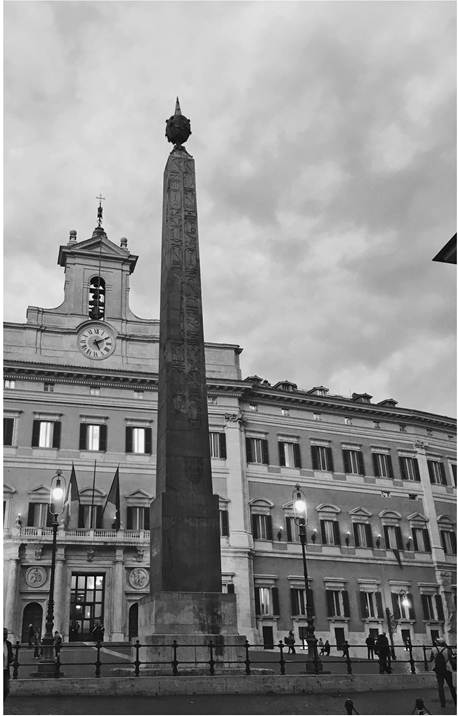
Figure 6.9. Obelisk once installed at the Campus Martius, now at the Piazza Montecitorio.
Photo: Cecily J. Hilsdale.
(Figure 6.9).[459] This obelisk was installed as the gnomon, or pointer, of a massive solar meridian whose shadow charted the sun’s progress from solstice to solstice. By measuring the shadow cast daily at noon, the meridian line could mark the local time of noon, indicate true north, and check the congruence of the civic and solar calendar.[460] This later function illuminates the sacerdotal dimension of the emperor and the cosmic scale of the Augustan imperial agenda. Upon assuming the position of Pontifex Maximus in 12 bce, Augustus took official responsibility for the Roman calendar and had it recalibrated after it had been determined to be in error.[461] The large-scale solar meridian installed in the northern Campus Martius displayed to all of Rome in clearly legible terms that the civic calendar was “in harmony with the progress of the sun through the year,”[462] and it thus showcased Augustus’s priestly role as symbolic time-keeper and order-maker for the empire.
Using a visually arresting monument from the past—and one with particular associations of Roman and Augustan ascendency—this imperial monument was not just about marking place, but setting time.Empires rise and fall, but monuments endure; and monuments from fallen empires serve as particularly poignant foils for imperial ascendency. These rather general points find concrete expression in the Augustan building project of the northern Campus Martius, which featured the solar meridian with its ancient Egyptian obelisk at its center, as well as the Ara Pacis, the altar of peace dedicated to Augustus 13-9 bce, and the Mausoleum of Augustus of 28 bce. This trio instantiated in monumental form an imperial project to separate the present historic moment from what went before—that is, to set Augustus’s rule apart as a turning point in history.[463]
The earliest of these monuments was the mausoleum. Conceived in the immediate wake of the civil war, it rooted Octavian and his family in Rome and underscored his Romanness, an especially important message given that Mark Antony had expressed his desire to be buried in Alexandria alongside Cleopatra. As the largest monument on the open terrain of the northern Campus Martius, the massive circular mausoleum, faced with marble and covered with cypress trees, dominated the landscape and displayed his authority on an unprecedented scale in visual, verbal, and symbolic terms: his bronze effigy stood at the apex, and the entrance was flanked by pillars engraved with his Res Gestae as well as two plain obelisks of red granite.[464] Built nearly 20 years later, the Ara Pacis and solar meridian were likely designed in tandem with the mausoleum. The three monuments are as close thematically as they are physically.[465] They were originally positioned as a right triangle, with the obelisk’s northern and eastern sides facing the mausoleum and the altar, respectively, and were experienced on the ground as a group.
Turning off the Via Flaminia, heading north from the city center, one would encounter head-on the entrance to the Ara Pacis with the obelisk rising above, directly behind it; proceeding beyond the altar to the meridian, the dominant axis of the obelisk directed attention to the mausoleum. By its position and alignment, therefore, the obelisk mediated the altar and mausoleum experientially. Beyond this, on a more symbolic level, as Peter Heslin elaborates, it also measured the temporal distance from the young Octavian of the mausoleum, who returned to Rome triumphant and blood stained from the east, to the Augustus of the altar who as Pontifex Maximus brought about the Pax Augusta. The solar meridian with its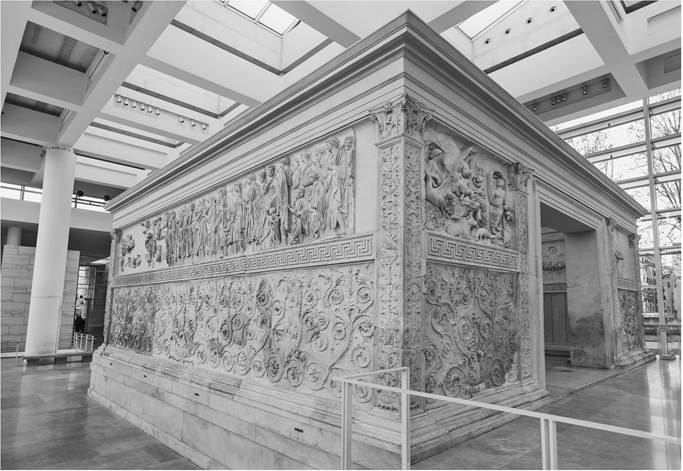
Figure 6.10. Ara Pacis Augustae, Rome, exterior.
Photo: Shutterstock
Egyptian obelisk-gnomon, in other words, not only served to chart the progress of the sun through the year, but also Augustus’s progress from a man of war to a man of peace.[466] The obelisk itself, taken from Heliopolis as a visible and tangible sign of his victory, became the measure of the noontime sun and also of the transformation of the emperor and of the empire.
The obelisk- solar meridian imbricates a singular historical trajectory—of Actium and the emergence of Augustus—within an eternally recurring visualization of time to promote imperial ascendency and the Pax Romana. The resonance of this message is amplified when read in conjunction with the imagery of the Ara Pacis, described by Peter Holliday as “a metaphor for the nature of the transitory moment in relation to larger cycles of time.”[467] The pictorial program of the Ara Pacis comingles contemporary civic ritual life with the eternal mythic realm of legend (Figure 6.10). The exterior frieze depicts the procession that accompanied the founding of the altar to celebrate Augustus’s return to Rome and the peace it inaugurated.
Here the imperial family and senators, with life-size legible portraits lending specificity to the program, process toward the altar’s entrance, which is marked by allusions to the legendary foundations of Rome.[468] While the exterior foregrounds the specific and the singular—both in the realm of legend and contemporary Rome—the inner walls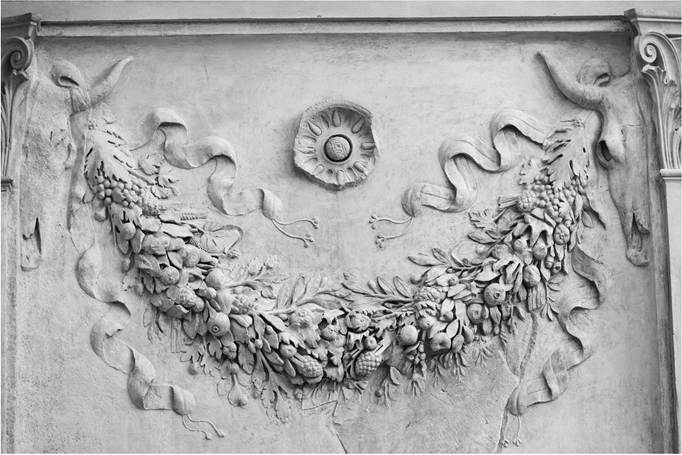
Figure 6.11. Ara Pacis Augustae, Rome, interior detail.
Photo: Shutterstock
stress the cyclicality of ritual renewal. Here, along with the smaller-scale relief of the annual sacrifice, the walls are lined with garlands of fruits from different seasons, all in bloom simultaneously, as well as sacrificial plates and bucrania (decorative reliefs of ox skulls) (Figure 6.11). Collectively these motifs underscore the recurring seasons and the sacrifices performed repeatedly to maintain the Pax Romana, the peace that was brought on by Augustus, who is depicted on the exterior as the pater familias leading the procession. As with the obelisk of the solar meridian, the Ara Pacis situates the singularity of the imperial event and identity within the recurring cyclical order of the world and the ideology of peace that defined it.
Having found Rome a city of brick, Augustus famously boasted of having left it a city of marble.[469] The newness of the Augustan era was indeed expressed in marble, but he also left Rome with a thicker monumental texture of history by anchoring primary symbolic nodes of the city with obelisks taken from Egypt.[470] If we understand the monuments discussed here as key to the Augustan promotion of his era as a turning point, we must also recognize the performative dimension of this campaign. The most spectacular ceremonial marking of the new from the old were the ludi saeculares of 17 bce.[471] Conceptualized as atonement for the excesses of the previous epoch, three days of citywide sacrifices were performed on the Capitoline and Palatine hills with nocturnal sacrifices at the Campus Martius as well as theatrical performances, games, and processions. While renewing the traditional republican festival, the rituals were transformed to stress the rebirth of the city under Augustus—the old came to sanction the new.[472] In preparation for the rituals of purification, sulfur, asphalt, and torches were distributed to the people, and the princeps himself actively participated in the ceremonial expiation. Coins minted in conjunction with this festival represent Augustus personally distributing the suffimenta for purification.[473] Such coinage disseminates on a wide scale a new image of the emperor as instrumental to the ritual propitiation that set the stage for the new era ushered in by his rule.
More on the topic Monumental Temporality and the Consolidation of Empire in Augustan Rome:
- Rome Divided in Two
- The Consuls of Rome
- Hieroglyphs and Cuneiform
- One Empire, One Peace: The Rise of Rome to the Pax Romana’s Decline
- Pax Gallica: bearing the mantle of Rome
- The Middle World
- Opening: What World History Context for Rome?
- Provincial Takeover: 'The Third-Century Crisis and the Late Antique World
- The Legacy of Roman Law