The Alliance for Progress
The failed Bay of Pigs invasion represented one method of fighting the spectre of communism in Latin America. Yet the Kennedy administration recognized more clearly than its predecessor that military intervention, even when successful, could yield only short-term solutions to the structural problems that had led to the growth of anti-Americanism and nationalism in Central and South America.
The Soviet Union's successful courting of Castro was, moreover, an indication that the various revolutionary movements had the potential to turn America's ‘backyard' into a Cold War battleground. To avert any repetition of Cuba, therefore, the Kennedy administration seized the moment in the spring of 1961, even as the Bay of Pigs invasion went ahead, to launch an ambitious aid programme aimed at boosting Latin American development.As noted above, the need to increase economic aid to Latin America had been acknowledged during the later stages of the Eisenhower administration. However, bodies such as the Inter-American Development Bank paled in comparison with the Kennedy administration's Alliance for Progress. Soliciting an enthusiastic response from south of the border, the new president announced in March 1961 an ambitious aid programme that was quickly compared to the Marshall Plan. In the speech which set out the programme Kennedy engaged in typical rhetorical excess, making references both to ‘this very moment of maximum opportunity', as well as to ‘the alien forces that once again seek to impose the despotisms of the Old World on the people of the New'. In short, Kennedy expressed the boundless opportunities that modernization held for the people of Latin America as well as the dangers of the ‘despotism' of Soviet-style communism. Much as in post-war Europe, the major problem, Kennedy repeatedly stressed, was poverty. To counter the negative political consequences of continued social and economic inequality in Latin America Kennedy thus called for ‘a vast co-operative effort, unparalleled in magnitude and nobility of purpose, to satisfy the basic needs of the American People for homes, work and land, health and schools'.
Kennedy's words were reminiscent of George Marshall's 1947 call for a campaign in Europe against ‘hunger, poverty, and chaos'.Alliance for Progress
The American assistance programme for Latin America begun in 1961, which called for an annual increase of 2.5 per cent in per capita income, the establishment of democratic governments, more equitable income distribution, land reform, and economic and social planning. Latin American countries (excluding Cuba) pledged $80 billion over ten years, while the United States pledged $20 billion. After a decade of mixed results, the Alliance was disbanded in 1973.
Formally launched in August 1961 at Punta del Este in Uruguay, with all Latin American countries except Cuba in attendance, the Alliance for Progress pledged $20 billion of American money for development over the subsequent decade. The recipient countries were to match the American aid effort with equal amounts of funding. Through trade, aid and co-operation the Alliance would attack the massive economic inequalities, poor living conditions, inadequate health care and high levels of illiteracy that plagued Latin American countries. While the United States did not intend to force full-scale democracy upon the countries south of its borders, aid was to be dependent on political change. The assumption was that with the creation of a substantial Latin American middle class, the need for military dictatorships as a protective shield against communism would dwindle, and ultimately the entire Western Hemisphere would be transformed into a bastion of modernized liberal democracy.
The Kennedy administration moved to initiate the Alliance for Progress in large part as a result of the Cuban revolution and the emerging links between the Soviet Union and Castro’s regime. One important provocation was that in early 1961 the Soviet leader, Nikita Khrushchev, made a public pronouncement in which he pledged support for wars of national liberation and cited Soviet economic assistance to Cuba as a case in point.
This, and the danger that Cuba might seek to export its revolution, undoubtedly added to the sense of urgency. Indeed, another way of interpreting the aims of the Alliance is to say that it sought to prevent any more Cubas, because the new programme would remove the sort of social and economic circumstances that had led to the Cuban revolution.For all its promise, however, the Alliance for Progress did not dramatically transform the relationship between the United States and its neighbours to the south. While the announcement of the Alliance for Progress, as well as Kennedy himself, was extremely popular in Latin America, the practical application of the ambitious programme proved immensely difficult. On the one hand there were simply too many vested interests at stake. On the other was the fact that the Alliance for Progress could only offer a long-term solution to the structural problems that impeded growth in Latin America. This was unfortunate, for the fact that it did not lead to an immediate ‘cure’ meant that American policy-makers in the 1960s increasingly looked to ‘proven’ methods of direct and covert intervention to counter any challenges to stability.
‘modernization'theory
The idea that rapid economic development is achieved by a state going through a ‘take-off’ stage in which an entrepreneurial class and high investment in economic growth play a crucial part. The theory is closely associated with the Massachusetts Institute of Technology (MIT) economist Walt Rostow, who served in both the Kennedy and Johnson administrations.
Another problem that emerged was that, despite all the hopes engendered by ‘modernization’ theory, the authorities in many recipient countries — as well as American governmental bureaucracies and private firms with significant investments in Latin America — were generally opposed to any form of social engineering. Over the preceding decades political and economic power in most of Latin America had been controlled by relatively small oligarchies.
These groups naturally had little interest in abandoning their hold on power or engaging in serious land reform or social welfare efforts. Therefore by the mid-1960s, in order to accommodate these local interests and to avoid enraging the nationalists any further, the United States abandoned the initial requirement that aid was to be tied to political reform. As a result corruption became a constant problem. Latin American elites pocketed portions of the aid money, refused to engage in significant land reform and opposed any far-reaching plans for progressive taxation. In retrospect, it seems that political change was required before the Alliance could have any chance of achieving its goals. However, American officials had no interest in working against the traditional friendly elites, while Congress specifically banned the use of American funds for land redistribution to the poor. Coupled with the lack of an effective ‘master plan’ or a coherent overall organizational structure, this inevitably made the Alliance for Progress a halfhearted effort.American businesses were equally keen on safeguarding the stability provided by local rulers. It was not, for example, in the interest of UFCO to support policies that would raise wages and improve the social standing of cheap labour in countries like Guatemala; it made little sense voluntarily to raise one’s operating costs. American investors also encouraged local landowners to use Alliance funds to develop export crops (such as coffee) rather than staple foods (such as beans). While local elites and American investors made large profits from such exports, inadequate food supplies in Latin America remained a constant problem.
Moreover, there was the additional problem that the Alliance’s efforts to initiate change took place during a population explosion. While infant death rates declined in part as a result of improvements in medical care, of greater significance was the fact that the Roman Catholic Church, the dominant religion in Latin America, continued to resist any plans for birth control.
Thus, whatever economic expansion and improvements in living conditions may have trickled down to the poorest parts of Latin America were of little substantial consequence to regions with an average annual population growth exceeding 2.5 per cent per year. This was the rate of increase even though the Alliance for Progress failed to meet its ambitious goal of halving infant deaths by the end of the 1960s. In 1968, for example, the death rate for children under one year of age remained 75 per 1,000 in Peru, 86 in Chile and a regional ‘high’ of 94 in Guatemala. In the case of Guatemala the rate had actually increased (but the population still grew).The Alliance also fell short of achieving its aim of an annual GDP growth rate of 5.5 per cent by the mid-1960s. Only Nicaragua, where the continued stranglehold of the Somoza family and their allies allowed little of the new wealth to trickle down to the majority of the population, could boast such a rate by 1965. Other countries’ GDP growth rates in the first half of the 1960s varied from Colombia’s 1.6 per cent to El Salvador’s 3.7 per cent. Moreover, the benefits of such admittedly positive but relatively modest growth tended to translate into more money for those who already had it: of every $100 of new income generated in the 1960s only $2 trickled down to the poorest one-fifth of the population.
The inflated promises and meagre results of the Alliance for Progress did little to reduce the attraction of revolutionary ideas. In the 1950s and 1960s almost thirty separate revolutionary groups and guerrilla organizations emerged to challenge the existing political power structures. A few of them, such as Nicaragua’s Sandinistas, were eventually successful in seizing power, but most guerrilla groups, including the Rebel Armed Forces in Guatemala and the Armed Forces of National Liberation in Venezuela, remained a somewhat marginalized but constant threat to their country’s internal stability. Perhaps most worryingly from the American point of view, several Cuban revolutionaries did try to export their movement to the rest of the Western Hemisphere.
In a spectacular, if ultimately doomed, effort the Argentine-born Ernesto ‘Che’ Guevara, Castro’s most famous lieutenant, organized the so-called foco group in the Bolivian highlands in the mid-1960s.Despite the idealistic rhetoric of the Alliance for Progress, the United States and most Latin American governments responded with force to the proliferation of revolutionary movements. Washington provided increasing amounts of military aid while many Latin Americans actively repressed any discontent and hunted down the guerrillas (Guevara, who was unable to gain the mass support he had hoped for, was killed in October 1967). Moreover, the Johnson administration, concerned over the leftward shift in the area’s largest country, supported a 1964 military coup in Brazil; indeed, the United States was even ready to send troops
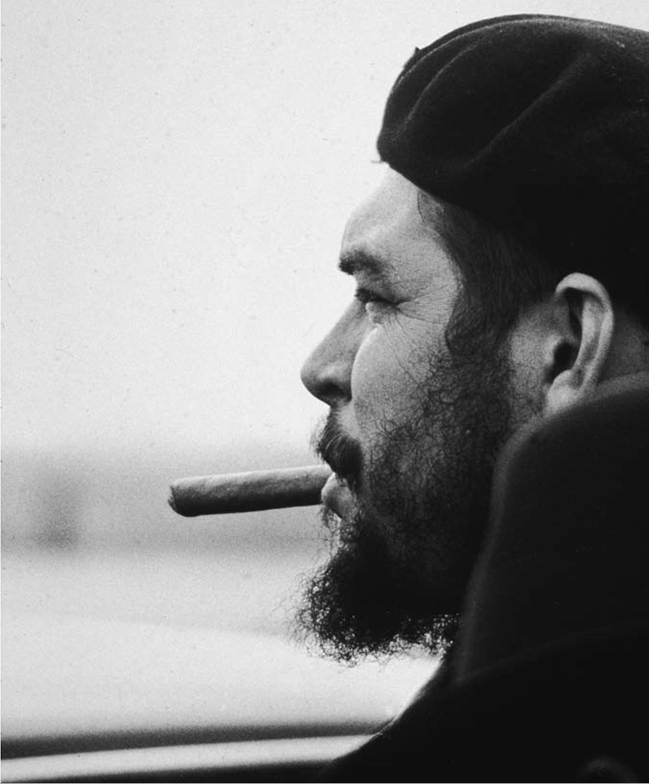
Plate 16.1 Ernesto Guevara, 17 December 1964. Profile portrait of Argentine-born Cuban
Marxist revolutionary Ernesto 'Che' Guevara, wearing a beret and smoking a cigar in an airport, probably New York City. (Photo: Bob Parent/Hulton Archive/Getty Images)
there if that proved necessary. For Brazil, the result was two decades of military rule; only in 1985 did the country again experience democratic elections.
Nor did the United States shy away from direct intervention in the 1960s. In 1965 20,000 American marines landed in the Dominican Republic in the largest American intervention in the Caribbean since the 1920s. The return of such ‘gunboat diplomacy’ had been in the making for several years. Following the assassination of the American-supported military dictator, Rafael Trujillo, in May 1961 the Kennedy administration, fresh from the Bay of Pigs fiasco and fearing ‘another Cuba’ on its watch, had dispatched a naval force to the Dominican capital, Santo Domingo. In addition to this gesture, the United States had boosted the Council of State that ruled the Dominican Republic through extensive economic aid and assistance to the local security forces and by training the Dominican army in counter-insurgency methods. After presidential elections in late 1962 the journalist-politician Juan Bosch had ruled the country between January and September 1963, at which point he succumbed to a military coup and took refuge in Puerto Rico. Even this had not brought about stability, for General Donald Reid Cabral's presidency came to an abrupt end on 24 April 1965 when a coalition of Bosch supporters and young officers set up a rival government. The Dominican Republic — and more specifically its military forces — was now divided between the Constitutionalists (those who called for the return of Bosch) and the Loyalists (who worked to restore a military junta).
The Johnson administration was in a dilemma. It did not wish to take a clear stand in favour of either side but also had no desire to see the Dominican Republic descend into a long civil war that might bring into power a left-wing politician or even encourage Cuban (or worse yet Soviet) intervention. The administration thus settled on a ‘third way': it would restore stability, install a provisional junta and hold elections (in which it would ensure that an undesirable candidate, such as Bosch, would not be able to triumph). Thus, in the same year as the United States began dispatching ground troops to Vietnam, marines returned to the Dominican Republic after a four-decade hiatus. Despite the lofty promises of the Alliance for Progress, interventionism thus re-emerged as an official American policy option in the mid-1960s. ‘Gunboat diplomacy', many charged, had been revived. see Chapter 6
More on the topic The Alliance for Progress:
- Institutions and technological progress
- The Grand Alliance at war
- BOOKS IN PROGRESS
- Progress of Science and Useful Arts
- The Orthodox Alliance
- V The Crimean Alliance
- CHAPTER FIFTEEN PROGRESS IN RUSSIA
- VI The Ottoman-Ukrainian Alliance
- The collapse of the Grand Alliance
- Chapter 19 TECHNOLOGICAL PROGRESS AND ECONOMIC TRANSFORMATION
- Alliance with the Tsar and the Death of Khmelnitsky
- The rise and decline of the Sino-Soviet alliance
- Technical progress as a source of change in labor market institutions
- The Polish-Lithuanian Alliance: Destruction of the Teutonic Order