The Visibility of Violence
The visibility of violence must take into account two questions: where was violence represented, and where was it exhibited? The first question concerns the nature of visual supports.
Pictures of violence occur on different media that have different uses, finalities and which imply different levels of visibility. When dealing with war, it might be natural to think of imposing and large monuments of war, while fights, battles and violent acts can also be found on smaller (portable) objects that potentially suggest a different perception and evaluation.Next to large reliefs (steles), wars and scenes of violence were also present on cylinder seals and minor works such as the typical inlays of the third millennium in both Mesopotamia and Syria that could have been originally mounted on larger panels. Inlays presumably once decorated wooden boards, and we may therefore think of composite larger monuments. However, the single elements were quite small in size and therefore the monumentality of those works (at least giving monumentality the meaning of a large, imposing object) can be called into question.[1208] The case of cylinder seals is even more striking and surprising. Indeed, for all their small dimensions and practical use, cylinder seals would appear to be quite an inappropriate place for a celebration of military events and emphasising the violence
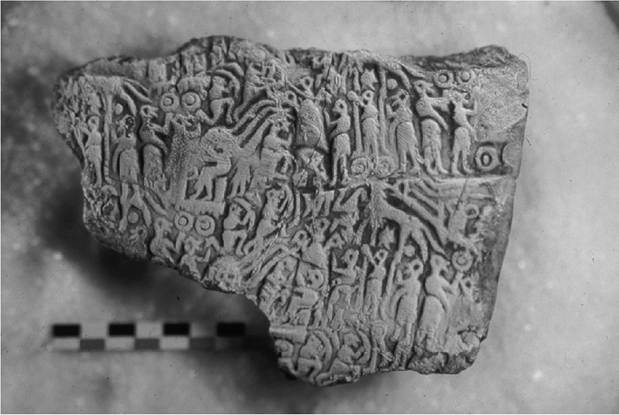
Figure 31.5 Seal impression from Tell Beydar.
inflicted upon the enemies. Moreover, due to the small space for images that cylinder seals permit, scenes of violence must necessarily be summarised with the creation of iconographically reduced models (we could say figurative canons) that are constantly repeated and gave birth to our iconographical typological motifs and definitions, such as ‘the triumph of the god/king over the enemy', ‘the duel between the god/king and the enemy', ‘the smiting of the enemy', that crystallise single acts and performances built upon recurrent motifs of gestures and position.[1209] Rare in fact are cylinder seals that bear the representations of larger and longer narratives of war events with scenes of violence.
Among the few known examples, we can include the seal impressions from Uruk,[1210] the seal impressions of the seal of Ishqi-Mari from Mari,[1211] the seal impressions from Tell Beydar (Figure 31.5)[1212] and Neo-Assyrian cylinder seals depicting sieges.41 Scenes of violence are relegated to brief sequences or even single figures, such as enemies falling from battlements (Tell Beydar), the execution of enemies (Uruk, Mari, Tell Beydar), corpses trampled and possibly overwhelmed by chariots (Tell Beydar, Mari) and severed heads (Mari). Assyrian cylinder seals depicting sieges are indeed miniature versions of the large palace reliefs, showing the attack and plundering of enemy cities. As Irene Winter has pointed out, the imagery of the seals depicting hunts and libations is often the reverse of the palace reliefs, as if the latter have been used as a source for the iconography of the seals.42 In this respect, can we apply the same reasoning to the seals showing images of war and violence? That is, do they reproduce and replicate representations of monuments (reliefs, steles etc.)? This would indeed explain the necessity of adapting complex narratives, rich in detail, to the small space of the cylinders by selecting shorter sequences or even single details. Hence, cylinder seals would not have had the task of representing larger events of divine and human battles with scenes of violence against the enemy; they did not have the same function as steles and bas-reliefs. On the other hand, by copying fragments of larger monuments, they spread the representations of war and, more specifically, violence. In fact, because they could not reproduce the entire representation of an event, seal cutters selected an image that became an icon, a part referring to the whole. Taking the image of the god/king smiting the enemy into account, this caused both the diffusion of the violent image, on the one hand, and its decontextualisation, on the other. Their presence on the seals was probably important to mark both the owner of the seal and the operation of sealing in the management of the administration. The violent image thus became a sign of identity and identification and, in this recontextualisation, it probably also lost its original function and meaning, that is, the representation of a precise moment of violence in space and time.The second question (where the representation of the violence was displayed) concerns the location of those scenes within the space and landscape.
Etudes consacrees a la Haute Mesopotamie (Turnhout: Brepols, 1998), p. 179, Beydar-7, pl.
I, Beydar-1.
41 Erika Bleibtreu, ‘Festungsanlagen auf neuassyrischen Rollsiegeln und Siegelabrollungen', in N. Cholidis et al. (eds.), Beschreiben und Deuten in der Archäologie des Alten Orients: Beschrift für Ruth Mayer-Opificius mit Beiträgen von Freunden und Schülern (Münster: Ugarit-Verlag, 1994), pp. 7-14.
42 Irene J. Winter, ‘Le Palais imaginaire: Scale and Meaning in the Iconography of NeoAssyrian Cylinder Seals', in C. Uehlinger (ed.), Images as Media: Sources for the Cultural History of the Near East and the Eastern Mediterranean (1st Millennium BCE) (Fribourg: Academic Press), p. 65.
As already pointed out, cylinder seals contributed to a large diffusion of the representation of violence (the seal itself as an easily portable object, and its impression on several documents and items). Large reliefs and inlays were mostly originally located within temples and palaces, but what was the degree of visibility of those monuments? In particular, the presence of large images of violence on the monuments of war is usually seen as the result of the imposition of an ideology via a heavy programme of propaganda. However, if monuments were indeed in places that did not have free mass access, then we should change our mind about the propagandistic nature and purpose of those images. The real point is that we actually have no clear information and data on the type and frequency of the audience that could enter temples and palaces in Mesopotamia and Syria.
However, rather than the result of imposition, the diffusion of images of aggression probably depends on the cultural value of violence as a means by which human beings face, communicate and deal with the other.The question of visibility, moreover, concerns the place where monuments and objects representing violence were physically located, and thus when, where and by how many people they could be seen. As an important moment of the narrative of a myth or a battle, violence often defines the culminating act of an event and, for that reason, it occupies a dominant role and space. Assyrian kings clearly state in their inscriptions that impalement and the exhibition of the severed heads and flayed skin of enemies must occur in the most visible places - city gates, walls of the city, in front of the city. As we have seen, Tiglath-pileser III wanted the people of the city of Sarrabanu to see their king impaled before the gate. As a result, Assyrian pictures of battles and sieges show the punishment and execution of enemies right in front of the walls and city gates of enemy cities, sometimes on elevated positions so that impaled men and severed heads can be clearly seen from a distance and from the perspective of the intended audience, that is, the enemy within the city. The execution and consequent exhibition of severed heads and corpses were theatrically arranged, that is, the place was ‘chosen for high visual impact on the intended audience',[1213] and I would also add for a high sound impact since the enemies were also impaled alive and their agonising screams would have significantly affected the target audience.
The intended audience of the violence, exhibited on the spot of the highest visual (and aural) impact, was the people of the enemy city as represented on the reliefs. That is, violence is represented for the internal audience of the pictures themselves (the enemies under attack or already defeated by the Assyrians) rather than an external audience (the observers of the reliefs in the palaces or ourselves now facing the reliefs in museums).
The same can be observed on slab 5 in room 33 from Sennacherib's South-West Palace at Nineveh. Ambassadors of the land of Urartu are invited (obliged?) to assist, exactly as a performance, in the execution and torture of Elamite enemies after Assurbanipal's battle against Teumman by the River Ulai. In this context, the violence is first addressed to the ambassadors and, later, to the observers of the reliefs.Were, in fact, Assyrian reliefs open to the public? Could people reach the innermost rooms of an Assyrian palace, look carefully and undisturbed at the reliefs and be affected by the atrocity of the represented violence? Or looking at the scenes of dismemberment and exhibition of severed heads in front of the city on the bronze bands of the Balawat Gates of Shalmaneser III, are we sure they were so clearly visible once they were mounted on wooden doors that reached a height of about 8 metres?[1214] It seems that we have overestimated the impact of the representations of violence since we have now the opportunity to look at and enlarge even the smallest details, which were not supposed to be seen, at least not by a large audience.[1215]
More on the topic The Visibility of Violence:
- Fagan Garrett G., Fibiger Linda, Hudson Mark, Trundle Matthew (eds.). The Cambridge World History of Violence. Volume 1: The Prehistoric and Ancient Worlds. Cambridge University Press,2020. — 756 p., 2020
- Relational Geographies of Child Abuse
- Defining "Orphans"
- THE CHALLENGES THAT LIE AHEAD
- Pre-independence India
- REFERENCES
- The Yogi's Way of War
- Trauma
- Unique Attributes Around Conflict in Higher Education
- Integrating Scholarship on Ukraine into Classroom Syllabi