Hazardous Waste
Hazardous wastes arise as a result of various industrial operations, energy production, metallurgical operations and health services. The hazardous waste contain organo-chlorine compounds, organophosphate compounds, heavy metals, oils, phenols, acids, fluorides, abrasives, solvents, caustics, etc.
In addition to chemicals, hazardous wastes also include biochemical waste arising from hospitals, nursing homes and laboratories. The hazardous waste poses several environmental problems and health risks. Therefore, its disposal demands special attention. If not managed properly, it can cause several problems.10.3.1 Incidents of Improper Disposal and Accidents
Several incidents of improper disposal have been reported in the past. Some of them caused major problems and are known worldwide. These are explained below:
1. LoveCanal
In 1976, in a residential area near Niagara Falls, New York, the trees and gardens began to die, rubber articles disintegrated and toxic substances began to ooze out from the soil.
The story of Love Canal actually began about 100 years back. In 1880, William T. Love started digging a canal which was never completed. A small remnant of the canal remained in 1900s. When it used to get filled with rainwater, it served as a favourite swimming spot. In 1942, the Hooker Chemical Co. signed an agreement with the canal’s owner, i.e., Niagara Power and Development Corporation, for dumping wastes in the canal. Hooker bought the sight in 1946 and for six years to comes, it dumped about 21,000 tonnes of highly toxic and carcinogenic wastes in the canal which included lindane and dioxin (Fig. 10.6).
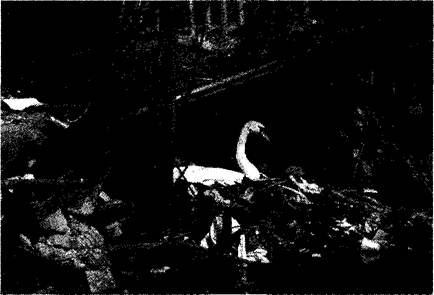
Fig. 10.6 : Love Canal
Later in April 1953, Hooker sold the land and got free from the liability for possible damage caused by dumping.
Eventually several homes and an elementary school were built on and near the site after filling and sealing the dump. In 1954, the construction workers removed the top filling of the soil, and rusting and leaking barrels became visible. Children playing near the site suffered chemical bums and died also. The problem continued for years. Later in 1976 - 77, heavy rains created more problems. Tests near the site detected 82 chemicals and many of them were suspected carcinogens. Officials admitted that not much was known about the impact of these chemicals. In 1978, it was found that 29% of women suffered from miscarriages and children were bom with birth defects. The cases of asthma, urinary, ear and sinus infections increased. People also reported respiratory diseases, rashes and headaches.The school was closed down and the families were evacuated. The clean up operations and relocation costed $275 million to the government.
2. Minamata
In the middle of twentieth century, a strange illness began to occur in the Japanese costal town, Minαmαtα. Birds lost their coordination and fell to the ground, cats started running in circles and foaming at the mouth, fishermen suffered from fatigue, irritability, headache, numbness and difficulty in swallowing. People reported blurred vision, lost muscular coordination and became hard of hearing. Some experienced problems in gums and had diarrhoea. Later, 43 people died and 111 were severely disabled. 19 babies were bom with congenital defects.
The cause was later found to be mercury released by a vinyl chloride factory into the Minamata bay. The microbial action converted the released inorganic mercury into the organic methyl mercury. The methyl mercury could pass readily through cell membranes in contrast to the inorganic mercury. Methyl mercury on transport by RBCs could enter into the entire body and also damage brain cells. The organic mercury was absorbed 100 times faster than the inorganic one by fish and its retention was also longer.
These fish when eaten by the people of Minamata bay resulted in the observed effects.3. Bhopal Gas Tragedy
The leakage of methyl isocyanate (MIC) gas from the Union Carbide Factory in Bhopal, India killed thousands of people and caused immense sufferings. The detailed effects of this incident are described in Chapter 15.
The above incidents have drawn international attention to the problems associated with hazardous substances whether arising from dumping of wastes or from accidents during production. Various bilateral, regional and global agreements came into existence for control and management of hazardous waste. One such convention is the Basel Convention which is discussed in detail in sec. 10.6.
10.3.2 Biomedical Waste
The biomedical waste comprises used needles, syringes, blood bags, urobags, glucose bottles, surgical gloves, bandages, chemicals, body parts and radioactive substances. Such a kind of waste is generated in hospitals, nursing homes, pathological labs and research institutions.
The biomedical waste poses special problem of spreading diseases such as AIDS, hepatitis, fevers, septicemia and other infections. It has a potential danger for the workers, public and the environment.
The Biomedical Waste (Handling and Management) Rules, 1998 prescribe the segregation of waste at source, colour coding of waste bags, incineration of infectious waste, careful disposal of waste sharps and shredding of plastics to prevent their reuse.
The schedule I categorises biomedical waste into 10 categories and recommends the methods of their treatment and disposal. The treatment of biomedical waste involves processes such as incineration, autoclaving, microclaving, hydroclaving and shredding.
• Incineration is a controlled combustion process where waste is completely oxidised and harmful microorganisms present in it are destroyed or denatured by high temperature.
• Autoclaving is a low - heat thermal process where steam is brought into direct contact with waste in a controlled manner for sufficient duration to disinfect the waste.
• In microclaving, microbial inactivation is done by thermal effects of electro - magnetic radiation having frequency between 300 and 3,00,000 MHz.
• Hydroclaving is similar to autoclaving except that the waste is subjected to indirect heating by application of steam in the outer jacket.
• Shredding cuts the waste into smaller pieces to make the waste unrecognizable. It prevents its reuse and signifies that the waste has been disinfected and can be disposed off.
10.4
More on the topic Hazardous Waste:
- 9 Hazardous waste
- Management of Hazardous Waste
- Hazardous Waste in India
- Hazardous Waste and Its Management
- Chemically hazardous substances, ecotoxicology
- 5 Disposal of waste off-farm
- 4 Temporary storage of waste
- 6 Disposal by waste management companies
- 7 Licence exemptions for low-risk waste
- 2 Definition of agricultural ‘waste’
- Radioactive Waste