Biochemistry
Metabolism
Several sources of energy are metabolized to produce adenosine triphosphate (ATP), which is essential for protein synthesis and transport and maintenance of ionic ingredients across the plasma membrane.
Sugars, fatty acids, and amino acids are metabolized to produce acetyl coenzyme A (acetyl-CoA). The acetyl-CoA then enters the tricarboxylic acid (TCA) cycle, also known as the citric acid cycle or Krebs cycle. This cycle leads to products such as carbon dioxide and hydrogen in the form of nicotinamide adenine dinucleotide (NADH). The NADH feeds into the respiratory chain inside the mitochondrion and the energy of the NADH is used for oxidative phosphorylation to produce ATP.
Glycolysis: this pathway converts a molecule of glucose that contains six carbon atoms to two molecules of pyruvic acid, each containing three carbon atoms (Figure 1.19). There is a net production of two molecules of ATP. This pathway does not require oxygen and cells can survive for short periods by generating ATP via glycolysis.
Citric acid cycle: the enzymes involved in the cycle are mainly located inside the mitochondria. Pyruvate ions diffuse into the mitochondrion and become attached to CoA, which acts as a carrier. Nicotinamide adenine dinucleotide (NAD+) plays a role in these reactions. During the citric acid, as a part of an enzymic reaction, a hydrogen ion is transferred to NAD+ and a proton is released. NADH feeds into the respiratory chain and in the presence of oxygen provides energy for production of most of the ATP (Figure 1.20).
Respiratory chain: this electron transport chain resides in the mitochondria. A single molecule of NADH has sufficient energy to generate three ATP molecules from ADP. The chain consists of a series of electron carriers, which can accept and then donate
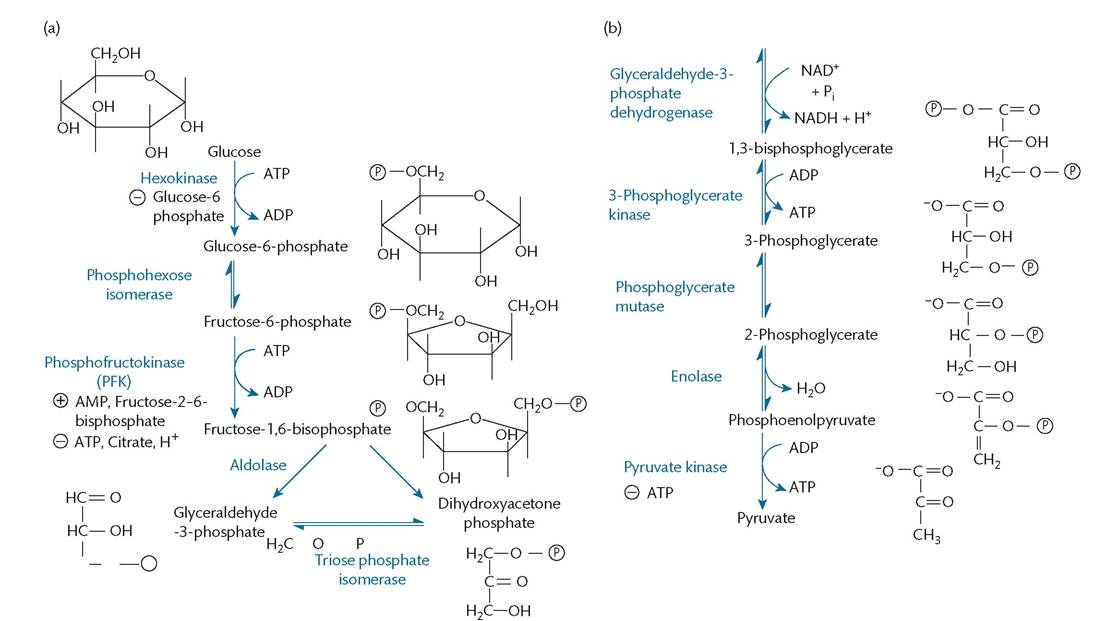
Figure 1.19 The glycolytic pathway.
(a) The energy-investment phase. (b) The energy-generation phase, which only glyceraldehyde-3-phosphate can enter.Reproduced from Neil Herring and Robert Wilkins, Biochemistry and metabolism, in: Basic Science for Core Medical Training and the MRCP, Oxford University Press (2015) with permission from Oxford University Press.
electrons. This results in the production of energy, which is used to stimulate the formation of ATP.
Fatty acid oxidation: this is a process whereby tissues produce energy by oxidation of fatty acids (Figure 1.21).
Triglycerides are stored in adipose tissue and in response to a variety of signals, a lipase enzyme becomes activated that cleaves fatty acids from glycerol. The free fatty acids are insoluble in water and are transported by albumin. Once a free fatty acid reaches the cell, it is subjected to pathway called beta-oxidation (Figure 1.22).
Catabolism
Haemoglobin: erythrocytes are degraded in spleen; the haemoglobin (Hb) is also catabolized. The globin chains of Hb are degraded to amino acids, which are reutilized. Haem is catabolized through various enzyme steps and finally converted to bilirubin. Bilirubin is then transferred to the liver where it is solubilized by the coupling of two glucuronic acid residues. The conjugated bilirubin is then excreted into the bile.
Urea cycle: this is an efficient detoxification process, which results in the excretion of more than 95% of the nitrogen via the urine in the form of urea. Most amino acid detoxification occurs in the liver. The first few reactions initiate in mitochondria and the latter part of the cycle takes place in the cytoplasm. Urea diffuses out of the liver into the circulation and gets filtered through the glomerulus of the kidney and passes into the urine (Figure 1.23).
Enzymes: these are proteins and mainly act as catalysts. The threedimensional structure is crucial to their activity. A change of structure and loss of activity is called denaturation.
Heating an enzyme usually results in complete loss of activity. Most enzymes are destroyed at 50-60°C. Organic solvents will also destroy their activity. Changes in pH affect the interactions between the amino acids and result in denaturation.Cell signalling
Cells communicate by secreting chemicals that act at a distance by forming gap junctions, which join the cytoplasm of the cells, or by expression of plasma membrane-bound molecules, which can affect other cells. Endocrine cells secrete hormones, which can travel throughout the body or can have local effects (paracrine effects). Some secrete hormones, which bind back to the same cell’s surface receptors (autocrine effects).
Nerve cells form specialized junctions known as synapses and secrete neurotransmitters.
Eicosanoids: these are signalling molecules that are made in the plasma membrane. They include prostaglandins, prostacyclins, thromboxanes, leukotrienes, and hydroxy-eicosanoic acids. They are all derived from arachidonic acid by the action of cyclooxygenase and lipoxygenase in the presence of oxygen (Figure 1.24).
Nitric oxide is also an important cellular signalling molecule involved in several physiological and pathological processes.
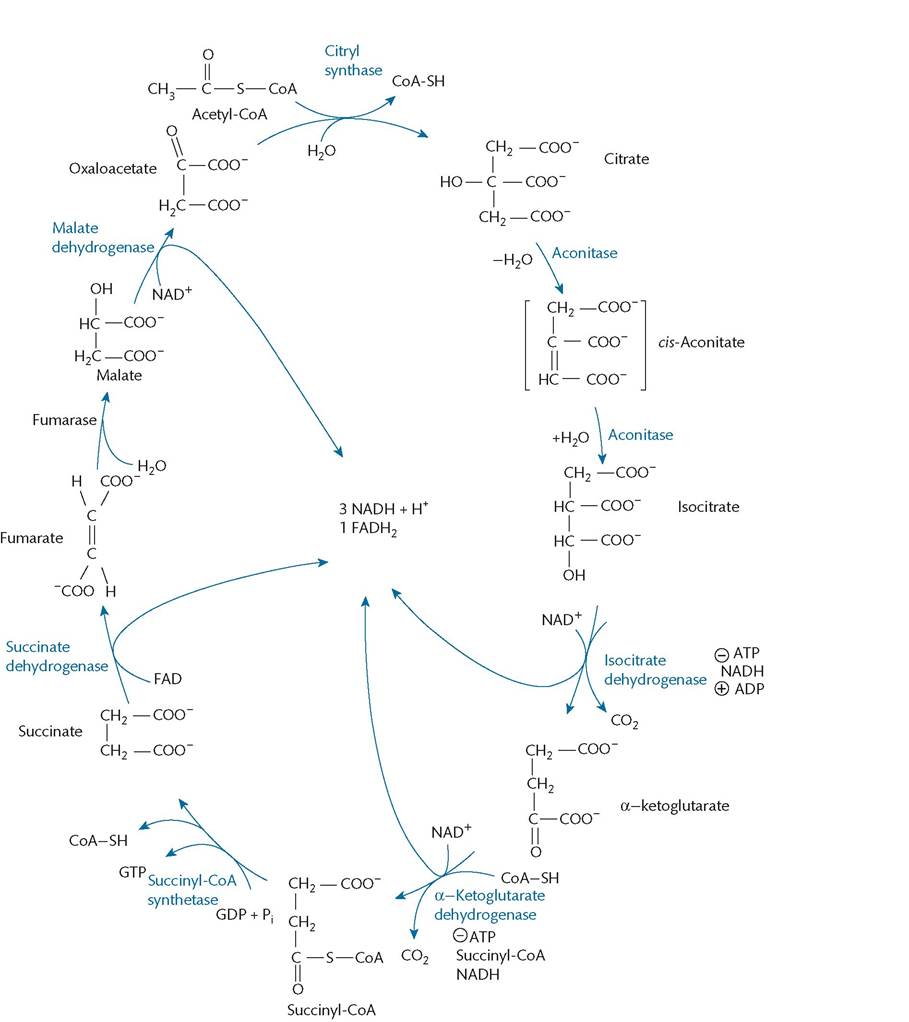
Figure 1.20 Complete citric acid cycle.
Reproduced from Neil Herring and Robert Wilkins, Biochemistry and metabolism, in: Basic Science for Core Medical Training and the MRCP, Oxford University Press (2015) with permission from Oxford University Press.
Calcium is an important intracellular messenger. Intracellular calcium is involved in the transmission of extracellular signals across the plasma membrane.
More on the topic Biochemistry:
- Biochemistry
- Diagnostic procedures
- Screening for chromosomal abnormalities
- Invasive Prenatal Diagnosis in Multiple Pregnancy
- Treatment postpartum-immediate and long term
- REFERENCES
- Clinical manifestations of polycystic ovary syndrome
- Prenatal diagnosis
- Summary points
- Introduction