Ectopic Hairs
Some dogs have very thick, ectopic bristly hairs emanating from a ring surrounding the eardrum. These bristles dig into the horizontal canal or move along the skin within the horizontal canal, resulting in cutaneous sensation and therefore itchiness to the ear.
Plucking these hairs seems to relieve the itch and generally results in cure, as the hairs do not usually grow back. Often wax plugs develop surrounding these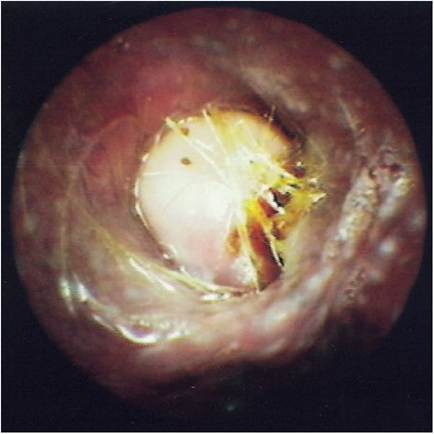
Figure 5-7
Dried medication causing a concretion to form in the horizontal canal. Oily and thick medications contribute to concretions more often than aqueous medications. hairs resulting in large concretions, many of which harbor large numbers of Malassezia organisms.
Pets with itchy ears may not have ear disease seen on otoscopic examination at all but may be responding to a localized pruritus associated with an underlying pruritic disease. Mast cells degranulate in the external ear canal, as does the skin of the rest of the body, releasing vasoactive substances that exacerbate inflammation and pruritus. In addition, referred sensations from the throat may cause itchiness in the ear canals.
Otitis externa is not always complicated by an infectious organism. Many dogs and cats with itchy ears have only otic inflammation, which will respond to a topical corticosteroid alone, so in these cases the use of antibiotics and antifungals may not be appropriate. Bacterial and yeast infections within the ear canal occur secondarily to the primary skin disease and are considered to be perpetuating causes of ear disease (see Chapter 8). When infections are present, the internal environment of the ear canal becomes hospitable to these organisms. For example, the hyperemia associated with atopy increases the watery, lipid secretions from the ceruminous glands. The increased humidity allows attachment of yeasts to the macerated keratinocytes. They can actively reproduce and metabolize the fats within the ear, leading to an otitis externa complicated by yeasts.
Treatment of infections within the ear canals may give the patient temporary relief of its disease. However, without addressing the underlying mechanism responsible for the infection, the disease will return shortly after the antimicrobial treatment is stopped.
More on the topic Ectopic Hairs:
- Skin appendages include hair follicles and hairs, sebaceous glands, apocrine glands, eccrine sweat glands and nails, all, except the nails, mainly present in dermis.
- Ceruminoliths
- Hair in Ear Canals
- Cushing Syndrome10
- Competition in Plants That Eat Animals: A Case Study
- Vertical Ear Canal
- Vague Objects
- Crusty and Scaly Dermatoses
- GENOMIC CONSIDERATIONS FOR THE PATHOLOGIST
- ANORECTAL MALFORMATIONS