HEAT DETECTION
‘Heat’ or ‘on bulling’ is the expression given to the behaviour shown by the cow when she is in oestrus, that is when she has a mature follicle in her ovary and is about to ovulate.
In herds using artificial insemination itis vital that heat detection is accurate and for this we need to know the signs of heat. These can be roughly divided into early, mid and late.
Early signs of heat
The cow becomes restless, perhaps standing apart from the main group; she may be looking around in the parlour instead of eating her concentrate, and her yield will be down. She may lick or sniff the urine and vulva of other cows or simply rest her chin on another cow’s back as shown in Plate 8.10. Sometimes there is playful head to head bunting and nudging behaviour. A proportion of cows will become very noisy, perhaps moving towards a gate or fence, calling to other cattle in the distance. In all the activities where two cows are involved, it could be either cow coming on heat. In the
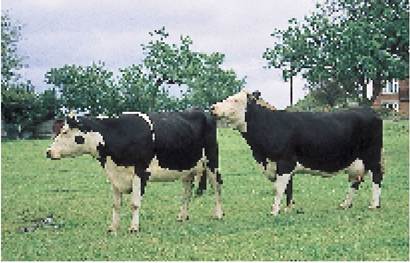
Plate 8.10. Heat detection: chin resting could be a sign that either cow is in the early stages of heat. In this instance both cows were on heat.
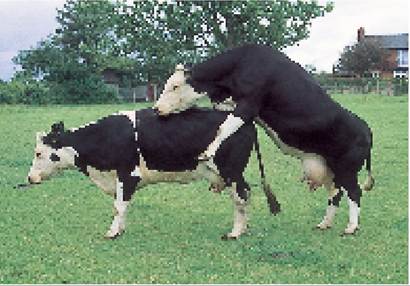
Plate 8.11. Heat detection: standing to be mounted is the best sign of heat. It is the underneath cow which is on heat, although the cow doing the mounting may be either a few days before or after bulling.
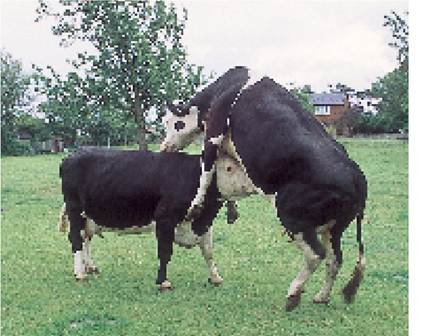
Plate 8.12. Heat detection: mounting head to head. In this case it is the top cow which is on heat.
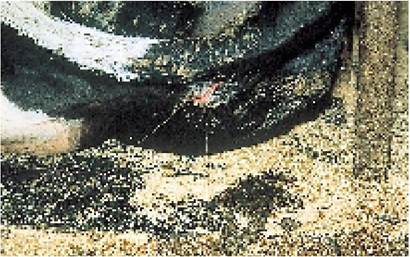
Plate 8.13. Heat detection: a flow of vaginal mucus is known as the bulling string.
early stages, the cow may try to jump others, but she will not stand to be mounted.Mid signs of heat
Standing to be mounted is the most sure and positive sign of heat (Plate 8.11) and you should always look for this. It is the cow standing underneath which is on heat. The exception to this is when the two cows are mounting head to head, in which case it is the top cow which is on heat (Plate 8.12). All the early signs of sniffing, nudging and chin resting may still be present, possibly slightly more intensely, and they are often a preliminary to mounting. You may see some enlargement of the vulva and later slime will be passed, known as the bulling string. This is often seen hanging from the vulva, particularly when the cow is sitting in the cubicles. The mucus is produced in the uterus, and released as the cervix opens when oestrus approaches. If you do not see the slime itself, look for signs of clear tacky mucus stuck around the tail at the level of the vulva, as in Plate 8.13.
Some common signs of heat
• standing to be mounted - the most important single sign
• attempts to mount other cows (which run away)
• rub marks on tail-head
• sweaty coat and muddy flanks
• behavioural changes, yield drop, bellowing
• mucous discharge (‘bulling string')
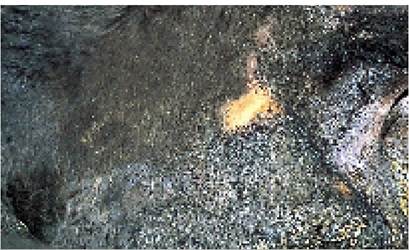
Plate 8.14. Heat detection: fresh raw rub marks each side of the tail head are a sure sign that the cow has been on heat.
Late signs of heat
The cow will now be less restless and will no longer stand to be mounted by others. You should be able to see the marks where she has been ridden however, for example areas of raw skin on the tailhead (Plate 8.14) or on each side of the tail, and there may be muddy marks down her flank. If you see fresh blood on the tail or mixed with the bulling string, you could well be too late: she may have been on heat yesterday or even the day before. Some say that blood on the insemination catheter is a sure sign that the cow will return to service.
This is not true, although it may indicate that she was inseminated fairly late in heat.Measurement of Heat Detection
There are two ways of measuring heat detection, namely:
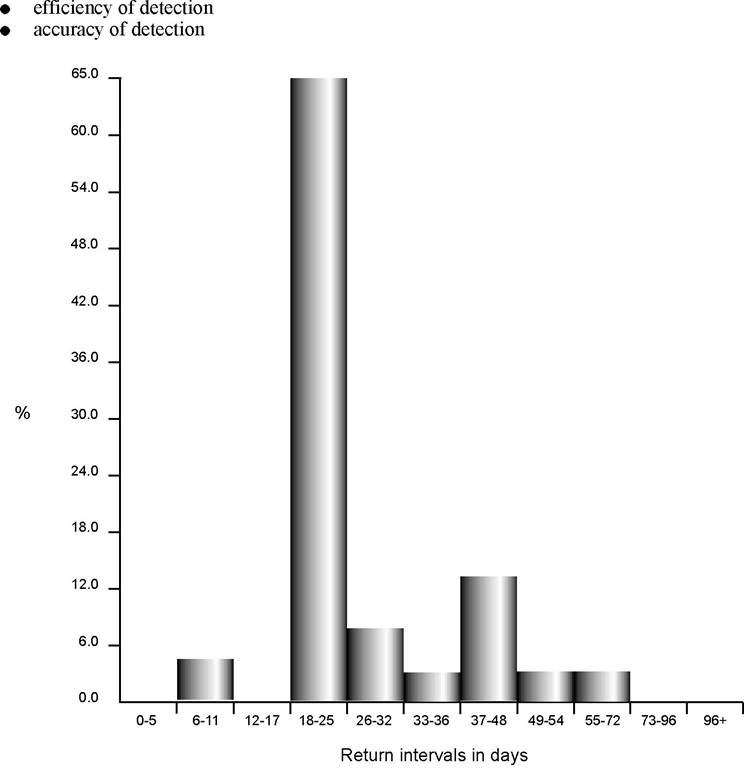
Figure 8.13. Heat detection accuracy and efficiency. This is a good herd, with a high percentage of returns at 18-25 days.
Efficiency of detection
This is a measure of how good you are at spotting heats. Assume that you have an autumn calving herd, that you intend to start serving on 5 November and that on that date there will be 50 cows eligible for service. By 26 November (21 days later) you have served 40 cows. Assuming that all 50 cows were cycling normally:
heat detection efficiency = 40 out of 50 = 80%
Compared to many large herds this is very good: 60% is an average figure and although 40% is poor it is by no means uncommon. However, even in our good herd, 10 heats were missed. If each lost heat costs £65.00 (see page 232), this means a potential loss of £650.00 in only 50 cows.
Accuracy of detection
Of the 40 cows submitted for AI in the above example, accuracy of detection measures the number which were actually on heat. Even in an above average herd, only 37 of the 40 cows presented for AI may have been in oestrus:
accuracy of detection = 37 out of 40 = 92.5%
Put another way, 3 cows (7.5%) presented for AI were not on heat and clearly their conception rate would be zero. Modern computer systems such as DAISY use the interval between serves (the inter-service interval) as a measure of both efficiency and accuracy of heat detection. Examples are given in Fig-
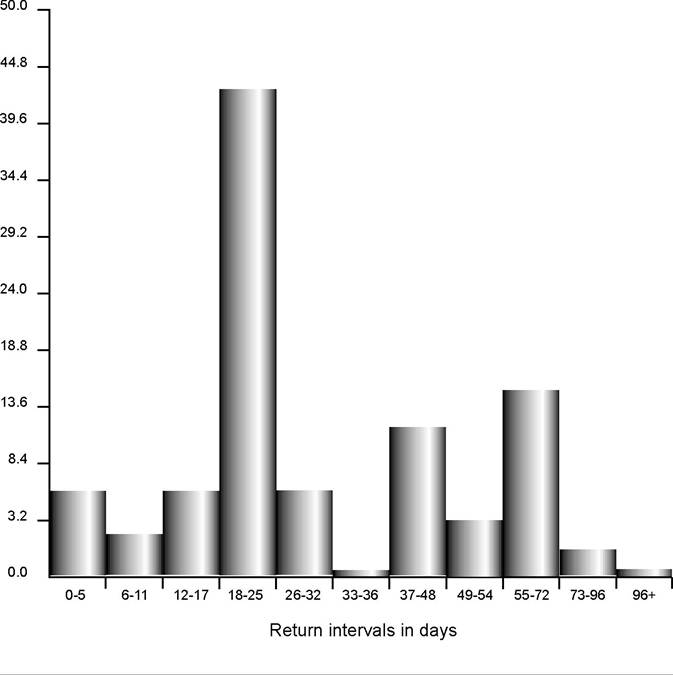
Figure 8.14. Heat detection accuracy and efficiency. A poor herd, with too many returns at 5-17 days, 26-36 days, 37-48 days and 55-72 days.
ures 8.13 and 8.14. Figure 8.13 shows a good herd.
The majority of returns (65%) were observed at18-25 days, with only a small peak (10%) at 36-44 days. The herd in Figure 8.14 obviously has problems:
• Too many cows were served at 5-17 days after the previous service. This could be due to inaccurate heat detection or a high incidence of cystic ovaries or hovering cows.
• Only a small peak (43%) were served at 18-25 days.
• Excessive numbers were served at 26-36 days. This could be inaccurate heat detection or embryo loss.
• Small peaks at 37-48 days and again at 55-72 days indicate that some cows were missed at 21 or both 21 and 42 days and suggests poor efficiency of detection.
Why is heat detection such a problem?
People such as Dr Esslemont and colleagues from Reading University have watched cows continuously, 24 hours a day, for 45 days or more. They found that most cows came bulling 40 days after calving, but for some of them heat periods were very short. This was particularly so in the dark, cold days of winter. For example, they found that although the average heat period lasted for 15 hours there were numerous problem areas as highlighted in the following:
• 20% of cows were on heat for less than 6 hours, with some for as little as 2 hours.
• There was an average of 20 minutes between mounts.
• 20% were mounted less than 6 times during their heat period.
• A larger proportion came on heat during the night, especially between 10 pm and 5 am.
Detection rates improved as lactation advanced, because the first one or two cycles after calving produced shorter heat periods. This is demonstrated numerically in Table 8.2.
| Cycle no. | No. cows | % detected |
| 1 | 96 | 12 |
| 2 | 96 | 31 |
| 3 | 96 | 40 |
| 4 | 82 | 52 |
| 5 | 53 | 64 |
Fonseca, Britt, McDaniel, Wilk & Rakes.
(1983), J. Dairy Sci. 66 1128. Cycles were monitored by assay of progesterone in blood samples collected twice weekly. Detection percentages refer to the proportion of cows that were detected by standing oestrus.Table 8.2. Rate of heat detection during the first 5 cycles after calving.
If a cow came on heat at 11 pm she might well have finished by 5 am, so heat detection would be almost impossible. This is most likely to happen towards the end of the breeding season, when cows are being served earlier after calving and when there are fewer cows in oestrus. Heat periods are then even shorter. The problem is compounded by the fact that around 5% of pregnant cows also show heat and stand to be mounted.
This is discussed in more detail on page 264, where possible courses of action are suggested.
Improving heat detection
You can do more for your overall herd fertility by improving heat detection than by any other single action. Because inaccurate heat detection leads to poor conception rates, improvements in heat detection not only get cows served sooner, but by being more accurate they also improve conception rates. Some of the more important factors are as follows:
Observation Careful and regular observation is the essential ingredient of good heat detection. Everyone on the farm should be on the look-out for cows on heat and the herdsman should set aside specific times of the day for heat detection. As the average interval between mounts is 20 minutes this should be the minimum period he spends watching. Twenty minutes may seem a very long time to stand watching and waiting in the middle of a busy day, but if it is compared with the £65 cost of possibly missing a heat, it will be time well spent.
More cows come on heat at night, so go and have a look round last thing in the evening, before you go to bed, and again first thing in the morning, before you start milking. This may not be a particularly welcome thought in the cold and dark of winter, but it can pay dividends.
The best time for observation is when the cows are resting. Most of them will be lying down cudding and some may be at the silage face. It is the small group of 3-4 cows standing away from the others which should attract your interest. Watch them carefully.When cows are being moved, for example, brought in for milking or put in a separate yard for scraping out or feeding, they are less likely to show oestrous behaviour. Admittedly some cows will be seen at this stage, but many will be more interested in the next feed than they are with mounting. This is why problems of heat detection sometimes occur in herds which are milked 3 times a day or fed late at night. The cows know that whenever they see the herdsman they are going to be fed or moved and so mounting activity decreases as soon as he arrives.
For similar reasons it is a good idea to have continuous low level lighting for the cows. There is some evidence that this increases both heat activity and conception rates. In addition, if the light is already on, there is even less disturbance to the cows when the herdsman comes in to check for heats.
Identify the buller area On many farms there is a small corner of the yard, perhaps halfway between the cubicles and the outside feeding area, where a group of cows congregate when one of them is on heat. This is known as the ‘buller group’ or the ‘buller area’ and if you can identify a favourite haunt such as this it makes heat detection much easier. This facility can be improved still further if a bull is penned adjacent to it. The presence of a bull not only draws cows on heat to one area, thereby increasing the manifestation of heat, but he also stimulates the early resumption of ovarian cycles after calving. Table 8.2 shows that heat detection gets easier with each cycle after calving, so the sooner the cow has her first cycle, the easier it will be to detect her on heat when she is ready to be served.
The other aspects of observation include almost any change in the cow’s normal behaviour. She may come into the parlour last rather than with an earlier group. Her milk yield is likely to be down - one survey in New Zealand showed that cows which had a 25% reduction in yield at one milking followed by a 25% compensatory increase at the next were highly likely to be in oestrus, and these changes were sufficient to make insemination worthwhile. Cows on heat may stand away from the feeding area and bellow over the gate, and when in the parlour they may be restless, shuffling their feet, looking around and not eating their food.
Minimise ill health and deficiencies Healthy cows are more likely to show signs of heat than animals which are thin due to underfeeding or disease. Lameness is especially important: cows with bad feet spend far more time lying down and are bound to be difficult to catch bulling. Similarly, ruminal acidosis and other digestive upsets giving abdominal discomfort are likely to suppress the signs of heat, so correct feeding, particularly providing adequate fibre, is also necessary. Some say that specific mineral and trace element deficiencies can lead to poor heats, sometimes called ‘silent heats’. For example, calcium, phosphorus, manganese and iodine have been suggested. While there may not be any conclusive proof of this, there are so many hormonal changes involved in the oestrous cycle that it must be logical to provide a properly balanced ration and thus avoid nutritional stress.
Housing Adequate loafing areas and good floor surfaces can also play a part. Overcrowding has been mentioned as a factor increasing the incidence of both lameness and environmental mastitis, and I am sure that cows which are packed into small, poorly ventilated and often purpose-built cubicle houses which give very little room for movement are much more difficult to spot when on heat. I like to see at least one open yard for a loafing area, somewhere where the ‘buller group’ can become active, without the risk of treading on the teats of other cows. This is one advantage of having the feeding area reasonably separated from the cubicles or bedding area.
The type of floor surface in the yard is also important. One trial compared cows on a dirt yard (which gave them a firm footing) with cows on concrete. Those on the dirt yard were seen standing to be mounted 50% more frequently (3.7 vs 2.5 mounts per 30 minutes) than those on concrete, and they were also in standing heat for longer (13.8 hours versus 9.4 hours). Results are shown in detail in Table 8.3.
Type of surface
| Dirt | Concrete | |
| No. cows | 69 | 69 |
| % in heat > 12 hr | 86 | 12 |
| Duration of heat (hr) | 13.8 | 9.4 |
| Mounts per 30 min | 3.7 | 2.5 |
| Stands per 30 min | 3.8 | 2.7 |
Britt, Scott, Armstrong and Whitacre (1986), J. Dairy Sci. 69 2195.
Table 8.3. Influence of foot surface on expression of oestrus in Holstein cows.
Floor surface also affects the accuracy of heat detection. For example, another trial looked at the proportion of cows submitted for AI which were not on heat. On dirt yards there was only a 3% error, but the error rate increased with concrete yard surfaces; 10% were incorrectly observed in alleyways, while the worst error was in cubicles. Of the cows submitted for AI on the basis of having been seen standing to be mounted in cubicles, 25% were not on heat! Cows mounted while in a cubicle cannot get away, of course, so they are bound to appear to be ‘standing’. This is further proof that a quiet inspection last thing at night, looking for cows in the ‘buller area’, is by far the best method of heat detection.
Increased activity of other cows If a cow fails to show heat it is assumed that she had a ‘weak’ heat - but possibly it was simply because other cows failed to mount her. It has been shown that the majority of ‘mounting’ cows are, in fact, close to coming on heat themselves, and if our bulling cow is the only one on heat and all the other animals are in mid cycle, then she will be ridden relatively few times. For example, in a group of heifers, when only one animal was on heat and no others were close to bulling, standing to be mounted was seen only 2-3 times per hour. However, if two heifers were on heat (or one was on heat and one was about to come on), then standing was seen 7 times an hour. This has important practical implications for the smaller farmer, who is more likely to have only one cow on bulling at any one time. The ideal group size for effective heat detection is 30-40 cycling, non-pregnant animals. Injecting a steer or barren cow with hormone to make them continually sexually active would make an ideal heat detector, but this is rarely done.
Oestrus synchronisation Grouping cows to come on heat together and in so doing increasing the oestrous activity of each cow is, in my opinion, one of the main reasons for using prostaglandin and other heat synchronisation systems at routine veterinary visits. Cows not seen bulling are one of the most common examinations requested. By using a heat synchronisation treatment, not only do they come on heat sooner (possibly saving £3 per day), but heats will be stronger, thus improving both heat detection and conception rates. Details of oestrus synchronisation methods are given in a later section.
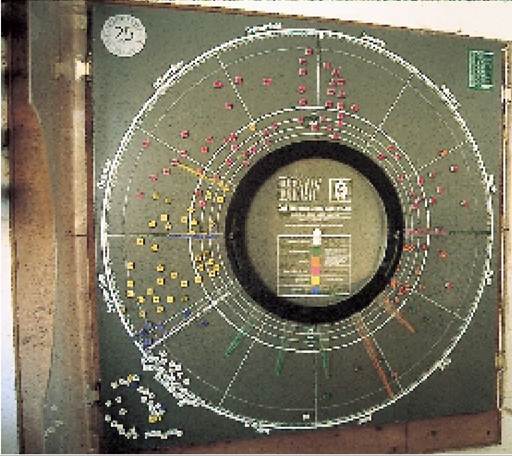
Plate 8.15. A breeding calendar is an excellent system of assessing the status of a herd. If you suspect a cow is bulling, check the calendar to see if she was ‘on' 3 weeks previously.
Records Records play a vital role in heat detection. If you have a visual display board like the one in Plate 8.15 you can see which cows should be on heat over the next few days and they can be watched especially carefully. It also helps with the ‘buller group’. The herdsman may see three cows in a ‘buller group’. He records their numbers on a pad and in the office he finds that only one of them was due on heat: one had just calved and the other one was already pregnant. He now needs to go back and watch the suspect cow much more carefully.
Cow identification You may see a cow jump when she is too far away for you to be sure which cow it is. Clear markings, preferably at both the front (ear tags or collars) and rear (freeze-branding) of the cow, make mistakes less likely. This is particularly important if you look at the cows last thing at night and have to leave a message for someone to keep the cow in for AI on the following day, or if you want other farm staff to assist with heat detection.
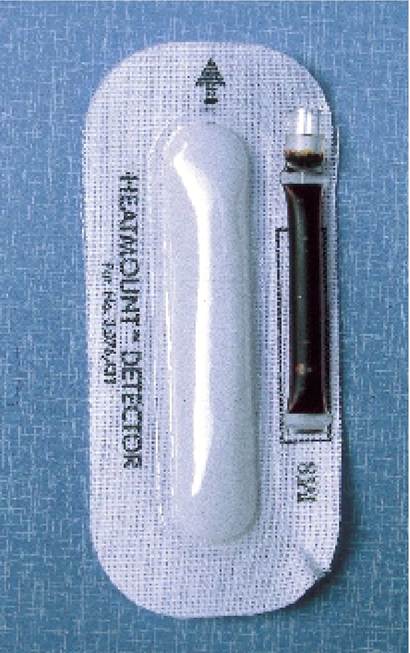
Plate 8.16. A Kamar heat mount detector consists
Regular veterinary visits Although not specifically aimed at heat detection, routine fertility visits play an important part (see page 277 for a fuller description). Cows which have not yet been seen on heat are identified for special attention, whereas others can be confirmed as pregnant and need not be watched so closely.
Heat detection aids There are a few devices which can be used to help you identify a cow on heat. I think the best of these is the Kamar heat mount detector. This consists of a small clear plastic tube (Plate 8.16) with a fine hole in the constriction at the front end. It is enclosed in an opaque plastic shield fixed to a piece of cloth and the device is glued to the tail-head of the cow, making sure the arrow is pointed forwards. If the
of a tube of dye contained in a plastic outer cover. The dye is squeezed out of the very fine hole at the front end of the dye tube.
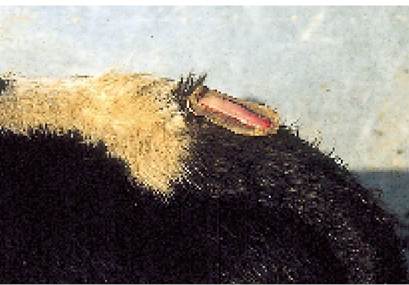
Plate 8.17. A positive Kamar. This cow is on heat: the plastic cover has turned red, the cloth surround is soiled brown and the cow's coat is sweaty with the hair standing on end.
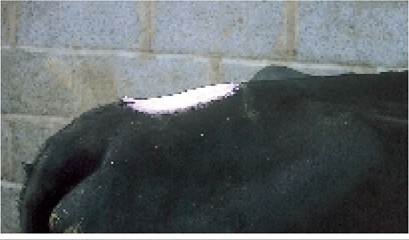
Plate 8.18. Tail paint can also be used for heat detection. When the cow is mounted, the paint cracks or is rubbed off altogether.
cow walks under a rail the ink in the inner tube is pushed to the back but cannot escape. If she is mounted by another cow, however, the weight and thrusting action of the mounting cow force the dye forwards, through the fine hole at the front of the tube and into the outer casing. The white opaque plastic then turns a brilliant red colour, as shown in Plate 8.17, indicating that the cow is on heat. False positives do occur, for example due to an oestrous cow mounting a Kamar cow when she is not in a position to escape. The plate probably shows a definite oestrus, however, because the sides of the Kamar are dirty and the hair on the cow’s tail arch has been rubbed forwards.
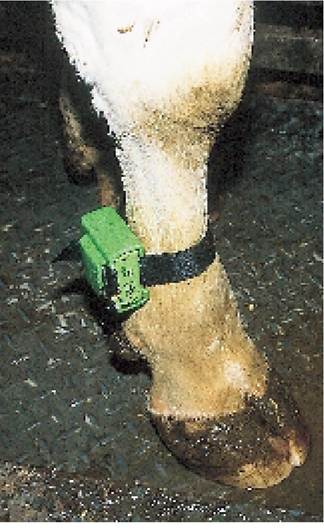
Plate 8.19. A pedometer strapped to the cow's leg measures her movements. A sensor at the entrance to the parlour leads to a computer printout (Figure
Tail paint is used in a similar way. A thick layer of paint is 8.15) which gives the activity of the cow applied as a band along the tail-head (Plate 8.18) so that it between milkings. flattens the hairs of the coat which run backwards. The paint dries and hardens, but when the cow is mounted, it cracks up, or is rubbed off altogether. With the paint, therefore, you have to remember which cows were marked and then act as soon as the paint has gone, whereas the appearance of a bright red Kamar is much more obvious.
Pedometers, devices which are strapped to the cow’s leg to register movement, are becoming more popular with the increasing computerisation of the milking parlour. An example is shown in Plate 8.19. As the cow enters the milking parlour she passes across a sensor which off-loads the information about her activity since the previous milking. This is then summarised in the printout shown in Figure 8.15. Day 0 is today’s date, so cow 770 was bulling 3 days ago, when there was a big increase in pedometer activity (and also a reduction in yield), and 21 days ago).
With any device you must remember that it is only an aid to heat detection: you should consult your records to see if the cow is supposed to be on heat and then look carefully to see if she is showing any other behavioural signs or rub marks.
The other two heat detection aids worthy of note are closed-circuit television cameras, so that the cows can be watched from the comfort of your kitchen or living-room, and sniffer dogs. Apparently dogs can be trained to sniff out and identify cows on heat: perhaps they could also sort the bulling cows from
the others and phone the AI!
More on the topic HEAT DETECTION:
- HEAT INJURIES
- Heat Syncope
- Heat Stroke
- Heat-Induced Illness
- PREGNANCY DETECTION
- Detection, Investigation and Preparation
- Heat Exhaustion
- Microscopic Detection of M. bovis
- Detection of MAP in Crohn’s Disease Patients
- DETECTION OF DNA FRAGMENTATION
- COSTS OF AMISSED heat
- Prey exhibit behaviors that can prevent detection or deter predators
- SYNCHRONISATION OF OESTRUS
- THE COMPONENTS OF THE CALVING INTERVAL
- Chapter 15 From Passions of the Soul Rene Descartes