PARASITIC CAUSES
Ringworm
This is a fungal infection caused by Trichophyton verrucosum, although occasionally other species of ringworm (e.g. Microsporum) may be involved. The fungus grows on the skin and penetrates the hair follicle (Figure 10.1).
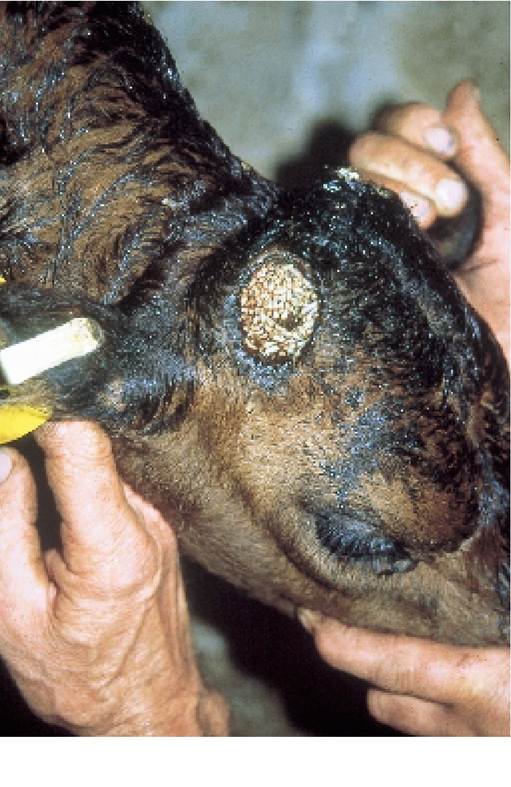
Affected hairs become very brittle and they break off at the surface of the skin, producing circular bald patches. The presence of the fungus also leads to thickening and flaking of the skin, and grey-brown debris can be easily picked off. The head and neck are the most commonly affected areas (Plate 10.1), especially around the eyes, nose and ears, although lesions may occur over the whole body. Occasionally secondary bacterial infection occurs and the lesions become moist and discharge pus.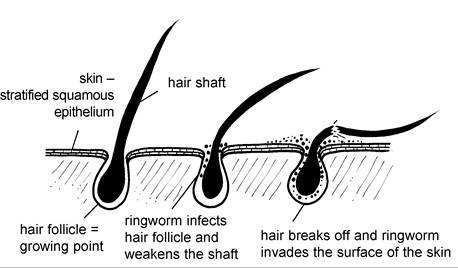
Figure 10.1. Ringworm infection. This leads to loss of hair and a crusty scaling over the skin surface.
Ringworm can cause irritation. Affected calves may rub their heads on troughs and hayracks and these act as a source of infection for other animals. The spread from one calf to another is especially common at feeding time.
Treatment
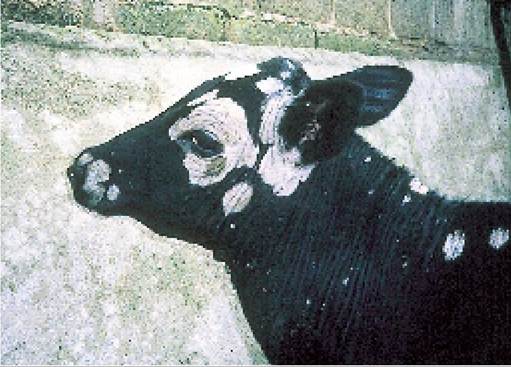
Plate 10.1. Dry crusty areas of skin are typical of ringworm.
Traditionally, affected skin was painted with creosote, diesel oil or other chemicals which would physically kill the ringworm. Aerosol cans of copper-based chemicals achieve a similar effect and are often used. While these treatments are not without merit, they can be dangerous to the calves’ eyes and they have been largely superseded by more modern drugs, the two most important being: 1. Griseofulvin This is an antibiotic-based drug which is given by mouth daily for seven days. The drug is incorporated into the growing hair and skin, so that by the end of a week’s treatment the whole animal is covered by a protective layer of griseofulvin, and this persists for four to six weeks.
Griseofulvin does not actually kill ringworm: it only prevents its growth. (It is fungistatic, not fungicidal - see Chapter 1.) The calf’s own immune defences are left to destroy the fungus, and this has two important practical considerations. Firstly, healthy calves in good condition respond to treatment better than do poor and unthrifty animals, which may have concurrent pneumonia or salmonella infections. Secondly, although the lesions may start to resolve by the end of the first week, the calf remains infectious to others for a further two to three weeks.Treatment should be given to the whole affected group. Since the incubation period of ringworm is approximately three weeks, attempts to separate and treat individual affected calves are generally unsuccessful, because further cases will probably continue to appear in the non-affected group. Occasionally higher doses for longer periods are required.
2. Natamycin This is administered as a spray and it is essential that all parts of the animal are thoroughly soaked at the rate recommended by the manufacturer. It is simply not sufficient to spray across the top of the calves at random. As with griseofulvin, the whole group should be treated and it is also worthwhile applying any remaining spray to troughs and fittings, since it will also counteract infection at these sites.
Prevention
The only sure way of prevention is to avoid contact with other animals and infective material. Ringworm seems to occur even in a closed herd, however. Often it affects successive crops of calves for two or three years, and then it is not seen again for a further few years. The spores produced are very resistant and may persist for up to four years if they are in a dry place. Elimination of infection from a building is therefore very difficult and is usually attempted either by a flame-gun or by painting with creosote or a 4% sodium carbonate (washing soda) solution.
Calves in poor condition are often the worst affected and maintaining a high standard of general health and nutrition will help to reduce the effects of ringworm.
Sometimes an injection of vitamins A, D and E aids recovery. Ringworm is killed by ultra-violet light and many cases resolve spontaneouslywhen calves are turned out in the spring. This is probably a combination of the effects of the sun and improved nutrition. Ringworm can also occur in outdoor cattle however, especially in the autumn, and if they are then housed under rather cramped conditions the disease can spread rapidly.
All species of animal ringworm are infectious to man, especially younger children, and care should be taken when handling affected animals.
Lice
Although there are many cheap and effective treatments available, it never ceases to surprise me how many farms suffer reduced growth rates from heavy lice infestations. There are two separate types of lice:
Sucking lice
Haematopinus eurysternus Linognathus vituli
Biting lice
Damalinia (Bovicola) bovis
Lice live on the surface of the skin and can just be seen with the naked eye. They are dark grey/brown in colour and approximately the size of a flattened pin-head. To see them, it may be necessary to look in several places, pulling aside the hair with both hands and looking for movement at the base of the hair. The other sign of infestation is the presence of lice eggs which are glued to the hair shaft and are seen as small white dots (Plate 10.2).
The life cycle is very simple: adult females lay eggs which hatch after ten to fourteen days into ‘nymphs’ or immature lice, and these take two weeks to mature. Adult egg-laying females may then live for a further four weeks, during which time they will lay several hundred eggs.
Clinical signs
The first sign of infestation is irritation. Affected animals rub their necks and backs, or there may be patches of hair loss where calves have been biting at their skin (Plate 10.3). This is especially true for biting lice, which can be intensely irritating. The shoulders, neck and back are usually
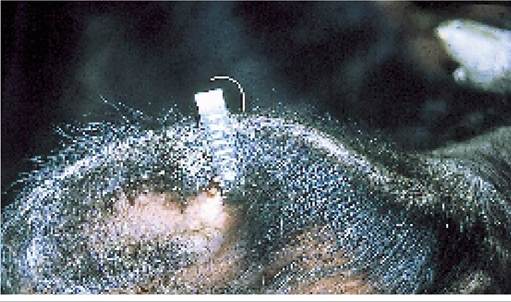
Plate 10.2.
The small particles sticking to the hairs around the ear tag are lice eggs.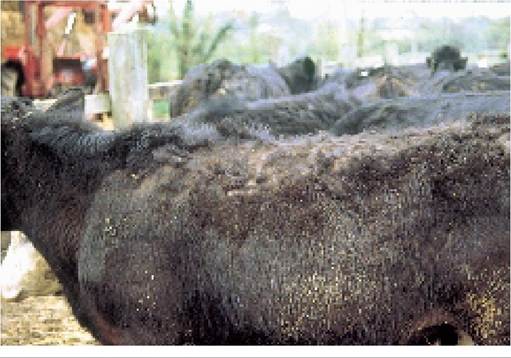
Plate 10.3. Lice. Irregular hair cover such as this in calves is a sign that they have been biting at their coat.
the worst areas, and the belly may also be affected. A common site is in the inguinal region, on the scro-
tum and in the groin (Plate 10.4). On a louse-infested neck, the coat is often arranged in lines running from top to bottom (Plate 10.5) and this makes diagnosis easy. Biting lice produce a crusty scurf on the
surface of the skin, while sucking lice can produce a severe anaemia.
Calves of poor nutritional status are far more susceptible to lice. I have often seen instances where calves are so badly run down with a heavy louse infestation that they lose weight and are much more prone to ringworm, pneumonia and other diseases. The heaviest louse burdens are seen in calves eight to twelve weeks old.
Both lice and mange (see next section) cause a surprising amount of damage to the skins of cattle and in so doing reduce the value of the hide. It takes at least 12 weeks for a hide which has been significantly damaged by lice to recover. Even if cattle are treated well in advance of slaughter, it is possible that they will get reinfected.
Treatment
The traditional louse powder, 0.6-1.0% gamma benzene hexachloride (BHC) is effective, provided that it is thoroughly worked into the coat. Pyrethroid compounds can also be used and these are often available in the form of pour-on fly repellents. There are many brands and provided that they are well applied, they should give a persistency of two to eight weeks, although it is sometimes difficult to get the full recommended dose to stay on the animal.
Pour-on organo-phosphorus warble fly treatments (Chapter 11) kill sucking lice very effectively. Normally only half the warble dose is sufficient, but many products are not recommended for use on calves less than two to three months old.
You should check the manufacturer’s instructions.Avermectin anthelmintics (ivermectin, moxidectin and doramectin) can be given by subcutaneous injection or as pour-ons. They are also
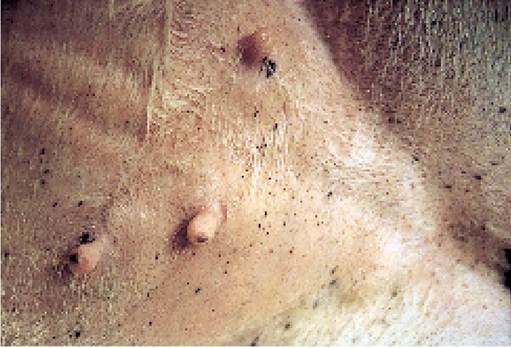
Plate 10.4. Lice can be seen as small dark brown dots around the teats.
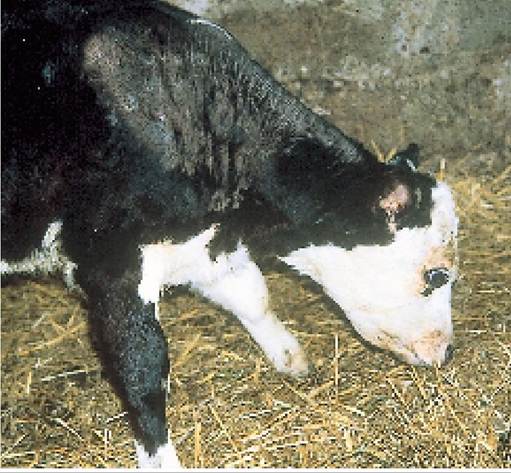
Plate 10.5. Lines running down the neck are typical of lice infestation. Ringworm and lice often occur together.
effective against sucking lice, mange and warbles. The small-volume dosage means that avermectins are very easy to administer, although they are more expensive than some other treatments, and are probably used mainly in the autumn when the whole range of their anthelmintic actions is needed. They are less
effective against biting lice.
Only fly repellents and possibly avermectins have any persistency against lice and none of the products mentioned have any effect against their eggs. A repeat treatment should therefore be given after two weeks to kill any lice which have recently hatched from eggs which were present at the time of the first treatment. Avermectins persist in the body for two to three weeks, and repeat treatments are therefore not needed.
Infestations drop to a low level in the summer. This is probably because the animals’ coats are cleaner, they are less tightly confined, their nutrition is better and the high temperatures of direct sunlight, ultra-violet light and dry skin conditions are all less favourable for growth of lice.
Mange
Mange is most common in adult cattle. The mange mites are much smaller than lice and cannot be seen with the naked eye. They are closely related to the mites which cause scabies in man, canker in dogs’ ears and scab in sheep. There are two types of mites in cattle, surface feeders and burrowing mites.
Surface feeders
Chorioptes bovis
Psoroptes ovis
Burrowing mites
Sarcoptes scabei
Demodex bovis
Although they are only surface feeders, Chorioptes and Psoroptes both cause intense irritation and thickening of the skin.
The common site for infestation with Chorioptes is in the fold of the skin beside the tail head (Plate 10.6), although in neglected cases the mite can spread almost anywhere over the body. Psoroptes commonly occurs over the perineum (Plate І0.7), that is the skin extending from the base of the tail to the udder. Sarcoptes is also seen around the perineum, but often extends over the sides of the neck and along the belly and flanks. Demodex is less common.The life cycle of all mange mites is direct. Adult females lay eggs on the skin (or in skin tunnels, like the burrowing mites such as Sarcoptes). Eggs hatch to form nymphs which mature to become adults in one to two weeks. Females may lay around 100 eggs in their lifetime and an adult may live for five to six weeks. Mite infestation is intensely irritant. Cattle rub and scratch against walls and posts, which damages buildings as well as leaving eggs on the wall. These eggs can survive for three to four weeks and therefore can be picked up by other animals rubbing past at a later date. Continual irritation is a stress factor, reducing food intake and production.
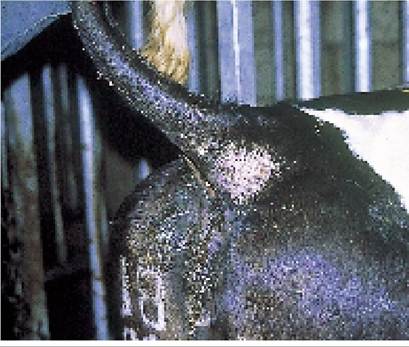
Plate 10.6. Chorioptic mange. Thick, scabby and sometimes moist areas are seen beside the tail.
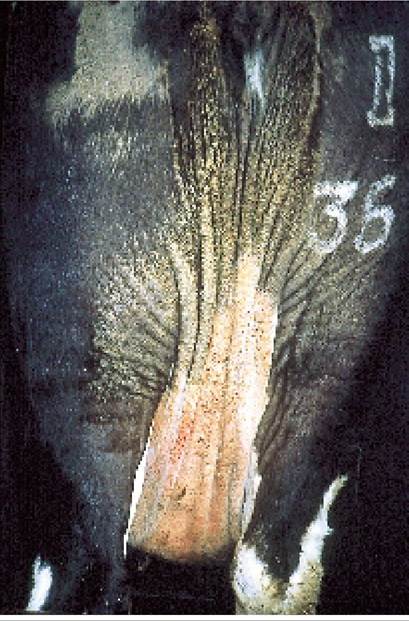
Plate 10.7. Psoroptic mange produces an inflammation and more generalised thickening of the skin from the tail to the udder. This could also be sarcoptic mange.
During the 1980s very little mange was seen in the UK. This was associated with the compulsory warble fly dressing which was being applied at that time. Now that warbles have been eradicated, mange seems to be common. A routine treatment in December/January is a wise precaution for every dairy herd and is certainly not expensive. The treatments commonly used are organo-phosphorus pour-on products or avermectins, avermectins being especially used in younger cattle at housing. Most pyrethroids and other fly repellents are not effective against mange.
Warble Fly
Warble flies have been eradicated from the UK. They are a notifiable disease and are discussed in Chapter 11.
Fly Strike
Maggot infestations of cattle are not common in the UK, although in other parts of the world screw-worm is a major problem. Fly strike occurs in hot, humid weather, with the eggs being laid on warm, moist and dirty parts of an animal’s body. The maggot infestation on a dehorning wound of the calf in Plate 10.8 is a typical example. Maggots may also be seen invading infected feet. In this site they will be removing debris from the wound and are often of benefit to the healing process. Sometimes infestations occur around the tailhead of recumbent cattle, especially if they are lying on soiled bedding. Provided that the animal is turned regularly, so that the skin is kept dry, this should not be a problem, even in a hot summer.
For treatment, physically scrape all the maggots from the affected area, clean the wound with a warm, dilute solution of antiseptic and then apply a fly repellent. Do not apply concentrated sheep dip, as this might be absorbed through the open wound and be toxic to the animal. An injection of an avermectin type wormer will also help in control.
Fly strike. Maggot infestation following disbudding in
Plate 10.8. a calf.
More on the topic PARASITIC CAUSES:
- BIBLIOGRAPHY FOR PARASITIC DISEASES
- Bibliography for parasitic diseases
- BIBLIOGRAPHY FOR PARASITIC DISEASES
- PARASITIC INFESTATIONS
- PARASITIC DISEASES
- PARASITIC DISEASES
- PARASITIC DISEASES
- PARASITIC DISEASES
- PARASITIC DISEASES
- PARASITIC DISEASES
- Parasitic Dermatosis
- BIBLIOGRAPHY FOR PARASITIC DISEASES
- FIVE The Parasitic Insects, Mites, and Tick
- ANTI-PROTOZOAL AND ANTI-PARASITIC AGENTS
- Skin diseases are commonly recognised in all ages of cattle.
- neurocysticercosis
- LIFE CYCLE STRATEGIES AMONG PROTOZOA
- In addition to the parasites outlined in this section, there are other parasites that are rarely seen in rats maintained in well-managed facilities.