Trichobezoar: Hairball
Gastric trichobezoars are frequently present as an incidental finding at necropsy in rabbits that have died from other causes. Depending on the size, however, anorexia, wasting, and occasionally gastric rupture and death may occur in severely affected animals.
Antemortem diagnosis is usually confirmed by palpation and sometimes by contrast radiography. Predisposing factors implicated include excessive grooming and hair chewing due to boredom, insufficient dietary roughage, poor gastric motility, and a sedentary lifestyle. “Outbreaks” of trichobezoars have been seen in laboratory rabbits raised in cold climates, and then introduced to warm indoor housing. They also tend to occur more frequently in sedentary rabbits, which may have decreased gastric motility. At necropsy, animals may be in fair to poor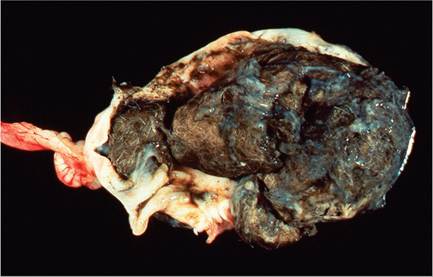
FIG. 6.80. Trichobezoar filling the stomach of an adult New Zealand White rabbit. These masses can be intractably felt-like in consistency, resulting in gastric occlusion, anorexia, and death.
condition. Large felt-like trichobezoars usually fill the stomach, extending into the pyloric region (Fig. 6.80). The intestinal tract usually contains scant ingesta. Hepatic lipidosis is a characteristic finding. Gastric rupture and peritonitis may occur. Trichobezoars have also been found in the large intestine of rabbits.
More on the topic Trichobezoar: Hairball:
- Trichobezoar: Hairball
- Gastric Ulceration
- Gastric Candidiasis
- Causes of Rupture
- Other Gram-Negative Bacterial Infections Bordetella hinzii Infection