Synthesis
From A to D, the theoretical survey has had to traverse four separate discourses and revealed anything but uniformity of views. Perspectives and opinions diverge. Empire has been too important and many-sided a historical phenomenon to allow for consensus to develop or for the various approaches to fuse.
One of the more surprising insights to emerge from the literature, left here to the end, is that it is difficult to make a theoretically clear distinction between defense and aggression among states locked in mutual rivalry within the same system. The defensive measure of one party will seem to another an intolerable act of aggression. Was Stalin's incorporation of Eastern Europe in a Communist block prompted by an understandable Soviet need for security against new invasions from the West? After the September 11th attacks, it very quickly became clear that the new doctrine of heightened security demands left no obvious limits to where US intervention might be required. Mommsen, the Nobel Prize laureate and towering nineteenth-century historian, was even able to declare Roman imperialism to have been defensive in nature. As a phenomenon, imperialism—the domination of weaker polities by stronger states and societies—transcends individual justifications, however important these may have been. Imperialism is simply a central property of the process of state-formation, a strong current, even if it has been moving to a historically alternating rhythm.[198] No single cause explains its existence, nor can it be ascribed to just one class of people. Capitalist command of markets, territorial control of agrarian resources, aristocratic honor, religious mission, middle-class profit, national assertion, and military rivalries all have been identified as crucial. But they have been so at varying times and in shifting constellations. Social power, as Michael Mann argued in his grand historical sociology, has no ultimate origin. It consists in the organizational capacity produced by the mobilization of people in all spheres of life—economic, political, ideological, and military—in different combinations and configurations.[199]This is a useful take, perhaps in particular, for conceptualizing imperial power— a composite phenomenon, always a bundle—and may help to impose a degree of order on the apparent, and often daunting myopia of history. In order to synthesize the imperial experience in world history, the four separate theoretical discourses can be arranged within the analytical scheme of Mann to constitute the dimensions of a matrix to structure our history and map the changing shape of empire. Economically, empire appeared as a form of monopoly power, which extracts resources and draws rents from protection. Politically, empire was revealed to rely on compulsory cooperation, harnessing select and privileged elites from subject societies, who performed the tasks of local government for the metropolis in return for a share in the “spoils of conquest and domination.” Ideologically, the consolidation of imperial rule depended on the formation of trans-regional or cosmopolitan cultures that elevated local elites above their home community and tied them to the cause of empire. Finally, empire may be analyzed in terms of military contests. Rivalry produced conquest, while enduring competition undermined hegemony. For all of the characteristics identified, the governing logic is expansive and extensive rather than intensive. Successful conquest eliminates rivals by absorption and reduces the intensity of competition. Imperial cosmopolitanism has normally aimed at integrating elites in extensive networks spanning diverse regions, rather than at intensively appealing to the sentiments of the mass of population. Compulsory cooperation enables minimal government, but admits a large degree of autonomy to local communities and works as a serious constraint on the ability of the metropole to penetrate provincial society intensively.
Monopolistic extraction of resources and protection money depends on widening the reach of the enterprise and then keeping costs at a stable minimum. Intensifying investment in the governmental apparatus might well outstrip income and undermine the surplus. But, how these different dimensions and basic characteristics of imperial power worked out in shifting combinations over time can hardly be expressed satisfactorily in a simple, abstract model. To capture the rich variety and changing weights of phenomena, to weave the different threads together and reveal historical development, the only viable strategy is narrative, pursued at different levels of generalization.In the many histories of individual empires that follow in Volume 2, we attempt to survey the imperial experience through time and across the globe via a large set of representative examples. This history of histories has been structured into eight chronological phases, each prefaced by a synthesizing overview that identifies the global themes, patterns, and connections characteristic of the period and its imperial developments. Volume 1 operates on a higher level of generalization and proceeds to examine a range of themes through concrete historical comparisons across the imperial experience. Here, first, comes the cumulative result or impression in broad outline, a narrative synthesis that seeks to take a global view and determine the predominant orders and trends in the long world history of empire from the perspective of the four key theoretical parameters of protection costs, elite formation, cosmopolitan culture, and military rivalry. To help the contours of this story emerge clearly, the narrative has been anchored in a set of eight world maps (Maps I-VIII), one for each of the periods into which the narrative survey in Volume 2 has been divided (Parts I-VIII).
To be sure, maps—and imperial maps especially—risk unduly reifying the claims of power and of rulers, exaggerating the level of control actually achieved, blotting out rival perspectives while naturalizing the view from the metropolitan center.
These are all legitimate concerns and have been voiced often enough (see Hostetler, Chap. 8 in this volume). Yet, even if there is an element of playing with fire, when painting the world in a few simple colors of empire, the map-making game is more than merely crude, blunt, and deceptive. Synthesis feeds on simplification—indeed needs it. History, after all, should be more than an exercise in the command of meandering detail. To remain relevant and offer guidance, it must also attempt to identify broader patterns and processes that only become visible by placing phenomena in sequence and grouping them within wider contexts; it demands the broad brush, and for that, few other tools are as helpful as global maps.These maps, then, tell a story that trace a glacially expanding universe of imperial polities in which European colonialism appears as only one, or perhaps two, in a series of significant milestones that delineate the eight phases into which this history has been divided. The first, however, is marked by the rise of empire in the ancient Near East. Empire emerged as a strong force in history, closely intertwined with the process of state formation, in the aftermath of the so-called Bronze Age urban revolution, sometime during the third millennium bce.[200]
Map I. Bronze to Iron Age, the Near-Eastern “Invention” of Empire (Third Millennium to 300 bce)
By then agricultural populations had grown dense enough to sustain, or rather to invite, state-formation. Early agriculturalists had been able to make do with less intensive forms of cultivation. Clearing a plot of land, they would use it for a number of years before moving on to fresh territory and starting over. Slash and burn agriculture was relatively undemanding in terms of labor and, as long as populations were small, much preferable from the perspective of peasant producers who would obviously aim to satisfy their needs at the least possible effort. The surplus of food generated even under this light regime was enough to support growing numbers of children and, for that reason, population slowly rose.
Eventually, as it became more difficult to find attractive territory not already claimed by others, more intensive forms of agriculture became necessary. Regional patches evolved where peasants had to become more sedentary. The succeeding history of pre-industrial societies, analyzed in this volume by Beattie and Anderson in Chapter 14 on the ecological interaction of empire and natural environment, was shaped by the gradually expanding frontier of this form of life.[201] Populations of peasant cultivators and urban dwellers existed in a dynamic relationship where growth in the size of territory and number of people was periodically capped by waves of the epidemic diseases that had developed to take advantage of bigger and denser human host populations. Occasionally such diseases struck with devastating effects, but each time, population bounced back and climbed to higher levels. In the long run, as we saw Lattimore argue above in the case of China, denser forms of sedentary peasant society expanded.[202] This process first got under way in the flood valleys of Egypt, Mesopotamia, the Indus, and the Yellow River, where easy access to water created conditions particularly favorable to the cultivation of grain. High yields and labor-intensive irrigation mutually reinforced one another. Copious harvests made it possible to feed more mouths, while the growing number of people constituted a ready pool of labor that could be used to expand the irrigation works even further. Soon the level of population had become unsustainable outside the river valleys; the peasantry was trapped and lay open to predatory elites. In return for a part of the surplus generated through the hard toil of sedentary peasant families, priests and warriors emerged to offer protection from the combined evils of divine wrath and armed assault.[203]This was the beginning of urbanization and state-formation. In the sale of protection, however, the underlying logic favored economies of scale, as F.
C. Lane realized. Soon enough the state elites of warriors and priests began to compete with their neighbors in an attempt both to expand their holdings and gain access to rare prestige goods and natural resources, both of which had to be gathered from outside the simple production world of peasant society. At least by the end of the third millennium bce, empire had emerged among the rivaling small-state societies of the ancient Near East (phase I on the map). When writing, Lane had in mind the compact, middling monarchies of early modern Europe. Yet, although a middling size in territorial extent—big enough not to be easily overcome by enemies and small enough to remain closely governable—was increasingly perceived as the ideal among European thinkers of this period, a political theorist such as Giovanni Botero still recognized some advantages in more extensive empires. In the Della Ragion di Stato, he included a set of trenchant observations about the big empire builders of his late sixteenthcentury world. Both the Spanish and the Ottomans, he realized, enjoyed a number of strategic advantages. Externally, each of these powers could keep their army continuously occupied by moving it from one enemy theater to the next. Their troops, therefore, were always well trained and sharp. Internally, the rule over diverse, but separate, communities meant that opposition could be overcome. Individually, isolated rebels were normally little match for the specialized army of a metropolitan government that could draw on the resources of the entire realm.[204] Among stateforming societies, in other words, the economy of force often favored the continuous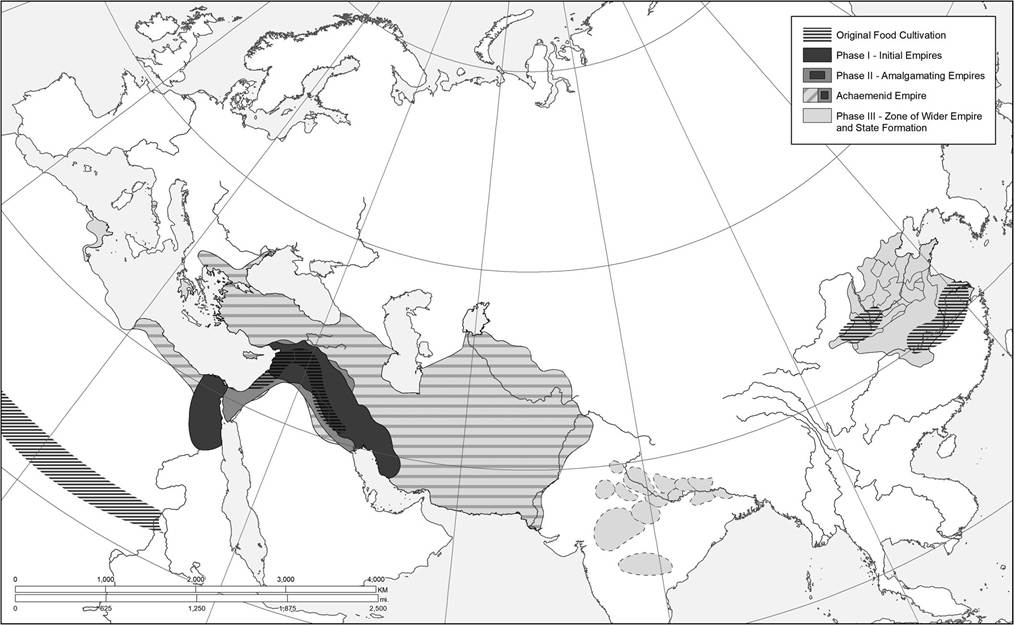
52 PETER fibiger bang
Map I. Bronze to Iron Age, the Near-Eastern “Invention” of Empire (Third Millennium to 300 bce). Copyright: Peter Fibiger Bang with Jonathan Weiland.
expansion of a predominant power, while the vast majority of neighboring societies gradually fell subject to its rule. Eliminating most of the competition brought about a stable situation that allowed the conquering “monopolist” to postpone the moment when the wheel of “creative destruction” would predictably roll again and overturn their hegemony.
To a modern historian, perhaps, ancient empires may appear to be nothing more than a steady stream of conquerors in which one unstable and ephemeral regime succeeded the other. But behind the line of seemingly endless conquests there was a slowly accumulating trend toward the formation and consolidation of very stable and durable imperial hegemonies that lasted for centuries. The ancient Near East was first to experience this development. Already a long-cherished dream of rulers, the prospect of universal empire came within reach when the so-called Neo Assyrian Empire, the great power to appear after the transition from the Bronze to the Iron Age, brought the processes of Levantine state-formation to their logical end point (ca. 900-600 bce). After having subjected the entire Mesopotamian area to their rule, the Assyrians began to extend their sway over Egypt (phase II). At the height of its power, the empire then unexpectedly collapsed toward the end of the seventh century bce. Stability had eluded the hegemon, but only briefly.
Imperial rule of extensive territories necessitated the co-optation of strong local elites. The logistical constraints of pre-mechanized transport severely limited the range and speed of movement of both armies and government personnel. Tight central control was impossible, and so most governmental functions had to be performed by locally anchored power holders. Within the Assyrian realm, the ancient city-state of Babylon claimed a powerful position. Quite in keeping with the expectations of Botero, Assyrian rulers had been able to constrain this alternative center of authority several times. However, as societies with state-formation could support greater numbers of people on the same area of land, their way of life continued geographically to expand in tandem with the slow growth of peasant populations. Not only did the gaps between the more densely populated, sedentary societies grow smaller, as old centers such as Egypt and Mesopotamia were gradually drawn into the same imperial complex, but new and potentially destabilizing powers also developed on the margins of the old cores. One of them, the Medes of Western Iran, allied with the rebellious Babylonians in a pattern that was to be repeated over the course of imperial history, to form a crushing alliance that took down their Assyrian overlords.[205] But the downfall of the hegemon simultaneously opened up opportunities for others. Soon, another group that had formed on the fringes of the Mesopotamian world, the Persians, joined the fray. Under the leadership of Cyrus, Cambyses, and Darius I, the Achaemenid dynasty more than fully completed the work of the Assyrians to establish an unparalleled hegemonic position. The universal empire of the Persian “great kings” represents a revolution in world history. Their power dramatically broke through the bounds of the world defined by the old Near Eastern monarchies in the region strung out between the flood valleys of Mesopotamia and the Nile. The trail left by the conquering armies of the Persians reached from western Anatolia to the river Indus, and from Afghanistan in Central Asia to Southern Egypt and Eastern Libya in North Africa.
Between the late sixth and late fourth century bce, the king of kings stood paramount in the world of states and rulers as his authority sought to embrace a staggering and unprecedented variety of peoples. The sprawling realm was characterized by enormous diversity in forms of subjection and degrees of effective control, exercised by a very thin central government that relied on a principle of hierarchical subjection to keep the edifice together, rather than uniform integration. Over some areas, authority was little more than nominal. Others were out of reach, even to the mighty imperial armies. No one, however, could rival the range of resources that were delivered as tribute to the Achaemenid lord by his countless subject communities. The ability to command the special products and people from almost everywhere, the depths of his coffers, and the splendor of the court became proverbial. Some, of course, might try to defy Persian arms and, at times, even succeed. The Greek historian Herodotus immortalized the victories scored by the Athenians and other Hellenic city-states against the Persian Titan during the early fifth century bce. Crucial to the autonomy of the small city-states of the Aegean, to be sure, the defeats were little more than scratches on an imperial edifice that remained stable and unmatched. Decades later, the Achaemenid rulers helped finance the successful efforts of Sparta, the other great member of the Hellenic resistance, to bring down Athens; divide and conquer. In the long run, empire would win out.[206]
However, it might do so in surprising ways. The origins of the Persians themselves had been obscure. They may have started out as nomadic pastoralists. The mobility of nomads, and their often plentiful access to horses, gave them a potential military advantage over sedentary populations where horses were scarcer and peasants normally were needed for working the land rather than available for military service. Time and again, ambulant groups appeared along the frontier of more densely settled agricultural societies. Here, sedentary rulers might employ them as a ready reservoir of military recruits. At other times, the nomads might themselves join the ranks of conquerors and military rulers. Historians have sought to capture the phenomenon of such mobile warrior coalitions through concepts such as shadow or kinetic empires. Some have even thought to identify the nomads as the main driver of pre-colonial world history.
Yet, the advantages of mobility were also its weakness: their political organization normally remained relatively transient. The great anthropologist Jack Goody rightly identified the Bronze Age revolution of the fourth and early third millennium все as a decisive dividing line in history. It was among the slowly expanding societies, which were able to fully adopt the organizational and technological changes of this transformation, that more elaborate and stable forms of social complexity developed and through which the main current of history ran. In areas and regions that remained thinly populated, the results of the revolution did not easily take root. Goody saw this in particular as a contrast between Eurasia and the lands of SubSaharan Africa.[207] But one could easily add to this the endless steppe lands of Asia or the vast forests and mountain regions that lay strewn between tracts of more densely settled regions. State-formation and empire only haltingly made headway in these frontier territories. Elites were unable to impose the necessary controls on populations that continued to be mobile and were able to move out of reach.[208] Permanence necessitated a transfer of political elites onto more crowded terrain where tributes, taxes, and rent could be extracted to make state-formation possible. In the case of the Persians, they had already begun to adopt and adjust to the demands of sedentary life and state-formation before the onset of conquests.[209] Rather than a sudden eruption of nomadic power, the unprecedented scale taken on by the Achaemenid empire reflects growth in the number of societies capable of state-formation. This area had begun to spread decisively beyond the old core areas of Mesopotamia and Egypt, in a band stretching across Afro-Eurasia within the temperate and sub-t ropical zones, eventually also reaching down into the tropics. Both to the east and west of the empire, state societies continued to grow (phase III). Beyond the city-states of the Aegean, a political cosmos of smaller city-state empires was emerging. The world history of empire tracks the slowly but steadily expanding frontier of state-like societies. However, the realm of the Achaemenids had reached a size whose dimensions, treated in general by Scheidel in Chapter 2 of this volume, especially Table 2.1, was almost as large as could be mastered in a world where transport and communication depended on muscle power and wind energy.[210]
This became clear when the Achaemenid dynasty, in its turn, finally fell prey to a new monarchy that had formed on its westernmost frontier. During the century preceding the ascension of Alexander in 336 все, the kingdom of Macedon had developed its resources to be able to finance a forceful military. In the hands of its new, young, and daring king, the army of Macedon turned into an invincible machine of conquest. A formula had been devised against which the Achaemenid ruler, irrespective of his greater resources, knew no remedy. A decade of campaigns made Alexander master of the world, earned him the eponym “the Great,” and set a standard that would be emulated by conquerors for millennia to come—all before his early death in 323 bce. By then the army of Alexander had traversed the Persian Empire to its furthest corners, until the soldiers refused to march any further at the Hyphasis River in the Punjab of North India and forced their adventurous king to turn back to Babylon. The succession struggle, however, showed that the new-won empire could not be held together. Pushing against the boundaries of the possible, the old Achaemenid dominion fractured into a number of rival monarchies as the former generals of Alexander became caught up in internecine war over the spoils of conquest.
Map II. The Classical Age, Culminating in the Formation of Large World Empires on the Margins of Eurasia: The Mediterranean and China (323 bce-600 ce)
The old core of Iran and Mesopotamia held firm, first under the Seleucid and then Parthian dynasties, but Syria, Anatolia, Macedonia, and Egypt were slowly drawn away by the gravitational pull of the new system of rivaling states forming in the Mediterranean as state-formation had spread and matured along its coastlines. Eventually, the Roman city-state, right at the center, came out victorious to unite the greater Mediterranean under the new universal monarchy of Augustus at the turn of the first century ce. To the east of Alexander’s conquered Achaemenid realm, the formation of empire equally moved into a higher gear among the evolving kingdoms on the flood plains of northern India. Under the Mauryan dynasty, much of the subcontinent was assembled in a loose, universal hegemony. If their rule was short-lived, they soon found strong successors, especially the Kushanas, whose power reached across the Hindu Kush. Still further east, another system of rival, or warring, states had been forming and expanding in the center of China. Just as in India, state-formation had roots that stretched back to the third millennium bce. Presumably conquest had begun very early on, but our historical records are weaker there than in the Near East. From the late second millennium bce, records testify to a world ritually united under the Zhou dynasty. There is, however, a strong inclination to take Chinese unity for granted and to date it back to the region’s earliest history. But it is with the conquests by the Qin that the first strong empire appears in the Chinese world. In 221 bce the Qin monarchy had overcome its last remaining sedentary rivals to subject “all under heaven.” Although the first imperial family quickly fell to the forces of rebellion, it was only to be supplanted by a new dynasty. The foundation of the empire proved sound and afforded the Western and Eastern Han 400 years of basically stable rule. In the three centuries following Alexander’s conquest of the Achaemenids, a string of universal imperial complexes had arisen in the wake of the growth of more densely settled peasant societies across the Afro-Eurasian landmass, from its western to its eastern fringes: Mediterranean, Mesopotamian-Iranian, North Indian-Central Asian, and Chinese. The advantages of monopolistic supremacy asserted themselves once again.
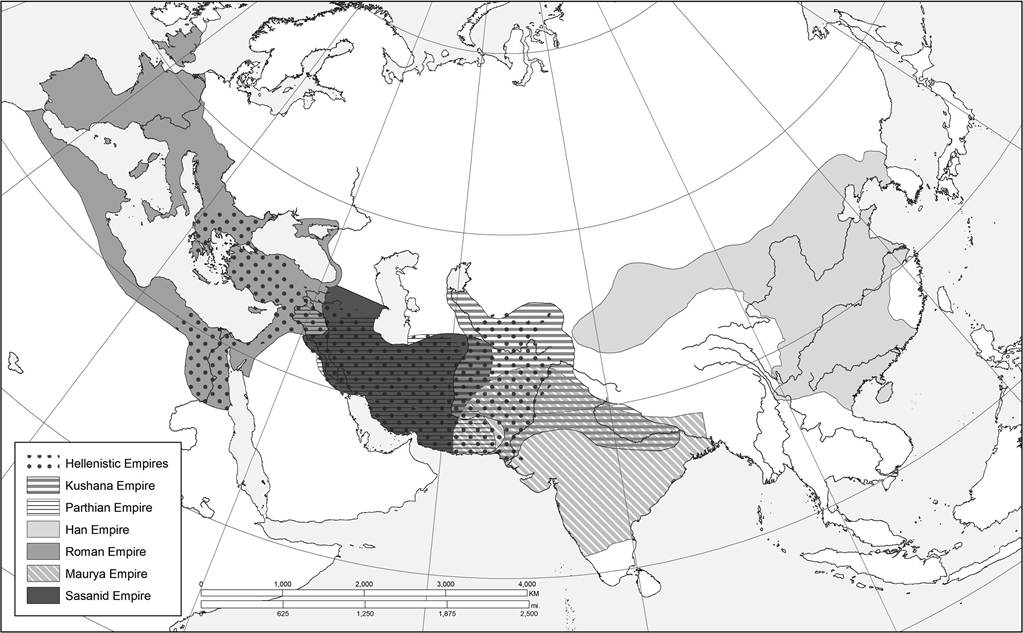
Map II. The Classical Age, Culminating in the Formation of Large World Empires on the Margins of Eurasia: The Mediterranean and China (323 bce-600 ce).
Copyright: Peter Fibiger Bang with Jonathan Weiland.
EMPIRE — A WORLD HISTORY 57
This was the classical age. A realist might point out that neither of these empires was really universal—not merely in the banal sense that there were a number of coexisting imperial complexes. After all, the Chinese and Romans were too far away and knew too little of one another to think, in political terms, of their worlds as one. However, even in the nearer world of each, some rivals were always left in the interstices. But the claim to universal monarchy was not an absolute one; it spoke into a universe of rival powers. A universal emperor was not unable to recognize rivals, nor was he ignorant of people out of his reach. Instead, he staked out a more or less successful claim to preeminence and supremacy. The rest of the world could, in this sense, be ranked, sometimes only symbolically, below him. As the Mauryan emperor Asoka proudly proclaimed on inscriptions, his dhamma or order reached wide beyond the range of the hard power of his armies.[211] The vast imperial polities continued, like the Achaemenids before them, to preside over a wide variety of peoples and territories, organized hierarchically, often by very different methods and forms of subjection. Even so, the resources at the disposal of imperial governments did develop. The massed infantry armies of the Chinese and especially the Romans achieved both a size and degree of institutional consolidation that would not be bettered before the early modern period.
Meanwhile, imperial government might rest upon military supremacy, but it depended on the co-optation of local elites to collect tributes and manage the peace. Anything else would both have been too slow and too costly. The Achaemenids seem to have reserved the top ranks in the hierarchy of elites for a narrow Perso- ethnic ruling class. During the classical age the most successful courts slowly began to throw their nets wider. In the portrait of the powerful first minister of the Qin dynasty, Li Si, written by Sima Qian at the turn of the first century bce, the ability of governments to command a wider range of materials is listed among the clear benefits of empire. But the ruler should not restrict himself to enjoying the greater riches, rare products, and natural resources that an extensive empire provided. Indeed, as the first minister is made to opine, if the monarch found such trifling materials important, how could he, in the far more important matter of appointing his officials, allow himself to make do with people only from his own original kingdom, instead of selecting the most eminent men from around his vast realm?[212] The courts of imperial rulers had from the very beginning constituted a cosmopolitan environment where elites from diverse origins mingled and sought favor. That made the venues of the monarch a crucible of aristocratic culture, and during the classical age this assimilative force intensified. Not only did the courts preside over the formation of cosmopolitan elites across Eurasia, they also tended to cast their nets wider and reach increasingly extended circles of upper-class society, and thereby fostered the spread of a shared aristocratic culture whose expressions have come, today, to be associated with the major civilizations of our world.
From the third century ce onward, the stability of the empires of the classical age was slowly undermined. No one benefited more from the imposition of the imperial peace than the local governing elites who saw their position strengthened, with the paradoxical result that the metropolitan center risked being squeezed out of its provinces. Equally, along the often expanding frontiers of imperial society, rivals cropped up. Alone or in combination, both factors would, just as previously in the case of the Assyrian and the Achaemenid empires, prove fatal in the end. To this must be added the effect of occasional Pan-Eurasian pandemics, though more as a factor that exacerbated structural strains that had slowly built up within the imperial polities, rather than as a main cause. The so-called Justinianic plague of the sixth century certainly weakened the fiscal basis of empire in both the Mediterranean and Irano-Mesopotamian macroregions by significantly denting their populations, but fell far short of destroying the foundation of imperial power per se. Quite the reverse, the impulse toward the formation of vast empires remained undimmed. Far from a graveyard of empires, the new age dawning would turn out to be one of vibrant imperial renewal.
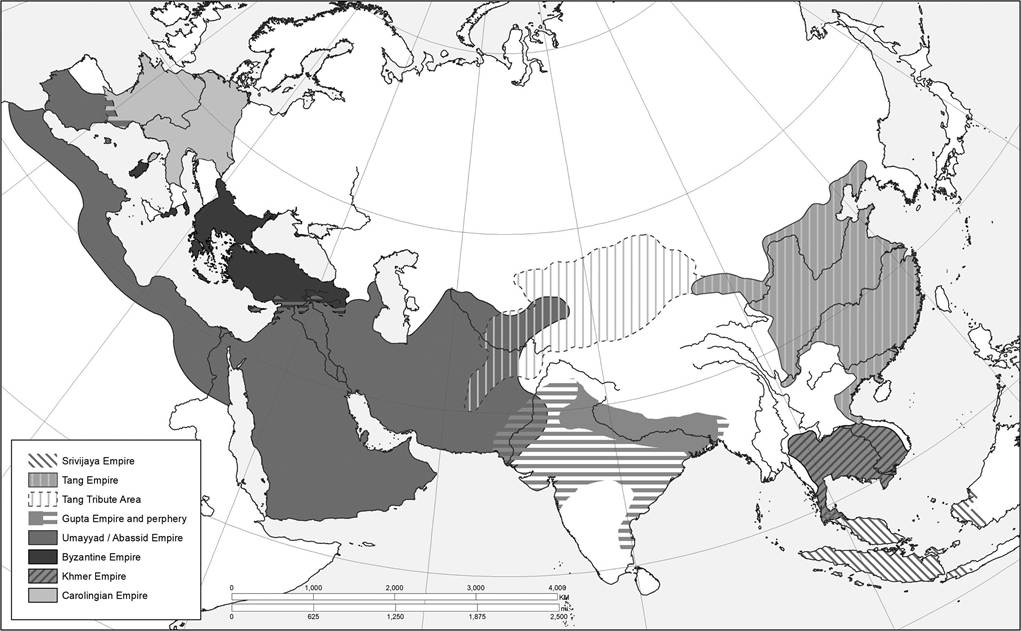
Map III. The Ecumenic Turn: Eclipse of the Old World and the Rise of Islam (600-1200)
From the space in between the Romans and the Sassanians, the Arabs rose to eclipse both powers by the fourth decade of the seventh century. The entire Irano-Mesopotamian imperial complex and about half the Mediterranean were swiftly conquered, united under the rule ofthe caliph. At the eastern extreme of Eurasia, the Sui and Tang dynasties had succeeded in reconquering the territories of the former Han Empire. Both of these mighty powers may be seen as the fulfillment of the cosmopolitan developments of the previous phase. As elites ofwidely scattered geographical backgrounds had been welded into greater unity, so denser networks of cultural integration had evolved. Imperial cultures experienced what might be described as an ecumenic turn as truth and cultural expressions more forcefully began to transcend local particularisms, tying old regions into a wider imperial cosmos. “How will the law be established universally except by a universal ruler?” This question was evidently intended to be rhetorical. Circulating in the Arabic translation of an originally Greek text, it formed part of a short tract on kingship, masquerading as a letter of advice from Aristotle to his world-conquering pupil, Alexander. Both were, by this period, firmly established across Western Afro-Eurasia as emblems of kingship and philosophy, truth and power. Ideally the two could be merged and the world made to conform to doctrine, godly, philosophical, and legal. “Blessed is he who will gaze on the splendor of that day when people unite under one rule and one king,” as the letter added further on, that would be a happy time when war and slaughter had ceded to harmony and order.[213]
60 PETER FIBIGER BANG
Map III. The Ecumenic Turn: Eclipse of the Old World and the Rise of Islam (600-1200). Copyright: Peter Fibiger Bang with Jonathan Weiland.
Claims that unity represented the right order of the universe echoed across Eurasia and over subsequent centuries. In the Mediterranean and the Near East, monotheisms gained traction. God was henceforth to be written in the singular, to everyone and everywhere the same. Christianity, from the fourth century, and Islam from the seventh, emerged as predominant when they became the creeds of strong imperial governments. The phenomenon, however, extended far beyond the traditional monotheist religions. At the court of the Gupta emperors of North India, developments under the previous dynasties came together to turn Sanskrit culture into a powerful model, inspiring emulation in the following centuries among rulers and elites across the Himalayas and Southeast Asia. Rigidly governed by grammar and anchored in an artful canon of classical literary works, Sanskrit claimed to be both time- and placeless, it was an instrument of distinction available, no matter the locality, to political and religious elites seeking to set themselves apart from the ruled. A grand Sanskrit cosmopolis developed which saw both the gods ofHinduism and its reformist Buddhist offshoot spread far and wide.[214] Buddhist monks traversing the narrow corridors of Central Asia likewise found sponsorship at the courts of Chinese rulers. But here the import of Indian wisdom was combined with a redoubled effort at strengthening the cosmopolitan literary culture that had been inherited from the Han. Under the Tang, the contours of what became the famous civil service examination system of later dynasties took on a firmer shape. Increasing numbers of officeholders in the imperial service were appointed after tests had been administered to examine their mastery of the so-called Confucian canon of texts.
From east to west, the world of Afro-Eurasia saw the consolidation and further diffusion of a number of ecumenic and literary “truth languages” promoted by the leading imperial courts—Arabic, Han Chinese, Greek, Latin, Sanskrit, and Persian, to name the most successful.[215] Meanwhile, local elites continued to slowly hollow out the hold of established imperial centers on their subject societies. Likewise, populations capable of sustaining state-building elites continued to expand, gradually, both along internal frontiers and further to the north— beyond the Rhine and the Danube in Europe—and south—deeper into South and Southeast Asia. Empire was not slow to follow. In Western-Central Europe, the Carolingians attempted to claim succession from Rome, even as emperors still ruled on the Bosporus in what was left of the old Roman Empire after the Muslim conquests. In Southeast Asia, powers such as the Srivijaya, perched across the straits of Malacca, and later the Khmers in Indo- China began to carve out empires of their own.
Map IV. The Mongol Moment: The Rise of Chinggis Khan and the Central Asian Steppe, Followed by Regional Reassertion (1200-1450)
By the twelfth century, the world of Eurasia was characterized by a number of imperial commonwealths where the memories and cultural models of universal empire lingered while the position of the former hegemon was reduced mostly to symbolic status. In Europe, for instance, the aspiration to create a new universal monarchy lived on in the so-called Holy Roman Empire and the Papacy, but in practice, effective power resided in a number of regional monarchies, each entertaining its own hopes of expansion. The same could be said of the Muslim commonwealth. The caliphs residing in Baghdad still held symbolic and religious prestige, but the power to command had splintered between a number of monarchies, some of them middling empires in their own right. Even the Chinese area was divided between a number of northern powers and the Song dynasty, whose basis had gravitated from the historical central plain along the Yellow River to the south, which had gradually been colonized by an expanding peasantry. Political fragmentation, moreover, opened the possibility for lean and small merchant empires to emerge at the interstices, such as that of Venice in the Mediterranean. All the while, forms of imperial statecraft continued to expand. Christian powers pushed northward and eastward in Europe. From the Mediterranean coastline, Islam trickled southward below the Sahara where state building elites began to adopt its precepts and eventually formed the loose Mali and Songhay empires, a process which unfolded, precisely as might be predicted, into one of the zones of original food cultivation (indicated on map I). However, this was the Mongol moment.
Sometimes elevated to the status of the engine of world history, the peoples of the Central Asian steppe had thus far been only one group of potential conquerors among many. Recently, they had begun to establish a number of permanent monarchies in the northern parts of China. Learning from these state-builders, Chinggis Khan united the people of the steppes as never before and turned them into a formidable fighting force that, over the course of three generations, cut down one sedentary monarchy after another until the power of the Mongol khagan ran from the south of China to the Russian principalities on the doorstep of Europe. The empire of the Great Khan is commonly labeled the largest in history (with the exception of the British, which did not form a contiguous whole), but here, more than usual, the standard caveats against the illusions of imperial map-making apply. Much of the territory included was very thinly populated and it is a moot point what, if anything, imperial authority could have meant in such regions. The area covered is perhaps better approached as a trail of conquests, much like Alexander’s path through the Achaemenid Empire, centuries before. And just as in the time of the Macedonian conqueror, it quickly became clear that the enormous territory could not be held together. The much larger size of the Mongol area, on the other hand, reflects both the continuous expansion of taxable peasant populations and
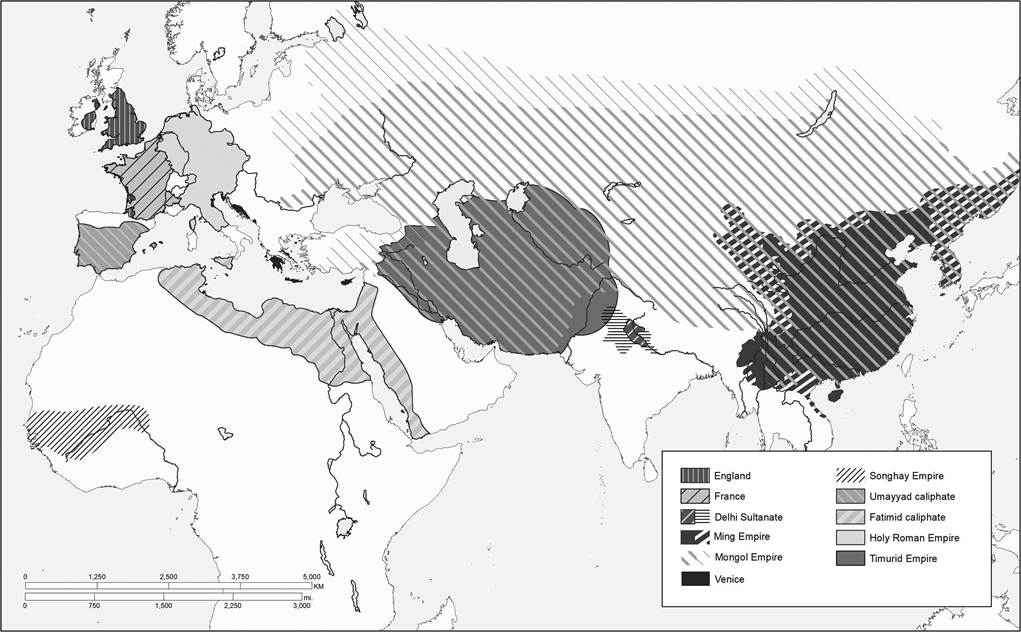
Map IV. The Mongol Moment: The Rise of Chinggis Khan and the Central Asian Steppe, Followed by Regional Reassertion (1200-1450).
Copyright: Peter Fibiger Bang with Jonathan Weiland.
EMPIRE — A WORLD HISTORY 63
that the classical regions capable of state-formation had grown closer together. Even so, the power to rule had to be immediately delegated to regional Khans and, within a few decades, the various macro-regions veered off in their own direction as Mongol lords struck deals with existing local aristocracies to anchor their rule. Less than a century after the conquest of China was completed (1279), the Mongol royal line, already domesticated by the local elites into the Yuan dynasty, fell to internal rebellion in 1368. A new Chinese dynasty had arisen, the Ming, but it stood on the shoulders of the Mongol conquerors. When the emperors of the new royal house launched the set of now famous naval expeditions to Southeast Asia and the Indian Ocean to proclaim the universal reach of their power, they could do so as effective rulers of the entire Chinese macro-region of sedentary peasant populations. If Mongol supremacy proved ephemeral, their impact nevertheless was deep and lasting; they reinvigorated the trend toward the formation of extensive empire and overcame the forces of division in several of the old Eurasian macro-regions.
Map V. Another World: The Separate, but Parallel Path of Imperial Formations in the Precolonial Americas
The next phase, gaining steam during the fifteenth century, would witness the formation of a series of universal monarchies running in a band across Eurasia. But it would also see the reconnection with a branch of humanity that had developed in a largely separate universe in the Americas since the end of the last Ice Age. Most of the development of human culture and habitation, preceding the arrival of Columbus, can only be recovered through archaeology and must remain in the realm of prehistory. But it is clear that, even from early on, zones of sedentary agriculture, with concomitant formation of priestly and warrior elites, did develop. By the first millennium ce very complex societies can be found, e.g., in the Peruvian and Ecuadorian highlands of the Andes or in the form of the Mayan city-states in Meso-America. Conquests almost certainly took place in this world, and some of these cultures are occasionally labeled empires by archaeologists. In the century before European arrival, vague generalizations give way to certainty. Among the polities of Meso-America and the Andean highlands in Peru and Ecuador, the Aztec triple alliance and the Incas embarked upon successful campaigns of conquest, gradually subjecting neighboring polities until, by the turn of the fifteenth century, they had established two substantial hegemonic empires in Central America and along the Andes in South America, from Ecuador to Chile. These were, by far, the most extensive empires in the New World up to that point. And like empires in the Old World, the Aztec and Inca lords equally demanded tributes from their subjects to gain access to a share of the agricultural surplus, manpower, and precious, exotic resources such as colorful bird feathers that were used as marks of distinction by the rulers. To do so, they also had to co-opt local rulers and elites, who were given material privileges and formal honors in return for administering the order of empire.
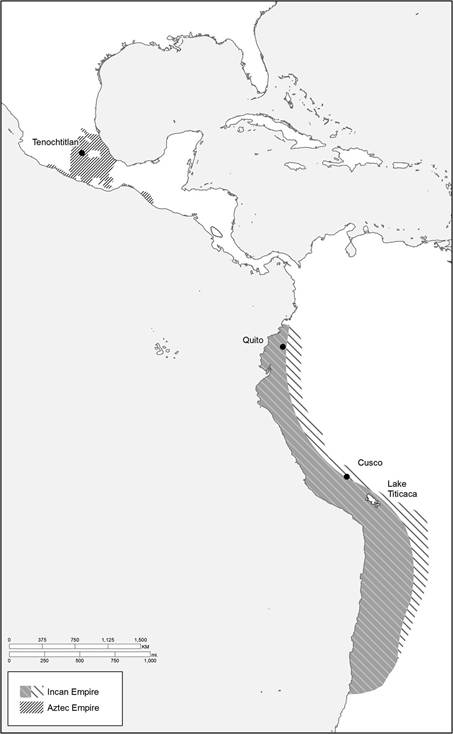
Map V. Another World: "The Separate, but Parallel Path of Imperial Formations in the Precolonial Americas.
Copyright: Peter Fibiger Bang with Jonathan Weiland.
Map VI. The Great Confluence: The Culmination of Universal Empires and the Conquest of the New World: Agrarian Consolidation and the Rise of European Commercial and Colonial Empires (1450-1750)
Much would, therefore, have appeared recognizable to the Spanish conquistadores when they arrived on the American mainland in the early sixteenth century. With unfailing instincts, they successfully allied with some local rivals and enemies of the imperial overlords in order to take them down. The short time, a span of less than 20 years, in which trifling numbers of Spanish adventurers managed to conquer the two great empires of the Americas, has never ceased to astonish. Yet, the Spanish conquests simply accentuate, albeit in the extreme, the pattern so familiar from Eurasian imperial history, where growth along the margins, combined with internal opposition, creates a deadly cocktail for the established hegemon. Only here, growth on the margins meant the expansion of densely settled Eurasian societies. Eventually, these found their way across the Atlantic. The Viking Norsemen had already touched ground in the Americas as they jumped from Iceland to Greenland, before finally making landfall in Newfoundland at the turn of the first millennium. But the number of people participating in this navigational diaspora were exceedingly small, even at the best of times, and connections tenuous. When the Black Death with its enormous toll on population hit, the demographic base of the European North Atlantic was seriously weakened and so its world contracted again during the fourteenth century. But it stands to reason that, at some point, the feat would be repeated.[216] When it did, the results were remarkable and catastrophic for the indigenous population— less because of European, let alone Spanish, exceptionalism than of the advantages enjoyed and exploited by Afro-Eurasian societies in general.
The grand conquests achieved by small troops of Spanish soldiers in the New World stand in sharp contrast to the ultimate failure of the imperial ambitions of the Iberian Habsburgs in Europe, where their real army, numbering in the tens of thousands of crack troops, was engaged in ceaseless warfare. With Charles V (1500-1558), the Habsburg family had produced an heir who seemed destined to reunite Catholic Christianity under a new Roman Universal Empire. In addition to the thrones of Spain, Austria, and the Netherlands, he also gained the title of Holy Roman Emperor, an unprecedented accumulation of power and resources which was boosted further still by the conquests in the New World. Even so, in spite of a life diligently spent on campaign, secure hegemonic monopoly in Europe proved elusive. In Central-Western Europe the Reformation broke out, irrepressibly rejecting the supremacy of Roman power, whether in the form of the emperor or the pope.[217]
Yet, where the Habsburgs failed, others were more successful in their claim to universal hegemony—even to Roman power. On the eastern frontier of the Habsburg domains, the Ottoman dynasty had vigorously risen and steadily accumulated an empire. After the conquest of Constantinople in 1453, and of Mamluk Syria and Egypt in 1516-1517— including guardianship of the Islamic holy cities of Mecca and Medina—they could credibly lay claim to the two great titles of late West Eurasian antiquity, caliph and caesar. Soon their writ ran from Mesopotamia and the Persian Gulf to the Balkans and Hungary. From a Western European perspective, the period between 1450 and 1750 might customarily be described as the failure of universal empire and the rise of overseas colonies. But to a person looking out from North India, such as the seventeenth-century man of Persian letters Abu Taleb Hosayni, the world presented itself as shaped by a number of grand imperial monarchies with
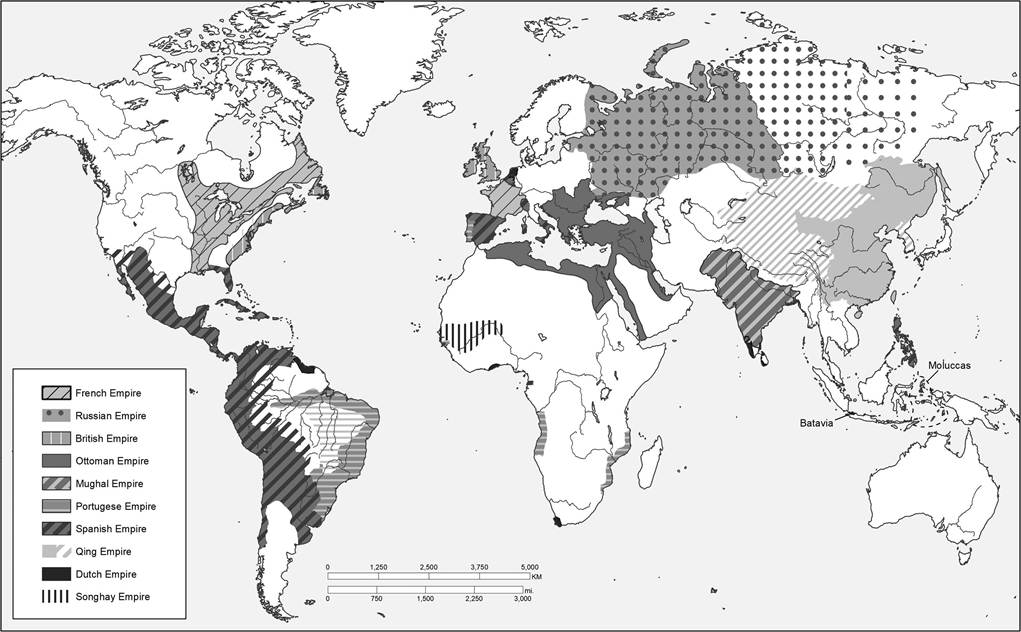
Map VI. The Great Confluence: The Culmination of Universal Empires and the Conquest of the New World: Agrarian Consolidation and the Rise of European Commercial and Colonial Empires (1450-1750).
Copyright: Peter Fibiger Bang with Jonathan Weiland.
EMPIRE — A WORLD HISTORY 67
roots dating back to antiquity.[218] Following hot on the heels of the Ottoman Kaiser-i Rum were the great Mughals. Drawing on their Central Asian and Iranian cultural background, they combined the notion of a Persian Shahanshah (i.e., king of kings) with Indian rulership, to extend the writ of empire over most of the subcontinent as never before. Still further east was the Chinese empire. With the Ming dynasty ailing under the usual tendency of local elites to arrogate the powers of the central state, their empire was about to be taken over by a new state emerging on the northeastern frontier. The Manchu Qing dynasty presided over an unprecedented expansion into Central Asia and the Himalayan Plateau, as well as along internal frontiers, which saw a staggering growth of population. These grand monarchies have been labeled gunpowder and post-nomadic empires. They were anything but the stagnant, moribund entities that they were later dismissed as. Successfully combining their nomadic background with new military technologies and the traditions of the great sedentary societies, they brought the formation of universal empires across Afro- Eurasia to their culmination. Cosmopolitan elites fanned out from the courts of these lofty rulers, enjoying the fruits of monopolistic supremacy.[219]
Under these circumstances, the small and middling monarchies of Europe were left to expand onto territories where opposition was less formidable and competition less intense. Portugal and Spain would lead the way. Hoping to bypass the position of Venice in the eastern Mediterranean as the agents of the lucrative trade in precious oriental exports to Europe, they set out into the Atlantic dreaming of the fabled riches of India and of vast conquests. In the New World, they encountered a set of societies where large empires had begun to form, but which were still in their early stages and existed, relatively speaking, under conditions of much less intensive military rivalry. Stone axes and clubs were standard weaponry, in comparison to the iron and gunpowder of the invaders. More important for the long-term viability of the Spanish conquests was epidemic disease. The larger, densely settled populations of Eurasia had developed a modus vivendi with a greater set of group diseases. When these arrived in the Americas, the impact was disastrous. Waves of smallpox and other epidemics ravaged the unaccustomed populations, causing millions and millions of deaths. Whole landscapes were laid waste and the total population of the Americas was dramatically decimated.
As the Portuguese clawed their way down the African coastline and eventually into the Indian Ocean, they enjoyed no such dramatic advantage. Their ships, armed with cannon and honed navigating the rough Atlantic, did, however, allow them to muscle their way into the fine-spun commercial oceanic networks of South and Southeast Asia. Lacking the capacity for vast territorial conquests, they had to make do with a less likely target—the seaborne world of the merchant, which for all the allure of its riches also presented greater obstacles to control by putative empire builders; the traders of the seas were mobile and elusive. Nevertheless, the Portuguese made the most of their limited resources to establish a set of nodal points along the oceanic trading routes that lined the great sedentary societies of Asia. These provided a slim base from which an ambitious attempt was launched to command the trade in spices to Europe and tax traffic on the sea lanes.
While none of this dramatically changed the balance of power between the regions of the Old World, the expansion of the two Iberian powers during the late fifteenth and the sixteenth centuries established both the beginnings of a new global commercial network and a novel pattern of empire. Gold and silver mined in South America, cash crops cultivated on plantations in the Caribbean, as well as spices and textiles from the Indian Ocean, combined to energize the long-distance trade of the Old World and transform an operation that had previously taken place in regional stages into a global commercial system. The effects were manifold. The great imperial monarchies of Eurasia found it easier to maintain large silver coinages that again facilitated taxation and markets. Slavery had been a regular feature of the labor supply in most state-forming societies from the very beginning. Captives taken in war were one source, while another were populations living both on internal and external frontiers. Eastern Africa had, for instance, supplied the societies of the Indian Ocean with slaves for centuries. Now, in a much more intensive fashion, western Sub-Saharan Africa became a source of slaves for entrepreneurs trying to make American lands, with their desperately dwindling population and labor supply, profitable. Millions of enslaved people were shipped across the Atlantic. Around the Caribbean, in southern parts of North America and in Brazil, a ruthlessly exploitative plantation economy developed on the basis of black slavery - the effects of which continue to scar their modern successor societies.
Where the Spanish and Portuguese went, their European rivals were not slow to follow. At the turn of the seventeenth century, both the Dutch and the English were mounting challenges to the Iberian powers and setting out to build their own colonial outposts in the Caribbean, in North America, and in the Indian Ocean. Enduring military confrontation and standoff in Europe spawned competition overseas. Private entrepreneurs were chartered to generate overseas income to fill the coffers of rulers busily engaged at home in a desperate struggle to increase revenues. Mercantilism was imperialism by business corporation. Acquisition of distant overseas colonies began to rival the conquest of neighbors as the most important strategy of imperial expansion. Inside Europe, by contrast, the principle of sovereignty was taking hold. State-actors were increasingly constituted as equal and autonomous, rejecting notions of imperial supremacy. That was the result of the failure of universal empire in Europe. But the price of independence was high. The inability of one power to assert itself did not simply lead to the mutual destruction or general weakening of contenders. Instead, a system crystallized that institutionalized the survival of a number of middling powers, locked in competition with each other. To stay in the game, states had continuously to reform and increase their capacity to finance wars, whose costs kept spiraling upward. The so-called military revolution, following the introduction of firearms in the fifteenth century, never really stopped, but kept rolling on in a series of ever more expensive, innovative waves. Colonies came to complement intensified metropolitan demands on their domestic populations.
Map VII. The Global Turn: The Age of European Colonialism, Subjection of Old Agrarian Empires to the European-Led World Economy and Nationalist Secessions (1750-1914)
By the middle of the eighteenth century, the system based on rival, warlike European metropoles and overseas colonies had gained significantly in strength and capacity. A threshold was about to be crossed and the world history of empire took a global turn. The European style of gunpowder warfare had developed to a level of intensity that the power gradient had begun to tip decisively in its favor, while at the same time global naval networks, dominated by European powers, had grown much thicker. The ceaseless wars and rivalries between the great powers of Europe increasingly came to play out on a global scale, just at a moment when the grand imperial dynasties of Asia were experiencing one of the recurrent decentralizing cycles that saw their power dissipate, taken over, to a larger or smaller extent, by provincial elites.[220] The Mughals were first, followed by the Ottomans, and then a little later the Qing. As a consequence, the balance of power between the great societies of Eurasia was dramatically upended. What had been impossible to the Portuguese in the sixteenth century was now achieved by the competing societies of the Euro-Atlantic world, who embarked on a period of unprecedented global colonial expansion at an ever accelerating pace. Over the course of the long nineteenth century, industrialization added enormously to the firepower and logistical capacity of colonizers. Railroads, steamships, ironclad warships, bigger cannon, rapid firing rifles, electric telegraphs, and scientific breakthroughs in medicine combined to make it possible for Europeans to overcome resistance, travel in much greater numbers than before, and open up vast inland areas whose products and raw materials could suddenly be carted out to feed into the arterial routes of the fast-growing oceanic global trading system. Spearheaded by the British under the paradoxical slogan of free trade, their European rivals joined “the great game,” forcibly reducing vast tracts of the planet to the status of colony, commercial dependency, or settlement by immigrant Europeans.
Gradually, but inexorably, the formation of empire across the planet was subsumed under the dynamic of the fiercely competitive system of European great powers. Where empires had once tended to congeal around a center when rivals absorbed each other, forming stable near monopolies, they now became an overseas expression of the capacity of competing states in the center to assert themselves. At the conference in Berlin in 1884-1885, the great (and smaller) powers of Europe simply met at the negotiating table to carve up Africa between them. In the eyes of the Western public, the rest of the world began to look like a static and inert mass. But
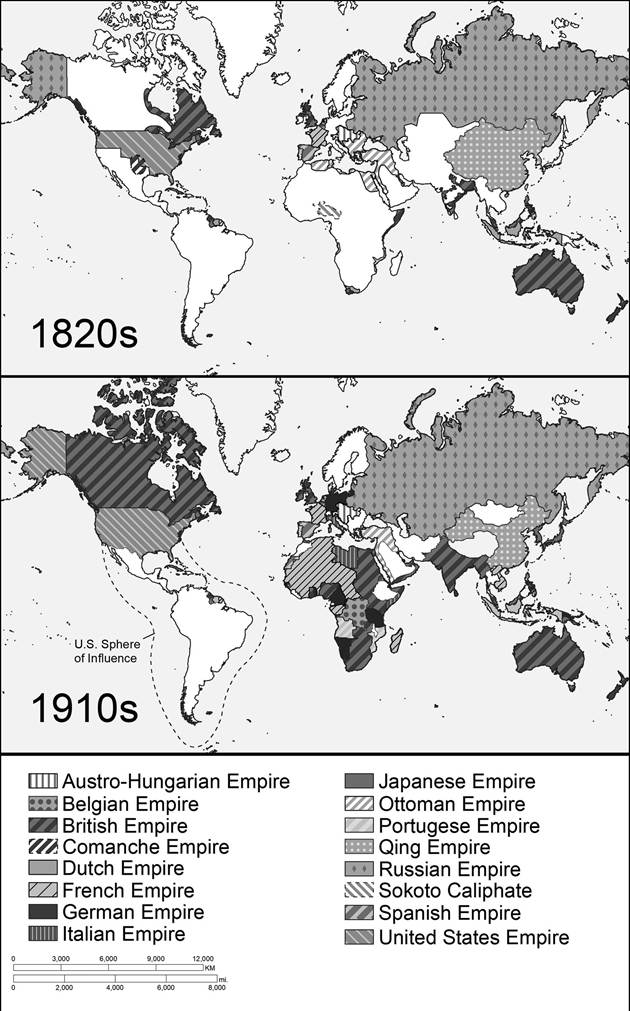
Map VII. The Global Turn: The Age of European Colonialism, Subjection of Old Agrarian Empires to the European-Led World Economy and Nationalist Secessions (1750-1914).
Copyright: Peter Fibiger Bang with Jonathan Weiland. that was a trick of the light. As with all imperialism, European colonial enterprises also required them to tap into the dynamic forces of subject societies and cooperate with local elites and populations if their projects were to succeed. The majority of soldiers in the British army in India were Sepoys—locally recruited, mostly high-caste Hindus. Across the societies subject to the pressures and stresses of the expanding European colonial order and world economy, the response was manifold and quick. In 1857, the Sepoys rose in a great rebellion. At roughly the same time, a failed entrant to the Chinese civil service examinations, who was inspired by Christian missionaries, rose up to lead the Taiping, proclaiming himself as the brother of Jesus, in a massive uprising against the Qing. All along, Comanche warriors had for a period successfully roamed the south western plains of North America to extend a fluid imperial network on the advancing frontier of colonial settler society.
In fact, a drastic reorientation was taking place. Empire had for a long time fostered cosmopolitan forms of identity, ideology, and knowledge. Under the strains and opportunities of the new colonial order, the old ecumenical communities of the book and the manuscript were breaking up and more globalized forms of ideology were taking their place. The colonial empires had widely extended and intensified lines of contact, communication, and travel to become incubators of new, transregional publics; intense political and ideological international debate was animated by the medium of the printing press and the electrical telegraph. Some reacted to the pressure by advocating reform of established beliefs. Islam, for instance, was anything but a spent force. Warriors, responding to a call to Jihad, had extended the loose authority of the Sokoto Caliphate over large areas of West Africa well before falling victim to a British expeditionary force in 1903. Across the British, Ottoman, and Russian imperial worlds one can trace the development of a network of Pan-Islamic reformists and revolutionaries with deep ramifications in the present world. These renovators advocated a more austere, Arabizing version of Islam, rather than the Persianizing traditions patronized by the monarchical courts in the previous centuries.[221] Other reformers opted into the discourses and beliefs of the colonial authorities, adding forceful contributions of their own. Christianity saw considerable growth in colonial societies. But the dominant creeds were secular and celebrated liberalism, modernizing reform, scientific progress, and the nation. Colonial elites engaged with the metropoles in a vibrant conversation about what these ideas could mean for their societies.[222]
This culture of internationalism allowed for communication across communities within and across the empires. It was, however, also a fractious and volatile formula, full of internal contradiction and tension. Increasingly, a sense of racial hierarchies developed, reinforced by metropolitan governments: Westerners first, others second, or third, even. Racism and its cultural arrogance would justify the most horrific acts of colonial repression. The murderous exploitation of the Belgian Congo or the genocidal war against the Herero in German East Africa are but some of the worst examples. Such acts and notions, however, were difficult to square with ideas of national self-determination, sovereignty, and freedom from colonial rule, which had run as a powerful current through the international discourse since the American War of Independence 1775-1783.[223] Anti-imperialism emerged, for the first time, as an ideology fully able to match the cosmopolitan claims of empire builders (See Majeed, Chap. 10 in this volume).[224] Elites in the colonies, and societies feeling pressure from encroaching Western powers, quickly began to harbor aspirations of liberty, modernization, and the formation of their own nations to bring them to par with metropolitan society. Both late Chinese and Ottoman history is characterized by desperate efforts to catch up. With the Meiji restoration, Japan opted to pursue radical reform with ruthless determination in order to match Western colonial powers and join the club of imperial states. The world was becoming centered on Euro-Atlantic models.
Normally, however, European empires could contain the forces of secession and national resistance. The combination of superior firepower and internal divisions within and between colonial societies gave metropolitan government the familiar advantages. Nevertheless, European colonialism was inherently unstable. In the historiographies of the major powers the reader will often encounter a succession of imperial projects. A first, second, or even a third empire can be found squeezed into what was, chronologically, little more than a century (so e.g. Todd in chap. 34 of vol. 2). Just as Britain was beginning to create a new empire in India, it lost a large part of its American colonies. France would have experienced the collapse of two imperial ventures before building up its vast possessions in Africa and Indo-China in the second half of the nineteenth century. The perseverance of competition at the metropolitan heart of European colonialism witnessed the repeated destruction of empire.
The history of European power politics can be written as a succession of great powers whose domination over the continent was repeatedly broken by counteralliances formed by their competitors. The relative strength of rivals was put to the test in grand wars that would recur at intervals to embroil much of the continent and the colonies in a merciless mobilization of force.[225] These World Wars were massive conflagrations that left the political landscape drastically altered. New powers would arise, while the hegemons of old were left exhausted. Losers, and sometimes even winners, were confronted with rising colonial elites who, under the inspiration of the new ideologies of national independence, attempted to sever ties with the weakened metropole. After every great war there followed a wave of decolonization (See further Chase- Dunn and Khutkyy in chap. 3 ofvolume 1). This label is usually reserved for the aftermath of World War II that saw the unravelling of European overseas empires. But already long before that period, North and South America, as well as Central-Eastern Europe, had been taken over by new nations that had arisen out of the wreckage of empire after a Great War.[226] If empires might (with Frederic Lane) be perceived as a form of monopoly, which achieved stability by suspending competition through conquest, then with European colonialism empire had entered its Schumpeterian phase. Here empire, much like capitalist business corporations, may be understood as a form of monopoly that briefly enjoys a respite from competition, just before the forces of creative destruction set in again and see the former giant overtaken by newcomers.
Map VIII. The Twentieth Century: The Collapse of Colonial Empires and the Rise of Superpowers
The newcomers to the scramble for colonies were, first and foremost, Germany, Japan, and the United States. Of these, the first two rose to challenge the leading colonial powers, Britain and France. The ramifications of the ensuing conflict shaped the twentieth century and radically redrew the world map. Over the course of World War I and II, the planet was engulfed by an epic and uncompromising struggle. The horrors and atrocities unleashed by full-scale industrial warfare were unlike anything seen before; the Jewish Holocaust and the nuclear bomb reflected military confrontations fought mercilessly and without limits. Old dynasties fell, and revolutions, be they nationalist, fascist, or communist, spread like wildfire across Eurasia in societies desperately seeking to modernize under the pressures and strains of total war.221 In the end, the result was unexpected. What had started in defense of old empires, or in pursuit of new ones, ended with the triumphant rise to world dominance of two self-styled anti-imperial powers, the United States and the Soviet Union. Not even the wide sprawl of loosely governed territories possessed by the leading colonial powers, Great Britain and France, had been enough to withstand the intensity of mobilization achieved by the Fascist powers. The extensive logic of territorial imperial rule, even one beefed up by modern industrial transport and communication, had been insufficient to match the strength generated from a strong industrial base in the home metropole, when it was single-mindedly geared toward warfare.
Only when the United States and the Soviet Union, each with a strong metropolitan industrial base of their own, entered the war did the balance tip decisively against the newcomers. Both societies had grown enormously during the nineteenth century through colonization by settlers, migrating from the old core regions in a movement westward and eastward, into the less densely populated areas of the North American and Asian continents. This gave them greater mass than the other contenders, and at the end of the war, they emerged predominant. A copious portfolio of colonies had not been the most important factor in ensuring success, and consequently empire began to look like a thing of the past. The future seemed to belong to the nation-state and a vigorous industrial home economy. Under the new world order, the plug was quickly pulled on the European colonial empires. Everywhere the self-determination of peoples was celebrated as the only genuinely legitimate principle of political organization. New nations vigorously rose to assert and, if need be, fight for their independence in a tidal wave of decolonization sweeping across Asia and Africa.
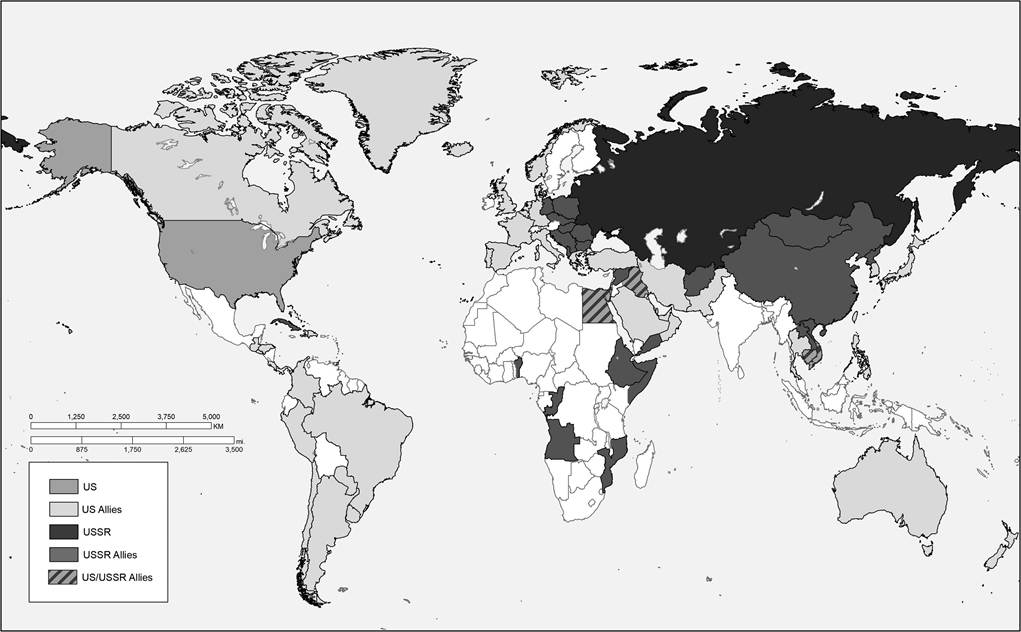
Map VIII. The Twentieth Century: The Collapse of Colonial Empires and the Rise of Superpowers during the Cold War. Copyright: Peter Fibiger Bang with Jonathan Weiland.
EMPIRE — A WORLD HISTORY 75
Yet, while the two new superpowers, each professing their rival version of a liberating enlightenment ideology, might have seen themselves as anti-imperialist, in practice both set about constructing a rival world order under their own leadership. The Soviet Union stepped into the shoes of the former Russian empire of the czars, while the United States took over much of the strategic commitments of the British and French empires. After the introduction of the atomic bomb, however, an all-out showdown was out of the question. Open conflict would mean mutual destruction, and so the world was locked into a cold war between two rival blocks, one communist, the other liberal and capitalist, but both universal and cross-cultural in reach. Territorial control mattered more in the former while, in the latter, the basic imperial principle of indirect rule was driven to its logical conclusion. The American empire was structured not around territorial possessions, but around a planetary web of military bases, regional alliances, and a global economic network that simultaneously offered local allied elites the attractive, but sometimes elusive, prospect of growth while laying their economies open to American corporations.
With the collapse of the Soviet Union in the early 1990s, it looked as if the long history of empire had finally reached its conclusion. With no rivals left, the United States seemed poised to unilaterally preside over the future world order. A Universal Empire had risen to extend its peace across the planet—Pax Americana. The moment of undisputed hegemony, however, proved short-lived. Just as the Soviet Union fell out of the competition because it was unable to produce economic growth at a rate even remotely comparable to the American bloc, Communist China was entering an era of economic reform and explosive growth. A few decades on, the revolutionary nation-state, created to salvage the old Qing dynasty's polyethnic monarchy from the combined onslaught of Japanese and European colonialism, is generating its own gravitational pull strong enough to begin to balance, if not yet fully match, the American superpower. Meanwhile, a new Russian state, a successor to the Soviet Union, has absorbed the shock of collapse and has begun to reassert a stronger position for itself in the international order. India, like China home to nearly a fifth of humanity, and just like China heir to a vast imperial space, has also entered a phase of high growth and looks destined to carve out a powerful position for itself. Once more, growth among states seems to create a league of big imperial powers. In that respect, the development of a more polycentric order—after a brief interlude in which the world was made to center on the Euro-Atlantic—may be seen as a kind of normalization. But if the coming global multipolarity may seem like a return to a well-known historical pattern, it also bears an uncanny resemblance to the geopolitical vision of the Nazi jurist Carl Schmitt and his visceral hatred of Anglophone globalization. The political order of the world, a principle unrepentantly restated by him in the aftermath of World War II, should be carved up into a number of greater imperial hemispheres. Yet, tempting as some may find it, in the present return to history, to seek counsel for the future in the embittered writings of this theorist of the order of power, such a turn would ignore the continued significance, indeed the overwhelming force of the global economic and political system originally produced by colonialism. That global system was not merely oppressive, it also generated forces of liberation and autonomy. Our future will depend upon how these two patterns, globalization and a league of hegemonies, merge. To guide this process, the last thing we need is a prophet of politics as absolute conflict, but rather an ecumenical capacity for dialogue and compromise.[227]
More on the topic Synthesis:
- VITAMIN D SOURCES AND ENDOGENOUS SYNTHESIS
- MECHANISMS OF MILK SYNTHESIS
- Designing a Green Synthesis
- Anatomy and Concept, Theory and Synthesis
- Shamanism, 1951-1970s: the Eliadean synthesis
- SYNTHESIS AND ACCOMMODATION IN POST-CONVERSION ENGLAND
- Basic Principles of Green Chemistry
- THE ANALYTIC AND SYNTHETIC POWERS
- Thalassemia
- The Quest for a New Memory