MECHANISMS OF MILK SYNTHESIS
The structure of the normal teat and udder is shown in Figure 7.1. Milk is produced by the gland cells lining the alveoli deep in the udder and it is stored in the alveoli, their ducts and in the udder cistern between milkings.
The average composition of milk is given in Table 2.1. Its components are derived from metabolites carried in the blood and it is said that 500 litres of blood must flow through the udder to produce each litre of milk. The gland cell synthesises a globule of milk fat in its cytoplasm and then extrudes it out into the alveolar space. As the globule passes through the cell membrane, it becomes coated with a thin layer of protein, and in this way the fat and some of the protein components of the milk are formed (see Figure 7.2). Mastitis can damage the cell membrane, and fat globules may then be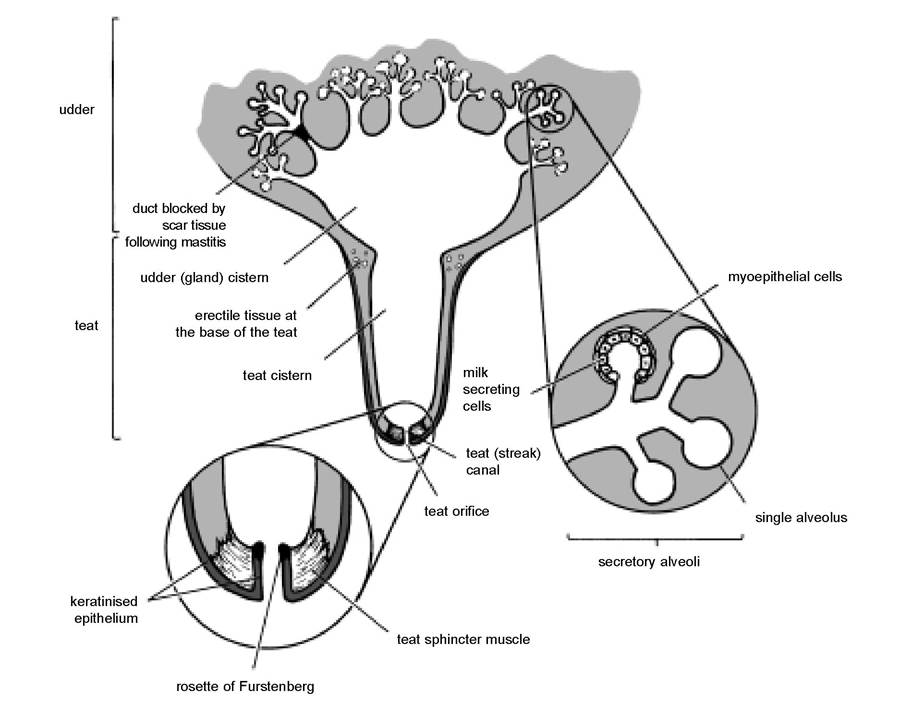
Figure 7.1. The structure of the udder and teat.
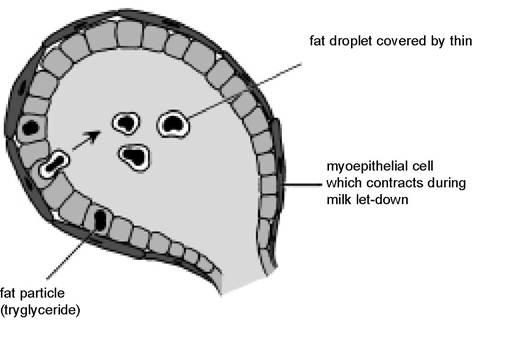
Figure 7.2. The synthesis of milk fat droplets in the alveolus.
passed with an incomplete protein covering. In this form the fat can decompose, a process known as lipolysis, and this is why cows with mastitis often produce milk which has a bitter taste. The majority of milk protein (casein) is similarly synthesised in the alveolar cell cytoplasm and extruded into the alveolar space. Lactose (milk sugar) is produced by combining one molecule of glucose with one molecule of galactose and is extruded from the cell in a similar manner.
More on the topic MECHANISMS OF MILK SYNTHESIS:
- TOTAL BACTERIAL COUNT (TBC) OF MILK
- THE CONTROL OF MILK PRODUCTION AND LET-DOWN
- CONCEPT 13.2 Hosts have mechanisms for defending themselves against parasites, and parasites have mechanisms for overcoming host defenses.
- As we have just seen, Plasmodium has specific mechanisms that enable it to live inside a red blood cell. When both a parasite and its host possess such specific mechanisms, that observation suggests that the strong selection pressure that hosts and parasites impose on each other has caused their populations to evolve.
- VITAMIN D SOURCES AND ENDOGENOUS SYNTHESIS
- Synthesis
- Designing a Green Synthesis
- Anatomy and Concept, Theory and Synthesis
- Shamanism, 1951-1970s: the Eliadean synthesis
- SYNTHESIS AND ACCOMMODATION IN POST-CONVERSION ENGLAND
- COMPLIANCE MECHANISMS
- Parasites have mechanisms that circumvent host defenses
- Mechanisms of Evolution
- Mechanisms of Succession
- Chapter 34 Liquidity Saving Mechanisms and Bank Behavior in Payment Systems
- 16 Molecular Mechanisms of HIV-1