World Revolutions
Institutions of global governance have evolved as they have over the centuries because core states and core capitalists compete with one another for global hegemony in a context in which subordinate classes and peoples in non-core areas resist the power structures of global governance.
Hegemony and resistance coevolve and this tension is a major factor in structuring world historical social change. Resistance and rebellion from subordinate classes and from the non-core have tended to cluster together in time as the contradictions of power, domination, and exploitation have produced somewhat similar conditions in non-core regions distant from one another. Even though the non-core rebellions and resistance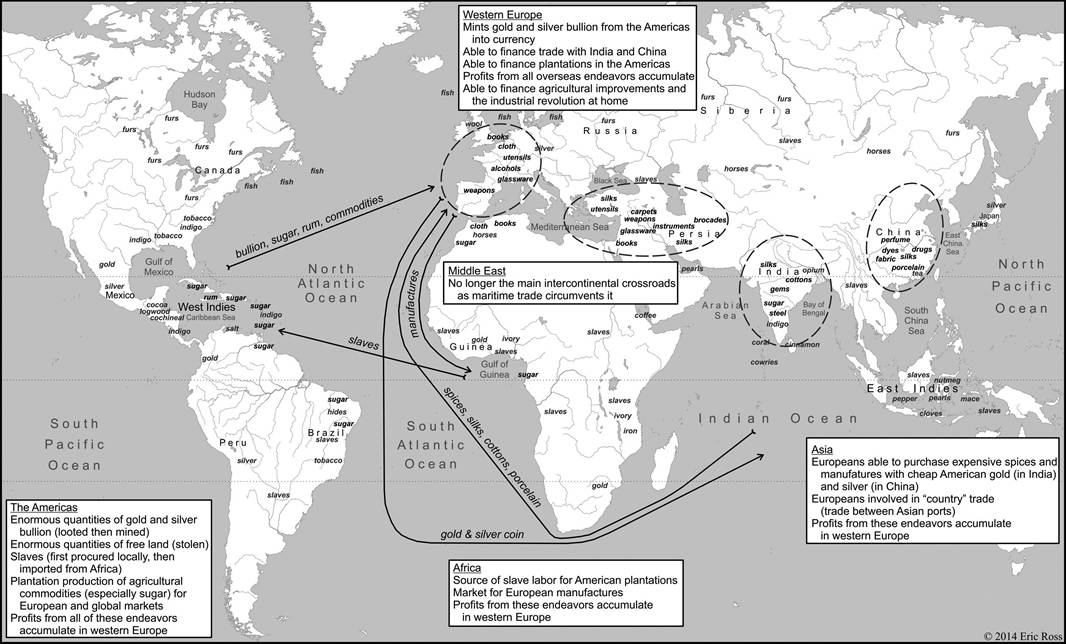
138 CHRISTOPHER CHASE-DUNN AND DMYTRO KHUTKYY
Map 3.3. Mercantilist World-Economy, c. 1530-1776
Copyright: Eric Ross.
movements were not very directly connected with one another in earlier centuries, their synchronous consequences converged on the core states, and especially on the hegemon. This phenomenon of widespread synchronous resistance and rebellion is termed “world revolution.”
The world revolution of 1789 involved the colonial rebellion in North America, the French revolution, numerous slave revolts in the Western Hemisphere, and the Haitian revolution. The outcome of the struggle between Britain and France for hegemony was shaped by rebellions in the periphery: the Haitian revolution cost the French state the loss of a major source of revenue, and the newly decolonized United States battled the British in the War of 1812 while Britain was engaged in deadly combat with Napoleon.
The world revolution of 1848 involved democratic, labor, and nationalist demands in Europe, but in the United States it mainly resulted in the emergence of several new Christian sects and utopian communities, many of which perpetuated socialist and communist ideas already popular in Europe.
Joseph Smith, the founder of the Church of Latter-Day Saints (Mormons), advocated community ownership of property. In China the Taiping rebellion combined the impetus of earlier Chinese landless peasant rebellions (e.g., the White Lotus religion) with the impetus of Christian millenarianism. A preacher from Tennessee gave Christian tracts to the leader of the Taiping, who concluded that he himself was Jesus's brother. With this development, an Asian cycle—of dynastic rise and fall, and of peasant rebellion—converged with the Western world revolution of 1848.The world revolution of 1917 included the upheaval in Russia during which the Bolsheviks came to state power, the collapse of the Second International's vow that European workers should not fight one another, and the foundation by Vladimir Lenin of the Third International that met in Moscow from 1919 to 1927. It also included the Mexican and Chinese revolutions and the Seattle general strike of 1919. American communist John Reed from Portland in 1919 authored a famous account of the Russian Revolution entitled Ten Days That Shook the World.
In the world revolution of 1968, workers in France and Italy, and students in Mexico and China, joined a revolt of students and soldiers in the United States. The world revolution of 1989 was a rebellion against Soviet domination in Eastern Europe that brought global issues of human and civil rights to the attention of more progressives in the West. Some see the global justice movement and waves of protest that have emerged since the Zapatista revolt of 1994 as the emergence of another world revolution—a rebellion against the neoliberal globalization project and the neo-conservative imperial project of the United States.[321]
World revolutions have become much more directly interconnected as social movements have become increasingly transnational, and popular groups and global parties have emerged to engage in politics on a global scale. They also have become more frequent, and now seem to be overlapping one another in time.
140 CHRISTOPHER CHASE-DUNN AND DMYTRO KHUTKYY
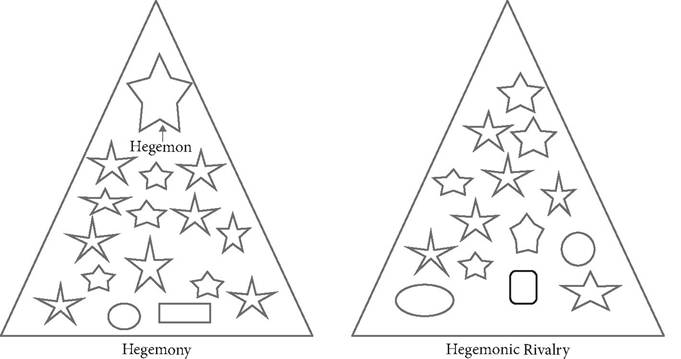
Figure 3.3. Core configurations with and without hegemony.
The ongoing evolution of capitalism and of global governance is significantly a response to resistance and rebellions from below. As Boswell and Chase-Dunn[322] contend, capitalism and socialism have dialectically interacted with one another in a positive feedback loop resembling a spiral. Labor and socialist movements came obviously in reaction to capitalist industrialization. In addition, the World Revolution of 1917 and the waves of decolonization spurred the rise of US hegemony and of post-World War II global institutions.
Hegemony in the contemporary interstate system primarily refers to a time period, “in which the ongoing rivalry between the so-called ‘great powers' is so unbalanced that one power can largely impose its rules and its wishes... in the economic, political, military, diplomatic, and even cultural arenas” (see Figure 3.3).[323] Elaborating on Immanuel Wallerstein's conception of hegemony, we would suggest a more comprehensive list of comparative advantages that are involved in contemporary rise and fall. These include technological-economic (technological, production, commercial, and financial), military-political (military, political, and diplomatic), sociocultural (institutional, normative, and cultural). Alternately, a more Gramscian understanding of hegemony deepens perspectives on the geopolitical evolution of the modern world-system. According to Giovanni Arrighi,[324] the hegemon necessarily inculcates a universalistic ideology portraying its interest as the general interest. The moral high ground matters because power based only on coercion is far too expensive. The “civilizational mission” or “making the world safe for democracy” serves to paint hegemony as leadership.
Further advantage accrues when the hegemon also has a comparative advantage in leading technologies and can sell or give away goods that are widely valued.From the beginning the interstate system was led by a series of hegemonic core powers that rose and fell—the Dutch in the seventeenth century, the British in the nineteenth century, and the United States in the twentieth century. Global governance has been, and still remains, largely governance by hegemony, with a cycle of hegemonic rises and falls consolidated in violent contests among contenders— world wars. World wars (land-based, destructive wars involving almost all the major military powers of the epoch) in the modern capitalist world-economy were: the Thirty Years' War (1618-1648), when Dutch interests triumphed over Habsburg in the world-economy; the Napoleonic Wars (1792-1815), when British interests triumphed over French; and long Eurasian wars (1914-1945), when US interests triumphed over German and Japan.[325]
This governance by hegemony continues to be the strongest institutional element in the contemporary system. Yet over the last 200 years a modicum of global regulation emerged via international political organizations overlaying the interstate system. After the Napoleonic Wars, Britain, Russia, Prussia and the Austro- Hungarian Empire created the Concert of Europe, an international organization aimed to help support monarchies and to prevent future revolutions of the French type and episodes of the Napoleonic kind. The Concert of Europe disintegrated over disagreements between its main sponsors, but was followed after World War I by the League of Nations, and after World War II by the United Nations and the international financial multilateral organizations—the World Bank, the International Monetary Fund, and eventually the World Trade Organization. These and regional military treaty organizations such as NATO, SEATO, etc., formed a proto-worldstate overlaying the extant national states.
These multilateral institutions did not dismantle the interstate system. Rather they supplemented the system of separate territorial sovereign states, which had only recently been extended to newly decolonized regions. (see Figure 3.4).US founding and support of these multilateral institutions has helped legitimate the hegemonic leadership of the United States. Michael Mann points out a specific feature of the current hegemon: unlike previous empires, the United States does not seek a direct empire of overseas colonies, but rather it exercises influence over an informal empire of client states.[326] Yet because the interstate system and governance by hegemony are still the mainstays of global governance, the multilateral institutions depend heavily on the goodwill of the most powerful states. And the United States still unilaterally controls the bulk of global military capability.
Another important aspect of contemporary global governance is based on the expansion and proliferation of nongovernmental organizations (NGOs). These voluntary associations have become important players in world politics, especially
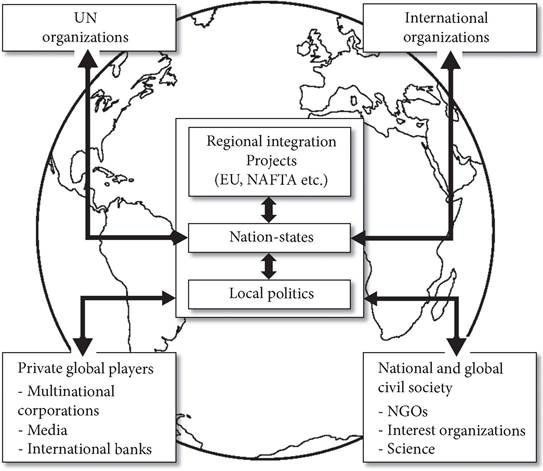
Figure 3.4. Levels of action in the architecture of global governance.
Source: Peter Berthelsen (based on Kennedy et al. 2002, 143 and Held and McGrew 2002, 66).
in the non-core, where in the era of neoliberalism they have taken on many of the functions formerly performed or claimed by national states. Some NGOs are supported by core states88 and play supportive roles in favor of the interests of their sponsors, while others have important relations with anti-systemic transnational social movements and play an important, if contentious role in global civil society.
So the formation of a true global state, with a monopoly of legitimate violence, is not near. Even the existing institutions of global governance are illegitimate insofar as they violate the notions of democracy that have become accepted by most of the world’s peoples. While global democracy would mean majority rule on a global scale, global governance by hegemony is undemocratic. There is a world military force—that of the United States—but its commander-in-chief is not elected by the peoples of the world, only by the citizens of the United States. The only valid explanation for this power is “might makes right.” So contemporary global governance is, in this sense, illegitimate.
More on the topic World Revolutions:
- The Russian Revolutions
- Was either of the two Ukrainian revolutions the result of a Western conspiracy?
- Revolutions and Relativism: From Kuhn to the ‘Strong Programme'
- Revolutions in the Russian Empire
- Revolutions in the Russian Empire
- What did the two recent revolutions in Ukraine (2004 and 2013-2014) have in common?
- Industrial Revolutions and Robots
- Riots, Rebellions and Revolutions in Europe
- 4 THE REVOLUTIONS OF THE SIXTEENTH CENTURY AND THEIR CONSEQUENCES
- EMPIRES, THE AGE OF REVOLUTIONS AND PLANTATION AMERICA
- 3 Political Collapse, Revolutions, and Social Upheavals, 1917-1923
- India, the seventh largest country in the world, is the most populous country in the world.
- On 4 February 2005, military guards welcomed guests arriving at the Livadia Palace near Yalta, as they had done sixty years earlier on the first day of the Yalta Conference, which brought together Franklin D. Roosevelt, Winston Churchill, and Joseph Stalin to discuss the shape of the world after the Second World War.
- World Peace
- IX The Game of the World