Answers to Analyzing Data 3.1 Questions
3.
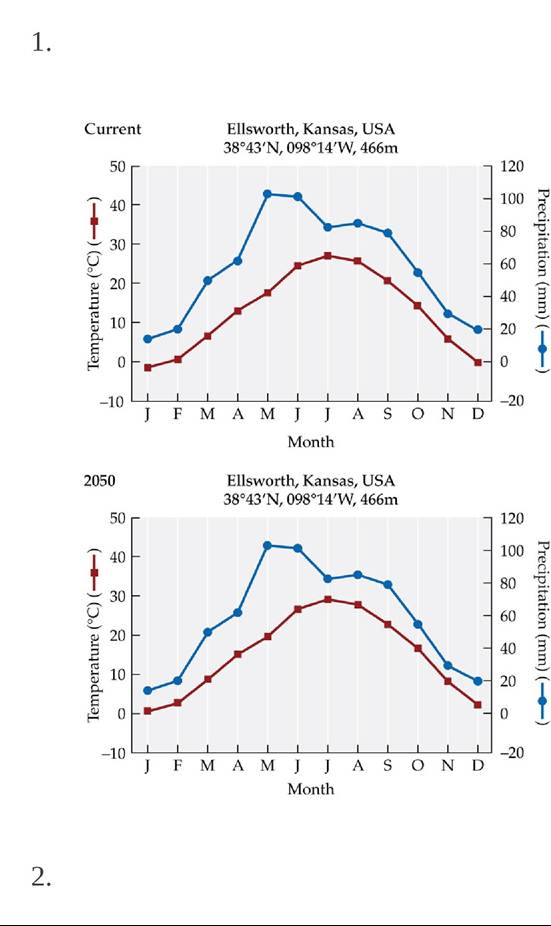
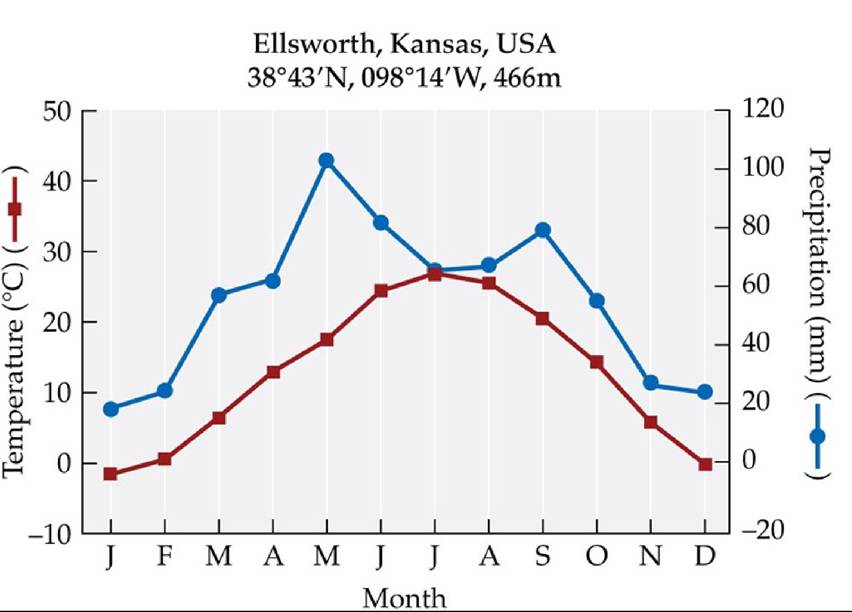
A decrease in precipitation during the summer growing season, coupled with warmer temperatures, results in a period of water stress in July, as indicated by the crossing of the temperature and precipitation lines. The occurrence of water stress in the summer and higher winter precipitation are more characteristic of the temperate shrubland biome, as shown in the exemplary climate diagram. With an increase in average annual temperature, the climate averages for Ellsworth cross the boundary between temperate grasslands and temperate shrublands.4. Grazing and fire frequency also play roles in determining the occurrence of the grassland and shrubland biomes. If fires continue to be a part of the landscape, greater frequency due to warmer, drier conditions may allow grasslands to persist, as frequent fires promote grasses more than shrubs. Grazing may also help promote the persistence of grasslands rather than shrublands, as grasses are more
tolerant of grazing.
More on the topic Answers to Analyzing Data 3.1 Questions:
- Answers to Analyzing Data 17.1 Questions
- Answers to Analyzing Data 6.1 Questions
- Answers to Analyzing Data 9.1 Questions
- Answers to Analyzing Data 5.1 Questions
- Answers to Analyzing Data 1.1 Questions
- Answers to Analyzing Data 2.1 Questions
- Answers to Analyzing Data 4.1 Questions
- Answers to Analyzing Data 7.1 Questions
- Answers to Analyzing Data 8.1 Questions
- Answers to Analyzing Data 10.1 Questions
- Answers to Analyzing Data 11.1 Questions
- Answers to Analyzing Data 12.1 Questions
- Answers to Analyzing Data 13.1 Questions
-
General ecology -
-
Conflictology -
Ecology -
Economy -
Finance -
History -
Law -
Medicine -
Philosophy -
Religious studies -