General laws of environmental factors effect on organisms. Limiting factors. Minimum law of Liebig, tolerance law of Shelford
The ability of an organism to survive and reproduce in a particular habitat depends on both the biotic and abiotic components of its environment. While the combination of all these components define the organism’s ecological niche, the more specific term tolerance range can be used to define the maximum and minimum values of a particular abiotic variable that the organism can withstand.
Liebig's law of the minimum, often simply called Liebig's law or the law of the minimum, is a principle developed in agricultural science by Carl Sprengel (1828) and later popularized by Justus von Liebig. It states that growth is dictated not by total resources available, but by the scarcest resource (limiting factor).
The crop (production) depends on the factor which is in minimum. If in soil useful components as a whole represent the counterbalanced system and only any substance, for example, phosphorus, is in the quantities close to minimum it can lower crop. But it turned out that even the same mineral substances very useful at their optimum maintenance in soil, could reduce crop, if they are in excess. Thus, factors can be limiting, even being in maximum.
The limiting effect of the maximum was established by Shelford in 1913, and it is called Shelford's law of tolerance (fig. 4).
Favourable force of influence is called the optimum zone of the ecological factor or simply optimum for organisms of the given species. The stronger the deviations from optimum are, the stronger the oppressing influence of the given factor on organisms is (pessimum zone).
Maximum and minimum endurable levels of the factor are critical points outside of which existence is already impossible, there comes death.
Endurance limits between critical points are called ecological valence of living beings in relation to the concrete factor of environment.
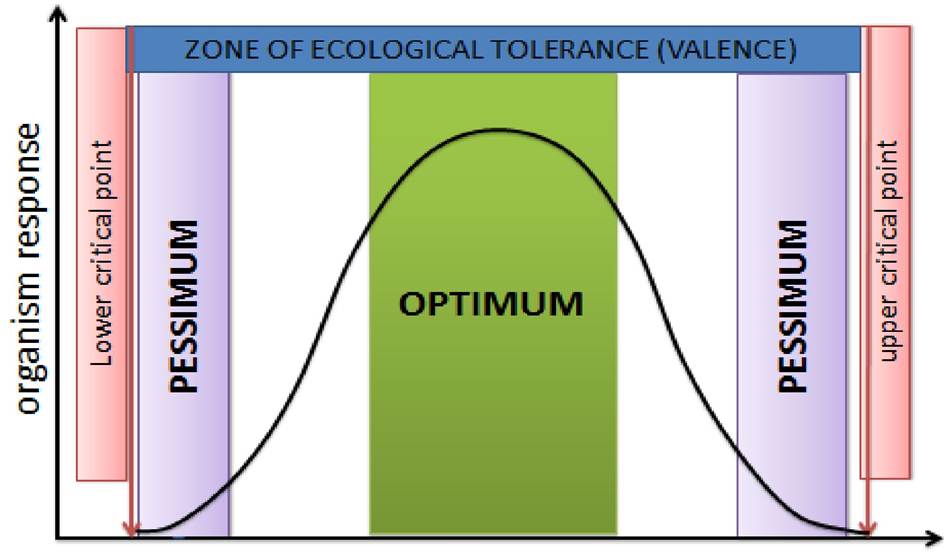
Figure 4 - Scheme of influence of environment factors on living organisms
The species which need certain ecological conditions for existence are called stenobiont, and those that are capable to adapt to different ecological conditions are called eurybiont.
More on the topic General laws of environmental factors effect on organisms. Limiting factors. Minimum law of Liebig, tolerance law of Shelford:
- General laws of environmental factors effect on organisms. Limiting factors. Minimum law of Liebig, tolerance law of Shelford
- Topic: First-aid dressing
- Dilutional Factors
- Environmental conditions play a strong role in limiting community membership
- Density-dependent factors regulate population size
- Competitors that use limiting resources in the same way cannot coexist
- Factors Affecting Climate
- SOCIAL FACTORS
- RISK FACTORS
- A field experiment suggests that multiple factors influence frog deformities