Mass extinctions and adaptive radiations have shaped long-term patterns of evolution
Thus far in this chapter, much of our focus has been on the process of evolution —the mechanisms by which evolutionary change occurs. But evolution can also be defined as an observed pattern of change.
Evolutionary patterns are revealed by observations of the natural world, such as data on the changing allele frequencies of a population over time. Patterns of evolutionary change are also documented in the fossil record, which shows that life on Earth has changed greatly over long periods (FIGURE 6.18).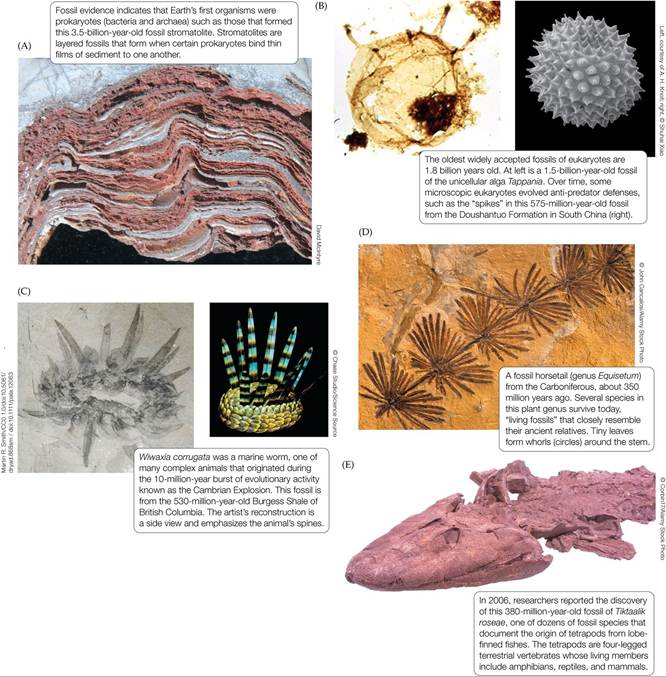
FIGURE 6.18 Life Has Changed Greatly over Time View larger image
The earliest known fossils are those of 3.5-billion-year-old bacteria, while the most ancient fossils of complex multicellular organisms are of red algae that lived 1.2 billion years ago. Animals first appear in the fossil record about 600 million years ago, and complex animals with bilateral symmetry (in which the body has two equal but opposite halves, as in most living animals) arose roughly 25 million years later (Fedonkin et al. 2007; Chen et al. 2009). These and many other great changes in the history of life resulted from descent with modification as new species arose that differed from their ancestors. Over millions of years, these differences gradually accumulated, leading eventually to the formation of major new groups of organisms, such as terrestrial plants, amphibians, and reptiles.
For example, a rich variety of fossils have been discovered that illustrate steps in the origin of tetrapods (vertebrates with four limbs, a group whose living members include amphibians, reptiles, and mammals) from fishes; the fossil of one such species is shown in Figure 6.18E. Similarly, the fossil record contains dozens of fossil species that show how mammals arose over a 120-million-year period (300-180 million years ago) from an earlier group of tetrapods, the synapsids (Allin and Hopson 1992; Sidor 2003).
The fossil record also documents cases in which the rise to prominence of one group of organisms was associated with the decline of another group. For example, 265 million years ago, reptiles and dinosaurs replaced amphibians as the ecologically dominant group of tetrapods, and then, 66 million years ago, the dinosaurs were replaced in turn by the mammals.The rise and fall of different groups of organisms over time has been heavily influenced by mass extinctions and adaptive radiations. The fossil record documents five mass extinction events in which large proportions of Earth's species were driven to extinction in a relatively short time—a few million years or less, sometimes much less (FIGURE 6.19). The most recent mass extinction occurred 66 million years ago, likely caused by a large asteroid that struck Earth, setting in motion cataclysmic environmental changes that led to the demise of dinosaurs and many other groups of organisms.
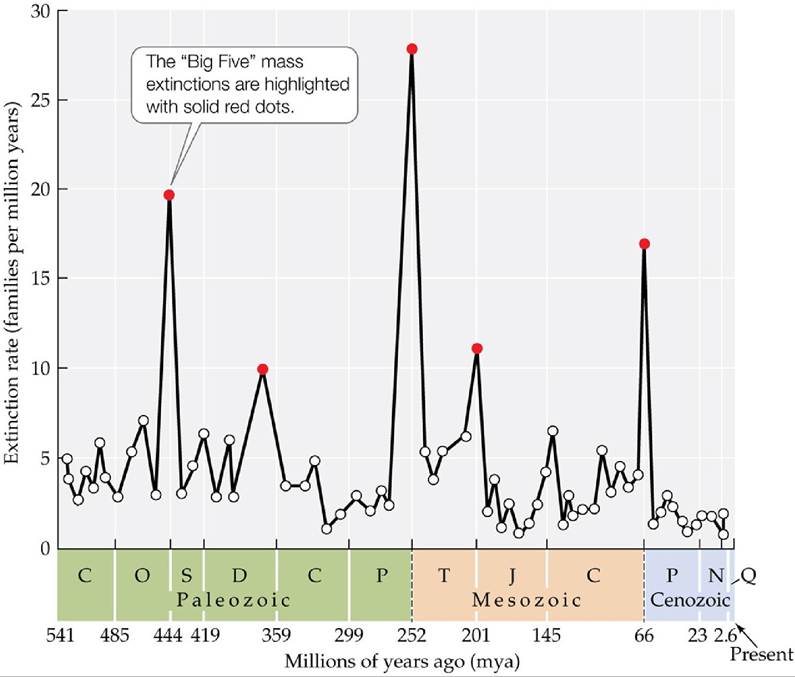
FIGURE 6.19 The “Big Five” Mass Extinctions Five peaks in extinction rates are revealed by a graph of extinction rates over time in families of marine invertebrates. View larger image
Each of the five mass extinctions was followed by great increases in the diversity of some of the surviving groups of organisms; for example, mammal diversity increased greatly after the extinction of dinosaurs. Mass extinctions can promote such increases in diversity by removing competitor or predator groups, thus allowing the survivors to give rise to new species that expand into new habitats or new ways of life. Great increases in diversity can also occur when a group of organisms evolves major new adaptations, such as the stems, waxy cuticles, and stomates on leaves that provided early land plants with support against gravity and protection from desiccation (see Concept 4.3). Whether stimulated by a mass extinction, new adaptations, or other factors (such as migration to an island that lacks competitors), an event in which a group of organisms gives rise to many new species that expand into new habitats or new ecological roles in a relatively short time is referred to as an adaptive radiation.
Fossil evidence also suggests that many of the great changes in the history of life were caused by ecological interactions. For example, the fossil record shows that for over 60 million years, early animals were small or soft-bodied, or both, and that all of the larger species were herbivores, filter feeders, or scavengers. However, beginning 535 million years ago, this safe, soft-bodied world disappeared forever with the appearance of large, well-armed, mobile predators and large, well-defended prey. This major step in the history of life appears to have resulted from an “arms race” between predators and prey. Early predators equipped with claws and other adaptations for capturing large prey provided powerful selection pressure that favored heavily armored prey species. That armor, in turn, promoted further increases in the effectiveness of the predators, and so on. Such reciprocal evolutionary change in interacting species, known as coevolution, is discussed in more detail in Concept 13.3.
Ecological interactions have shaped the history of life in many other ways. For example, the origin of new species in one group of organisms can lead to increases in the diversity of other groups, especially those that can escape from, eat, or compete effectively with the new species (Farrell 1998; Benton and Emerson 2007). An example of this process can be seen in parasitic wasps that feed on the apple maggot fly (Rhagoletis pomonella), a species that eats fruits (FIGURE 6.20). Following the introduction of apple trees to North America 200 years ago, some Rhagoletis populations began to eat apples. As these populations adapted to their new food plant, they diverged from the parent species genetically and now appear to be well on the way to forming a new fly species (Feder 1998). In addition, populations of the wasp have emerged that specialize on the incipient fly species (Forbes et al. 2009). These wasps have become reproductively isolated from the parent wasp species, thereby providing evidence of a sequence of speciation events that is in progress today and appears to be driven by ecological interactions.
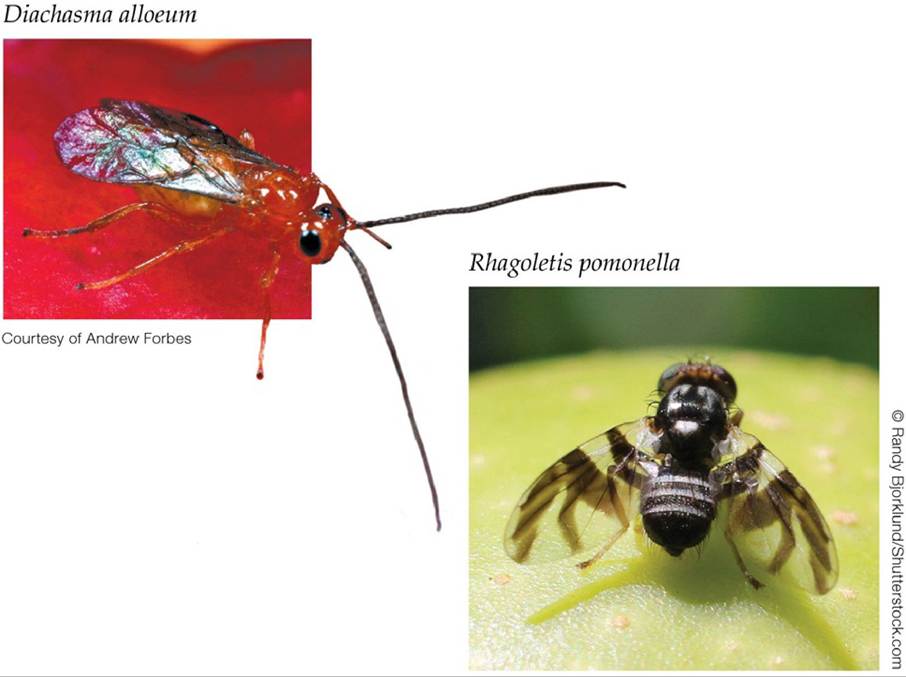
FIGURE 6.20 A Chain of Speciation Events Driven by Ecological Interactions? In the last 200 years, populations of the fly Rhagoletis pomonella that feed on apples have diverged genetically from their parent species, forming an incipient fly species. This change also appears to be leading to the formation of a new wasp species, Diachasma alloeum, that parasitizes members of apple-feeding Rhagoletis populations. View larger image
We turn next to a more detailed look at an idea that we have already encountered in this chapter: while ecological interactions influence evolution, evolution also influences ecological interactions.
2
- A species can be defined as a group of organisms whose members have similar characteristics and can interbreed.
More on the topic Mass extinctions and adaptive radiations have shaped long-term patterns of evolution:
- CONCEPT 6.4 Long-term patterns of evolution are shaped by large- scale processes such as speciation, mass extinction, and adaptive radiation.
- Adaptive Evolution
- Adaptive evolution can occur rapidly
- The long-term causes of the First World War
- CONCEPT 8.1 Evolution is the basis for adaptive behavior.
- Planning for Long-Term Needs
- CONCEPT 6.3 Natural selection is the mechanism for adaptive evolution.
- LONG TERM
- Long-Term Entrapment
- Long-Term Entrapment