Protection of surrogate species can provide protection for other species with similar habitat requirements
If we protect the habitat that is necessary for the red-cockaded woodpecker, as described in the Case Study, will we simultaneously provide protection for the gopher tortoise, Bachman's sparrow, Michaux's sumac, and other rare species that are dependent on the longleaf pine savanna ecosystem? Species may become conservation priorities not only because of their own conservation status, but also because of their capacity to serve as surrogate species whose conservation will serve to protect many other species with overlapping habitat requirements.
Some surrogate species can help us garner public support for a conservation project; examples of such flagship species include charismatic animals such as the mountain gorilla (FIGURE 23.20). Other surrogate species are referred to as umbrella species, which we select with the assumption that protection of their habitat will serve as an “umbrella” to protect many other species with similar habitat requirements. Umbrella species are typically species with large area requirements, such as grizzly bears, or habitat specialists, such as the red-cockaded woodpecker, but they may also include animals that are relatively easy to count, such as butterflies (Fleishman et al. 2000). Some researchers prefer to choose not just one species, but several focal species, selected for their different ecological requirements or susceptibility to different threats, with the realization that by thus casting a broader net, we improve our chances of covering regional biodiversity with protection.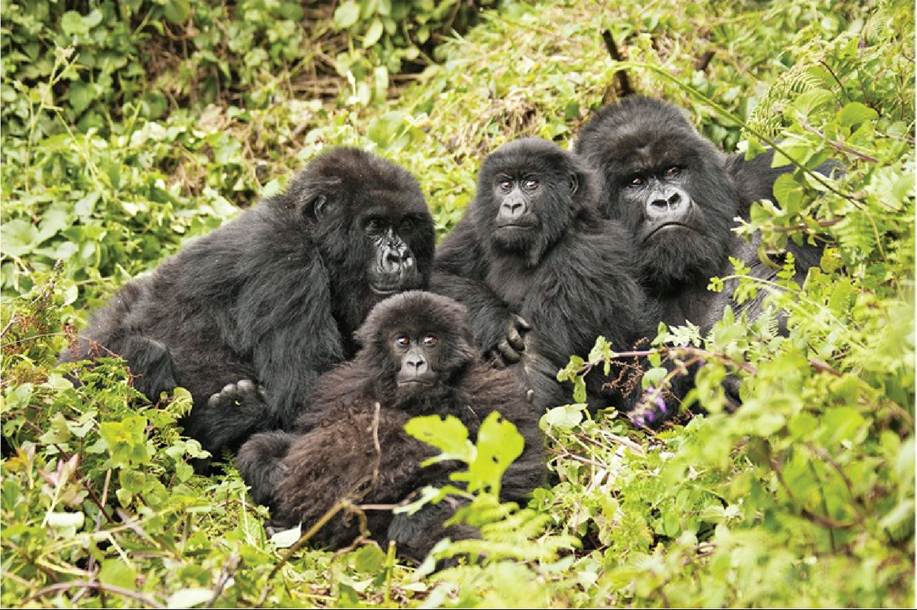
O Mary Ann McDonald∕Shutteburning is used as a management tool for conserving species in numerous ecosystems where fire has been a regular natural disturbance (FIGURE 23.22).
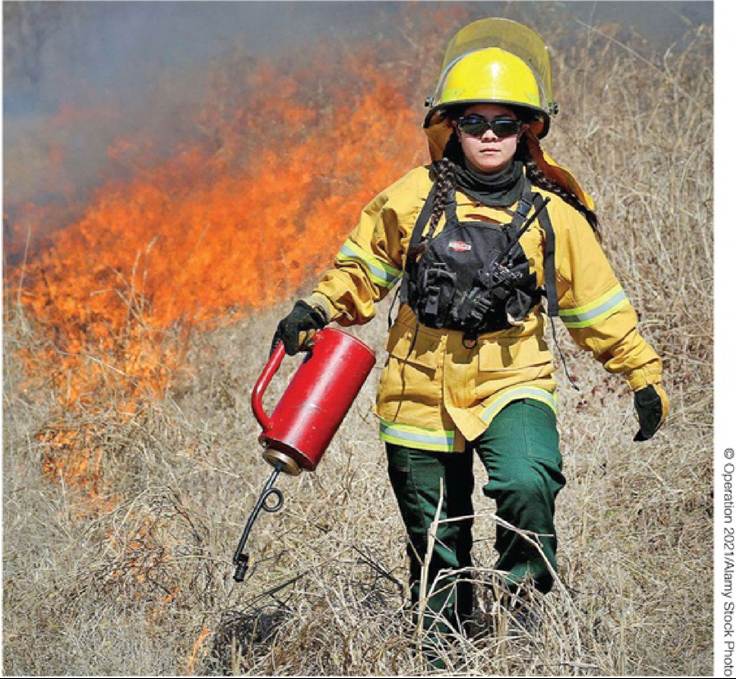
FIGURE 23.22 Prescribed Burning Is a Vital Management Tool in Some
Ecosystems Throughout the United States prescribed control burning, such as that shown here, helps to maintain a natural disturbance regime that maintains the high plant biodiversity characteristic of the understory in pine savanna ecosystems.
Many threatened species, including the red-cockaded woodpecker, rely on regular burning for their persistence. View larger imageBut the use of fire as a management tool can have unintended and undesirable ecological outcomes where non-native invasive species are present. In some longleaf pine savannas in Florida, openings resulting from burning have provided favorable habitat for the establishment of cogongrass (Imperata cylindrical an invasive plant from Asia. The presence of this grass, in turn, causes fires to burn hotter and more extensively. The consequences of these hotter fires are increased mortality of longleaf pine seedlings and native wiregrass, favorable conditions for further infiltration of cogongrass, and a resulting threat to the high levels of native plant diversity found in the understory of the longleaf pine savanna (Lippincott 2000). Land managers are faced with a dilemma: to burn or not to burn? The right question is more likely to be when to burn, and how often.
Adding people to the burning landscape further complicates matters. Throughout the southeastern United States, prescribed burns are taking place in a complex landscape where patches of forest are adjacent to people's homes and businesses. Convincing the public that these fires are necessary has required considerable outreach and public education. In the North Carolina Sandhills, the days for prescribed burns are chosen not only for safe conditions, but also with regard to wind direction so as to minimize the amount of smoke in population centers.
Here, as elsewhere, recognition of people as an integral component of the landscapes that must harbor all of nature's diversity has been a vital piece of the conservation picture. Establishing protected natural areas as sanctuaries for wildlife is an important part of the solution to the biodiversity crisis, but we must also do what we can to ensure that the vast majority of Earth's surface outside of protected areas is able to sustain both people's livelihoods and habitat for other species. This is a difficult challenge that will involve education, cooperation, legislation, and many creative approaches.
More on the topic Protection of surrogate species can provide protection for other species with similar habitat requirements:
- Where should we put our focus in preventing species loss—on the species or the habitat?
- The rarest and the most rapidly declining species are priorities for protection
- Ranking Species for Protection
- CONCEPT 19.1 Species diversity differs among communities as a consequence of regional species pools, abiotic conditions, and species interactions.
- Species distribution models can be used to predict a species' geographic range
- CONCEPT 13.1 Parasites typically feed on only one or a few host species, but host species have multiple parasite species.
- The outcome of competition between species can be changed by a broad suite of factors, including features of the physical environment, disturbance, and interactions with other species.
- CONCEPT 14.1 Competition can be direct or indirect, vary in its intensity, and occur between similar or dissimilar species.
- Invasive species can displace native species and alter ecosystem properties
- CONCEPT 9.3 Species are limited in their distribution and abundance by habitat suitability, historical factors, and dispersal.
- We have seen in previous chapters that disturbance, stress, and predation can modify species interactions and allow for species coexistence.
- CONCEPT 23.3 Primary threats to diversity include habitat loss, invasive species, overexploitation, pollution, disease, and climate change.
- CONCEPT 16.2 Species diversity and species composition are important descriptors of community structure.
- CONCEPT 15.1 In positive interactions, no species is harmed, and the benefits are greater than the costs for at least one species.