Rathwa Identity and Religion
There are layers of historical development, migrations, social-political movements, and religious divisions which have been responsible for establishing the identity of the Rathwa tribe.
From the outsider layman’s point of view, tribes are ‘primitive’ people engaged in timeless traditions identified by their agricultural based life practices. But at the same time through the ages, these identities have shifted, from a rustic lifestyle to one that is catching up with modernity. In the present time two parallels are clearly visible, one leading to retaining the originality of Adivasi identity15 and the other merging with development so they can present themselves as civilised/modern human beings.There is an important political dimension that needs to be understood in determining the identity of the Rathwa community. Pre-independence, to improve their position and caste identity, the Rathwas attempted to pass themselves off as Kolis (who had a Rajput like status) and they got themselves registered in the Census of that time as ‘Rathwa Kolis’16. But this identity has been recently challenged by the government as Rathwas need to prove their tribal status to qualify for the category ‘Scheduled Tribe’ which entitles the holder to significant advantages in terms of job reservation and concessions in education. This has led to the development of consciousness among the youth regarding their original identity. They are seen readopting ‘Rathwa’ identity with a sense of pride, as well as compulsion. Thus, to reclaim this identity, Rathwas dress up in their traditional attire, playing drums and flourishing bow and arrows in political demonstrations and melas17 of Chota Udepur (see Figure 16.3).
Jyotindra Jain in his book on the Rathwas’ Pithora paintings writes, “Rathwa tribe... endeavours to demonstrate that the ritual paintings of a tribe are one of the structural elements of that particular society which is an organic whole”(Jain 1984:1).
These paintings are a sacred entity in themselves and there is a complex organic relationship between the representation and the represented. The priest, painters, and medium become immaterial once the work is completed. The space becomes magical having a spiritual power devoted to the myth. The Rathwas find religious significance and cultural validation in the painting. But in modern times this religious significance is lost when the Lakhara18 artists paint Pithora on canvases to sell to urban clients in craft fairs. One may also see such paintings done on government buildings and digitally-printed on T-shirts of the Adivasi youth. Thus, there is a clear shift from religious belief to mere visual identity of indigeneity. In the outside world, Pithora paintings that identify the Rathwa Adivasi community have become a commodity or an art piece appreciated for their aesthetics without an understanding of context. In contrast, within the Rathwa community, through the lens of the bhagats, the Pithora have been seen as a cause of impoverishment of individual households as each one involves lakhs of expenditure in its execution.In the case of the living traditions of the Adivasis we find that there are shifting realities incorporating changes. These changes cannot be dated and measured as there are no written records of antiquity unlike in the Indian classical traditions. Therefore, one has to look at the changes within their contextual framework. For example, in the case of the Pithora paintings practised by the Rathwa and the Bhilalas, “The character of a given painting was determined more by the prescription of a particular ‘school’ of belief, ritual, and mythol-
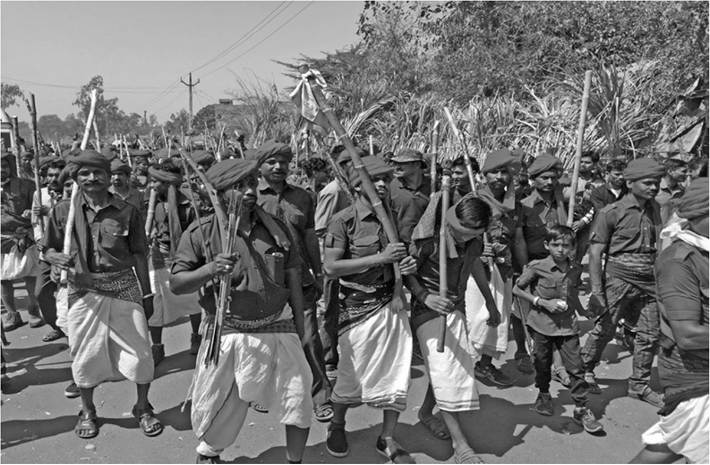
Figure 16.3 Rathwa Youth Dressed in Traditional Attire to Assert their Identity and Unity at the Gair Holi fair in Kanwat, Chota Udepur
Source: Author
ogy rather than a ‘school’ of painting” (Jain 1984:1).
Thus we observe stylistic variation in the Pithora paintings practised by the Rathwa and Bhilala across Gujarat and Madhya Pradesh. The structure of these paintings varies according to the size of the space available in the house, i.e. single or double, which is referred to as the verandah, but is always inside and hidden.The religious beliefs of the Rathwa are interwoven with various deities picked up from mythology (like Babo Ind, Pithoro, Ganeh and Rani Kajal) and linked to their immediate ancestry depicted on iconic horses. There are also deities of a more down to earth nature like Gamdev (village god), Himodi (goddess of village boundary), Khetrapal (field deity), Bhehato (protector of buffaloes), Tundvo and Tundvi (two hills), and the primordial sun and the moon. All these find expression in paintings, sculpture, and votive terracotta offerings. But unlike in Hinduism, these gods don’t reside in the idols or paintings. Instead, they are approached by a badvo (shaman) when necessary and asked for solutions to the problems faced by the people. When approached by the affected person the shaman goes into trance to seek out these spirits (Ratnagar 2010:68). The gods do not reside in temples; but they are summoned by the badvo. Badvo has authority over the Pithora; he conducts the ritual and makes offerings to the gods. He calls each of them by tapping the freshly painted wall with his sword imploring them to be present at the culmination of the ritual. After completion of the ritual, he takes his portion from the goats and chickens which have been sacrificed. In the Pithora ritual there is a continuous fluidity which finds its completeness with the sanction of the badvo who authenticates it. Here badvo is only a medium, while the spirits are the main subject.
Among the Rathwas, badvo is considered a highly respected religious practitioner. “He directs all the religious activities and holds formidable influence over all social and economic matters of the village” (Jain 1984:8).
He is consulted for regular problems related to women’s fertility, children’s illness, cattle, monsoon, theft, etc. He even solemnises marriages in the absence of the pujara (priest who solemnises marriages). The same badvo also works as a healer by recommending herbal medicines, and applying tantric practices to the affected persons. He is respected and well regarded for being the carrier of the spiritual power of the ancestors, but not as a supreme entity in his individual capacity. When not possessed by the spirits, he is considered a normal human being.16.2.1 From Spirit to Personage: Changes in Religious Faith
The religious changes among the Rathwa are clearly visible in the shift from the installation of the legend from spirits (Pithora) to Dharama Gurus of various panths active in the region. These panths have motivated the Adivasi population to convert to becoming bhagats. Becoming a bhagat gives a sense of moving away from the past identity of ‘primitivism’, and adopting a more cultured life as instructed by the panth guru. The educated class has stopped believing in the badvo and in his curing power through the mantras. They prefer to visit hospitals during illness. Several hospitals have been setup by the panths itself like the one in Bodeli setup by Swaddhaya Parivar. Adivasi believe that panths have given them opportunity to connect with the outside world to become part of the larger family consisting of other castes and groups. With this they also get an opportunity to travel outside to the main seats (temples or community centres) of these panths. This has helped them to move out of the oppression (if any) in their villages and to adopt a new identity of which they feel proud.
Becoming a bhagat has the implication of moving away from the sins and wrong doings and living a cultured life with daily pooja (worship) in the temple. Thus, many bhagats now bear red vermillion tilak marks on their foreheads. Tilak identifies one as being a bhagat which means abstention from alcohol and meat.
In the ceremonial meals meat has been replaced by puri-subji (a kind of pancake and vegetable curry) and liquor by cold drinks, sweets, and tea. But the change in their food pattern has also given rise to, as reported in many quarters, malnutrition among the tribal population of Chhota Udepur. There are regular jagaran (singing sessions at night) in the phaliya (hamlets) in which the Gurus preside (see Figure 16.7). These Gurus have no association with the Pithora or Gam Shai who have been the traditional deities of the Rathwa. New festivals such as Navratri, Ganpati Sthapana, Janmashtmi, and Hanuman Jayanti are now widely celebrated. The rituals like Pithora and Gam Shai; the worship of Baba Hudor or Timberva Dev for curing illnesses of buffaloes; Chapallyo Dev for predicting the rain; Barya Bap for curing chicken pox; and Verai Mata for protection of children and family are being forgotten. Adivasi festivals like Diwasa, Dev-Diwali, Holi, Akhateej, etc. have their association with the season unlike the tithi (dates based on the Vedic Hindu calendar). Nature has always remained an important part of all their festivals.Marriages are now solemnised by the Brahmins and not by the pujar among the bhagats. Their houses generally hoist red or white flags; posters of gurus are often put inside the house covering the Pithora painting without a sense of respect. Both are worshipped with the changed consciousness. This is a new kind of modernity spreading among the Adivasis
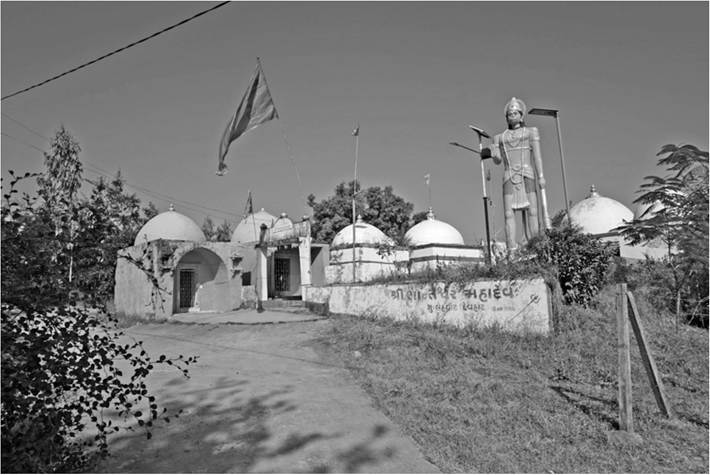
Figure 16.4 Hindu Temple at Devhat, Chota Udepur
Source: Author
of Chhota Udepur. Simultaneously there is a new kind of untouchability and separation spreading among the bhagat and jagat, and sometimes within the members of different panths. This has highly influenced the matrimonial alliances and the socio-cultural fabric. There are splits in the families leading to separation of houses.
Physical boundaries are constructed by dividing the house and setting up separate kitchens. Many a time the panth guru advises building a separate house different from that of the Jagats to start living a separate life. This leads to division of the land holdings and separation of brothers.As stated by Alice Tilchea a new wave of Bhagatisation is taking place against a background of various religious, political, and development agencies, including the Hindutva organisations such as the Sangh Parivar (Tilche 2011:165). It is like forgetting the past redolent of primitivism, backwardness, and poverty and adopting a more progressive life of better values connecting with the outside world facilitated by the panth guru. It is about believing the reality in the form of a panth guru rather than gods or spirits of the past. Pantha is more futuristic to synchronise with the new developments. In the beginning, conflicts between the bhagat and jagat were evident, but presently most of the Adivasi population have shifted to adopt one or the other panth, the impact of which is visible from the weekly haat (street market)19 and the change in life style, house structures, food pattern, and rise of political parties propagating the Hindutva agenda. The panth also have direct connection with political Hinduism (see Figure 16.4).
Various Hindu panths (sects) active in Chhota Udepur region among the Rathwa and other Adivasi communities are as under:
1 Ramanandi: This was initiated by Vishvanath Maharaj among the Rathwa, Bhil, and Tadvi in the Bhil Pradesh20. The Maharaj noticed that Adivasi communities living on the banks of rivers were catching fishes to eat. He initiated the Bhakti movement among them to stop these killings and inspired them to adopt the path of ahimsa (nonviolence). Now a temple in memory of Vishvanath Maharaj stands on the river in Pala village where he preached his teachings and asked people to give up hunting and adopt agriculture. This was the first panth who arrived in Chhota Udepur some hundred years ago.
2 Swaminarain: Based on the teachings of Hindu Vaishnava sampradaya this is one such sect which has spread across the world and millions of people of different castes and creed are its followers. In the later years this sect has become divided into many subsects such as Narain Dev, Lakshminarain Dev, Bochasan Akshar Purshottam Samradaya (BAPS), Abaji Bapa, Sokhada Haridham, Maninagar, etc. The followers of these various sub-sects have internal conflicts and politics.
The reason for the popularity of the Swaminarain sect has been because of the preaching of its founder Sahajanand Swami, believed to be the incarnation of Krishna, was very much appreciated and adopted by the social leaders, modern historians, and advanced communities. He was regarded as a man of great personality and philosophy of scientific and practical preaching. Thus, during the 19th century most of the religious leaders from India and abroad; Hindu, Muslim, and Christians, appreciated his efforts to eradicate the superstitions prevalent in most traditional religions. The Swaminarain sect encouraged education of women; discouraged the practices of sati and infanticide, animal sacrifice, liquor consumption, etc. By combining religion, devotion, knowledge, and meditation this sect has synergised monotheism among its disciples.
The Swaminarain sect has its main seat in Ahmedabad. It spreads to the Adivasi region of Chhota Udepur in 1981 AD. Since then various temples have been constructed through contribution of land, money, and labour by its followers.
3 Kabeer: Kabeer Panth was founded by Dharmdas and Surti Gopal. There are various oral and written myths regarding the birth of Kabeer and his religious identity whether he was a Muslim or a Hindu. Rambhakt (followers of Ram) and Sheikh Taqi (Muslim) are recognised as initiators of Kabeer Panth.
Kabeer Panth evolved during the Bhakti Period (or Sant Mat, meaning teachings of the saints) between 13 th and 17th centuries. It is based on the philosophy of the teachings of Kabeer which is about devotion to him as one guru leading to salvation. Its followers belong to different religious backgrounds as Kabeer did not force a change of religions but highlighted their limitations. In Chhota Udepur this sect arrived some fifty years ago. In this there are two types of figures, those who are sannyasi (celibates) and those who are worldly saints. Some of the temples of Kabeer Panth are around Bodeli. Its saints have different names and roam in the area for jagaran. Their food is prepared separately as they do not dine with the community members. In their service they are offered money along with flowers (see Figure 16.5).
4 Purshottam: Purshottam is associated with the Swaminarayan Sect started by a different section of its followers. Unlike the Swaminarain sect there is no supreme guru to preside over the chair. Their last guru was Daya Maharaj whose photo is worshipped
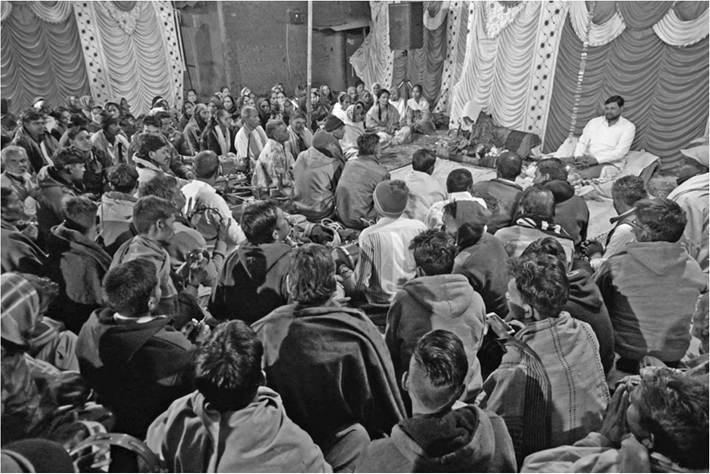
Figure 16.5 Jagaran Presided by the Guru of Kabeer Panth at Tejgadh
Source: Author
by the followers. It has its greatest influence in the border villages of Chhota Udepur adjoining Madhya Pradesh and Maharashtra. It has a history of around 30 years and has four big temples in the region (see Figure 16.6).
5 Sat Kaival: Sat Kaival means to believe (Sat, Eng. Equivalent: soul) in one God i.e. who is Kai (devoid of) Val (name, form, figure and qualities). This sect has existed for the last 40 years in villages around Pavi Jetpur and Tejgadh. Its foundation was laid by Paramguru Shreemat Karuna Sagar Maharaj in 1772 AD. He was Pragat (materialised) in a Forest in Kasor Gaam, Gujarat, India. Its largest temple is in Sarsa near Anand, and another one is in Kikawada. The head of the sect teaches his followers to view him as a Guru who will lead his followers to Karta21 believing that God is one.
6 Dasha Mata: It has been popular for the last 20 years mainly among the De-notified tribes, Dalits, and some of the Adivasi in the region, particularly Tadvi and Nayak.
7 Rai Muni: This sect was also part of the Swaminarain, but later it separated and moved to Pratapnagar (Pavi Jetpur). It is now led by Rai Muni Maharaj who himself is a Rathwa Adivasi and believes himself to be an incarnation of Krishna. Their tradition is not of sanyasi but worldly. On the day of Janshatmi (Krishna's birthday) a large festival is organised in Pratapnagar by the followers (Haribhakt) of Rai Muni.
8 Apart from this, in Kanwat, Pavi Jetpur, Bodeli and Sankheda blocks there are a few cases where the Adivasis have converted to Jainism. The reason is that they find employment in the Jain temples.
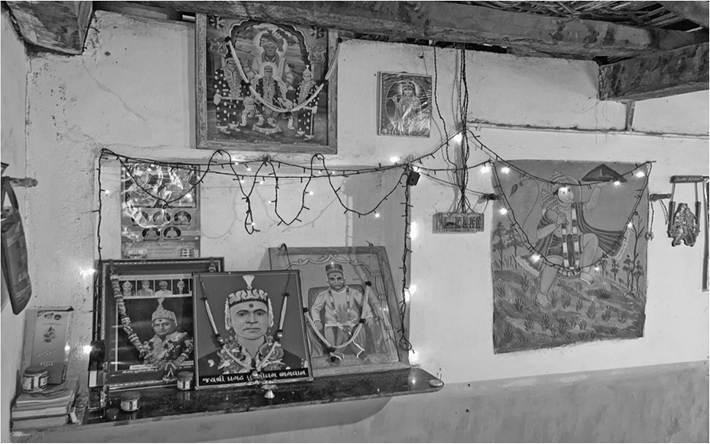
Figure 16.6 Posters of Various Gurus of Pragat Purshottam
Source: Author
Large gatherings of these panths are presided over by the gurus22 of particular sects who are greeted and honoured with flowers and cash. Money is an important part of service to the guru in most of the sects. Many followers have also donated lands for construction of temples, particularly those of the Swaminarain sect. In Rai Muni panth, the guru is weighed in cash (generally coins) when he visits a community (see Figure 16.7). Sometime, these gatherings are filled with fun and enjoyment rather than sermons or religious preaching. During the day an invitation is sent out to the villages, a pandal is prepared, sound systems are installed playing bhajans and food is prepared for the devotees.
In this way the panth guru wanders from village to village collecting donations for building temples. According to an understanding it is in exchange for giving up alcohol leading to savings which should go to the guru which they spend on temples. But in spite of this, these sects have failed to eradicate social differences and casteism among the Adivasi groups. Within the Adivasi groups of Chhota Udepur, Rathwas believe themselves to be higher in the caste hierarchy as compared to others. For example Nayaks could be Kotwal (messenger or drum players) to the village deities, but not allowed to touch them like the Rathwas. In jagarans also they are seen sitting separately at a distance from the Rathwas.
16.3
More on the topic Rathwa Identity and Religion:
- Rathwa Identity and Religion
- Identity of Visitors to the Hot Springs
- One Ring, some daemons, and Jesus Christ: the non-identity (1M) of law and religion
- An absence of religion? Translating the non-identity of dm as Islamic bios
- Conclusion
- Towards an All-Russian Identity
- Chronology of Religious Divisions
- 0.2 Introducing the Handbook and Contents