Multiple Sclerosis
GENERAL PRINCIPLES
Definition
• Multiple sclerosis (MS) is a chronic, progressive, immune-mediated disorder of the CNS, initially characterized by inflammatory demyelination followed later in its course by neurodegeneration.
• Although the disorder is presumed to be autoimmune in nature, the antigen(s) driving the immune response remains unknown.
Classification
• Types of MS
о Relapsing-remitting MS (RRMS): Episodic neurologic dysfunction followed by a complete or partial recovery in between episodes. Most patients are initially diagnosed with RRMS.
о Primary progressive MS (PPMS): Progressive neurologic dysfunction from onset without relapses or remissions. Less common.
о Secondary progressive MS: Progressive neurologic dysfunction but follows an initial relapsingremitting course.
• Classification is important in that progressive forms of the disease, in general, do not respond to many of the first-line disease-modifying therapies (DMTs) effective in RRMS (e.g., interferon-#946;) but do
respond to other therapies (e.g., ocrelizumab in PPMS).
Epidemiology
• Approximately 500,000 patients carry a diagnosis of MS in the US.
• The worldwide prevalence is estimated at over 2.3 million and growing.
Etiology
The exact etiology of MS remains unknown. The pathophysiologic pattern of MS is characterized by inflammatory cell infiltration, demyelination, axonal damage, and gliosis culminating in neurodegeneration.
DIAGNOSIS
Clinical Presentation
At disease onset, symptoms are variable and can include visual dysfunction (i.e., optic neuritis), sensory abnormalities, motor dysfunction, ataxia, fatigue, and bowel/bladder dysfunction.
Differential Diagnosis
• The differential diagnosis of MS is too extensive to be covered here but is reviewed in great detail elsewhere.16
• Important differential diagnoses to consider include neuromyelitis optica (NMO), another immune- mediated demyelinating disorder of the CNS.
NMO, in the majority of cases, is associated with antibodies against the aquaporin-4 antigen.• Another autoantibody-mediated demyelinating disorder of the CNS that shares clinical features with MS and NMO is anti-myelin oligodendrocyte glycoprotein (anti-MOG) disease.
Diagnostic Testing
• A cornerstone of diagnostic testing and monitoring/follow-up is MRI of the brain and spinal cord (in many cases). It is worth noting that “MRI-negative” MS does not exist. Lesions on MRI are part of the diagnostic criteria (2017 McDonald criteria) for the disease. However, in patients unable to undergo MRI scans, additional laboratory studies (i.e., CSF analysis) can be used, in the appropriate clinical context, to support a diagnosis of MS.
• RRMS is a disease disseminated in space and time. Patients should have clinical or radiographic evidence of #8805;2 attacks.
• CSF analysis is second to MRI in its value as a diagnostic marker of MS. Historically, CSF-specific oligoclonal bands have substituted for criteria of dissemination in time. More recently, CSF kappa free light chain has been demonstrated to have comparable performance with increased sensitivity and is therefore used as a screening test.17
TREATMENT
• Acute relapses are often treated with corticosteroids.
• There is no cure for MS. DMTs remain the cornerstone of treatment.
• In general, as DMTs increase in efficacy, the side effect profile increases. Lower efficacy medications (i.e., injectables) are preferred for less severe cases and higher efficacy medications are used for more
severe cases.
• There has been a substantial growth in the number of DMTs available to treat MS in recent years.
• See Table 27-5 for more details.
TABLE 27-5
DISEASE-MODIFYING THERAPIES APPROVED FOR USE IN RELAPSING-REMITTING MULTIPLE SCLEROSIS
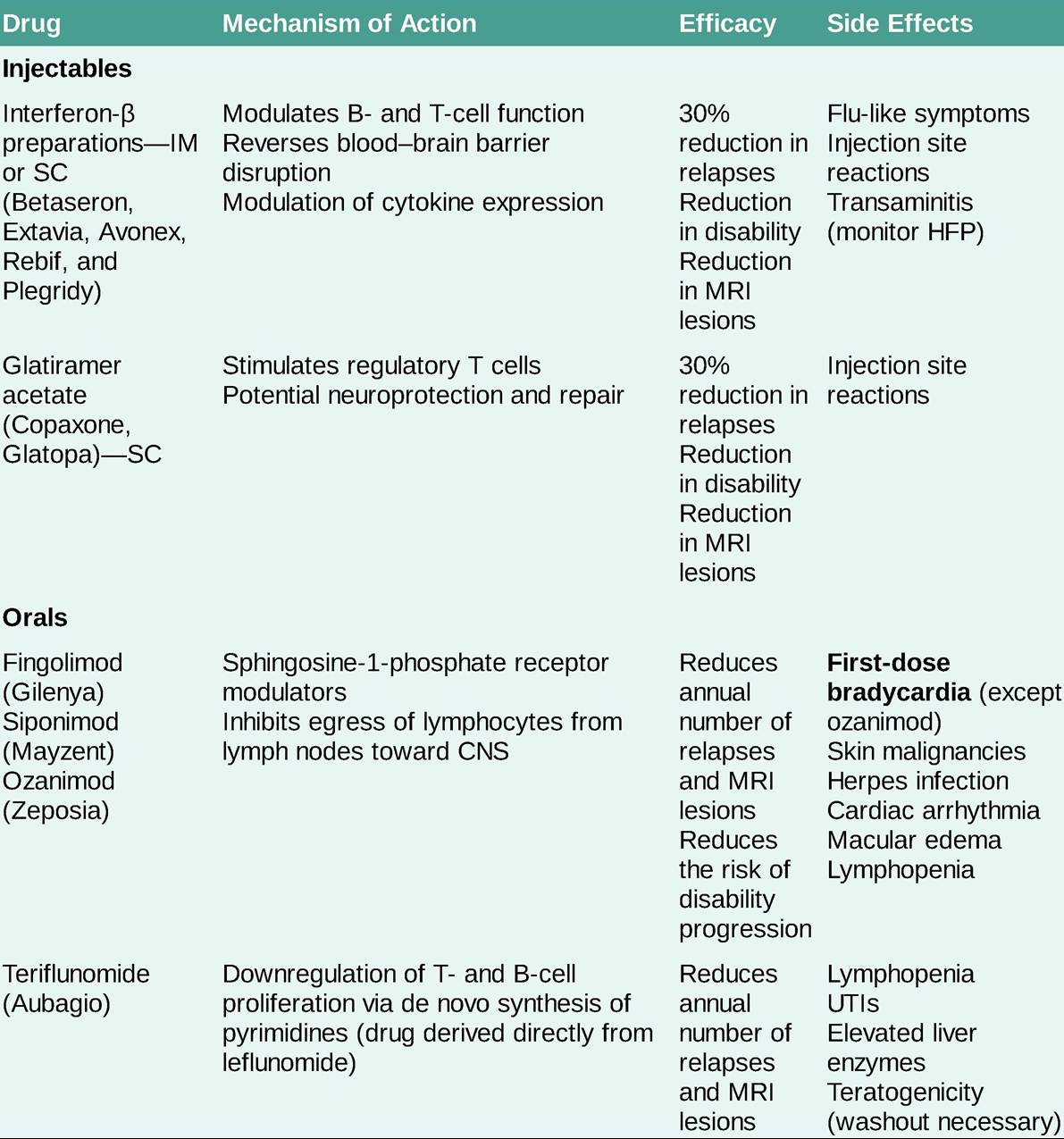
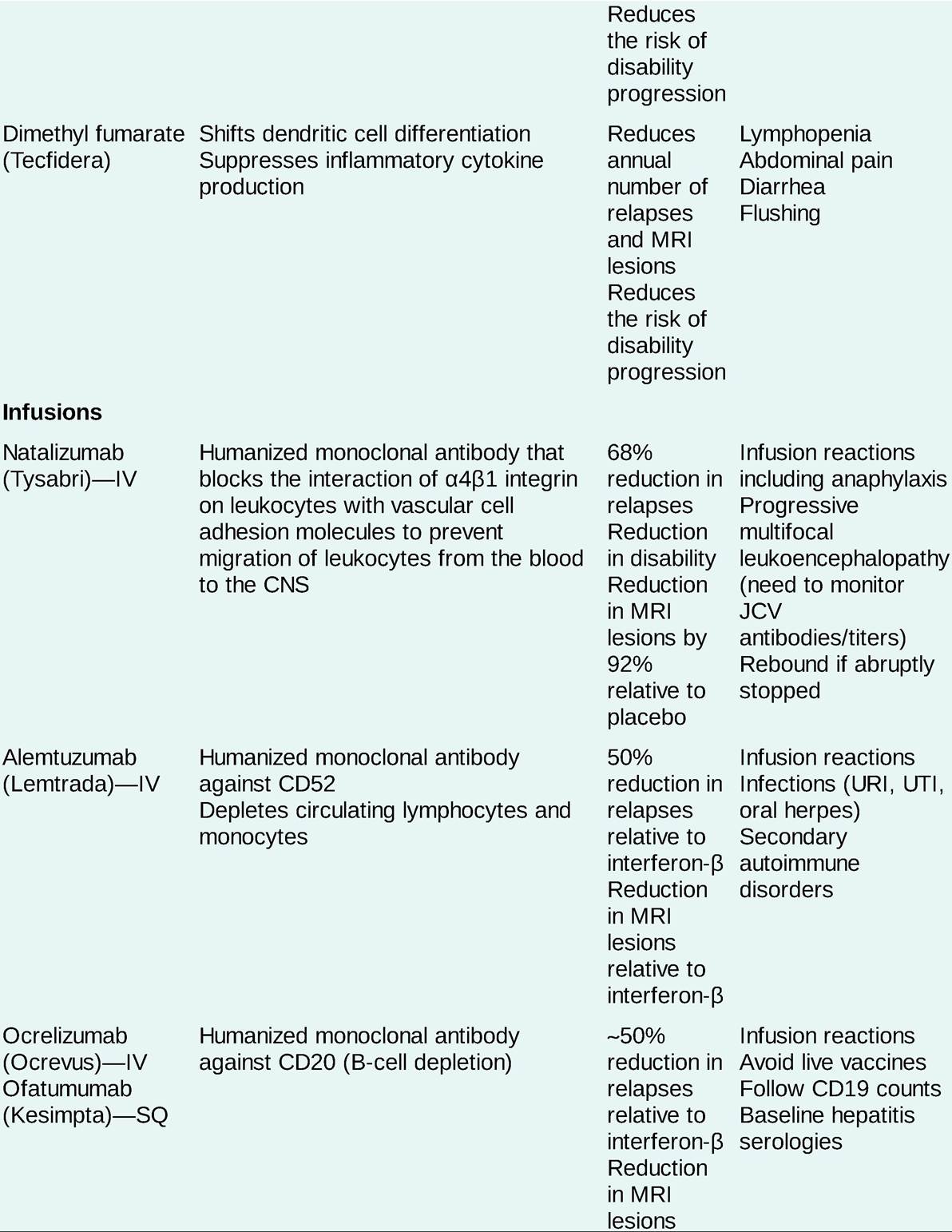

CNS, central nervous system; HFP, hepatic function panel; PPMS, primary progressive multiple sclerosis; URI, upper respiratory tract infection; UTI, urinary tract infection.
Referral
In general, all patients with suspected MS or MS should be referred to a neurologist for formal diagnostic testing and initiation of DMTs if indicated.
More on the topic Multiple Sclerosis:
- Systemic Sclerosis
- MULTIPLE PREGNANCY
- Multiple Myeloma
- 3.4 MULTIPLE STRATEGIES AND DIVIDED COMMUNITIES
- Multiple Myeloma
- name=bookmark2992>B. Multiple Pledges
- Multiple choice questions
- Multiple choice answers
- Interactions of Multiple Species
- The way we think about species interactions changes dramatically when we consider that they are embedded in a community of multiple interactors.
- Conditions for Controllability in a Static Strategic Setting with Two or Multiple Players
- Conflicting multiple intended meanings