Cattle Movement Networks in Uganda
Disease dynamics are a function of host population characteristics. This effectively means that pathogens are “hitchhikers” on waves of individual and group characteristics and other events that occur in populations.
It is therefore imperative to understand the disease dynamics, such as the numbers, direction, and risks associated with animal movements in developing disease control measures (Fevre et al. 2006). Within this context, there are no empirically documented livestock movement patterns in Uganda. However, Nyakahuma and Kimezire (1995) predicted livestock movements in Uganda based on human and animal census data (Fig. 22.1), and it is clear that Uganda has a centripetal cattle movement pattern, i.e., they filter from the rural areas into urban centers where a unit of animal protein is likely to fetch a higher price (Boysen and Matthews 2012). This phenomenon has also been reported in Ethiopia where the patterns of molecular markers of M. bovis reflect a similar centripetal cattle movement (Firdessa et al. 2012).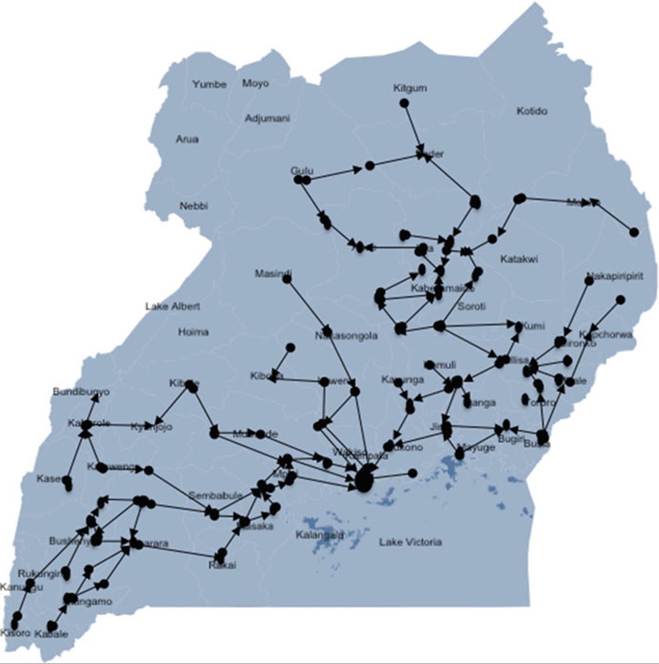
Fig. 22.1 The predicted livestock movement network in Uganda
Animal movement between herds and districts has been linked to the distribution of BTB in two UCC districts: Nakasongola and Nakapiripirit (Oloya et al. 2007a) where cattle mobility is one of the cardinal features of the system of livestock farming (Oloya et al. 2006, 2007a; Muwonge et al. 2012a). Spoligotype profiles in Uganda too reflect this feature in that SB1469 was isolated from humans, cattle, and pigs in both the Karamoja and the Mubende districts. These two districts are approximately 600 km apart, and unless this spoligotype is ubiquitous in Uganda, it is present in these two wide-apart districts because of host movements between these two districts. Other than long-distance movement, there is also evidence of short-range movement, reflecting the situation in the Nakasongola, Mubende, and Luwero districts that share similar spoligotypes (see below). Cattle rustling sporadically occurs at the Uganda borders (Gray et al. 2003; Jabs 2007), and this violent and illegal practice also causes the movement of BTB-infected cattle into the UCC and beyond (Gray et al. 2003). The molecular signature of M. bovis from the latter sources can only be examined once molecular data from neighboring countries are made available.
22.3
More on the topic Cattle Movement Networks in Uganda:
- Cattle Movement Networks in Uganda
- Molecular Epidemiology of Bovine Tuberculosis in Uganda
- A Brief History of Cattle Movements in Africa
- The Cultural Networks of Empire
- International women’s networks
- Braving the Masculinist Antiwar Movement
- Evidence for Disease Susceptibility Differences in Cattle
- Bovine TB in Ethiopia
- Conclusion