Cutaneous Adverse Drug Reaction
Any drug, drug vehicle, or food product can cause an adverse reaction in the skin (toxiderma) (Figure 12-6). Most authors agree that toxiderma can mimic any skin disease. Some specific drugs preferentially induce pinna lesions.
Self-induced mutilation of the head and neck has been reported in hyperthyroid cats treated with carbimazole. The same symptoms have been observed less
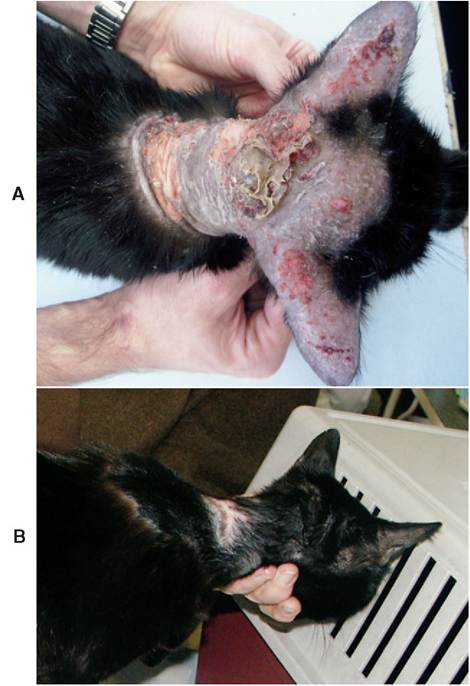
Figure 12-6
A, Sudden onset of ear and neck excoriation in an 8-year-old male domestic short-hair cat associated with treatment. No other lesions could be seen on the body. B, The same cat 2 months later.
commonly in cats treated with the carbimazole metabolite, methimazole.14,15 Facial pruritus has also been associated with propylthiouracil and clavulanic acid and amoxicillin.16 Cephalexin-induced pemphigus foliaceus lesions on the whole ear pinna and extending to the face have been observed in one cat.16 Vasculitis, causing necrotic pinnal lesions and onychomadesis, was associated with penicillin injections.16
More on the topic Cutaneous Adverse Drug Reaction:
- Adverse Drug Reactions
- ADVERSE EVENTS FOLLOWING IMMUNIZATION (AEFI)
- DRUG FEVER
- Adverse Food Reactions (AFR)
- The Reaction
- Specific Drug Treatment
- Reaction to Resistance
- Drug-Induced Hemolytic Anemia
- Injecting drug users
- 26 Inflammatory bowel disease and adverse reaction to food in a dog
- Addressing Adverse Formalisation: The Land Question in Outer Island Indonesia
- PETER ΓS INITIAL REACTION
- Drug resistance
- Stalinist Reaction: “Nationalist” Pasts Recalled
- Netherlands, 1870s: Chantepie's theological reaction
- Relationships with Drug Users
- Reaction of the shar'i establishment: scholars and religious tendencies
- Drug toxicities
- Drug-Induced Liver Injury
- My contribution to this festive volume deals with untimely death and one specific ancient reaction to it, the accusation of sorcery.