Chile
Rebalancing
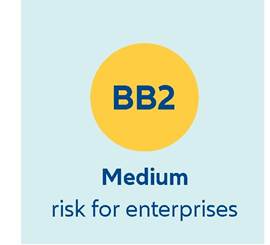
| GDP | USD301.0bn (World ranking 46) |
| Population | 19.6mn (World ranking 64) |
| Form of state | Presidential republic |
| Head of government | Gabriel Boric (President) |
| Next elections | 2025, General |
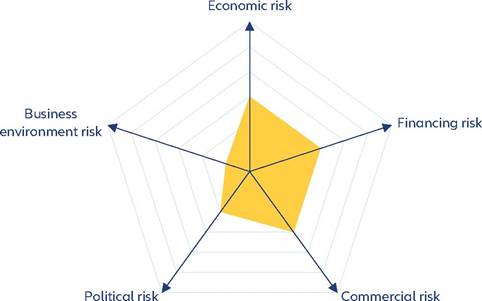
Strengths & weaknesses
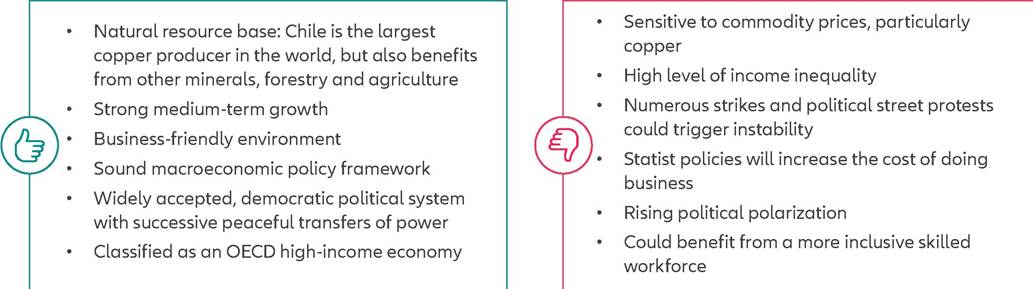
Economic overview
Economic growth set to recover
After a period of stagnation in 2023, Chile's economy is set for a modest recovery, with projected growth rates of +1.6% in 2024 and +2.5% in 2025.
This expected recovery will be supported by rising real wages and a decline in inflation, creating an environment conducive to increased consumer spending. Monetary policy is also adjusting to these conditions, with the central bank easing its stance to encourage investment and spending. However, Chile faces challenges, including policy uncertainty affecting investment in the first half of 2024 and potential external risks, such as a slowdown in China affecting demand for minerals. In addition, domestic reforms to the tax and pension systems could add to this uncertainty. Environmental factors such as climate-related events also pose a risk to sectors such as agriculture and mining, potentially affecting growth and fiscal stability.Fiscal policy is planned to be moderately expansionary, with public debt remaining under control (around 40% over the forecast period, lower than the EMEs average of 60%). The focus on medium-term mineral demand will boost revenues, supported by new mining royalties, ensuring that deficits remain manageable.
As Chile navigates these challenges and opportunities, its approach to renewable energy and natural resources positions it well to benefit from the global energy transition.Moderate fiscal deficit; current account rebalancing
Chile's fiscal deficit is projected to improve significantly, falling from 3.2% of GDP in 2023 to 2.4% in 2024. The improvement continues, with a further decline to 1.3% expected by 2028. This positive trend is attributed to higher income and sales tax revenues, boosted by the economic recovery and higher tax revenues from copper and lithium production. However, higher social spending and public works projects will partly offset these gains.
The current account deficit is also projected to improve, falling from 9.0% of GDP in 2022 to 3.7% in 2023, before rising slightly to 4.3% in 2024. This change is mainly due to fluctuations in the trade balance, influenced by volatile copper prices and import dynamics. Despite Chile's relatively large current account deficit, the risk of a balance of payments crisis is low. This reflects a large trade surplus driven by strong mineral exports, especially lithium. The services deficit will also narrow as inbound tourism recovers and logistics costs continue to ease. Robust FDI inflows, especially in renewable energy and mining, will be more than sufficient to cover the current account deficit throughout the forecast period. Chile's foreign reserves are adequate and the country maintains a stable financial position, supported by robust international reserves and access to a substantial IMF flexible credit line (6.2% of GDP).
Relatively good business environment; challenging political landscape
Chile's business environment compares favorably with its peers. Chile ranks 59th in the World Bank's Doing Business 2020 survey, with high scores for protecting minority investors, enforcing contracts, resolving insolvency, starting a business and dealing with construction permits. According to the Fraser Institute, Chile also ranks first in economic freedom (30th out of 165 countries) compared to other large economies such as Brazil (90) and Mexico (68).
However, Chile's business environment could be weakened by the government's reform agenda, which includes increased regulation and a greater role for the state in many sectors. In particular, higher taxes and stricter environmental, labor and social regulations will increase the cost of doing business. President Boric's statist policies pose potential risks to the business and investment environment in the medium and long term.The political landscape in Chile in 2024 is complex. Following the rejection of constitutional reform, President Gabriel Boric's government is focusing on key reforms in the areas of taxes, pensions and state-owned lithium. Opposition from right-wing parties, fueled by the government's low approval ratings, poses a challenge. Reform efforts are crucial, but compromises are expected due to political dynamics, including the upcoming regional and local elections on 27 October, which could further polarize the political environment and affect governability. The outcome of these reforms and elections will have a significant impact on Chile's political and economic trajectory.

More on the topic Chile:
- Bibliography
- Contents
- Bibliography
- AppendixA: Data
- Emblems of Violence in Other Regions of the Americas
- Synopsis
- Index
- Putative Title
- 40 The Nordic Indies
- Chapter 9 Obstetric conditions