Earth's biota is becoming increasingly homogenized
Organisms are naturally mobile, which influences their dispersal across their geographic ranges, although they are still subject to dispersal barriers such as oceans and mountain ranges.
Over the last century, however, people have moved over Earth's surface at an unprecedented rate, carrying organisms with them and greatly enhancing rates of introductions of new species to all parts of the globe (FIGURE 23.7).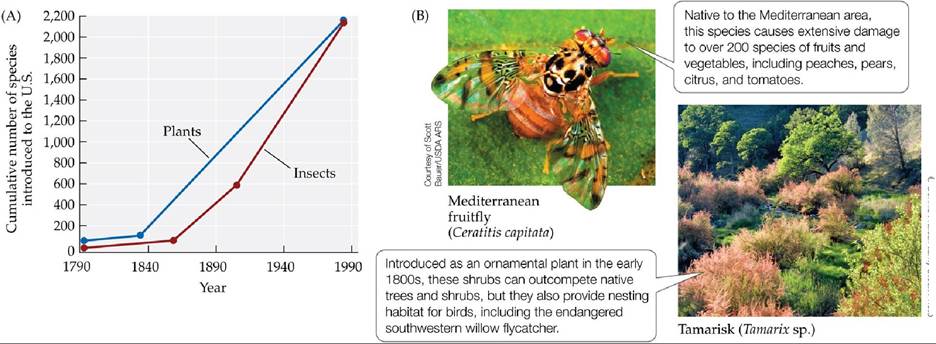
© Dennis FratesZAIamy Stock Photo
FIGURE 23.7 Species Introductions Are Increasing Globally The number of non-native species that have become established in the United States has increased about fivefold over the
past century for various organisms, including molluscs, fishes, terrestrial vertebrates, and (A) plants and insects. Similar patterns are seen in many other countries. Photographs in (B) show two examples of introduced species. (After U. S. Congress, Office of Technology Assessment. 1993. Harmful Non-Indigenous Species in the United States. U.S. Government Printing Office: Washington, DC, based on contractor reports done for OTA.) View larger image
While the introduction of non-native species can increase local diversity, they generally have negative effects on native species diversity. For example, introductions of non-natives can contribute to the range contractions of native species whose numbers may already be in decline because of habitat loss and other factors. Typically, the greatest “losers” among the native species tend to be specialists—those with morphological, physiological, or behavioral adaptations to a particular habitat—while the “winners” tend to be generalists with less stringent habitat requirements. The spread of non-native species and native generalists, coupled with declining abundances and distributions of native specialists, is part of a growing taxonomic homogenization of Earth's biota (Olden et al.
2004). In rare circumstances, non-native species can provide conservation benefits, such as habitat or food for rare species (Schlaepfer et al. 2011). Non-native tamarisk shrubs (Tamarix spp.), for example, provide nesting habitat for the endangered southwestern willow flycatcher (Empidonax traillii extimus). Species introductions have also increased regional biodiversity in many parts of the world (FIGURE 23.8), although the value of increasing diversity through the increase in non-natives is questionable, as it typically comes at a cost to native diversity.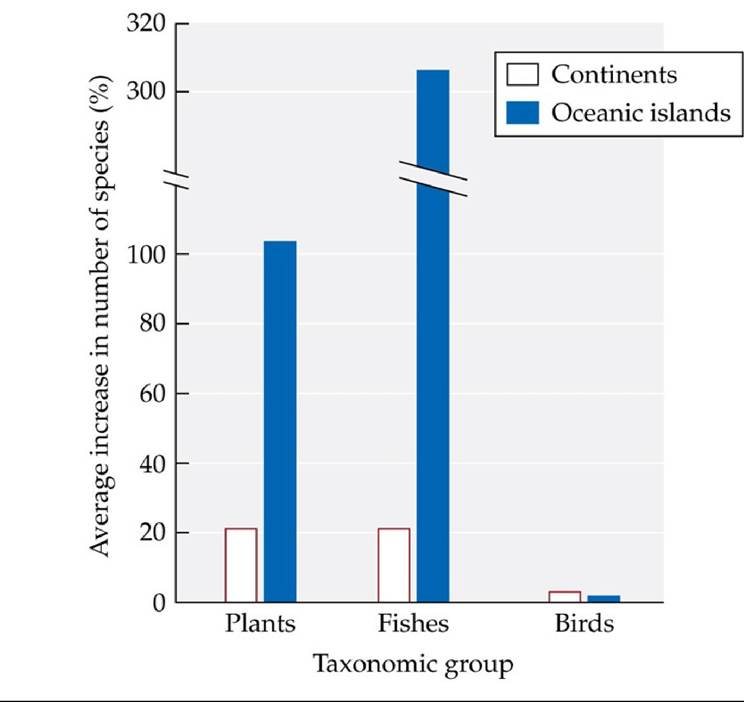
FIGURE 23.8 Introductions of Non-Native Species Can Increase Regional Biodiversity
The introduction of non-native species to new regions has led to sizable increases in the numbers of species found on oceanic islands and within continental regions for plants and fishes, but not for birds.
The introduction of non-native plants to new regions is associated with a decrease in the global diversity of plants. Explain how that can be true given the results shown in this figure.
(After D. F. Sax and S. D. Gaines. 2003. TrendsEcolEvol 18: 561-566.) View larger image
Island biotas are particularly vulnerable to both invasion and extinction. The decline of island endemics is often accelerated by the introduction of more cosmopolitan species. In a survey of American Samoa, Robert Cowie (2001) found just 19 of the 42 species of land snails historically known from that island group, plus 5 species not previously found there but which he presumed were native. He also found that there were 12 non-native species present on the islands. These non-natives occurred in high abundances, representing about 40% of the individuals collected (there was also one abundant native species). Cowie concluded that most native species were declining in abundance, while many non-natives were increasing. Furthermore, the predators contributing to the declines of native land snail species were also non-natives, such as the predatory snail Euglandina rosea and the house mouse (Mus musculus).
Cowie has found this trend toward homogenization of land snail faunas to be widespread among Pacific islands.Homogenization has also been observed among the freshwater fishes of the United States, largely as the result of widespread introductions of game fishes. Rahel (2000) quantified the homogenization of U.S. fish faunas by examining the change in the number of species shared between all possible pairs of the 48 conterminous states. He found that, on average, pairs of states shared 15 more species than they did at the time of European colonization (FIGURE 23.9).
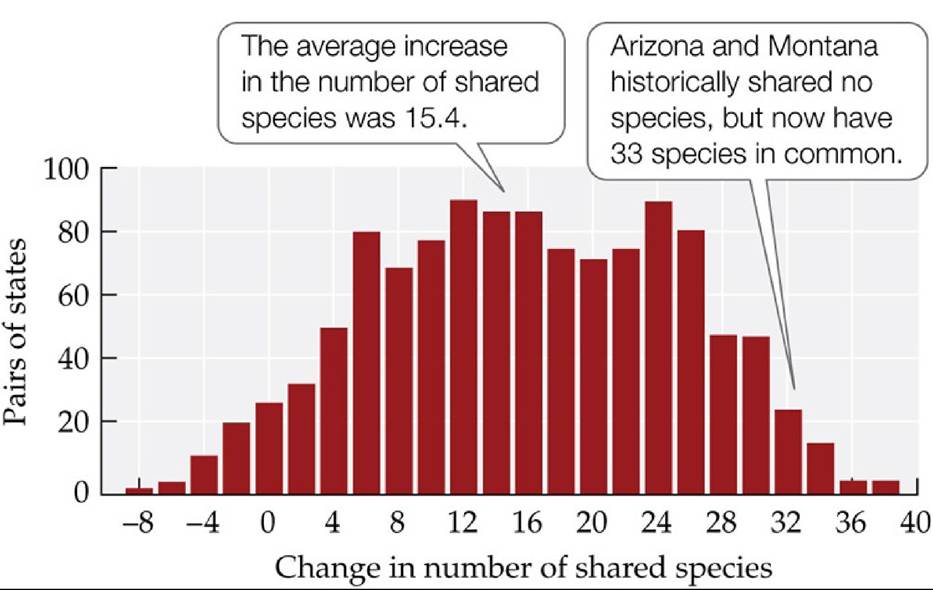
FIGURE 23.9 U.S. Fish Faunas Are Undergoing Taxonomic Homogenization The numbers of fish species shared by pairs of the 48 conterminous U.S. states have increased since
European settlement. (After F. J. Rahel. 2000. Science 288: 854-856.) View larger image
On a global scale, it is clear that biodiversity is being lost as a result of humanity's impact on the planet. Let's look in more detail at the reasons for these losses, and then consider what steps can be taken to counteract them.
More on the topic Earth's biota is becoming increasingly homogenized:
- B. Mary as Earth-Goddess
- Radiation Balance of Earth
- HEAVEN AND EARTH
- Seasonality results from the tilt of Earth's axis
- In the course of the eighteenth century, as a result of successful wars with its western and southern neighbors, the Russian Empire was increasingly becoming a multiethnic and multicultural polity.
- THE COVENANT BETWEEN HEAVEN AND EARTH
- The Largest Ecological Experiment on Earth: A Case Study
- One of the most obvious ecological patterns on Earth is the variation in species composition and diversity among geographic locations.
- The rate at which Earth is losing species is accelerating
- Tane and Hine-ahu-one (Earth Maiden)
- From Heaven to Earth
- THE TURNING OF THE EARTH