Males and females differ in their sexual organs and in other ways that are directly related to reproduction.
But there are other, more puzzling differences between them. Males are often larger or more brightly colored than females, they may possess unusual weapons (such as large horns), or they may have gaudy ornaments, such as the extravagant plumage of a male Argus pheasant (Argusianus argus; FIGURE 8.13) or a male peacock.
In addition, males and females often differ in their mating behavior. In many species, the males may fight, sing loudly, or perform strange antics to gain access to females (FIGURE 8.14). Furthermore, males may be willing to mate with any female who will have them. Females, on the other hand, rarely attempt to court males and typically are more choosy about who they will mate with. What causes such differences between the sexes?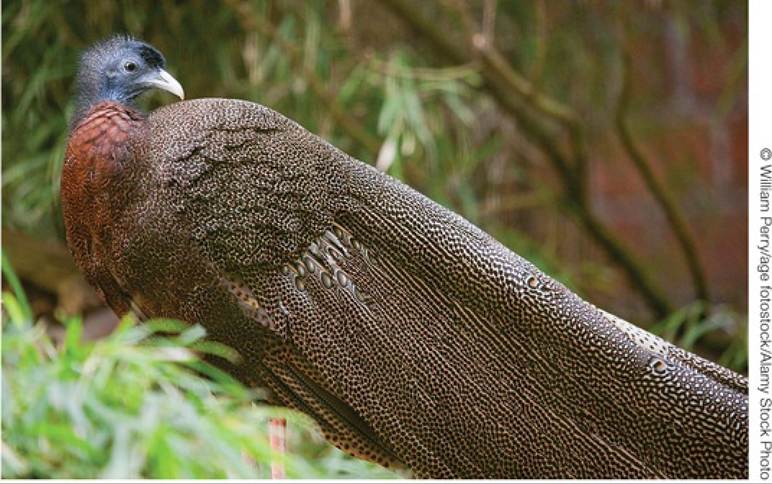
FIGURE 8.13 A Male Shows Off The Argus pheasant (Argusianus argus) is native to the understory of the dense tropical forests of Southeast Asia. The males display their remarkable tail feathers as they attempt to attract and mate. View larger image
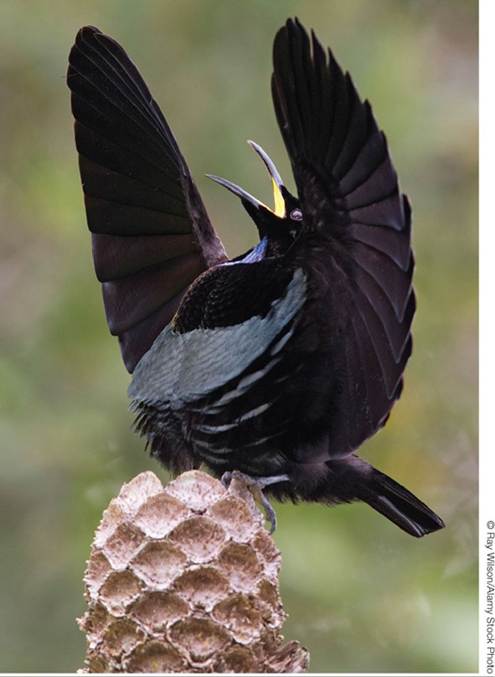
FIGURE 8.14 A Male Courtship Dance The male Victoria’s riflebird (Ptiloris victoriae) of Australia accentuates the bright colors of his plumage in this courtship display. Part of this courtship display includes the “sky-pointing” behavior seen here. View larger image
More on the topic Males and females differ in their sexual organs and in other ways that are directly related to reproduction.:
- Differences between males and females can result from sexual selection
- Sexual History and Gender-Affirming Care Taking a Sexual History
- SECTION F THE ORGANS OF LOCAL GOVERNMENT
- Mode of reproduction is a basic life history trait
- Limits of male maintenance: females as breadwinners
- MEDICALLY ASSISTED REPRODUCTION
- There are trade-offs between current reproduction and other life history traits
- Species may compete directly or indirectly
- Content Regulations Where the Message Directly Causes Harm
- SECTION G THE ORGANS OF GOVERNMENT IN THE EIGHTEENTH CENTURY
- DISORDERS OF MALE REPRODUCTION
- Populations grow geometrically when reproduction occurs at regular time intervals