APPENDIX ONE Systematics of Major Parasites Groups
CONTENTS
| Identification | 381 |
| Nomenclature | 381 |
| Classification Systems | 381 |
| Classification of Parasites | 383 |
| Literature Cited | 398 |
The science of systematics includes three parts: identification, nomenclature, and classification of living organisms (Grimont 1999).
Taxonomy, the theory and practice of classification, is designed to delineate organisms into natural groups and then generalize knowledge about those groups by studying representative organisms.IDENTIFICATION
Identification is a process whereby an organism is recognized as belonging to a known species within a taxonomic hierarchy and designated accordingly (Grimont 1999). The methods of identification vary considerably among taxonomic groups and, where pertinent, are addressed in discussions of these individual groups.
NOMENCLATURE
Biological nomenclature is the system of assigning Latin names to organisms using a universal vocabulary. The intention of nomenclature is that each species in a given taxonomic position should be given a unique name (Grimont 1999). Since the time of Linnaeus, each organism has been given a binomial name; the first is the genus name and is written with the first letter capitalized; the second is the species epithet and normally is not capitalized.
The term species has been defined in a variety of ways. Within evolutionary biology, species typically are identified as natural populations of individuals that are actually or potentially interbreeding, and are isolated reproductively from other such populations (Dobzhansky 1937; Mayr 1942, 1963).
However, this has presented difficulties for classifying and naming many microorganisms such as bacteria, protozoa, and some groups of fungi, in which sexual reproduction is infrequent or absent. Because viruses are not viewed as fully living organisms, their taxonomy and naming also have presented some difficulties. Each of these fields has developed additional tools for identifying species, and phylogenetic analyses are playing increasingly important roles in classifying and naming among these groups.Any biologist may name a new species, provided that the proposal is supported by sufficient data and the appropriate nomenclatural rules for a discipline are followed. Each group of organisms has specific rules for its proper naming. For example, the International Code OfNomenclature of Bacteria (Sneath 1992) includes rules on how to name bacteria and how to use the names.
CLASSIFICATION SYSTEMS
A classification based on evolutionary relationships is a phylogenetic classification. Cladistics is a method of classification based on evolutionary genealogies alone (Thain and Hickman 2004). While the science of classification generally is designed to reflect evolutionary relationships, these relationships have been very difficult to ascertain for some groups of organisms, including most microorganisms (Bohannon 2008).
Classification of living organisms is a complex field that is continually undergoing significant revisions as new techniques and new information arise. R. H. Whittaker broke the historic tradition of a three-kingdom system of classification after recognizing that the classification of all organisms as prokaryotes, animals, or plants was an artificial division that did not reflect their evolutionary relationships (Whittaker 1969). Adding the Kingdoms Fungi and Protista was intended to more closely reflect their presumed evolutionary relationships by attempting to establish monophyletic groups that included an ancestor and all of its descendants, as well as to develop a hierarchical classification to reflect the relationships of these groups (Alexopoulos et al.
1996). In contrast, polyphyletic groups are those that do not share close common ancestors; historically, many classifications of “protozoa” have included disparate polyphyletic groups (Patterson 2000).Until the early 1990s, the consensus view was that the early descendants of life's last universal common ancestor, a small cell with no distinct nucleus, divided into two prokaryotic (nonnucleated) groups— the bacteria and the archaea (Doolittle 1999, 2000). Later, the archaea were proposed to have given rise to eukaryotic cells, more complex cells with true nuclei that, in turn, gained mitochondria, chloroplasts (among plants), and other organelles by incorporating adaptable bacteria (Doolittle 1999, 2000). Increasingly, evidence emerged that most archaeal and bacterial genomes, and the inferred ancestral eukaryotic nuclear genome, contained genes from multiple sources through the effects of extensive “lateral gene transfer” (Doolittle 1999). Thus it became difficult to propose a clear hierarchical universal classification based on evolutionary relations, because the traditional metaphor of a branching tree no longer appeared to apply (Doolittle 1999).
Instead, it was proposed that a communal, loosely knit community of primitive cells evolved together and developed to a stage where this community broke into several distinct communities that further evolved into three primary domains, or lines of descent: archaea, bacteria, and eukaryotes (Woese 1998). Cells of these early groups each had relatively few genes; while each group was distinct, they also commonly exchanged genes. In time, most gene transfers were thought to have become limited to within each of these three domains (Doolittle 2000).
With further work, there again is a more optimistic view about finding a last universal common ancestor. Following the finding of the large mimivirus in amebae (La Scola et al. 2003), a view emerged that viruses might be the last universal common ancestor (Villarreal 2005).
There is also a recent proposal of a thermophilic gram-positive bacterium as the last universal common ancestor, and with a proposed tree of life that encompasses the three primary domains (Ciccarelli et al. 2006).While numerous classification schemes have been proposed, ranging from two to eight kingdoms (Keeton and Gould 1993), Whittaker's five-kingdom scheme still is most commonly used. For classification purposes, an initial division typically is made between prokaryotic organisms and eukaryotic organisms. Eukaryotic organisms include organelles such as true nuclei, mitochondria, endoplasmic reticulum, Golgi apparatus, and lysosomes— structures lacking in prokaryotic organisms (Murray et al. 1999). Prokaryotes divide by fission rather than by mitosis or meiosis. Prokaryotes include both the Archaebacteria and Eubacteria (“true bacteria”) (Murray et al. 1999) and are classified in the Kingdom Monera (Whittaker 1969). Eukaryotic organisms are distributed among the Kingdoms Protista (single-celled eukaryotes), Plantae, Animalia, and Fungi (Whittaker 1969).
A recent revision of single-celled eukaryotic classification based on molecular phylogenies (Adl et al. 2005) incorporates revised thinking about classification. With an emphasis on wildlife diseases, the scheme of Adl et al. (2005) for eukaryotic cells includes the following categories and divisions:
Supergroup Amoebozoa
Entamoebida (parasitic amoeba)
Mastigamoeba (parasitic amoeba)
Supergroup Opisthokonta
Fungi (Parasitic fungi)
Metazoa
Animalia (multicellular animal groups) Platyhelminthes (flatworms) Nematoda (nematodes)
Acanthocephala (spiny-headed worms) Arthropoda (insects, acarina)
Supergroup Rhizaria
Supergroup Archaeplastida
Chloroplastida
Charophyta
Plantae (plants)
Supergroup Chromoalveolata
Alveolata
Apicomplexa (malarias, piroplasms, coccidia) Ciliophora (parasitic ciliates)
Supergroup Excavata
Fornicata (intestinal flagellates)
Parabasilia (intestinal flagellates) Supergroup Euglenozoa (hemoflagellates)
In Adl et al.’s (1995) revision, organisms of former kingdoms such as fungi and animals are proposed as second- and third-level subgroups of one supergroup (Opisthokonta); in contrast, many the groups traditionally classified as relatively close have been separated into widely disparate taxonomic groups.
CLASSIFICATION OF PARASITES
Parasites may comprise the majority of species in the world, with parasites outnumbering free-living species four to one according to one estimate (Zimmer 2000). In conventional Darwinian theory, organismal selection often adapts organisms to immediate local environments through specializations that reduce organismal flexibility for future evolution, especially to radically altered conditions (Gould 2002). Parasites may be more extreme examples of this process, with considerable specializations obscuring their evolutionary affinity to ancestral forms and contemporary free- living forms. Thus, while contemporary perspectives on the classification and taxonomic relations among various parasite groups will be considered, these perspectives often are controversial and continue to change as additional information becomes available. However, in recent years, even microbial classification is becoming more phylogenetically based, and molecular methods are being used to clarify many relationships.
We recognize the progress represented by the recently proposed classification ofeukaryotes (Adl et al. 2005) summarized above, and that scientific understanding of the basic relationships between organisms continues to change. However, we currently continue work from the more established, traditional five- kingdom system: Monera, Protista, Fungi, Animalia, and Plantae. The only exception is that we will draw on Adl et al. (2005) in discussion of the Kingdom Protista.
With the exception of Plantae, parasites of importance to wildlife are represented in each of Whittaker’s other four kingdoms. Viruses and prions are additional infective agents causing wildlife diseases that generally are not included as living organisms; these are treated as addenda to the five-kingdom system.
In the Kingdom Animalia of Whittaker’s (1969) traditional scheme, several phyla are of importance to wildlife diseases. Members of the Phylum Platyhel- minthes (“flatworms”) all are dorsoventrally flattened.
Almost all are hermaphroditic (monoecious); they lack coeloms, but have well-developed mesoderms that form the parenchyma, reproductive organs, and musculature in the adult animals (Roberts and Janovy 2000).Members of the Phylum Nematoda are characterized by bilateral symmetry, and by being round in cross section, elongated, and tapered at both ends. Members of the Phylum Acanthocephala, or “spiny-headed worms,” are a small group of unsegmented parasitic worms characterized by bilateral symmetry (Crompton and Nickol 1985). They are round in cross section, typically with a cylindrical or slightly flattened body and an invertible spiny hold-fast organ at their anterior end.
Members of the Phylum Annelida are bilaterally symmetrical segmented worms with a true coelom. They typically comprise three groups of organisms: Class Polychaeta (sandworms), Class Oligochaeta (earthworms), and Class Hirudinea (leeches) (Mader 1994). Members of the Phylum Arthropoda are bilaterally symmetrical invertebrates with a true hemocoel, chitinous exoskeletons, and jointed legs (“arthro-pods”) (Keeton and Gould 1993).
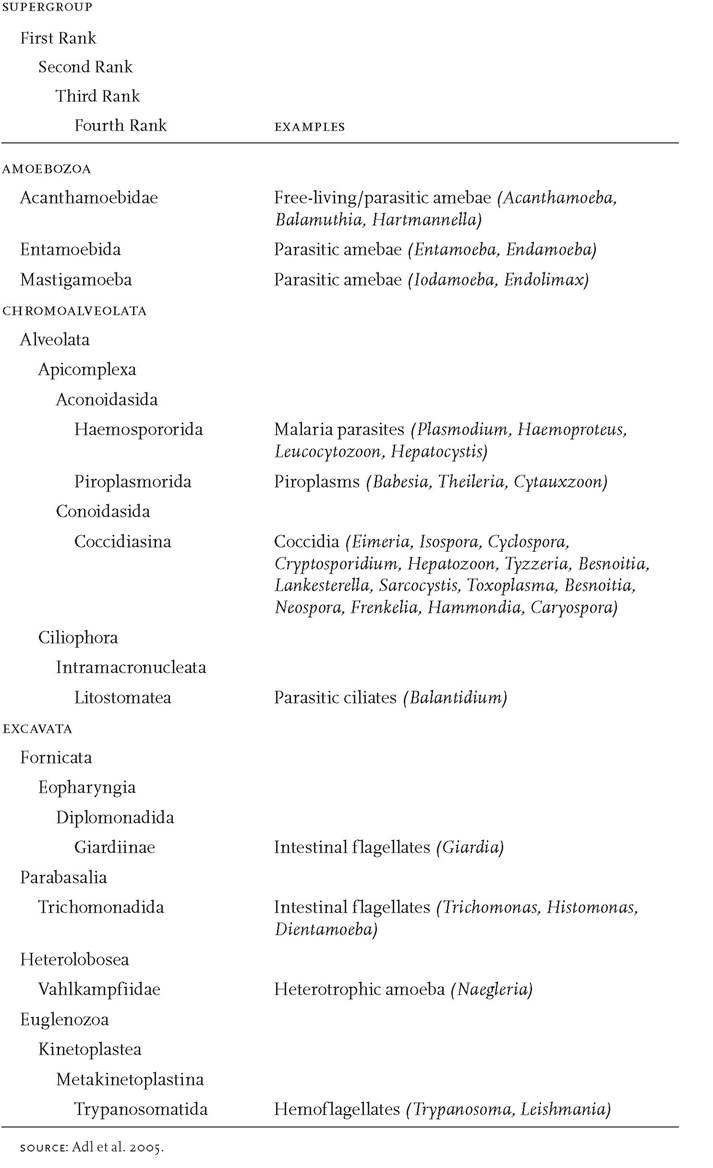
The Kingdom Protista has several important groups and, for these, we draw on more recent studies reflected in the work of eukaryotic taxonomists (Adl et al. 2005). The major groups addressed are parasitic amebae in the Supergroup Amoebozoa; the malaria parasites, piroplasms, coccidia, and ciliated protozoa in the Supergroup Chromoalveolata; and the flagellated protozoa included in the Supergroup Excavata.
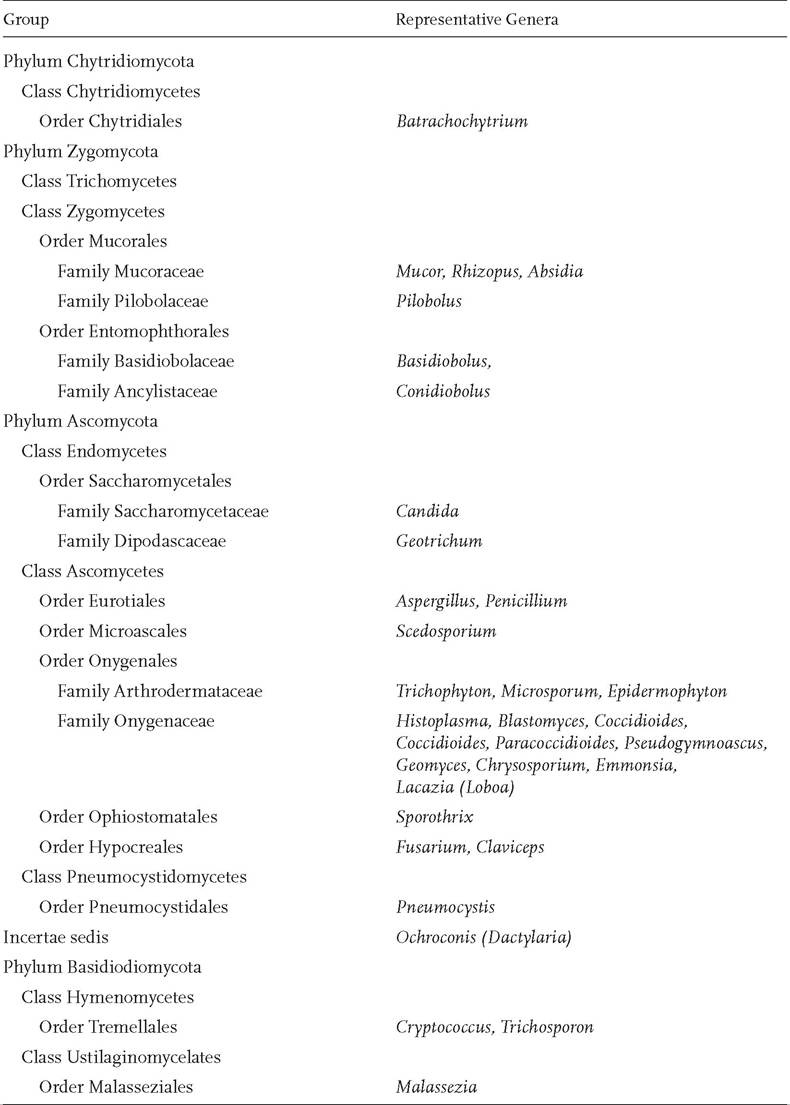
Members of the Kingdom Fungi are eukaryotic organisms that lack chlorophyll, roots, leaves, stems, xylem, or phloem; however, they have cell walls with chitin, cellulose, or both. They almost always are non-motile, and reproduce by means of spores (Alexopoulos et al. 1996).
Among prokaryotic organisms, the Kingdom Monera currently contains two significant groups: the Archaebacteria and the Eubacteria. Of these, only the Eubacteria are of importance in the study of wildlife diseases, and further discussion will be focused on them. Eubacteria are single cells or simple associations of simple cells with cellular rather than organismal properties (Holt et al. 1994); occasional filamentous or mycelial forms may occur.
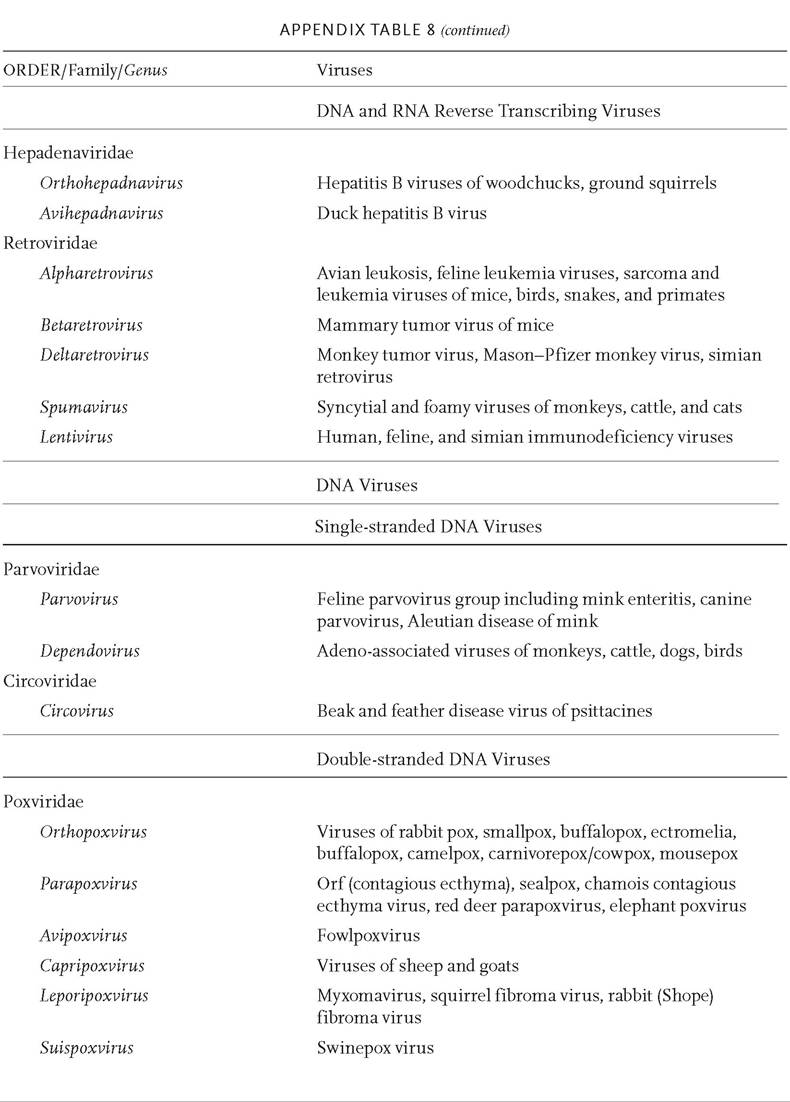
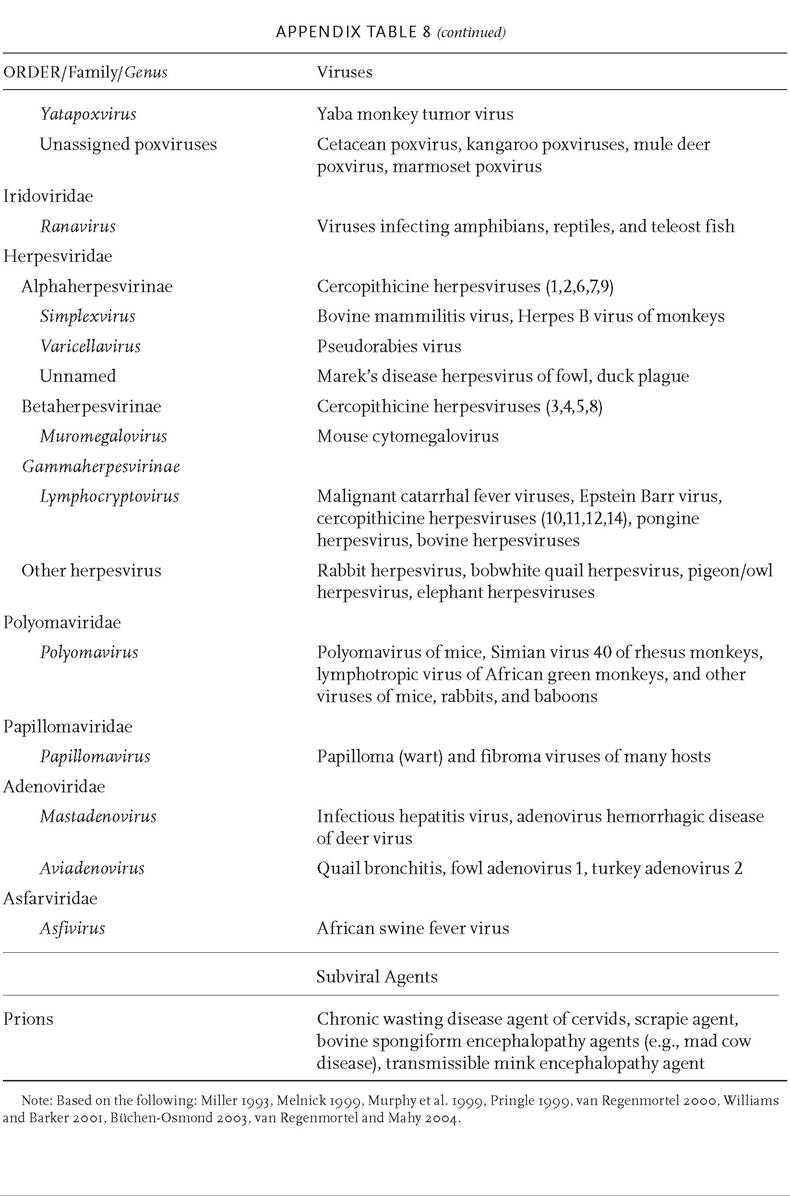
While viruses possess some of the properties of living systems, including having a genome (Villarreal 2004), they are best described as nonliving infectious entities rather than living microorganisms (van Regenmortel and Mahy 2004). Interestingly, some viruses can become infected with other viruses, and become “sick” in the process (Ogata and Claverie 2008); this adds a complex element to the debate around the status of virus as living agents. Current classification schemes for viruses are based on their proposed evolutionary relationships (Buchen- Osmond 2003, van Regenmortel and Mahy 2004).
Recently, infectious proteins (prions), with no nucleic acids (Buchen-Osmond 2003), have been described that are important contributors to some wildlife diseases. Prions (proteinaceous infectious particles 1 “on,” denoting particle) are normal cellular proteins in which some have undergone changes in their folding configuration that, in turn, have led to their becoming pathogenic.
For each major group we provide a general definition of the group, a brief description of some of its distinctive features, and a summary of any recent taxonomic changes.
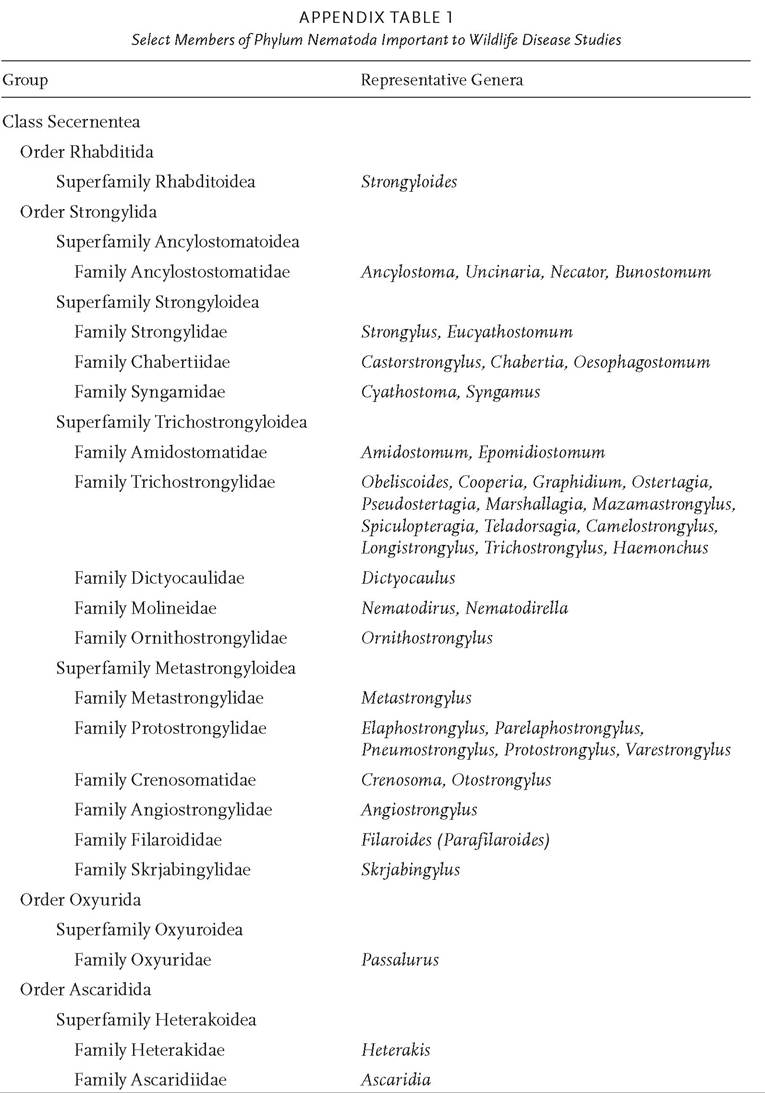
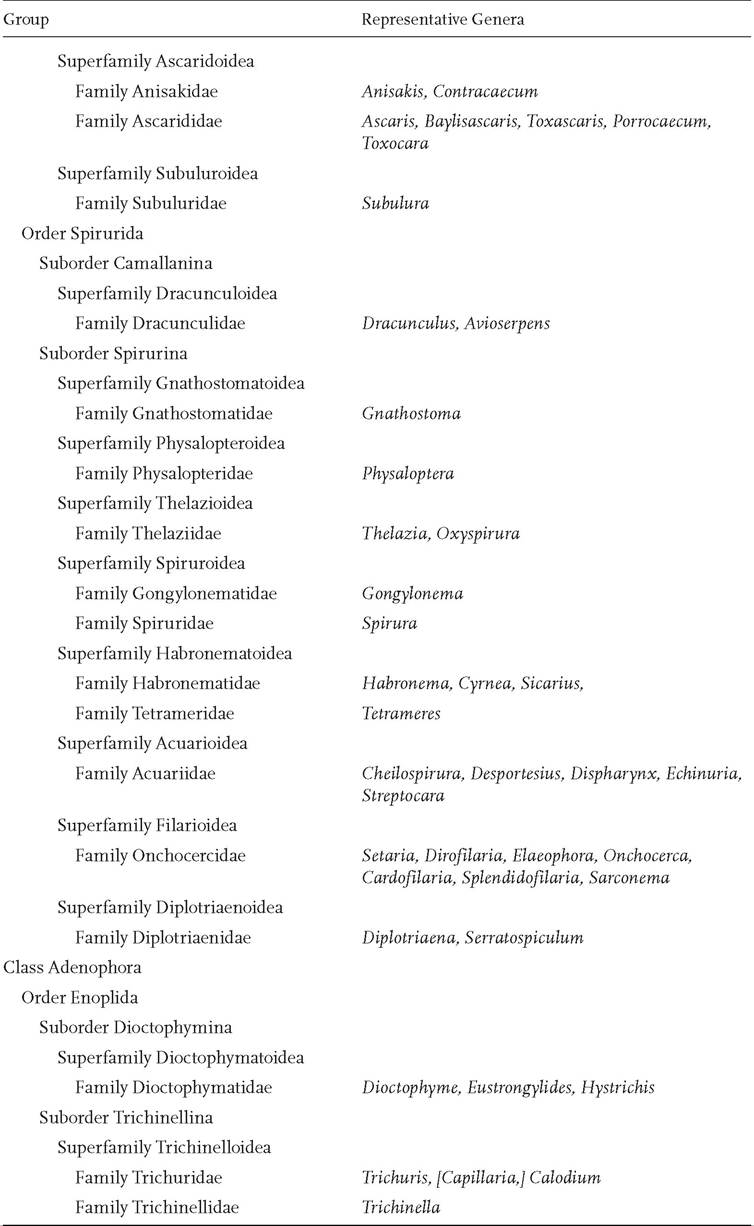
source: Anderson 2000.
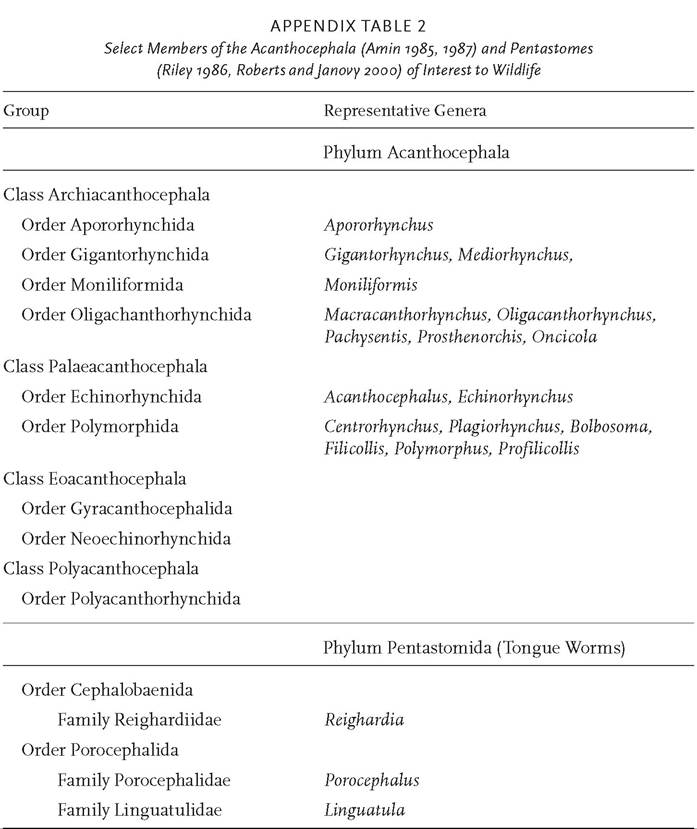
APPENDIX TABLE 3
Platyhelminths (Class Cercomeridia) Important to Wildlife
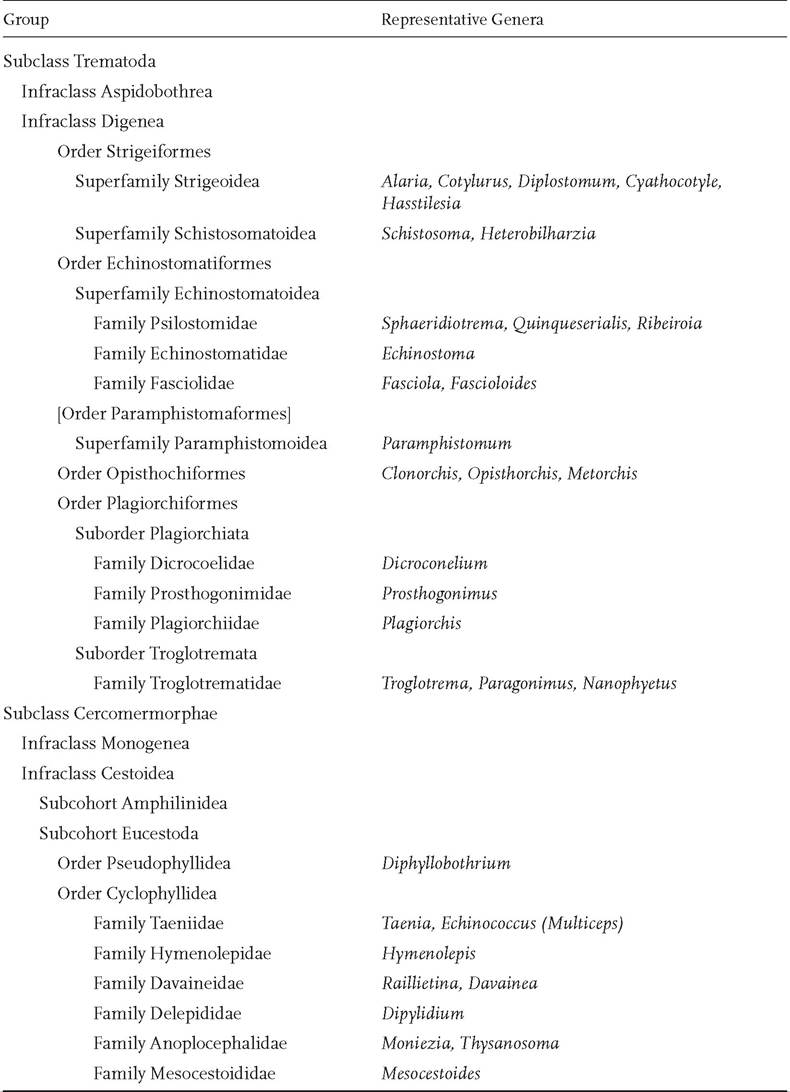
source: Bush et al. 2001.
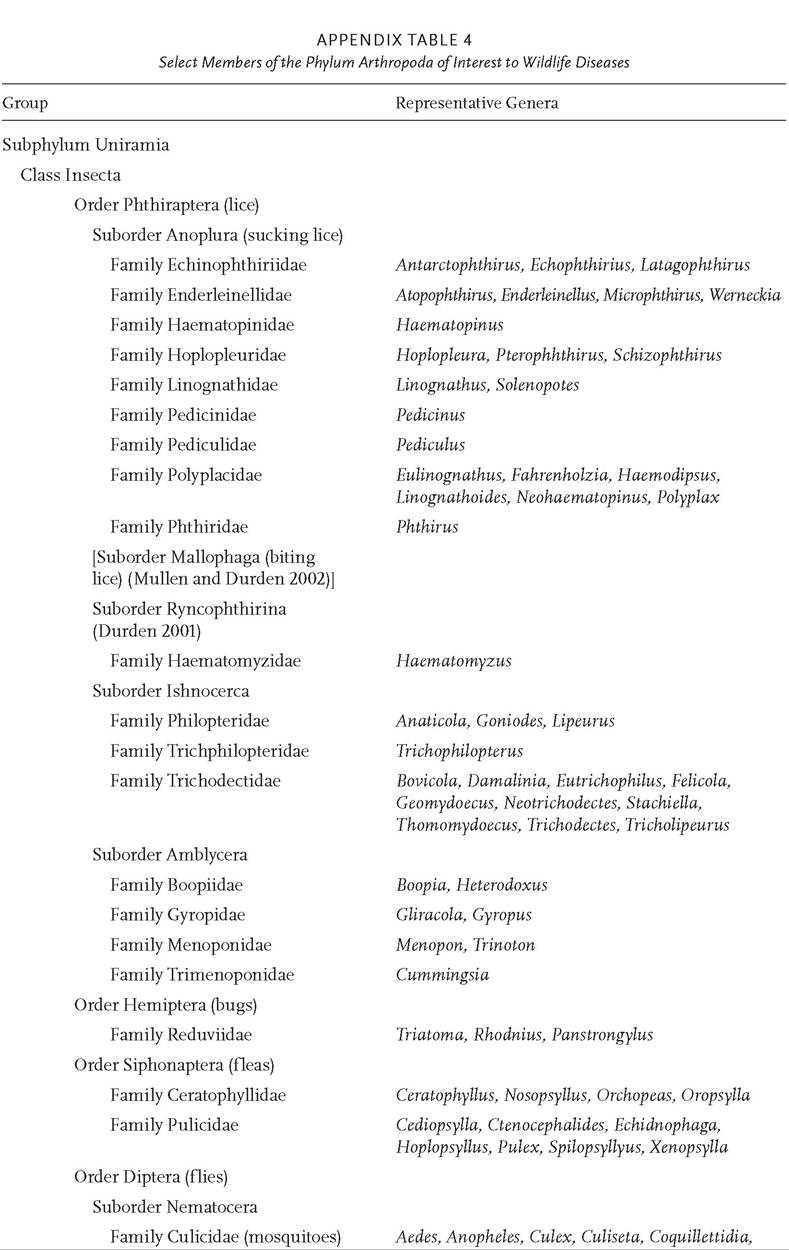
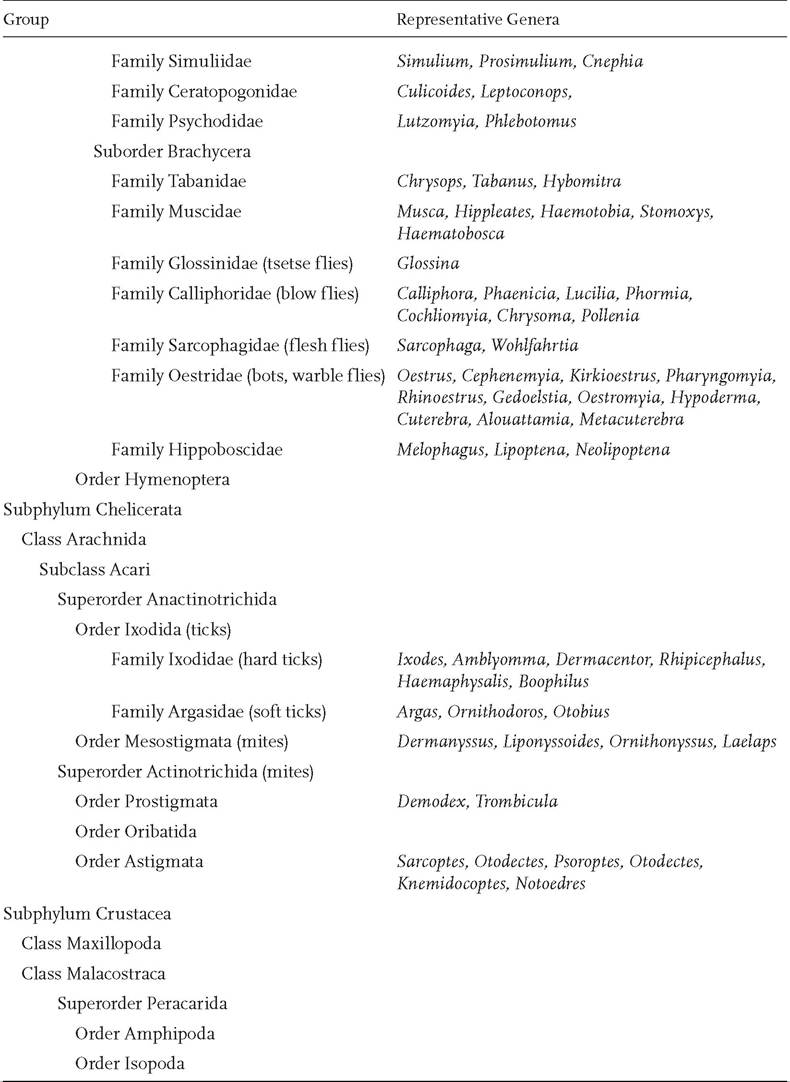
sources: Allan 2001, Colwell 2001, Durden 2001, Mullen and Durden 2002.
APPENDIX TABLE 5
Classification for Major Protista Groups Affectingfor Wildlife
APPENDIX TABLE 6
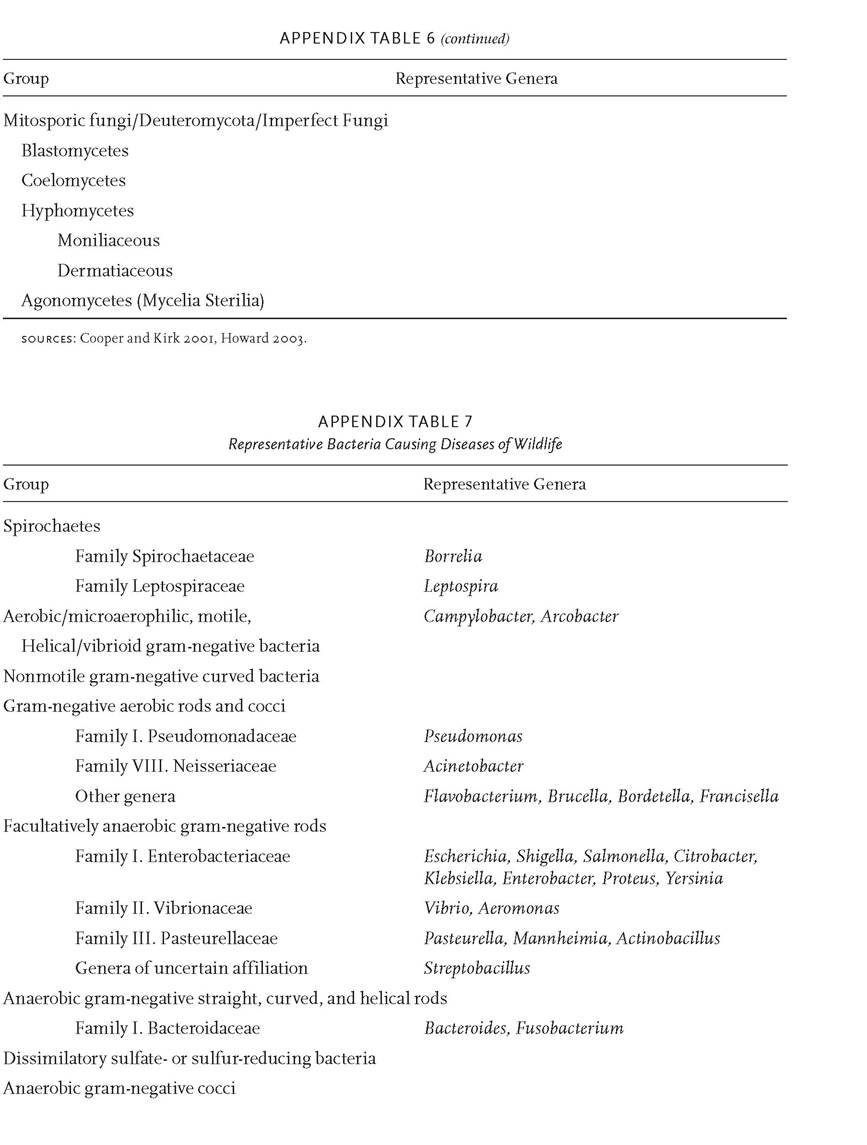
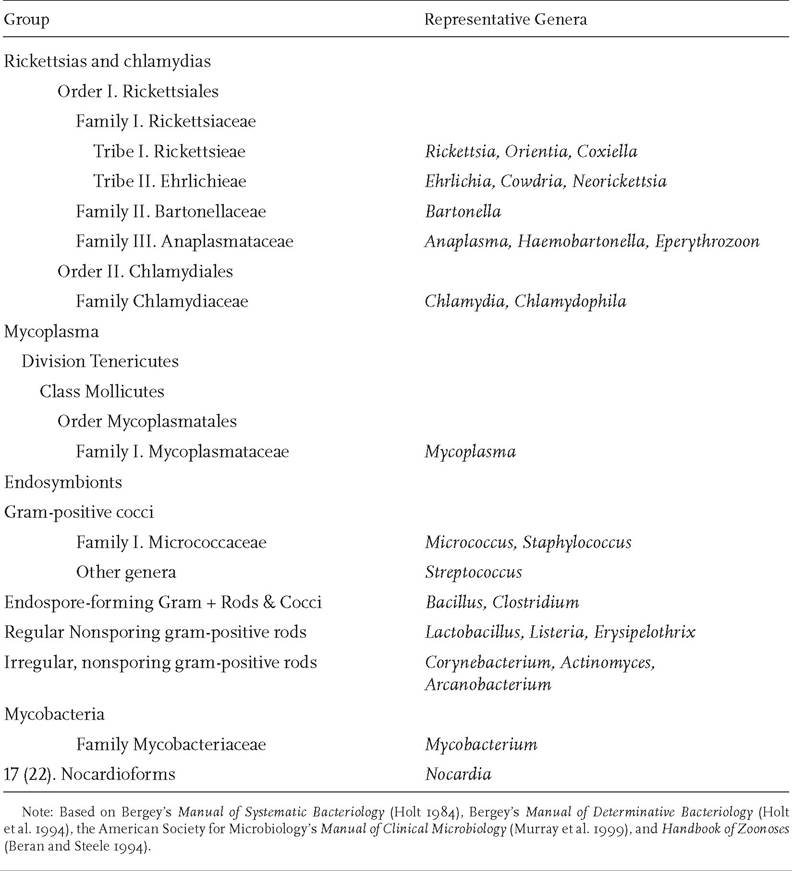
Fungi of Interest in the Study of Wildlife Diseases
(continued)
LITERATURE CITED
Adl, S. M., A. G. B. Simpson, M. A. Farmer,
R. A. Andersen, O. R. Andersen, J. R. Barta,
S. S. Bowser, G. Brugerolle, R. A. Fensome,
S. Fredericq, T. Y. James, S. Karpov, P. Kugrens, J. Krug, C. E. Lane, L. A. Lewis, J. Lodge,
D. H. Lynn, D. G. Mann, R. M. McCourt,
L. Mendoza, 0. Moestrup, S. E. Mozley- Standridge, T. A. Nerad, C. A. Shearer, A. V. Smirnov, F. W. Spiegel, and
M. F. J. R. Taylor. 2005. The new higher level classification of eukaryotes with emphasis on the taxonomy of protists. Journal of Eukaryotic Microbiology 52:399-451.
Alexopoulos, C. J., C. W. Mims, and M. Blackwell. 1996. Introductory mycology. 4th ed. John Wiley & Sons, New York.
Allan, S. A. 2001. Biting flies (Class Insecta: Order Diptera). Pp. 18-45 in W. M. Samuel, M. J. Pybus, and A. A. Kocan (editors), Parasitic diseases of wild mammals. Iowa State University Press, Ames, IA.
Amin, O. M. 1985. Classification. Pp. 27-72 in D. W. T. Crompton and B. B. Nickol (editors), Biology of the acanthocephala. Cambridge University Press, Cambridge, UK.
Amin, O. M. 1987. Key to families and subfamilies of acanthocephala with the erection of a new class (Polyacanthocephala) and a new order (Polyacanthorhynchida). Journal of Parasitology 73:1216-1219.
Anderson, R. C. 2000. Nematode parasites of vertebrates: Their development and transmission. 2nd ed. CABI Publishing, New York.
Beran, G. W., and J. H. Steele (editors). 1994. Handbook of zoonoses. Section A: Bacterial, rickettsial, chlamydial, and mycotic. 2nd ed. CRC Press, Boca Raton, FL.
Bohannon, J. 2008. Confusing kinships. Science 320:1031-1033.
Buchen-Osmond, C. 2003. Taxonomy and classification of viruses. Pp. 1217-1226 in Manual of clinical microbiology. ASM Press, Washington, DC.
Bush, A. O., J. C. Fernandez, G. W. Esch, and J. R. Seed. 2001. Parasitism: The diversity and ecology of animal parasites. Cambridge University Press, Cambridge, UK.
Ciccarelli, F. D., T. Doerks, C. vonMering,
C. J. Creevey, B. Snel, and P. Bork. 2006. Toward automatic reconstruction of a highly resolved tree of life. Science 311:1283-1287.
Colwell, D. D. 2001. Bot flies and warble flies (Order Diptera: Family Oestridae). Pp. 46-71 in W. M. Samuel, M. J. Pybus, and A. A. Kocan (editors), Parasitic diseases of wild mammals. Iowa State University Press, Ames, IA.
Cooper, J., and P. Kirk. 2001. Dictionary of fungi. 9th ed. CABI Publishing, Egham, UK..
Crompton, D. W. T., and B. B. Nickol. 1985. Biology of the acanthocephala. Cambridge University Press, New York.
Dobzhansky, T. 1937. Genetics and the origin of species. Columbia University Press New York.
Doolittle, W. F. 1999. Phylogenetic classification and the universal tree. Science 284:2124-2128.
Doolittle, W. F. 2000. Uprooting the tree of life. Scientific American 282:90-95.
Durden, L. A. 2001. Lice (Phthiraptera). Pp. 3-17 in
W. M. Samuel, M. J. Pybus, and A. A. Kocan (editors), Parasitic diseases of wild mammals. Iowa State University Press, Ames, IA.
Gould, S. J. 2002. The structure of evolutionary theory. Belknap Press of Harvard University Press, Cambridge, MA.
Grimont, P. A. D. 1999. Taxonomy and classification of bacteria. Pp. 249-261 in P. R. Murray,
E. J. Baron, M. A. Pfaller, F. C. Tenover, and R. H. Yolken (editors), Manual of clinical microbiology. ASM Press, Washington, DC.
Holt, J. G. (editor-in-chief). 1984. Bergey's manual of systematic bacteriology. Williams & Wilkins, Baltimore, MD.
Holt, J. G., N. R. Krieg, P. H. A. Sneath, J. T. Staley, and S. T. Williams. 1994. Bergey's manual of determinative bacteriology. 9th ed. Lippincott Williams & Wilkins, Philadelphia, PA.
Howard, D. H. 2003. An introduction to the taxonomy of zoopathogenic fungi. Pp. 1-16 in D. H. Howard (editor), Pathogenic fungi in humans and animals. Marcel Dekker, New York.
Keeton, W. T., and J. L. Gould. 1993. Biological science, Vol. 2. 5th ed. W. W. Norton & Company, New York.
La Scola, B., S. Audic, C. Robert, L. Jungang,
X. d. Lamballerie, M. Drancourt, R. Birtles, J.-M. Claverie, and D. Raoult. 2003. A giant virus in amoebae. Science 299:2033.
Mader, S. S. 1994. Inquiry into life. 7th ed.
Wm. C. Brown Publishers, Dubuque, IA.
Mayr, E. 1942. Systematics and the origin of species. Columbia University Press, New York.
Mayr, E. 1963. Animal species and evolution. Harvard University Press Cambridge, MA.
Melnick, J. L. 1999. Taxonomy and classification of viruses. Pp. 835-842 in P. R. Murray, E. J. Baron, M. A. Pfaller, F. C. Tenover, and R. H. Yolken (editors), Manual of clinical microbiology. ASM Press, Washington, DC.
Mendoza, L., J. W. Taylor, and L. Ajello. 2002.
The Class Mesomycetozoea: A heterogeneous group of microorganisms at the animal- fungal boundary. Annual Review of Microbiology 56:315-344.
Miller, M. J. 1993. Viral taxonomy. Clinical Infectious Diseases 16:612-613.
Mullen, G., and L. Durden (editors). 2002. Medical and veterinary entomology. Academic Press, Boston, MA.
Murphy, F. A., E. P. J. Gibbs, M. C. Horzinek, and M. J. Studdert. 1999. Veterinary virology. 3rd ed. Academic Press, San Diego, CA.
Murray, P. R., E. J. Baron, M. A. Pfaller,
F. C. Tenover, and R. H. Yolken (editors). 1999. Manual of clinical microbiology. 7th ed. ASM Press, Washington, DC.
Ogata, H., and J.-M. Claverie. 2008. How to infect a mimivirus. Science Express 321:1305-1306.
Patterson, D. J. 2000. Changing views on protistan systematics: The taxonomy of protozoa—an overview. Pp. 2-9 in J. J. Lee, G. F. Leedale, and P. Bradbury (editors), An illustrated guide to the protozoa: Organisms traditionally referred to as protozoa, or newly discovered groups. Society of Protozoologists, Lawrence, KS.
Pringle, C. R. 1999. Virus taxonomy—1999: The universal system of virus taxonomy, updated to include the new proposals ratified by the International Committee on Taxonomy of Viruses during 1998. Archives of Virology 144:421-429.
Riley, J. 1986. The biology of pentastomids. Pp. 45-128 in J. R. Baker and R. Muller (editors), Advances in parasitology. Academic Press, New York.
Roberts, L. S., and J. Janovy. 2000. Gerald D. Schmidt and Larry S. Roberts' Foundations of parasitology. 6th ed. McGraw-Hill, Boston, MA.
Sneath, P. H. A. (editor). 1992. International code of nomenclature of bacteria: Bacterial code, 1990 revision. ASM Press, Washington, DC.
Thain, M., and M. Hickman. 2004. The Penguin dictionary of biology. 11th ed. Penguin Group (USA), New York.
van Regenmortel, M. H. V. 2000. On the relative merits of italics, Latin and binomial nomenclature in virus taxonomy. Archives of Virology 145:433-441.
van Regenmortel, M. H. V., and B. W. J. Mahy. 2004. Emerging issues in virus taxonomy. Emerging Infectious Diseases 10:8-13.
Villarreal, L. P. 2004. Are viruses alive? Scientific American 291:101-105.
Villarreal, L. P. 2005. Viruses and the evolution of life. ASM Press, Washington, DC.
Whittaker, R. H. 1969. New concepts of kingdoms of organisms. Science 163:150-160.
Williams, E. S., and I. K. Barker (editors). 2001. Infectious diseases of wild mammals. 3rd ed.
Iowa State University Press, Ames, IA.
Woese, C. 1998. The universal ancestor. Proceedings of the National Academy of Sciences of the United States of America 95:6854-6859.
Zimmer, C. 2000. Parasite rex: Inside the bizarre world of nature's most dangerous creatures. Free Press, New York.
More on the topic APPENDIX ONE Systematics of Major Parasites Groups:
- MAJOR GROUPS CONSIDERED
- APPENDIX Biographies of the Major Roman Jurists
- Appendix 5A Systemic Implications of Problems at a Major European Bank
- APPENDIX 2: Timeline of Major Events from the Foundation of Rome to Justinian I
- In addition to the parasites outlined in this section, there are other parasites that are rarely seen in rats maintained in well-managed facilities.
- CONCEPT 13.2 Hosts have mechanisms for defending themselves against parasites, and parasites have mechanisms for overcoming host defenses.
- Lameness is not only a major economic problem, but it is also a major welfare issue - for both the cow and the herdsman!
- After years of promoting savings groups, I have identified nine principles that explain why the number of savings groups has grown so quickly,
- Parasites can drive host populations to extinction
- Parasites can influence host population cycles
- ABOMASAL PARASITES
- Two Types of Groups
- India's Self-Help Groups
- Enslaver Parasites: A Case Study
- Parasites Can Change Ecological Communities
- Germs, parasites, insects and nematodes