Seminal Vesicular Dilatation and Atrophy
Aged male B6 mice may develop unilateral or bilateral dilatation or contraction (atrophy) of their seminal vesicles (Fig. 1.125). The dilated vesicles may result in marked abdominal distention.
There may often be contraction of one and dilatation of the other.Pseudocanalization and Megalokaryocytosis of Male Reproductive Epithelium
The epithelium lining the epididymis and vas deferens of aged male mice frequently has cells with large, polyploid nuclei. In addition, the epithelial lining may contain open spaces between cells that suggest canalization.
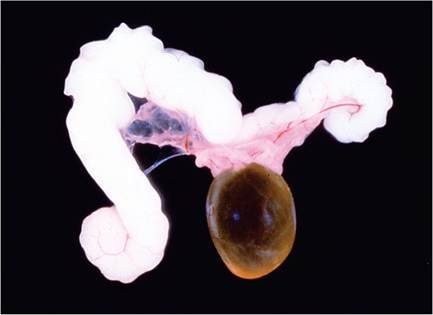
FIG. 1.125. Seminal vesicles and urinary bladder of an aged male B6 mouse. There is marked enlargement of one seminal vesicle in contrast to the normal contralateral vesicle.
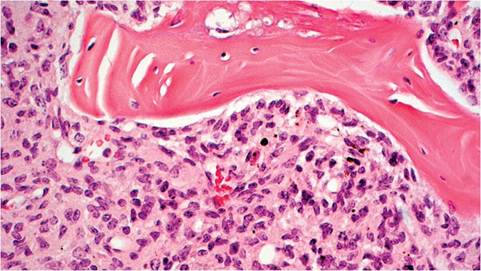
FIG. 1.126. Vertebra from an aged female mouse with fibro-osseous hyperplasia. There is marked infiltration of the bone marrow by fusiform mesenchymal cells, with displacement of hematopoietic elements.
Disorders of the Musculoskeletal System Muscular Dystrophy
Muscular dystrophy in humans has promulgated the development of a number of GEM models, but two important natural mutations arose in inbred strains of mice. A and SJL mice have retroelement (Etn) insertional mutations in the dysferlin gene and both develop progressive degenerative changes in proximal skeletal muscle groups with age. C57BL/10ScSn mice have an X chromosome mutation (mdx allele) in the dystrophin gene, similar to Duchenne's muscular dystrophy in humans. This allele has been crossed onto other mouse models, and the gene has been targeted for the creation of additional models. The naturally occurring mutations are mentioned because they arose in relatively common inbred strains of mice, and in the case of A and SJL mice, they are characteristics of the parental strains.
More on the topic Seminal Vesicular Dilatation and Atrophy:
- SWINE VESICULAR DISEASE VIRUS
- 12 Chronic partial gastric dilatation in a dog
- Spinal Muscular Atrophy II
- Distal Spinal Muscular Atrophy
- Posttraumatic Hydrocephalus and Cerebral Atrophy
- Predominantly Proximal Spinal Muscular Atrophy
- Spinal Muscular Atrophy I (Werdnig-Hoffman Disease)
- Spinal Muscular Atrophy III (Kugelberg-Weilander Syndrome)
- BRONCHIECTASIS
- neurocysticercosis
- CALICIVIRUS INFECTIONS OF MARINE MAMMALS
- SPINAL CORD MALFORMATIONS
- Bibliographical Essay
- Polycystic Disease: Polycystic Liver Disease