WHAT IS MASTITIS?
Any word ending in ‘-itis’ denotes inflammation, and ‘mastitis’ means inflammation of the mammary gland. Usually an infection is involved, although the inflammation can be the result of bruising.
Externally the inflammation may be seen as heat, pain or swelling of the quarter. The cow may or may not be off-colour and, of course, there are changes in the milk.Diagnosis by clinical signs
The extent and nature of the clots in clinical mastitis are often more of a reflection of the response of the cow to infection, rather than the type of bacteria present. It is not possible to be sure which bacteria are causing mastitis simply by the appearance of the milk and the degree of illness of the cow. ‘Ordinary’ white, flaky clots (Plate 7.4) may be caused by staphylococcal or streptococcal infections, although they may also be caused by a mild E. coli infection. The brown-tinged fluid with no clots (Plate 7.5) is typical of an acute E. coli infection in a cow which is mounting a good defence against that infection. The blood-tinged gassy secretion of gangrenous mastitis (page 221) is usually caused by Staph. aureus, although E. coli is occasionally involved.
Mastitis definitions
A variety of terms are applied to the different stages of mastitis. They are:
Clinical - an infected quarter where clots, swelling, heat, pain or other signs of mastitis are evident Subclinical - the quarter is infected, shedding bacteria and therefore a danger to other cows, but there are no outward signs of mastitis and nothing to tell the herdsman that infection is present. In any herd there will be far more subclinical than clinical infections
Clinical mastitis may be seen in a variety of forms, namely:
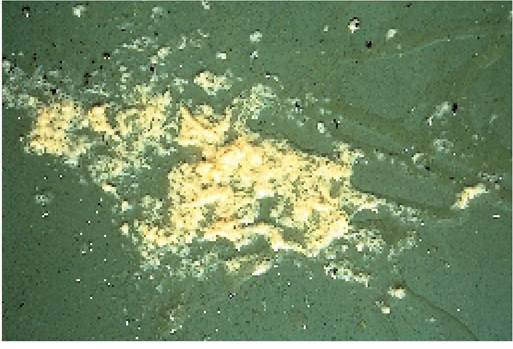
Plate 7.4. It is not possible to be sure which organism is causing mastitis simply by the appearance of the milk. These typical clots could be caused by staph or strep infections, or by a mild E. coli.
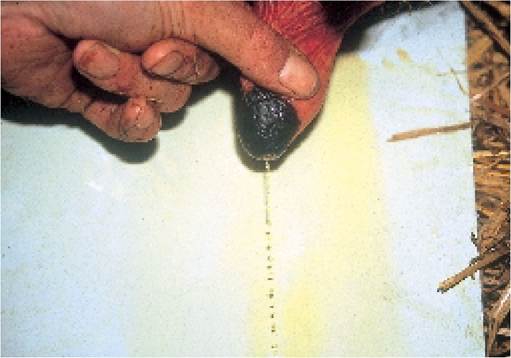
Plate 7.5. Mastitic milk. Brownish fluid like this is most probably caused by an E. coli infection.
Acute - a severe infection, but probably only lasting for a short period of time Chronic - a less severe infection, but one that persists for a long period Peracute - the most severe infection
More on the topic WHAT IS MASTITIS?:
- TREATMENT OF MASTITIS
- THE CONTROL OF MASTITIS
- THE ENVIRONMENT AND MASTITIS
- MASTITIS RECORDS AND TARGETS
- THE MILKING ROUTINE AND MASTITIS CONTROL
- TEAT AND UDDER DEFENCES AGAINST MASTITIS
- SUMMER MASTITIS
- Mastitis continues to be a major cause of economic loss to the national dairy herd and I suspect that, combined with teat injuries, it is one of the greatest aggravations to the herdsman.
- Chapter 7 MASTITIS AND CONDITIONS OF THE TEAT AND UDDER
- TOTAL BACTERIAL COUNT (TBC) OF MILK
- Arcanobacterium infections
- DRY COW THERAPY
- MILKING THE MASTITIC COW