Contextualizing Inca Imperialism
Although the Incas claimed to be the only civilization to develop in the Andes, their empire was built atop distinct networks of social power in three principal regions comprising Inca territory: highland valleys, the Pacific coast, and the Amazonian slope.
Local environments varied considerably throughout these areas, but some general constraints influenced the development of social power.[1755] On the coast, desert conditions tied populations to valley oases with permanent running water, which people learned to channel to support complex irrigation networks. Coastal states relied on intensive agriculture and the rich fisheries of the Pacific to produce food surpluses that supported the ruling elite, as well as priests and merchants and artisans who worked full-time to manufacture status goods. Highland subsistence combined agriculture and pastoralism, with elevation and precipitation constraining productive activities. Maize was a key high-yield crop on the coast and in the highlands (Figure 25.1), but it required frost-free climates and abundant water, limiting its surplus production to particular local environments.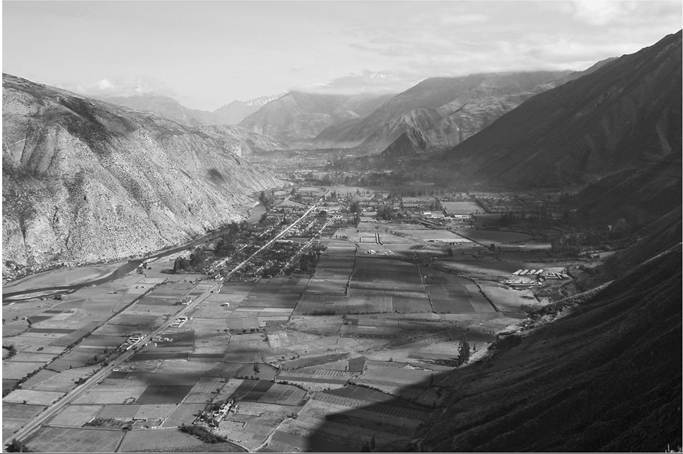
Figure 25.1. The Yucay Valley of highland Peru.
Photo: R. Alan Covey.
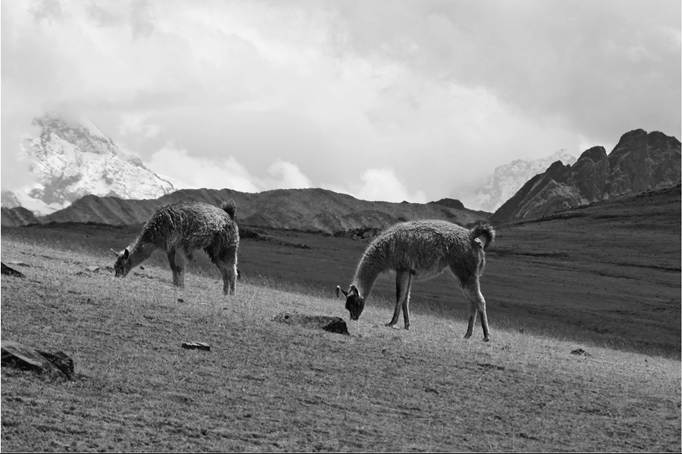
Figure 25.2. Llamas grazing in high elevation pasture.
Photo: R. Alan Covey.
Domesticated camelids (the llama [Figure 25.2] and the alpaca) thrive in the grasslands found above the agricultural zones, and these animals were key resources for caravan labor and for providing wool for textile production. To the east of the Andes, the Amazonian slope is characterized by broken topography, dense vegetation, and a wet and warm climate; and populations in the lowlands pursued distinct subsistence and social practices from those seen in the highlands.
Archaeology demonstrates that Andean statecraft developed a millennium earlier in the arid coastal valleys of what is today northern Peru.[1756] The Moche state and its neighbors combined centrally-managed hydraulic agriculture on the coastal floodplain with exploitation of rich Pacific fisheries, sustaining urban populations that included nobles, priests, and artisans.[1757] The central government of the Moche Valley declined after a few centuries, but local forms of statecraft proliferated along the coast up to Inca times. The first highland urban societies emerged slightly later than those of the coast, as the Wari and Tiwanaku states developed in the southcentral highlands by 600 ce. [1758] The Wari intensified agricultural production in maizeproducing ecozones, sending farming colonies to settle in highland valleys across the region, while Tiwanaku developed in the Lake Titicaca basin, where tuber cultivation, camelid herding, and fishing were possible. Both highland states declined
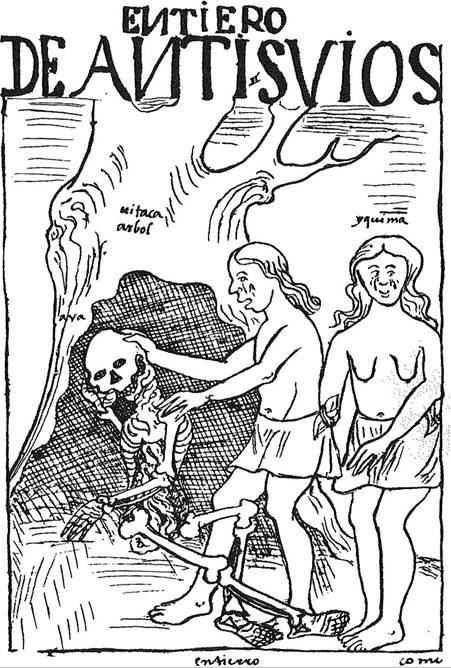
Figure 25.3. Felipe Guaman Poma de Ayala's depiction of mortuary practices of the Amazonian slope.
Illustration from Felipe Guaman Poma de Ayala's 1615 chronicle.
from the tenth century onward as the regional climate shifted to more unpredictable and arid conditions.
The Amazonian slope seems to have lacked an independent tradition of urbanism and statecraft prior to Inca conquest, although comparatively little systematic archaeological research has been conducted in this region. The Incas characterized indigenous Amazonians as tribal societies who lived in villages, shifting their locations based on horticultural practices and defensive requirements (Figure 25.3). These stereotypes of “wild” people living in a dangerous and unfamiliar landscape have been challenged by some archaeologists and should at the very least be considered part of a race-infused Inca imperial narrative justifying the brutal expropriation of land and resources in the region during the early sixteenth century.[1759]
The Inca state developed after 1200 ce, a time when the central Andean highlands were populated by local agropastoral societies that lacked strong political and economic hierarchies, specialized craft and wealth production, and permanent priestly positions.[1760] Most local power in highland societies emanated from an individual’s ability to manipulate kin networks, and from military leadership in raids, and the construction of defensive works.
By contrast, centralized states flourished in some coastal areas at this time, characterized by elaborate administrative hierarchies, flamboyant craft economies, occupational specialization, and significant investment in monumental political and religious constructions. The largest coastal state was the Chimu Empire, which expanded along the Pacific coast just before the Incas began to incorporate the polities of the Cuzco region.[1761]By around 1400 ce, the Incas had achieved dominance over the Cuzco region through elite marriage alliances, diplomacy, and military conquest, and they embarked on a century of imperial campaigns across the Andes, uniting the fractured central highlands, dominating the kingdoms of the coast, and bringing state institutions to the Amazonian slope and other areas for the first time.[1762]
More on the topic Contextualizing Inca Imperialism:
- Military Dimensions of Inca Imperialism
- Historians of different opinions have showed great interest in PJ. Cain and A.G. Hopkins's two volumes, British Imperialism: Innovation and Expansion 1688-1914, and British Imperialism:
- Contextualizing Genetics in the Gospel of John
- Considered in the setting of global - or simply international - history, British gentlemanly imperialism was only one among many, not always 'gentlemanly' forms of imperialism.1
- The Beheading of the Inca
- The Inca Imperial Economy
- The Development of Inca Power: Space and Time
- Aztec and Inca Human Sacrifice Compared
- The Good Shepherd of the Inca
- The Inca Imperial Trajectory and Its Sources
- 25 The Inca Empire
- The Inca Empire was the last and most powerful indigenous state to develop in the Americas (Map 25.1).
- The idea of ‘imperialism'
- 11 The Peculiarities of British Capitalism: Imperialism and World Development1