Making the Cut: The Full Bronze Age
In the FBA, the invention of the sword and the shield represent perhaps the clearest break in traditions of warfare with humanity's deep past. The entirely new character of these weapons and the techniques of the body for using them represent watershed moments in human violence because neither had parallels in other fields of craft or social activity and they required dedicated combat training to be used effectively.
The earliest shields include the figure-of-eight and tower shields from the Aegean Bronze Age, which were in use by the seventeenth century bce at the latest. Perhaps our best evidence for the use of shields comes from the shaft graves at Mycenae (seventeenth to fifteenth century bce). On the Lion Hunt dagger and the silver Battle Krater we see warriors armed with very long spears/lances held in two hands and a shield hanging on their shoulder via a telamon.[219] Their shields had no handle and were used in a historically unusual fashion somewhere between a cape, body armour and a shield, the movement of the torso controlling their placement. The scenes indicate that shields could be used to provide a broad defensive front for lines of battle involving groups of warriors. Spears were the main offensive weapon depicted, yet in both depictions archers move within the ranks of spearmen. Archers wear the same form of helmet, indicating a similar social status. On the contemporary Silver Siege Rhyton, also from Mycenae, and the slightly later Miniature Fresco from Akrotiri on Thera, we once again find lines of battle. By the thirteenth century bce in the Aegean round shields with a central handle appear, replacing the earlier large body shields, and they are depicted as being of similar proportions and morphology as shields used elsewhere in Europe, though there are certain differences in size and design between the regions.
Round wooden and leather shields from Ireland (Figure 5.1) have been scientifically dated as ranging from the second quarter of the second millennium bce until the end of the millennium.[220] These represent materials and forms of shield used widely across Europe but not preserved due to the perishability of the materials. That they once existed is indicated by the numerous stelae from the Iberian peninsula (e.g. Solana de Cabanas, Carmona or Badajoz) that depict precisely this type of shield with decorative notches, though no physical organic shields are preserved.Surviving bronze shields are far more common, and some possess broadly similar notches and U-notches to the organic ones from Ireland, with finds as far afield as Scandinavia and Greece.[221] A few metal shields are incredibly thin (less than 0.3 mm) and it is doubtful these would stand up to robust combat, but others can be up to 1.5 mm thick, forming very serviceable weapons. Circles portrayed in southern Scandinavian rock art may represent shields because they are associated with warriors bearing swords and spears, though
barry molloy and Christian horn
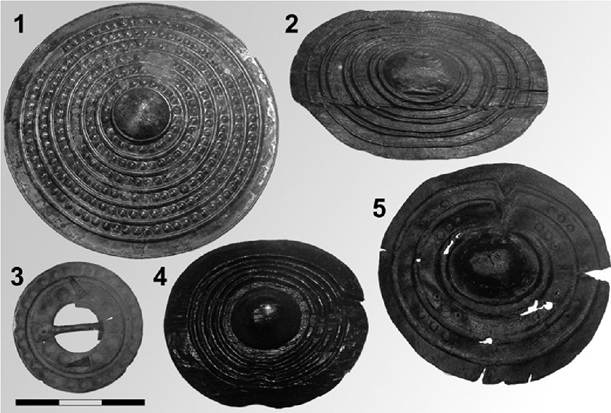
Figure 5.1 Bronze Age shields from Ireland from the environs of (1) Lough Gur, (2) Annadale, (3) Lough Gara, (4) Cloonlara and (5) Clonbrin. Scale is 30 cm. Courtesy of the National Museum of Ireland.
we cannot use these data to identify any formations. In most parts of Europe, metal and organic shields generally range from 50 to 70 cm in diameter, though in the north-west there are metal examples that are much smaller, at around 30 cm diameter. The difference is significant, because the former size category encourages cooperative forms of fighting with mutual control of space, whereas the smaller ones are very much individualistic because they need to be moved around a lot to intercept incoming attacks.[222] Combatants using shields may be encouraged to fight collaboratively with peers in a coordinated fashion that ensures mutual visibility and co-dependent security.
This perhaps contributed to the self-awareness of warriors as a distinct social group, because on the battlefield they need not rely only on themselves but could coordinate, cooperate with and protect their fellow fighters.Swords
The first swords in Europe were developed in the Aegean region. They were in use in the early stages of the FBA and were quite homogeneous in form,
Weapons, Warriors and Warfare in Bronze Age Europe being long, double-edged weapons with a high central midrib and ranged from 55 cm to over 100 cm.1“ A probable date for their invention is the eighteenth century bce, but our evidence for their common use dates from the sixteenth century bce and this general type of long, thin sword continued in use until the thirteenth century bce in some areas. These weapons were capable of making thrusting attacks and inflicting both lacerating and incising cuts using long, drawing motions. The midrib served to strengthen the long blade, but its presence also limited the depth of the cutting edge. This may suggest that non-lethal but bloody wounds were common, hinting at a display element to fighting or intentional blood-letting without killing as a consequence of some combats at least. By the fourteenth century bce robust and effective shortswords became increasingly common in the Aegean, such as Types Dii, F and G.11
In Europe, swords developed along quite different lines. The earliest forms emerged sometime around the end of the seventeenth century bce in a zone running from the Carpathian Basin to southern Scandinavia. These swords have a bronze handle and a blade either with a midrib that could have tapering edges or in a leaf shape that was 30-45 cm in length. These items exhibit the effective exploitation of the mechanical properties of bronze to produce weapons that were simply not practicable using lithic technologies. Other early swords in Europe have a bewildering array of different typological names, but all are in essence similarly functioning short swords.
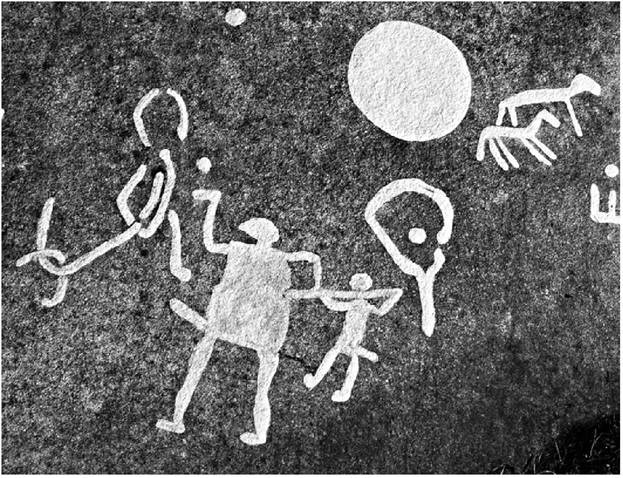
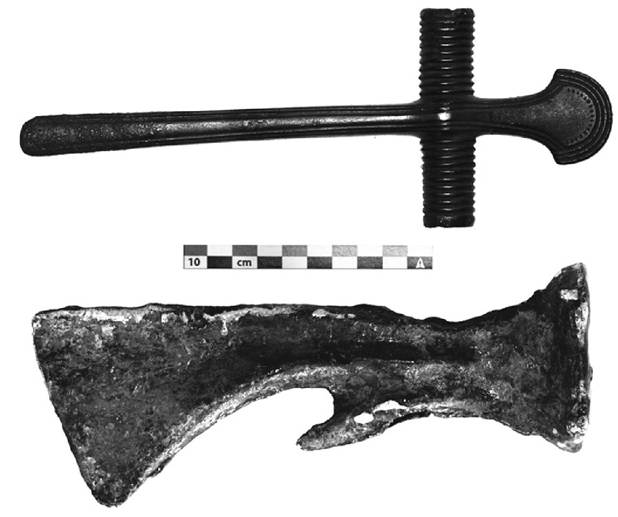
If we reimagine the long-lost organic hilts on these weapons, we find that a range of very similar swords came into use across large areas of Europe from Ireland to the Balkans and from Scandinavia to Spain by the early sixteenth century bce. 12 These shortswords were relatively light (usually less than 500 g), making them fast and effective, and while regional variation can be noted, in many parts of Europe these weapons had similar functional characteristics.Over the following century in Europe, the range of swords with organic and metal hilts diversified notably. In northern Italy, the Balkans and the Carpathian Basin types of sword emerged by the end of the fifteenth century bce that which had all or part of the handle cast as an integral part of the [223] [224] [225] blade. The Balkans was an interface between central Europe and the Aegean, and notably local variants of Aegean type swords were manufactured there by the fifteenth or fourteenth century BC. This is salient because at this time, long and thin swords that functioned in a similar fashion emerged in central Europe. Notably, the sword from Tetovo in the central Balkans is derived closely from an Aegean form but has incised decoration on the blade that we find on Type Sauerbrunn-Boiu swords of Europe, indicating knowledge of both traditions.[226] The swords in this wider area thus suggest contact that led to increasing similarities in how swords were used, though local traditions of use and appearance remained more dominant. By the fourteenth century bce swords such as Type Asenkofen, from Germany, and similar swords in France were being made in Europe, and they adopted the same range of sabre and hammer grip and cutting techniques that we find on Aegean swords.1[227] At this time in the Aegean, a short robust type of sword, called the Type F, develops with surprisingly standard lengths of38-42 cm. This remained popular for centuries until the very end of the Bronze Age, and other shapes of sword were made in similar proportions suggesting a form of close-quarters sword fighting that became very popular. We have dwelt on these sword forms briefly because they are indicative of how closely linked European societies were at this time, where innovations in one region are often rapidly integrated, though adapted, often at a large regional scale. While regional differences remain strong, some common strands to the material conduct of violence can be detected across Europe. This is most clearly seen in the case of grip-tongue swords of the general Naue II family that are found from the Aegean to Great Britain. The earliest dated examples occur in the middle of the thirteenth century bce in Italy and Mycenae,[229] showing that they Weapons, Warriors and Warfare in Bronze Age Europe developed rapidly and were used within a widespread milieu. In central and northern Europe these swords strongly influence local smithing and combat traditions. On the Iberian Peninsula there are a few transitional types between those made with separate handles and those with grip-tongue handles, indicating a relatively rapid transition due to external influences. A similar development occurs in Britain, France and Ireland, where an early use of blades with leaf-shaped blades may indicate that this tradition spread eastwards from there into Europe.17 Southern Scandinavian and central European octagonal hilted swords from the fourteenth century bce are also indicative of how some basic ideas of how a sword should look and handle can ‘move’ between regions while local craft and combat traditions are meaningfully integrated or built upon. It has even been suggested that objects of the latter local tradition came to hold a certain prestige value while the grip-tongue technology of swords with organic handles were regarded as being more workaday.18 Similarities in the function of swords in different parts of Europe suggest that aspects of combat practice were being shared and variably interpreted by warriors and smiths. dutikis Elladas kai Italias kata ti diapkeia ton opsimon Mukinaikon xronon’, in S. A. Paipetis and Ch. Giannopoulou (eds.), Politismiki Allilogonimopoisi Notias Italia kai Dutikis Elladas mesa apo tin Istoria (Patras: Ministry of Culture), pp. 85-7. 17 D. Brandherm, Las Espadas del Bronce Final en la Peninsula Iberica y Baleares (Stuttgart: Steiner, 2007); Barry Molloy, ‘Nought may Endure but Mutability: Eclectic Encounters and Material Change in the 13th to 11th Centuries BC Aegean’, in Molloy (ed.), Of Odysseys, pp. 343-84. 18 Kristian Kristiansen, ‘The Tale of the Sword - Swords and Swordfighters in Bronze Age Europe’, Oxford Journal of Archaeology 21.4 (2002), 319-32. our typological range of nomenclature, by the thirteenth century bce most swords in Europe were shortswords with strong hilt-blade connections, and a hilt shape that enabled both hammer and sabre grips to be used effectively. These two ways of holding a sword shift the balance between tight-arced robust cuts and more sweeping draw-cuts respectively. Spears By the advent of the FBA spearheads across Europe had sockets that were cast with an opening to receive the shaft. Only the spears of the Aegean tradition are technologically distinct, having a split socket which had to be forged closed around a shaft. Broadly leaf- or kite-shaped blades of various proportions occur in most parts of Europe by the early stages of the FBA. Only small fragments of wooden shafts survive within the socket of the spearhead, making it hard to tell the length or weight of the full composite wood-bronze weapon. It remains possible that certain weapons we term ‘spears' could have been hafted on much shorter shafts and used somewhere between a spear and a sword, making them capable of both cutting and stabbing attacks. Joachim Tarot and Richard Davis have argued for differing fighting styles based on the design of the spearhead, particularly their length.[230] In the Atlantic islands and western continental zone, spearheads can vary from very short affairs to much longer varieties that are around the same length as contemporary swords. Aegean spearheads of the fifteenth to thirteenth centuries bce have robust points and cross sections indicating that some were made for penetrating armour as well as flesh.[231] While these and earlier Aegean spearheads could reach the same lengths as the longest of those in the north-west, by the twelfth century bce there was a greater trend towards quite short and compact weapons of around 20 to 30 cm. They are significantly influenced by prototypes from Italy, central Europe and the Balkans, where these relatively short and robust spearheads dominate.[232] The picture is broadly the same in central Europe,[233] and in the Nordic world an initial diversity of spearhead sizes from the sixteenth century bce gives way to a much more restricted size range by the thirteenth century bce that broadly accords with what we find in central Europe.[234] It is assumed that longer spearheads would have made a more intentional use of the blades to cut, and use-wear evidence from the very variable Irish and Nordic spearheads dating to the beginning of the FBA suggests that all types were employed for a similar fencing style, including thrusts, cuts and slashes.[235] The presence of cutting edges on most European spears enabled warriors to inflict lacerating injuries even when the point itself missed its target. The proposition of mixed weapon combat is supported by new evidence from Medbo, Sweden. Here one spear-bearer engages with a fighter wielding a club or a sword.[236] Evidence for killing opponents with a spear can be found in Sweden, for example in Brastad and Lovasen (Figure 5.2). There are battle scenes on seals and sealings from the earlier part of the FBA Aegean that indicate that the spear was often used in combination with a shield, but the sword was often used in isolation from other weapons.[237] This changes by the thirteenth century bce at least, and looking to other figural art in Europe we see spear-bearers in Scandinavian rock art that could also carry swords alongside their shield. Axes We have little direct evidence for how axes in any area of Europe were used, because metalwork-wear studies are very rare for this category of artefact. However, it cannot be assumed that any axe was destined for a single mode of use, given its versatility as a tool or weapon. Central European axes with deeply collared shaft holes and one long, slender axe blade or spike with a protrusion on the opposing side ending in a disc, spike or another axe bit are not very ambiguous in their nature; these items would be wholly unsuitable for carpentry but well suited to combat (Figure 5.3). Contemporary to these finds, a series of Baltic battle-axes in northeastern Europe appear equally martial in character, with elongated blades and a percussive device on the other side, but lacking the characteristic collar of central Europe. On the Adriatic coast the heavy Albano-Dalmatian barry molloy and Christian horn Figure 5.2 Rock art image from Lovasen, Sweden (RAA Tanum 319:1) with an axe-bearer being stabbed in the back by a spear-bearer who also has a sheathed sword: the killed either has a phallus or this was the only way to show his sword sheath. shaft-hole axe type emerges late in the Bronze Age and also appears to be intended for battle on the basis of its shape. Shaft-hole axes in the Scandinavian Bronze Age can also occur in very large sizes and rock art strongly suggests that axes were used as weapons as well as tools; in some scenes they appear alongside unequivocal weapons such as swords and spears or are associated with phallic males, for example in Simrishamn.27 Later axe-bearers also carry swords and are occasionally part of fighting scenes, for example in Fossum. Archery We have images of archers in the Aegean world engaged in interpersonal combat and we find chipped stone arrowheads deposited in well-furnished graves at Mycenae and Knossos. Bronze arrowheads were also used commonly in the Aegean,[238] [239] but the evidence for their use in Europe is less clear. Figure 5.3 Bronze Age battle-axe from Vatin, Serbia (top), and Bronze Age axe from Schkoder region, Albania (bottom). They are rare in hoards in central Europe and do not appear to have been used in the Atlantic region at all. At the site of Velim, in the Czech Republic, arrowheads have been found in contexts that indicate they were used when this site was attacked in the fourteenth century. Bronze arrowheads with both sockets and tangs are known from the Carpathian Basin, including one from a burnt deposit at a causeway across a fortification ditch at Gradiste Idjos, Serbia. Heart-shaped flint arrowheads occur in considerable numbers in graves in the Nordic lands around 1700-1500 bce alongside swords, for example in Baven, Germany.[240] Scandinavian rock art shows archers engaged in several activities, for example in a scene in Aspeberget in Sweden that could be regarded as a cattle raid. The bronze and flint arrowheads used to kill warriors at the Tollense battlefield around 1350-1200 bce suggest both technologies were in use side by side, and the continued use of non-metal weapons in battles is emphasised, for example, by wooden bow and arrow remains from De Zilk and Weerdinge (Netherlands), Edington Burtle (Britain) and Fiave-Carera (Italy). The use of slings is suggested in art from the Aegean world in the context of battle and possible ceramic sling stones come from Santana Cetatea Veche, in Romanian Banat.[241] Armour The development of sheet metalworking technology by the end of the fifteenth century bce paved the way for making corselets, helmets and greaves from bronze. The first corselets were manufactured from sheet metal and were comprised of many parts, such as the entire suit recovered from the site of Dendra, Greece. Over the course of the thirteenth century bce this form of armour appears to have been simplified and the central components of a separate front and back plate came to be the most common type. The evidence for armour remains piecemeal in the Aegean,[242] and although the record is even poorer in Europe, it is clear that two-part plate metal corselets of broadly similar form were in use by the thirteenth century bce. A handful of scales from armour exist in the Aegean as well as some smaller plates, indicating that lamellar forms of armour found in North Africa and Asia were in use there. In western Europe, the beautiful cuirasses from Marmesse, France, for example, are evidence that plate armour continued to be popular in Europe up until the end of the Bronze Age.[243] Unpublished experimental archaeological studies (by Barry Molloy) demonstrate that 10 per cent tin bronze plate armour of 1.5 mm thickness is capable of withstanding thrusts from contemporary swords, thrown light spears and substantial bronze-tipped arrowheads shot from a 57-pound composite recurve bow at 10 metres. Scale armour manufactured from this same bronze was also effective, but arrows could force their way between overlapping plates on occasion. Multiple layers of linen found in a chamber tomb at Mycenae are the best surviving evidence we have for the use of organic armour in this region, which could be presumed to exist on the basis of iconography. Armour made from twelve layers of linen soaked in animal bone glue and backed by ten unglued layers was not penetrated fully by handheld or projectile weapons, even from the above almost point-blank range. From the Nordic Bronze Age, a rare find should be mentioned, because it illuminates what we usually miss in the archaeological record. In Ostra Gerum, Sweden, a cloak potentially dating to the middle of the second millennium and made from heavy fabric has been discovered in a bog.[244] This fascinating find is oval in shape and about 200 cm by 248 cm in size. Several ancient cuts and elongated holes suggest that its wearer was attacked at least once with a bladed weapon while wearing it. The number of cuts suggests that the cloak itself may have played a part in the defensive strategy. A skilled fighter may employ it in movements to obscure where limbs and body are or to get the opponent's weapon stuck. Perhaps this find indicates that there were alternative defensive measures other than shields and body armour. The bronze cap helmet from the New Hospital site at Knossos demonstrates that metal helmets were in use by 1400 bce. These occurred alongside the well-known boar's tusk helmets that had been in use since the second quarter of the second millennium and were at once items of defensive armour and symbols of a warrior's prowess on the basis of the number of boars that needed to be hunted to make one. There may have been a close relationship between the development of these helmets in quite different materials,[245] which is important because numerous finds of helmets in Europe are virtually identical to that from the New Hospital site in Crete. Aegean iconography suggests a much wider variety of forms of helmet were being used by the twelfth century bce. We also find many forms of helmet in continental Europe, some being basic caps akin to the above-mentioned Cretan one, others made from multiple pieces of bronze sheet mechanically joined together. Of these, the Pass Lueg helmet is interesting because recent analyses have shown that this has a complex biography, having being modified to accept parts from other helmets, presumably when original pieces were lost or damaged.[246] This suggests that items of armour had a certain workaday aspect to them whereby they were not expected to look pristine all of the time, yet it also indicates that specific pieces could be retained over time rather than being recycled, perhaps indicating they held personal meanings for their owners. The horned helmets from Vekso, Denmark, indicate that sometimes certain pieces of armour could have been made for purposes other than the battlefield. Greaves are found in central Europe and the Aegean, and display considerable similarities. They had notable differences in their specific technological details,[247] but functionally speaking were ovoid sheets of metal, probably backed by organic material like leather, and were generally supposed to protect the shinbone. Taken as a whole, it is clear that bronze armour may be at once functional, visually impressive and commonly used, but, like shields, its deposition followed very different paths to offensive weaponry and so it is underrepresented archaeologically speaking. Osteoarchaeology FBA skeletons exhibiting unambiguous trauma suffered in combat are very rare. Skeletons with weapon-inflicted trauma occur at sites in many parts of Europe, and though these typically consist of single or small groups of victims who experienced violent combats, the context of their death is less clear and may or may not be a direct consequence of war. In many cases the injury may be to the back. For this reason we may ask if these victims were injured fleeing the scene of battle or in a chaotic combat situation with an opponent coming up from behind. It is also possible that they were victims of execution or murder, or in some cases even hunting accidents, but the use of weapons to injure and kill is certain. Pictorial evidence for killing of fleeing men may, for example, be provided by the rock art panel from Lovasen, in Sweden, while there is a swordsman and hound chasing down a fleeing foe from Agia Triada in Crete.[248] At Velim there are a considerable number of human bones in (probable) nonmortuary contexts, some from articulated skeletons, which are believed to have been victims of a violent attack. Because many were from contexts that cannot be considered normal burials, the excavators argue that at least some were victims of violence when the site was attacked by aggressors on several distinct occasions.[249] Similarly, finds of human remains from defensive ditches in the south-east Carpathian Basin of this date are indicative of circumstances for human remains to be placed in settlement rather than cemetery contexts, suggesting a form of social violence. Some further possible victims of war-related violence have been found at Caska Veles, northern Macedonia, where children and older adults were found partly burnt in a burned-down house. Notably absent from the deceased are males of warrior age and women of childbearing age - the former possibly away fighting in a remote location and the latter taken away, a pattern also seen at some Neolithic sites.[250] At Sund, Norway, an informal burial of people included men, women and children, and these had died by being struck by a range of weaponry.[251] At the Athenian Agora, Greece, and Olmo di Nogara, Italy, the evidence is particularly instructive: there were burials with weapon-inflicted trauma that had no weapons accompanying them and others with weapons in the burial which had no injuries evident. Clearly, the use of material culture to construct identity in the mortuary events were not of necessity reflecting all aspects of a person's identity in life.[252] At the site of Mochlos, there was a house from around 1400 bce that contained the burnt remains (presumably already dead or trapped when the structure burned down) of many individuals.[253] These cases make clear that violence in many parts of Europe was not restricted to warriors killing other warriors. An example of unambiguous war-related violence is the recently discovered thirteenth century bce battlefield at Tollense.[254] The story of this site is still unfolding, but hundreds and perhaps thousands of warriors fought a battle here, with many being left at the site following it. In one area that has been explored at least ninety-one individuals were discovered. Most of the dead were males below the age of 40. Exploration of their injuries shows that the ways in which they were killed or injured were diverse, from examples of warriors with arrowheads still embedded in their skulls to those that had been stabbed by spears with considerable force and others with various forms of trauma to the cranium. The osteology suggests that simple percussion weapons were used, such as the wooden clubs, of varying dates, recovered from the same site. Tollense also tells us about the potential size of armies at this time - the first chance we have to consider this in more detail for the Bronze Age. Previous estimates of bands of tens of men may remain correct for many conflict situations, but Tollense tells us that this could escalate to levels where many times this number were fielded. This in turn indicates levels of social organisation that would both support the resourcing of large numbers of warriors while also the capacity to bring them together in common cause. For this reason, we can begin to speak more confidently of the existence of armies in Bronze Age Europe. Fortifications The citadels of the Mycenaean world are particularly imposing structures and their defensive features are undeniable. Built from dry-stone masonry using colossal blocks of locally quarried rocks, they included the capacity to store resources to withstand sieges and had many overt and subtle defensive features.[255] At both Mycenae and Tiryns, for example, approaching warriors are forced to expose their sword (rather than shield) arm to the fortification walls and there are a series of gates through which they must then pass at Tiryns. These citadels belong primarily to a horizon from the fourteenth to thirteenth centuries bce, potentially influenced by stone forts from regions to the north, given the modest size of these endeavours. Such inspiration may be found in the castellieri stone forts of Istria, Friuli and the Dalmatian coast, which are increasingly common from around 1500 bce onwards and are often multivallate constructions. In north-east Italy there is a move to fortified sites in the Po Valley from around the fifteenth century bce, which are destroyed or abandoned by the early twelfth century BC. Massive forts are constructed and apparently abandoned in the south-east Carpathian basin following a very similar chronology to north Italy.[256] Overall, these large forts are clearly designed to hold attackers out as well as to display the wealth, power and prestige of their occupants. A similar story may be given in broad terms for the phenomenon of hill forts and other broadly circular earth and wood fortifications that become common in various parts of Europe from the thirteenth century. Increasingly popular since just before the first Mycenaean forts were built, these fortifications were often larger, sometimes many times larger, than the forts of Greece. The destruction by fire of parts of some, for example Santana Cetatae Veche, Romania, or other evidence for attack, as seen at Velim, Czech Republic, demonstrate that these structures had a military function, even if this was not exclusive.[257] These places certainly constituted central places that were at once a declaration of control of a landscape and a challenge to those who may contest this. Violence against these physical places may be an outcome of various forms of conflict, warfare or otherwise, and indicates that the scale of violent acts could escalate to the entire obliteration of the central places of a community - as evidenced by abandonment following fiery destruction at many sites across Europe. In Crete from the late thirteenth century bce the natural landscape was used to build settlements that were occupied for centuries in highly defensible locations, from hilltops to massive gorges. In Scandinavia, fortifications emerge very late in the local Bronze Age and the onset of the Iron Age. This is significant, because there is pervasive evidence for the presence of war indicating that building fortifications is by no means a necessary reaction but depends on perception, ideology and the social rules of war conduct.[258] Discussion The shield is in essence a basic form of weapon, yet it may be seen as one of the most influential inventions of the Bronze Age. It materially encouraged warriors to fight in an increasingly cooperative fashion, paving the way for the development of armies, potentially already during the Bronze Age. To put this in context, controlling a shield with one arm and using the other to wield an offensive weapon completely transforms how the body moves in combat in relation to preceding periods. The coordinated use of one hand to deflect, buffet, entrap, redirect and control an opponent's weapon and manipulate their personal space is accompanied by movements intended to stab, slice or strike them or their weapons. This requires particular motion paths of each arm independently and the body itself, including the commitment of weight and balance. These movements, and the coordinated use of weapons, have few parallels in craft or hunting activities, and can be seen therefore to reflect entirely new ways of using material culture and the body in unison. People began to fight in a way that required entirely new skill sets as an individual but also within their group/cooperative environment. New forms of weapons in the Bronze Age also benefited considerably from the manipulation of the mechanical properties of bronze, making harder cutting edges around a tougher body (relative to each other). This maximised the possibility of cutting while minimising the risk of breakage when crafted effectively. It is this synthesis between the development of entirely new social traditions and the material and craft resources that underwrote them that mark the Bronze Age as a fundamental watershed moment in human development. Martial arts practices that were in themselves complex can be seen to emerge to support these frontier innovations in the use of metals in society. The important questions of who these warriors were and what their status was is a frustratingly opaque aspect of our knowledge of Bronze Age society. The significant skill needed to use many of the weapons required training and the material resources for equipping warriors, and represent significant investments by a society. The appearance of images of warriors in elite contexts, such as the shaft graves at Mycenae, the important role of martial symbolism in art in Scandinavia and Iberia and even the very concept of idealising warrior identity through the material culture used in mortuary practices all tell us that warriors were important in society. Their capacity to change that society through acts of violence means that they played an important role in the balance between military, sacred and economic power. That warriors were part of the elite therefore appears quite certain in many parts of Europe. However, this raises two crucial issues for understanding societies: was warriorhood an exclusive or even dominant aspect of the identity of combatants; and did warriors belong to some form of elite class that were the only people in society expected to fight? We struggle to answer these questions, though it can be argued that the time required to master warriors skills implies that it was a significant manifestation of identity for specific members of society for defined phases of their life. Paul Treherne argued that warriors would have had quite distinctive aesthetics cultivated through body modification (e.g. shaving), hairstyles and adornment.[259] There are some difficulties of defining such appearances as an exclusively ‘warrior aesthetic', but we may imagine that the physique and bearing of a person who invested time in preparing their body for combat would be another complementary visible marker. While the idea of warrior elites may therefore be hard to substantiate, the role of warriors in elite agendas would have included specialist training so that we can consider them to be a particularly influential form of craft specialist sharing a corporate identity in Bronze Age social and political networks. This places many of them in any given society within the realm of elite power dynamics without weighting this influence in any universalising sense. The wooden clubs found at the battlefield site of Tollense may show a different side to this story,[260] one where non-specialist warriors were involved in a battle involving large bodies of combatants. The alternative options of organic and metal shields, known archaeologically from Ireland but by implication in most or all of Europe, suggests also that not all warriors would have been equipped the same. This in turn implies that there was status and ranking among combatants, as we find repeatedly throughout recorded history. That those who used the more specialist weapons such as swords and shields should be considered warriors appears appropriate, but the use of organic weapons and archery in battles indicates that the battlefield could include a wider body of men, including those potentially coerced into fighting.
More on the topic Making the Cut: The Full Bronze Age:
- A BRONZE AGE RELIGION?
- PART I BRONZE TO IRON AGE
- THE NORDIC BRONZE AGE MYTH OF THE ETERNAL JOURNEY OF THE SUN
- A note on the study of the Bronze Age Aegean
- Coming in Swinging: The Initial Bronze Age
- DIVINE TWINS AND TWIN KINGS: A BRONZE AGE INNOVATION
- 10 Religion and society in the Bronze Age
- THE NEW GODS OF THE BRONZE AGE AND THEIR ATTRIBUTES
- BRONZE AND IRON AGE RELIGION: THE TRANSFORMATION OF THE SACRED
- Mythological aspects of Nordic Bronze Age religion
- EPILOGUE TO THE BRONZE AGE AND PROLOGUE TO THE RELIGIONS OF EUROPE
- Weapons, Warriors and Warfare in Bronze Age Europe
- The earliest historical religions in Europe were those of the Bronze Age Aegean.
- There are many items testifying to religious or ritual activity in the rich archaeological material of the Nordic Bronze Age (1700-500 BCE).
- The transformation of warfare in the Bronze Age was perhaps the most profound transformation in human history.
- In our view, there are only two plausible methods available to judges when they decide cases as a matter of common law, the ‘natural' model of decision-making and the ‘rule' model of decision-making.
- Article 16.3 Chinese shares fall despite bank reserve ratio cut
- The Path to Full Employment
- Species supply is the “first cut” to community membership
- A chain saw cut through a thin layer of aluminum alloy with much whining but little difficulty—the monument’s neck was hollow.