A SIMPLE MODEL
In Figure 9.1, we suggest an integrated model of problem solving and decision making in conflict resolution. (For simplicity, we refer to it as the PSDM model.) When people are unable to resolve conflict constructively, they are in some way unable or unwilling to reach a resolution that is to all parties—at the least— acceptable.
There are many potential sources of such stuckness. Their interests might appear to be (or actually be) incompatible; they might be too angry with one another to talk constructively; they might have fundamental differences in values about the subject of their conflict or about processes for resolving it; they may hold different versions of “the truth” about what has already happened, what will happen, or about any of the “facts” involved; they may have different views of, or desires for, the nature of their relationship, or they may have deep misunderstandings that are hard to sort out. (Because the word “interests” is often understood as a reference to the tangible outcomes people may be seeking, we use the term “concerns” to encompass not only interests but also values, emotional investments, views of reality, and so on.)We could say, then, that there is a complex puzzle, or problem, to be solved: putting together the various interests, values, preferences, realities, emotional investments, and so on, of the parties involved, and finding a solution that accounts for these at least well enough. In that sense, problem solving needs to take place. Along the way, there are many decisions to be made, both individually and together (see Figure 9.1). The private decisions include prioritizing concerns, evaluating proposals, figuring out whether to offer or seek more, and deciding whether to trust, to name a few. Decisions to be made together may concern processes to be used, whether and when to get help from a third party, choices from among the options generated during problem solving, and whether to enter into an agreement.
Some of these decisions are made during the course of problem solving and some after the problem-solving process has yielded a set of alternatives to consider. One possible decision to be made afterward is whether the options generated are adequate or inadequate. If inadequate, the parties must return to another round of problem solving. So, the process may be iterative, necessitating repeated return to the problem-solving stage until the parties decide to agree.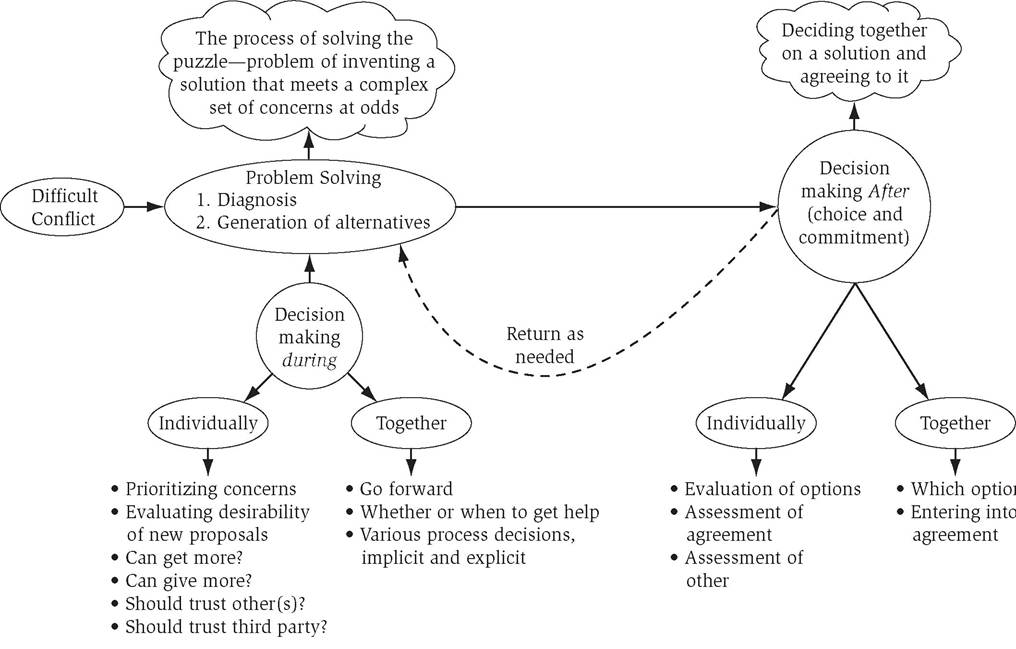
Figure 9.1. An Integrated Model of Problem Solving and Decision Making in Conflict Resolution.
Note: The lists of decisions to be made are intended to be illustrative, nor exhaustive.
The rest of this chapter aims to move us through this outlined process. To do so, we must understand the parts of the process, and how they work.
Note: The lists of decisions to be made are intended to be illustrative, not exhaustive.
More on the topic A SIMPLE MODEL:
- Modelling the settlement-trial decision
- Simple models of host-pathogen dynamicssuggest ways to control the establishment and spread of diseases
- OTHER ESTIMATION PROBLEMS
- Anticommons, property fragmentation and the laws of entropy
- CONCLUSION
- Other neglected aspects of consumer-resource models
- References
- EXPERIENCE AND NEW THEORY FROM THE 1980s ONWARD
- The Lotka-Volterra model
- LMIs AND WAGE INEQUALITY: AN EMPIRICAL ASSESSMENT