Chemosynthesis harvests energyfrom inorganic compounds
The earliest autotrophs on Earth were probably chemosynthetic bacteria or archaea that evolved when the composition of the atmosphere was markedly different than it is today: low in oxygen, but rich in hydrogen, with significant amounts of carbon dioxide (CO2) and methane (CH4).
A diverse group of archaea and bacteria still use energy from inorganic compounds to take up CO2 and synthesize carbohydrates. Chemosynthetic bacteria are often named according to the inorganic substrate they use for energy (TABLE 5.1).TABLE 5.1 Inorganic Substrates Used by Chemosynthetic Bacteria as Electron Donors for Carbon Fixation
| Substrate (chemical formula) | Type of bacteria |
| Ammonium NH4+ | Nitrifying bacteria |
| Nitrite (NO2 ) | Nitrifying bacteria |
| Hydrogen sulfide (H2S∕HS~) | Sulfur bacteria (purple and green) |
| Sulfur (S) | Sulfur bacteria (purple and green) |
| Ferrous iron (Fe ) | Iron bacteria |
| Hydrogen (H2) | Hydrogen bacteria |
| Phosphite (HPOβ2-) | Phosphite bacteria |
Source: M. T. Madigan and J. M. Martinko. 2005. BrockBiology of Microorganisms. Prentice Hall: Upper Saddle River, NJ.
During chemosynthesis, organisms obtain electrons from the inorganic compound—in other words, they oxidize2 the inorganic substrate. They use the electrons to synthesize two high-energy compounds: adenosine triphosphate (ATP) and nicotinamide adenine dinucleotide phosphate (NADPH).
They then use energy from ATP and NADPH to take up carbon from gaseous CO2 (a process known as fixation of CO2). The fixed carbon is used to synthesize carbohydrates or other organic molecules, which are stored to meet later demands for energy or biosynthesis (manufacture of chemical compounds, membranes, organelles, and tissues). Alternatively, some bacteria can use electrons from the inorganic substrate directly to fix carbon. The biochemical pathway most commonly used to fix carbon is the Calvin cycle, named for Melvin Calvin, the biochemist who first described it. The Calvin cycle is catalyzed by several enzymes, and it occurs in both chemosynthetic and photosynthetic organisms.One of the most widespread and ecologically important groups of chemosynthetic organisms is the nitrifying bacteria (e.g., Nitrosomonas, Nitrobacter), which are found in both aquatic and terrestrial ecosystems. In a two-step process, these bacteria convert ammonium (NH4+) into nitrite (NO2-), then oxidize it to nitrate (NO3 ). These chemical conversions of nitrogen compounds are an important component of nitrogen cycling and plant nutrition, and we will discuss them in more detail in Concept 22.2. Another important chemosynthetic group is the sulfur bacteria, associated with volcanic deposits, sulfur hot springs, and acidic mine wastes. Sulfur bacteria initially use the higher-energy forms of sulfur, H2S and HS- (hydrogen sulfide), producing elemental sulfur (S), which is insoluble and highly visible in the environment (FIGURE 5.5). Once the H2S and HS- are exhausted, these bacteria use elemental S as an electron donor, producing SO42- (sulfate).
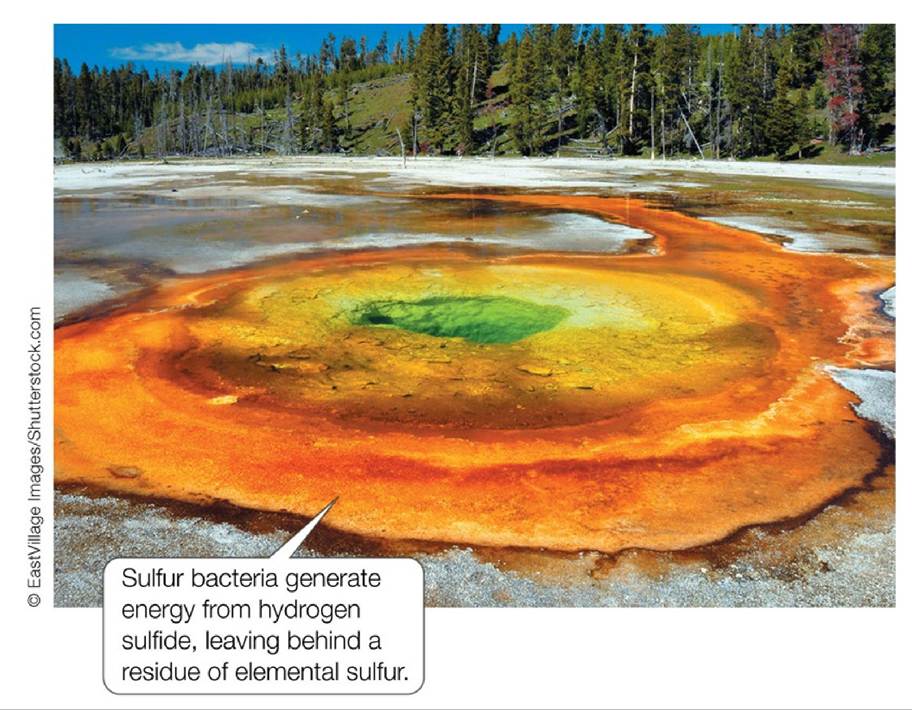
FIGURE 5.5 SulfurDepositsfromChemosyntheticBacteria Sulfurbacteriathrivein sulfur hot springs with water temperatures as high as 110°C (230°F). View larger image
More on the topic Chemosynthesis harvests energyfrom inorganic compounds:
- CONCEPT 5.1 Organisms obtain energy from sunlight, from inorganic chemical compounds, or through the consumption of organic compounds.
- The vast majority of the autotrophic production of chemical energy on Earth occurs through photosynthesis, a process that uses sunlight to provide the energy needed to take up carbon dioxide and synthesize organic compounds, principally carbohydrates.
- The generation of chemical energy by autotrophs, known as primary production, is derived from the uptake of carbon during photosynthesis and chemosynthesis (see Chapter 5).
- Energy that is derived from the consumption of organic compounds produced by other organisms is known as secondary production.
- SUMMARY
- Answers to Review Questions
- Key Concepts
- COMMON SPECIFIC POISONINGS
- Composition of Soil
- Learning Objectives
- The End of Pastoral Economy
- In the previous section, we saw how nutrients undergo biological, chemical, and physical transformations as they are taken up by organisms and released through decomposition, ultimately returning to their original forms (or similar ones).
- Decomposition is a key nutrient recycling process
- Organisms can be grouped into trophic levels
- Chemically hazardous substances, ecotoxicology
- Characteristics of Water