Organisms can be grouped into trophic levels
Each feeding category, or trophic level, is based on the number of feeding steps by which it is separated from autotrophs (FIGURE 21.3). The first trophic level consists of the autotrophs, the primary producers that generate chemical energy from sunlight or inorganic chemical compounds.
The first trophic level also generates most of the dead organic matter in an ecosystem, which also provides energy for organisms in the ecosystem. In our desert ecosystem, the first trophic level includes all of the plants, which we lump together to form a single group, regardless of their taxonomic identity. In Lindeman's lake ecosystem (see Figure 20.3), the first trophic level was composed primarily of dead organic matter, which Lindeman poetically referred to as “ooze,” as well as autotrophs such as phytoplankton and pondweeds. The second trophic level consisted of the herbivores that consume autotroph biomass—which in our desert ecosystem would include grasshoppers and mule deer—as well as organisms that consume dead organic matter, called detritivores. The remaining trophic levels (third and up) contain the carnivores that consume animals at the trophic level below them. The primary carnivores constituting the third trophic level in our desert ecosystem would include small birds and scorpions, while examples of the secondary carnivores making up the fourth trophic level would be foxes and birds of prey. Most ecosystems have four or fewer trophic levels.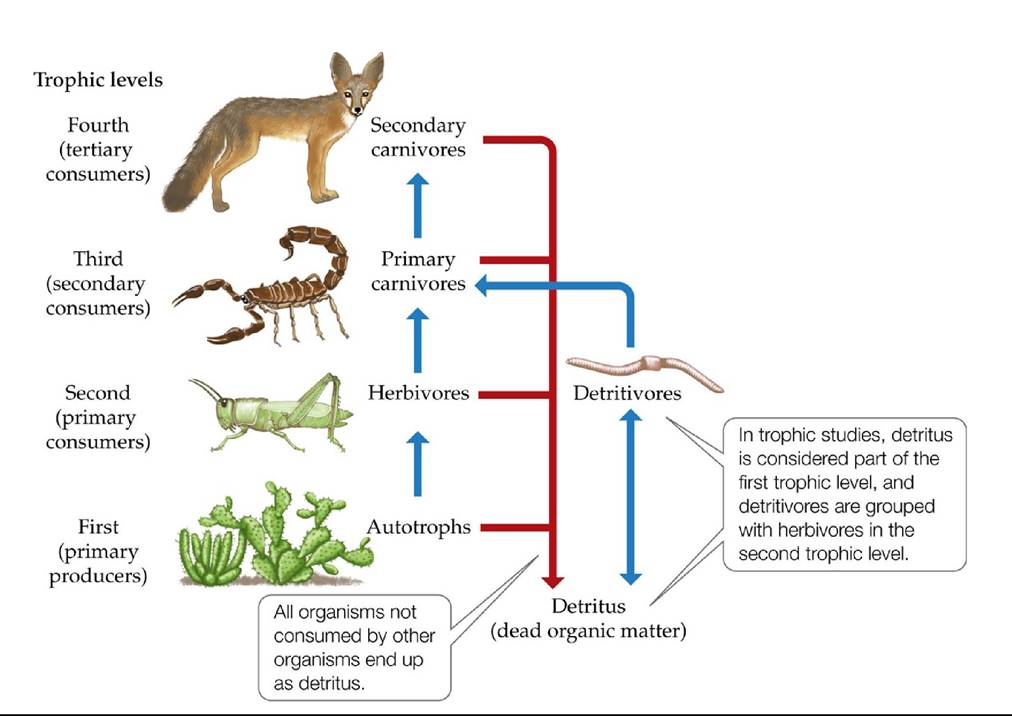
FIGURE 21.3 Trophic Levels in a Desert Ecosystem Each trophic level is characterized by the number of feeding steps by which it is removed from autotrophs (primary producers). View larger image
Some organisms do not fit conveniently into the trophic levels defined here. Coyotes, for example, are opportunistic feeders, consuming vegetation, mice, other carnivores, and old leather boots. In trophic studies, heterotrophs that feed at multiple trophic levels are called omnivores.1 Such heterotrophs defy our attempt to group organisms into simple feeding categories. However, their diets can be partitioned to reflect how much energy they consume within each trophic level (Pimm 2002). This partitioning is facilitated by the use of stable isotopes to trace food sources (Post 2002a) (see Ecological Toolkit 5.1 and Concept 20.4). Thus, omnivores occupy intermediate trophic levels as determined by the proportions of the foods they consume. Omnivory is common in many
ecosystems.
More on the topic Organisms can be grouped into trophic levels:
- CONCEPT 21.3 Changes in the abundances of organisms at one trophic level can influence energy flow at multiple trophic levels.
- CONCEPT 21.1 Trophic levels describe the feeding positions of groups of organisms in ecosystems.
- Trophic interactions can trickle down through multiple trophic levels
- What determines the number of trophic levels?
- Energy flow between trophic levels differs among ecosystem types
- Energy Flow between Trophic Levels
- Energy flow between trophic levels can be depicted using energy or biomass pyramids
- CONCEPT 21.4 Food webs are conceptual models of the trophic interactions of organisms in an ecosystem.
- Explain how interactions between organisms and their environment can affect other organisms and potentially lead to unexpected consequences.
- Family law concerns legal aspects of the domestic relationships between persons who are grouped together within a household understood as a social, political, and economic unit.
- The strengths of trophic interactions are variable
- Trophic efficiencies can influence population dynamics
- All organisms are either consumed or end up as detritus
- IMPACT OF ANTIRETROVIRAL THERAPY ON LEVELS OF LYMPHOCYTE APOPTOSIS
- Trophic Cascades
- Levels of humility in science
- Appendix 1.1: Levels and trajectories of SHD at the local level
- Climate controls where and how organisms live