Core natural areas should promote species persistence
The principles of landscape ecology and conservation biology have come together to guide biologists in selecting the most vital lands for conservation. The design of new nature reserves focuses on core natural areas, where the conservation of biodiversity and ecological integrity take precedence over other values or uses (Noss et al.
1999). Populations that are able to maintain themselves in core areas may serve as sources of individuals for populations outside the protected areas. Ideally, core areas also provide enough land to meet the large habitat area requirements of top predators.Madagascar is a large island that is a global priority for conservation. It has a rich biota and many endemic species, including more than 70 species of lemurs, a group of primates found only on Madagascar. The biota of Madagascar is seriously imperiled, as only 15% of the island's original forest remains. Efforts are under way to put more of its land into conservation. In designing a new
national park in northeastern Madagascar, Claire Kremen and her colleagues examined both the biological and the socioeconomic circumstances of the region. Their design (FIGURE 24.16) was based on a core natural area that extended across several elevational and climate zones, encompassing a range of vegetation types. The proposed core area encompassed habitat for all of the region's rare species of butterflies, birds, and primates, and it had as yet been little affected by deforestation. The researchers excluded areas close to villages that had already been fragmented and where hunting had negatively affected animal populations (Kremen et al. 1999). The Masoala National Park, which opened in 1997, is now the largest national park in Madagascar at 211,230 ha (over 521,000 acres). With proper management, the park will give the unique biodiversity of this region an improved chance of being maintained in perpetuity.
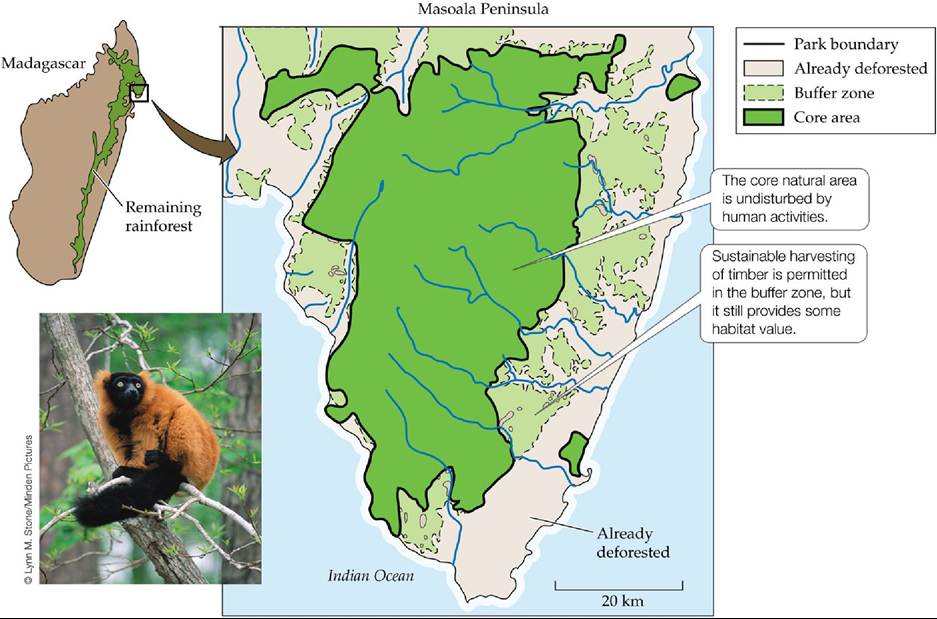
FIGURE 24.16 Designing Masoala National Park Masoala National Park, in northeastern
Madagascar, was established after careful planning that took both ecological and socioeconomic
concerns into account. It preserves habitat for many threatened species, including the red ruffed lemur (Varecia variegata rubra), which is endemic to this region of Madagascar. This map was simplified from more complex maps generated by using GIS techniques to analyze satellite imagery. (After C. Kremen et al. 1999. ConservBiol 16: 605-618.) View larger image
Core natural areas are best when they are large and uncut by roads or even by trails. Large core areas facilitate maintaining large population sizes and help to minimize the problems of small populations and susceptibility to local extinction (see Concept 10.3). Thus, not all protected areas qualify as core natural areas. Many do not fully serve the purpose of protecting the whole biota from human interference. Most national parks in the United States were not established with the conservation of biodiversity as their primary mission, but rather to preserve scenery, often on land that was not considered useful for anything else. Conservation planners recognize that many countries do not have the short-term motivation of carving out large areas of land to be solely dedicated to biodiversity conservation given the requirements of supporting an economy based on resource extraction.
In the design of nature reserves, some spatial configurations are theoretically better than others for fostering the persistence of biodiversity (FIGURE 24.17). The principal concepts are that greater area, connectivity among reserves, and buffer zones promote greater biodiversity. While large areas with a greater proportion of core area should enhance diversity, multiple reviews indicate that several small reserves contain more species than a large reserve with the same total area (Fahrig 2019).
The underlying reasons for this observation are unclear, but the realization that multiple small preserves can protect as much if not more biodiversity holds promise for the design of future reserves in the face of rapidly declining biodiversity and intact habitat. There are additional situations where small or disconnected reserves may be desirable. For example, diseases may spread less easily between isolated smaller reserves than within a large reserve.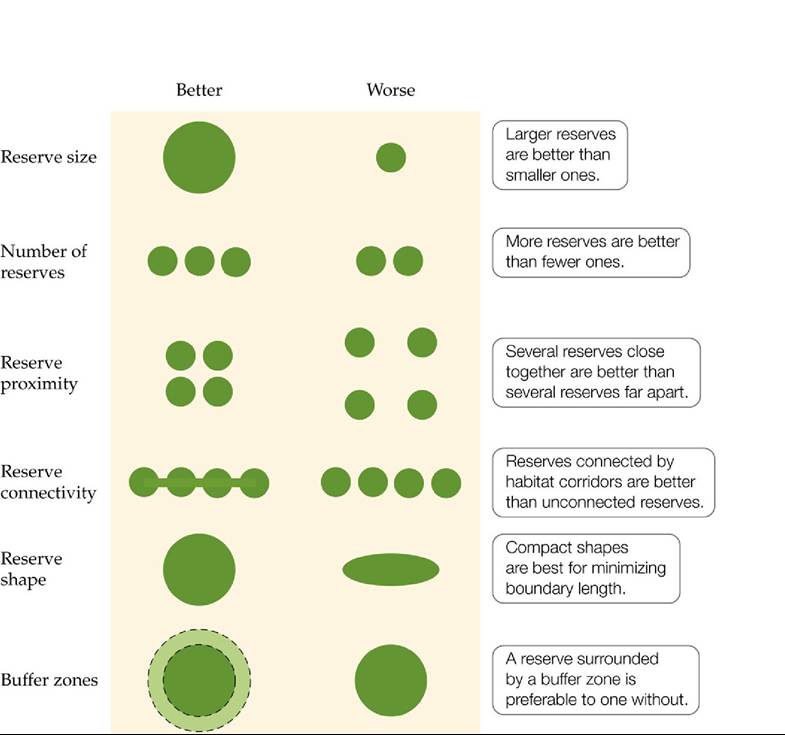
FIGURE 24.17 Guiding Principles for Designing Nature Reserves Somespatial configurations are preferable than others for fostering biodiversity.
Explain the underlying reasons why the design on the left is better than the one on the right for conservation as related to reserve size, proximity of multiple reserves, reserve connectivity, and reserve shape.
(After C. L. Shafer 1997. Terrestrial nature reserve design at the urban/rural interface. In M. W. Schwartz [ed.], Conservation in Highly Fractured Landscapes, pp. 345-347. Chapman and Hall: New York, and R. B. Primack and A. A. Sher. 2016. An Introduction to Conservation Biology. Sinauer and Associates: Sunderland ma.) View larger image
In many settings where conservation is being accomplished, either the landscape or the social context may not realistically permit adhering to the principles described above (Williams et al. 2005). There are many smaller reserves that have been established with the conservation of a single species or ecological community as their main objective. Such biological reserves, even if they are
small, are nevertheless an important part of our conservation efforts. Critically situated smaller reserves may be the best available option, particularly where human population density is high and large reserves are unfeasible.
More on the topic Core natural areas should promote species persistence:
- Core natural areas should be buffered by compatible land uses
- 5 Areas of outstanding natural beauty
- CONCEPT 19.1 Species diversity differs among communities as a consequence of regional species pools, abiotic conditions, and species interactions.
- HIV-1 LATENCY AND PERSISTENCE
- Persistence: The Protracted War
- CONCEPT 13.1 Parasites typically feed on only one or a few host species, but host species have multiple parasite species.
- Gene flow can promote as well as limit local adaptation
- Species distribution models can be used to predict a species' geographic range
- Invasive species can displace native species and alter ecosystem properties
- Did the presidents of independent Ukraine promote a united national identity?
- Where should we put our focus in preventing species loss—on the species or the habitat?
- The outcome of competition between species can be changed by a broad suite of factors, including features of the physical environment, disturbance, and interactions with other species.
- We have seen in previous chapters that disturbance, stress, and predation can modify species interactions and allow for species coexistence.
- CONCEPT 16.2 Species diversity and species composition are important descriptors of community structure.
- CONCEPT 15.1 In positive interactions, no species is harmed, and the benefits are greater than the costs for at least one species.
- Protection of surrogate species can provide protection for other species with similar habitat requirements
- The equilibrium theory of island biogeography holds true for mainland areas
- Central Core Myopathy
- 2 Trees in Conservation Areas
- DEVELOPING CORE COMPETENCE IN FINANCIAL TECHNOLOGY INNOVATION