DRINKING WATER
Without an adequate supply of drinking water, animals will not eat as much, the efficiency of utilisation of their food will be depressed and milk yields will fall. Water intakes and requirements vary enormously and depend on factors such as:
• the level of milk production: 0.9 litre of water is required for each litre of milk produced
• the dry matter content of the diet: cows eating dry foods need more water
• the total amount of dry matter eaten (which will also vary with milk yield)
• environmental temperature: water intakes increase in hot, dry and windy weather
• diets high in minerals, for example high salt intakes or caustic treated grain
• the palatability and temperature of the water.
Cows prefer to drink warm water in the winter (the outflow from a plate cooler is ideal for this) and cold water in the summer. Brackish water with a high (0.75%) salt content depresses intakes and may need to be desalinated before use.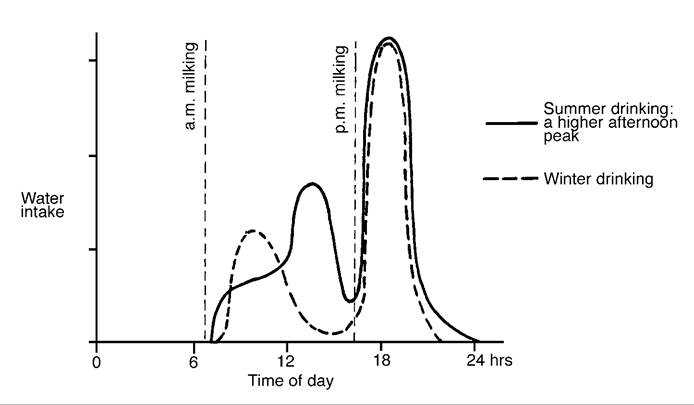
Figure 12.2. Daily drinking patterns of cows in summer and winter.
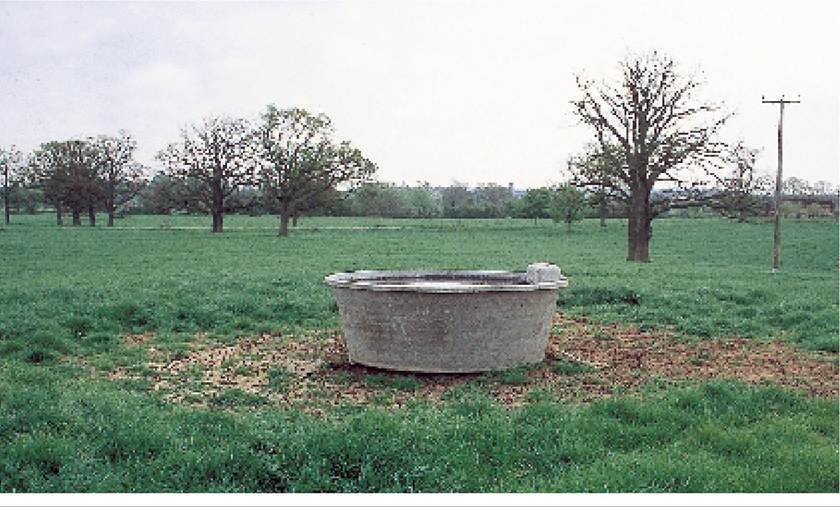
Plate 12.4. Free-standing water trough with good access.
Water intakes may vary between 20 and 100 litres daily for lactating dairy cows, with a figure of 55-65 litres per day being an approximate average value.
Despite these intakes, cows normally go to the trough to drink only four to six times each day and the daily pattern of drinking is surprisingly constant in both summer and winter. This is shown in Figure 12.2. There is a rise in intake around mid day and a considerably greater peak soon after evening milking, when up to 50% of the total daily intake may be drunk in three consecutive hours. This short peak of drinking activity has important implications in terms of the supply provided.
Because all the cows want to drink at the same time, it is essential that you have sufficient space to allow adequate access, that there is ample reserve capacity in your trough and that the supply pipe is of sufficient bore to carry water at the rate at which the cows are drinking it.As cows can drink at a rate of up to 20 litres per minute, and as there may be several cows drinking at any one time, an enormous rate of supply is needed, so a large-capacity tank is by far the best idea. Circular troughs holding 1600 litres, and which allow 15 cows to drink at any one time, are now available. As an approximate rule of thumb, allow sufficient space for at least 10% of the herd to drink at the same time, or allow 6 cm of trough space for each cow, which is equivalent to 6 m for 100 cows. Cow comfort, access and water intakes can all be improved by using a free-standing trough (Plate 12.4) rather than one which is sited in the corner of a field or building, and by constructing a concrete or even a bark-based apron similar to a cow track (Plate 9.38) around the outside to improve conditions underfoot. If the area around the water trough is a mixture of deep mud, surplus bricks and lumps of concrete, you should not be surprised if water intakes - and milk yields - are depressed.
As milk is 87% water, thirsty cows will have depressed yields. Thirst also reduces food intake and this can cause a further fall in milk production and even bodyweight loss.
Water can be a problem for sick animals. If they are too weak to reach the trough, or unable to compete with the other cattle when they get there, dehydration soon sets in. Even low levels of dehydration will make the animal feel lethargic and depress its appetite, and this is bound to retard recovery. Sick animals, cows or calves, are therefore best penned individually so that food and water can be made easily accessible and their intakes monitored.
More on the topic DRINKING WATER:
- Water is essential for life. Water is the medium in which all biochemical reactions necessary for physiological functioning occur.
- CONCEPT 4.3 The water balance of an organism is determined by exchanges of water and solutes with the external environment.
- Malcolm Fraser had likely been drinking, although at the inquest his wife attested that he ‘was not of drunken habits’.
- Water Quality Parameters
- Types of Water Pollution
- WATER TRADING
- Characteristics of Water
- 16.4 Rain Water Harvesting
- Water flows along energy gradients
- WATER ALLOWANCE TRADING
- THE EQUITY PRINCIPLE AND WATER TRADING
- SOIL AND WATER AS RESERVOIRS
- WATER HOMEOSTASIS
- 3 Water quality standards and environmental permits
- Seasonal changes in aquatic environments are associated with changes in water temperature and density
- Impact of Water Pollution on Human Health
- Sources of Water Pollution