UROLITHIASIS (BLADDER STONES)
Calculi are small stones of calcium or magnesium ammonium phosphate which form in the urine in the bladder. They cause few problems in the bladder, but when they pass out of the bladder into the urethra they may cause a blockage.
Because of the longer length and smaller internal diameter of their urethra, it is usually only males which are affected and castrates more commonly than entire males. The most common point of blockage is at the sigmoid flexure of the penis, just above the scrotum (Figure 3.6). Initially the calf will stand apart from the others, not eating and disinclined to move. With a grossly distended bladder, the symptoms are not too surprising! At this stage the condition is difficult to diagnose. Later the penile urethra may rupture at the point of impaction of the calculi and the urine flows out and collects under the skin to form a large swelling, as in Plate 3.20. Note the dry crystals on the hairs of his prepuce, which are effectively ‘external’ calculi.
Treatment
The only treatment option is surgical. A new opening for the penis is created above the scrotum. Unfortunately the skin covering the urine swelling often drops off and recovery is then very slow. Sometimes the bladder ruptures before the urethra. The calf then dies.
Prevention
Various dietary measures are available and these will reduce the likelihood of calculi forming. These include:
• Ensure the correct dietary ratio of calcium to phosphorus, especially avoiding excessive phosphorus intakes.
• Avoid excess dietary magnesium. No more than 200ppm should be added to the diet. (Magnesium is added to prevent hypomag- nesaemia in milk-fed calves.)
• Add urinary acidifiers, e.g. ammonium chloride or ammonium sulphate to the ration (but note that excess ammonium sulphate can cause CCN).
• Ensure there is adequate and easy access to a plentiful supply of fresh, clean water. Some people suggest adding salt to the ration to encourage even further water consumption, thereby diluting the urine and decreasing the risk of urinary calculi.
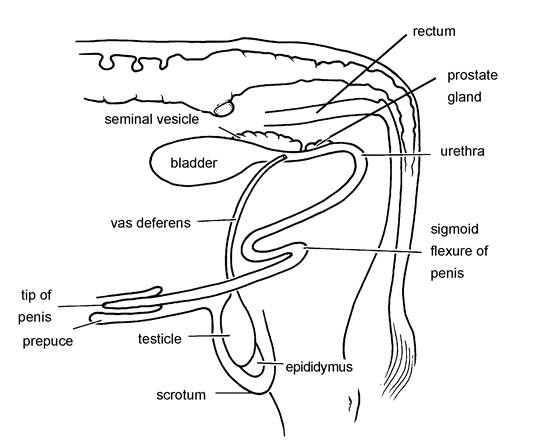
Figure 3.6. The diagram shows the urinary and genital organs of a bull. Calculi can cause a blockage of the penis at the sigmoid flexure, just above the scrotum.
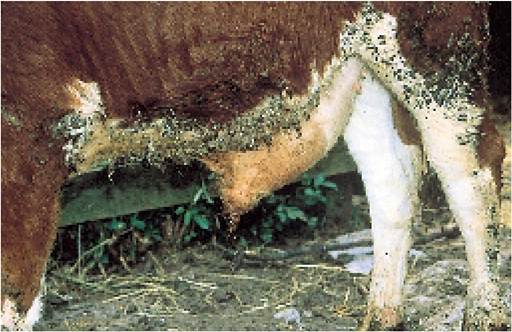
Plate 3.20. Urolithiasis. Note the swelling caused by rupture of the penis and accumulation of fluid under the skin. There are dry crystals on the hairs of the prepuce.
More on the topic UROLITHIASIS (BLADDER STONES):
- Bladder Management
- Bladder Capacity
- Bladder Cancer
- NEURQGENiC BLADDER
- Diagnostics
- Nephrolithiasis
- RITUALISM
- Physiology
- Murine Urologic Syndrome (MUS)
- Gallstone Disease
- Sati: Royal Tradition and Legal Invasion of a Ritual Space
- ELIMINATION DISORDERS
- OBSTRUCTIVE UROPATHY
- Rituals, Natives, and the Colonial State
- CONCLUSION
- DISORDERS OF MALE REPRODUCTION
- Acknowledgements
- As the ever-moving chess board was set for this latest contestation of the land, Ukraine was putting military pieces in place.
- Spina Bifida Occulta
- Anterior Cord Syndrome